Vietnam’s Catholic community represents one of Asia’s most dynamic faith traditions, with approximately 7 million Catholics (6.6-7.4% of population) as of 2026. For authoritative Catholic news Vietnam, the Catholic Bishops’ Conference of Vietnam (CBCV) serves as the official channel, coordinating pastoral activities across 27 dioceses and maintaining diplomatic ties with the Holy See. This pillar page delivers current insights into the Church’s remarkable 48.6% growth since 1999, its organizational structure, historical journey from 16th-century evangelization, and latest Vatican relations.
Readers seeking reliable Catholic news Vietnam will find verified data on clergy, parishes, and the Church’s expanding influence. For the most recent updates, visit the official Catholic news Vietnam portal.
- Vietnam’s Catholic Church is one of Asia’s largest, with 7 million faithful (6.6-7.4% of population) organized into 27 dioceses.
- The Church has experienced remarkable growth: 48.6% increase since 1999, with rising vocations and a total of 6,854 priests.
- CBCV, led by Archbishop Joseph Nguyễn Năng, coordinates national pastoral activities and maintains diplomatic relations with the Vatican, including the appointment of the first resident papal representative in 2023.
How Strong is Catholicism in Vietnam?
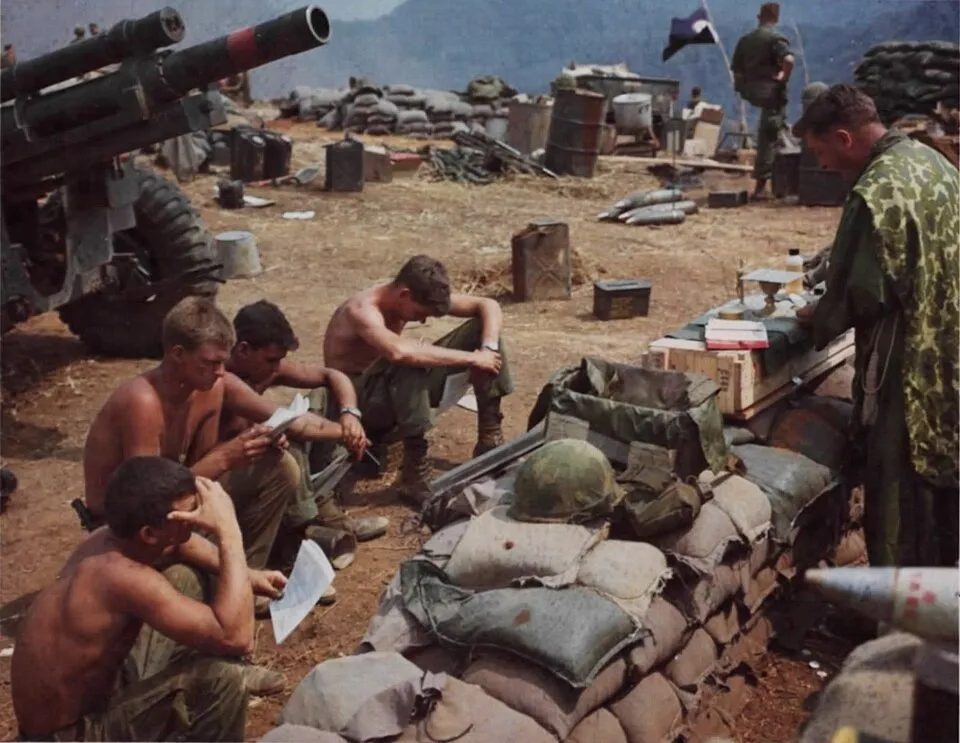
Catholic Population: 7 Million Faithful in 2026
- Current Catholic Population: Approximately 7 million Catholics reside in Vietnam as of 2026, representing 6.6-7.4% of the country’s total population.
- Growth Since 1999: The Catholic community expanded from 3.9 million in 1999 to 7 million in 2026, achieving a 48.6% increase over 27 years.
- Comparative Growth Rate: This surge significantly outpaces Vietnam’s overall population growth rate, which averaged about 1% annually during the same period, highlighting the Church’s exceptional appeal and effective evangelization efforts.
- Regional Context: Vietnam’s Catholic population ranks as the fifth-largest in Asia, following the Philippines, India, China, and Indonesia, positioning it as a key player in the continent’s Catholic landscape.
This substantial growth reflects the Catholic Church’s deep integration into Vietnamese society and its ability to attract followers despite operating within a socialist framework that imposes certain restrictions on religious activities. The increase from 3.9 million to 7 million demonstrates sustained evangelization success, strong community bonds, and the Church’s significant contributions to education and social services. Notably, the growth rate has remained consistent even through periods of economic transition and social change, indicating the resilience of Vietnamese Catholic identity.
The Church’s emphasis on family life, moral teaching, and community support continues to resonate with many Vietnamese citizens. Youth engagement programs, such as those described in the Vietnam Catholic youth initiatives, play a vital role in nurturing the next generation and sustaining this growth trajectory.
Church Structure: 27 Dioceses and 2,228 Parishes
- Diocesan Organization: Vietnam’s Catholic Church is structured into 27 dioceses, including three archdioceses: Hà Nội, Thành phố Hồ Chí Minh, and Huế.
- Parish Network: These dioceses encompass 2,228 parishes and hundreds of mission stations, providing sacramental and pastoral care to the faithful nationwide.
- Ecclesiastical Provinces: The dioceses are grouped into three ecclesiastical provinces, each centered on an archdiocese that coordinates regional activities and serves as a metropolitan see.
- Geographical Distribution: The diocesan map covers all regions of Vietnam, from the mountainous north to the Mekong Delta in the south, ensuring comprehensive pastoral coverage despite varied terrain and population density.
This extensive organizational structure enables the Church to minister effectively to a widely dispersed flock. Each diocese operates with a certain degree of autonomy while remaining united under the CBCV’s coordination. The parish serves as the primary unit of Catholic life, where sacraments, catechesis, and community activities take place.
The presence of mission stations in remote areas demonstrates the Church’s commitment to reaching all Vietnamese, including ethnic minorities in mountainous regions. The three archdioceses—Hà Nội, Thành phố Hồ Chí Minh, and Huế—are historically significant centers that have produced many of Vietnam’s bishops and cardinals. This diocesan distribution also reflects historical patterns of Catholic settlement, often concentrated in certain regions due to missionary pathways and population movements.
The scale of 2,228 parishes presents both an opportunity and a challenge for coordinated national initiatives, a task managed effectively by the CBCV through its various committees. For details on specific dioceses and their bishops, the Vietnam bishops conference structure page offers comprehensive information.
Clergy and Vocations: 6,854 Priests and Growing Numbers
- Total Clergy: Vietnam’s Catholic Church is served by approximately 6,854 priests, comprising 4,821 diocesan priests and 2,033 religious priests from various orders and congregations.
- Diocesan vs Religious: The majority (70%) are diocesan priests who serve directly under their local bishops, while religious priests belong to communities like the Redemptorists, Dominicans, and Franciscans, each with specific charisms and ministries.
- Vocational Trends: Recent years have witnessed a notable increase in vocations to both priesthood and religious life, with seminaries reporting growing enrollments and more men entering formation programs.
- Supporting Clergy: In addition to priests, the Church relies on deacons, religious brothers and sisters, and catechists to support pastoral work, though priests remain the primary ministers of sacraments and parish leadership.
The 6,854 priests ministering across Vietnam represent a significant increase from previous decades, reflecting a healthy vocational culture within Vietnamese Catholicism. This growth in clergy numbers is essential for sustaining the Church’s sacramental life, especially given the large Catholic population and extensive parish network. The balance between diocesan and religious priests allows for diverse ministries: diocesan priests focus on parish administration and local sacraments, while religious priests often specialize in education, healthcare, or missionary outreach.
Seminaries in major dioceses, such as those in Hà Nội and Thành phố Hồ Chí Minh, have expanded their formation programs to accommodate more candidates. The rise in vocations is particularly striking against the backdrop of declining numbers in many Western countries, positioning Vietnam as a source of future priests for the global Church. For insights into how the Church is engaging young people to foster these vocations, see the Catholic youth ministry initiatives.
Vietnam’s Global Ranking: Fifth-Largest Catholic Community in Asia
Vietnam’s position as the fifth-largest Catholic community in Asia places it among the continent’s most significant Catholic populations, following only the Philippines, India, China, and Indonesia. With 7 million faithful, Vietnam’s Catholic community surpasses that of many European nations and represents a substantial portion of Asia’s roughly 120 million Catholics. This ranking matters for the global Catholic Church because Asia is seen as a region of growth potential, while Europe faces decline.
Vietnam’s vibrant Church thus becomes an important source of vocations, missionary energy, and financial support for universal Church activities.
Several unique aspects contribute to Vietnamese Catholicism’s size and vibrancy. The Church has a long history of martyrdom, with 117 Vietnamese martyrs canonized in 1988, providing powerful models of faith.
Vietnamese Catholics maintain strong family and communal ties, with many households practicing regular prayer and devotions. The Church also operates an extensive network of schools and social service institutions that attract families seeking quality education and care. Additionally, the presence of multiple liturgical rites, though primarily Latin, includes some Eastern Catholic influences from historical connections.
The CBCV’s active role in the Federation of Asian Bishops’ Conferences further integrates Vietnam into the broader Asian Catholic dialogue. For a broader perspective on the Church’s role in Asia, the Holy See messages to Vietnam often address regional challenges and opportunities.
This demographic strength also gives Vietnam a louder voice in international Catholic forums. Vietnamese bishops regularly participate in synods and conferences, sharing experiences of evangelization in a socialist context. The country’s Catholics are known for their deep devotion, particularly to the Virgin Mary, and for maintaining popular piety alongside liturgical participation.
The combination of historical roots, community cohesion, and institutional infrastructure makes Vietnam’s Catholic Church a model for growth in challenging environments. As the Church worldwide seeks renewal, Vietnam’s story offers valuable lessons in resilience and faith formation.
Catholic Bishops’ Conference of Vietnam: Leadership and Organization
CBCV Leadership 2026: Archbishop Joseph Nguyễn Năng and Key Bishops
The Catholic Bishops’ Conference of Vietnam is led by a presidium comprising three key bishops elected to guide the Church’s national activities. As of 2026, Archbishop Joseph Nguyễn Năng serves as President, concurrently holding the office of Archbishop of Thành phố Hồ Chí Minh. In this capacity, he chairs plenary assemblies, represents the Vietnamese Church in international gatherings, and oversees the implementation of CBCV decisions.
The Vice President is Archbishop Joseph Vũ Văn Thiên, Metropolitan Archbishop of Hà Nội, who brings extensive experience from the northern region and assists the President in strategic planning. Bishop Joseph Đỗ Mạnh Hùng of Phan Thiết Diocese serves as Secretary General, managing the CBCV secretariat, coordinating committee work, and ensuring communication among dioceses.
These leaders work closely with the heads of CBCV’s various committees, which handle specific pastoral areas such as liturgy, catechesis, social communications, and ecumenical dialogue.
The leadership team meets regularly to address pressing issues, from religious freedom concerns to youth ministry strategies. Recent appointments reflect a balance of seniority and regional representation, ensuring that both long-standing and newer perspectives shape the Church’s direction. For the latest updates on CBCV leadership and activities, the CBCV updates page provides timely information directly from the conference.
The President and Vice President, as archbishops of the two largest cities, symbolize the unity of north and south Vietnam—a historically significant reconciliation given the country’s division from 1954 to 1975. Their collaborative leadership helps bridge regional differences and promotes a common pastoral vision.
The Secretary General’s role is particularly administrative, requiring fluency in both ecclesiastical and civil matters, especially regarding relations with government authorities. Together, these three bishops embody the CBCV’s mission to foster communion, coordinate pastoral initiatives, and serve as the official voice of Vietnam’s Catholics in both domestic and international contexts.
Is There a Catholic Cardinal in Vietnam? Current and Historical Context
Vietnam has a distinguished history of producing cardinals who have served the universal Church, though as of 2026, there is no Vietnamese cardinal currently residing in the country. The most renowned was Cardinal François Xavier Nguyễn Văn Thuận (1928-2002), who endured imprisonment in Vietnam for 13 years and later became a prominent figure in the Vatican, serving as President of the Pontifical Council for Justice and Peace. Another significant figure was Cardinal Joseph-Marie Trịnh Văn Căn (1921-1990), the second Vietnamese cardinal, who led the Archdiocese of Hà Nội and contributed to the post-synodal apostolic exhortation for Asia.
More recently, Cardinal Nguyên Văn Nhon, Archbishop Emeritus of Hà Nội, participated in the Synod of Bishops for Asia in 1998, representing Vietnamese perspectives at the highest level.
The absence of a resident cardinal today does not diminish Vietnam’s standing in the Church; rather, it reflects the normal ebb and flow of episcopal appointments. Cardinals are typically chosen from among archbishops of major sees or those serving in the Roman Curia.
Vietnamese bishops continue to be appointed to important dicasteries and to participate in synods, ensuring the country’s voice is heard. For the most current information on whether a Vietnamese cardinal has been appointed, the official CBCV website and its official Catholic documents section provides authoritative announcements.
The question of a cardinal often arises because of Vietnam’s large Catholic population and historical contributions. While the College of Cardinals includes representatives from many nations, Vietnam’s absence from its ranks in recent years is a matter of papal discretion rather than any slight.
The Church in Vietnam continues to thrive under the leadership of its bishops, and any future appointment would be announced through the Holy See’s press office and immediately disseminated by the CBCV. Until then, Vietnamese Catholics take pride in their cardinal legacy and the continued recognition of their Church’s importance in Asia.
Diocesan Representation: 27 Bishops Uniting Vietnam’s Church
The Catholic Bishops’ Conference of Vietnam functions as the assembly of all 27 bishops leading the country’s dioceses, making it the supreme collegial body representing the Vietnamese Catholic Church. This structure mirrors the universal model of episcopal conferences found in many nations, as encouraged by the Second Vatican Council. Each bishop, by virtue of his office, is a member of the CBCV, which meets in plenary assembly typically twice a year to deliberate on matters of common concern.
Between assemblies, a permanent secretariat, headed by the Secretary General, handles day-to-day operations and coordination.
The CBCV’s mission is threefold: to promote communion among the bishops themselves, to foster collaboration in pastoral initiatives across diocesan boundaries, and to serve as the official voice of the Vietnamese Church in dialogues with government authorities and the wider society. Through its numerous committees—covering liturgy, evangelization, social action, education, and youth—the conference develops guidelines, organizes national events, and ensures consistent teaching and practice.
This unified approach is vital in a country where the Church must navigate complex relations with state agencies while maintaining its spiritual independence. The CBCV also acts as the intermediary between the dioceses and the Holy See, transmitting Vatican documents and facilitating papal appointments. For detailed information on the bishops and their dioceses, the Vietnam bishops conference page provides an up-to-date roster and contact details.
Vatican Relations: First Resident Papal Representative (2023) and 2024 Visit
A landmark development in recent years was the appointment of Archbishop Marek Zalewski as the first resident papal representative to Vietnam in 2023, ending a diplomatic gap of several decades. This move signifies a major thaw in relations between the Holy See and the Vietnamese government, which had previously limited contact to non-resident envoys. Archbishop Zalewski, based in Hanoi, serves as the diplomatic channel between the Vatican and Vietnam, handling both ecclesiastical matters and negotiations on religious freedom.
His presence allows for more continuous and nuanced dialogue, strengthening the bond between the universal Church and the local Church in Vietnam.
The significance of this step was further underscored by the April 2024 visit of Archbishop Paul Gallagher, the Vatican’s Secretary for Relations with States and International Organizations. During his week-long trip, Archbishop Gallagher met with senior Vietnamese officials, visited parishes, and celebrated Mass with local Catholics.
His itinerary included Hanoi, Thành phố Hồ Chí Minh, and Huế, demonstrating the Vatican’s commitment to engaging all regions. These high-level interactions reflect mutual interest in deepening cooperation, particularly regarding the Church’s legal status, property rights, and the training of clergy.
The warming relations also open possibilities for a future papal visit, an aspiration long held by Vietnamese Catholics. For ongoing coverage of these diplomatic developments, the Holy See messages to Vietnam page compiles official statements and news.
The establishment of a resident nuncio also facilitates the process of episcopal appointments, as the papal representative can now consult directly with bishops and assess candidates on the ground. This improves the quality of diocesan leadership and ensures smoother transitions.
For Vietnamese Catholics, seeing a Vatican diplomat living among them is a powerful symbol of the Holy See’s closeness and care. The progress achieved since 2023 represents a hopeful chapter in the Church’s journey in Vietnam, one that balances engagement with the state while safeguarding spiritual integrity.
History of Catholicism in Vietnam: From 16th Century to Today
Early Evangelization: 16th Century Spanish and Portuguese Missionaries
Catholicism first reached Vietnam’s shores in the 16th century through the efforts of Spanish Franciscan and Dominican missionaries sailing from Malacca. These early evangelizers, arriving around 1533, faced immense challenges: language barriers, cultural differences, and a political landscape dominated by Confucian courts suspicious of foreign influences. Despite persecution and occasional martyrdom, they established small but resilient communities, particularly in the coastal regions of Đàng Trong (Cochinchina) and Đàng Ngoài (Tonkin).
The missionaries learned Vietnamese, created a Romanized script (quốc ngữ) to translate religious texts, and began the long process of inculturation.
The early centuries saw slow but steady growth, with conversions often occurring among marginalized groups and those displaced by war. Missionaries also contributed to Vietnamese society by introducing Western medicine, astronomy, and calendar systems.
However, their presence was frequently interrupted by anti-Christian edicts from the Nguyễn and Trịnh lords, who viewed Catholicism as a threat to traditional order. Many Vietnamese Catholics from this era became martyrs, later beatified and canonized in groups.
These foundational sacrifices forged a strong identity for Vietnamese Catholics, who would endure further trials in later centuries. The legacy of the 16th-century missionaries lives on in the quốc ngữ script and in the deep devotion of Vietnam’s Catholic communities, which trace their spiritual lineage back to these pioneering Franciscans and Dominicans.
By the early 17th century, mission stations dotted the central and southern coasts, with priests moving inland whenever possible. The establishment of the first permanent mission in Hội An in 1615 marked a turning point, allowing for more sustained pastoral work.
Despite periodic crackdowns, the faith took root among families who passed it down through generations, creating a lay-led resilience that would characterize Vietnamese Catholicism for centuries. The early missionaries’ emphasis on catechesis and sacramental life laid the groundwork for the robust parish structure seen today.
Did the French Bring Catholicism to Vietnam? The Paris Foreign Missions Society’s Role
A common misconception is that French missionaries introduced Catholicism to Vietnam. While French members of the Paris Foreign Missions Society (Missions Étrangères de Paris) became the dominant evangelical force from the late 17th century onward, they were not the first. Spanish Franciscans and Portuguese Dominicans had already established a presence in the 1500s, as noted earlier.
The French arrival, beginning in earnest around 1660, coincided with the expansion of French influence in Southeast Asia and the decline of Spanish and Portuguese missions due to political changes in Europe.
The Paris Foreign Missions Society brought a new organizational model and greater resources, enabling more systematic evangelization. French missionaries like Bishop Pierre Lambert de la Motte and Bishop François Pallu worked tirelessly to build churches, train local clergy, and advocate for religious tolerance.
They also played a crucial role in the development of the Vietnamese language and the establishment of the first seminary in 1664. Over the next two centuries, French missionaries gradually assumed leadership of the Vietnamese Church, a transition completed by the early 19th century.
This French period coincided with increasing colonial involvement, which complicated the Church’s position as it became associated with foreign powers. Nevertheless, the missionary zeal of the Paris Foreign Missions Society left an indelible mark, producing many Vietnamese saints and shaping the liturgical and devotional practices that endure today.
It is important to recognize that the shift from Spanish/Portuguese to French leadership was not abrupt but occurred over decades, with both groups often working side by side. The French also benefited from the earlier foundations laid by their predecessors, including the quốc ngữ script and the initial Christian communities. By the time of the 1889 statistics—when the Vietnamese Church had 9 bishops and 219 clergy—the French missionary era was in full swing, setting the stage for the hierarchical structure that would be formalized under colonial rule.
1889 Milestone: 9 Bishops and 219 Clergy
The year 1889 stands as a pivotal benchmark in the history of the Catholic Church in Vietnam, marking the moment when the local Church achieved a stable hierarchical structure. By that year, the Vietnamese Church counted 9 bishops and 219 clergy, a significant increase from the scattered missionaries of earlier centuries. This development occurred during the French colonial period, when Vietnam was divided into Annam, Tonkin, and Cochinchina under French protection.
The colonial administration, while often ambivalent toward the Church, allowed for the establishment of a regular diocesan system with clearly defined territories.
The 1889 configuration reflected decades of growth in both numbers and institutional maturity. The nine bishops included both Western missionaries and the first generation of Vietnamese priests elevated to episcopal rank.
The 219 clergy, though still modest relative to the population, represented a sustainable workforce for parishes and missions across the country. This hierarchical foundation enabled more effective pastoral planning, seminary formation, and charitable outreach. It also positioned the Church to weather the political storms of the 20th century, including wars, partition, and the communist takeover.
The growth trajectory from 1889 to today—from 219 clergy to over 6,800 priests—illustrates the remarkable expansion of the Church in Vietnam. For a detailed chronology of such milestones, the History section on the CBCV website offers a comprehensive timeline.
The 1889 milestone also coincided with the appointment of the first Vietnamese bishop, Bishop Jean-Baptiste Nguyễn Bá Tòng, in 1933, though the 1889 data includes primarily foreign bishops. The transition to Vietnamese leadership would accelerate in the mid-20th century, culminating in the post-colonial era when Vietnamese clergy assumed full control of the Church’s governance. The numbers from 1889 thus represent both an endpoint of missionary dominance and the beginning of an indigenous hierarchy that would eventually produce cardinals and archbishops of global renown.
Historical Timeline: Key Events from 16th Century to 2024
The historical journey of Catholicism in Vietnam spans over five centuries, marked by both persecution and triumph. The following timeline highlights pivotal moments that have shaped the Church’s identity and growth.
| Period | Key Developments | Significance |
|---|---|---|
| 16th century | Arrival of Spanish Franciscans and Dominicans from Malacca; establishment of first Christian communities in coastal areas. | Introduction of Catholicism to Vietnam; creation of quốc ngữ script; beginning of evangelization that would span five centuries. |
| 17th-19th centuries | Dominance of Paris Foreign Missions Society; gradual increase in clergy and parishes; periodic persecutions; development of native Vietnamese clergy. | Consolidation of Church structures; formation of resilient Christian communities; preparation for hierarchical establishment. |
| 1889 | Church composed of 9 bishops and 219 clergy; diocesan system formalized under French colonial administration. | Achievement of stable hierarchy; foundation for future growth; benchmark for measuring expansion. |
| 20th century | Martyrdom of 117 Vietnamese saints (canonized 1988); production of first Vietnamese cardinals (Nguyễn Văn Thuận, Trịnh Văn Căn); division of Vietnam (1954-1975); post-war challenges. | Testimony of faith through persecution; elevation of Vietnamese Church to global prominence; adaptation to political changes. |
| 21st century (2023-2024) | Appointment of first resident papal representative (Archbishop Marek Zalewski, 2023); historic visit of Vatican foreign minister Archbishop Paul Gallagher (April 2024). | New era in Vatican-Vietnam relations; enhanced diplomatic engagement; potential for further normalization. |
This timeline underscores the Church’s resilience and its ability to evolve from a missionary enterprise to a vibrant local Church with global significance. Each period built upon the previous, creating the dynamic Catholic community seen in Vietnam today. For more in-depth coverage of these historical phases, the Catholic education in Vietnam page explores how educational institutions preserved faith and culture through turbulent times.
The most striking development in recent decades is the 48.6% growth of Vietnam’s Catholic population since 1999—a surge that defies trends in many developed nations and underscores the Church’s enduring appeal. Equally historic is the establishment of a resident papal representative in 2023, ending a diplomatic vacuum of over fifty years and opening new avenues for dialogue.
For ongoing coverage of these and all matters concerning the Catholic Church in Vietnam, we invite you to visit the official Catholic news Vietnam portal at www.cbcvietnam.org/catholic-news-vietnam. Subscribe to the CBCV newsletter and follow its social media channels to stay informed about the latest events, pastoral letters, and community initiatives from across Vietnam’s 27 dioceses.