The Vietnam War ended in 1975, after bishops’ leadership amid conflict, leaving the Catholic Church in Vietnam divided and devastated. Dioceses were split between North and South, many institutions were damaged or closed, and clergy were scattered. Vietnamese Catholic bishops, led by the Catholic Bishops’ Conference of Vietnam (CBCV), embarked on a monumental task of rebuilding and renewal.
They focused on reunifying ecclesiastical territories, restoring seminaries and parishes, and establishing a new relationship with the government. This period marked a profound transformation, as documented in the CBCV’s official chronology of special historical events. The bishops’ leadership not only reconstructed the physical Church but also redefined its mission in a changing Vietnam.
- The post-1975 period saw the reunification of dioceses and restoration of Church institutions after the war’s devastation, as documented in the CBCV’s chronology.
- The CBCV played a pivotal role in normalizing relations with the Vietnamese government through dialogue and constitutional engagement, including official messages on amendments.
- Pastoral strategies focused on inculturation, seminary formation, and lay ministry to renew the Church from within and engage Vietnamese culture.
The Post-1975 Rebuilding: Key Events and Milestones
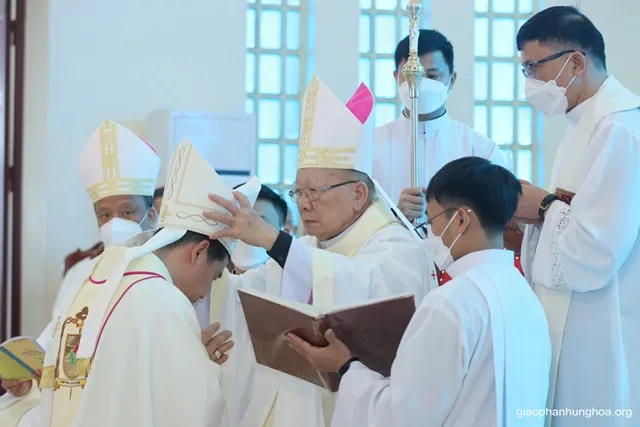
The immediate post-war years presented immense challenges. The Church had operated under two separate hierarchies—North and South—for decades. After 1975, bishops faced the complex task of merging these structures into a single, unified body aligned with the new political reality of a reunified Vietnam.
This required delicate negotiations with authorities, careful boundary adjustments, and the appointment of bishops to new or merged dioceses. The CBCV’s chronology records key milestones: the first unified diocesan synods, the restoration of parish life in war-affected areas, and the gradual reopening of Catholic institutions. By the mid-1980s, a coherent diocesan structure was reestablished across the country, enabling coordinated pastoral work and laying the groundwork for future growth.
Reunification of Dioceses and Ecclesiastical Territories After 1975
They redrew diocesan boundaries to match new provincial and municipal lines, sometimes merging smaller dioceses or creating new ones—such as Đà Nẵng with Bishop Joseph Nguyễn Văn Tiếp—to serve growing populations. This reorganization ensured that every Catholic had access to sacramental life and pastoral care within a defined territory.
The CBCV’s special historical events chronology highlights the first unified episcopal conferences and the appointment of bishops to reunified sees—such as Bishop Joseph Nguyễn Văn Bình—as critical steps. These actions symbolized the Church’s unity and its commitment to serving all Vietnamese Catholics regardless of former political divisions.
Restoration of Seminaries and Clergy Formation Programs
A cornerstone of renewal was the restoration of clergy formation. Seminaries, which had been disrupted or closed during the war, were gradually reopened with limited resources but strong determination. The CBCV’s records on seminaries show a focused effort to rebuild theological education.
- Reopening of major seminaries: Institutions in Hanoi, Ho Chi Minh City, and other locations resumed operations, often in makeshift conditions initially.
- Curriculum development: Formation programs integrated philosophy, theology, and pastoral practice, with an added emphasis on inculturation and Vietnamese cultural context.
- Spiritual formation: Seminarians received structured spiritual direction and community life training to prepare for ministry in a challenging social environment.
- Lay leadership training: Recognizing the shortage of clergy, the Church expanded programs for lay catechists and pastoral workers, empowering the laity to support evangelization.
- International collaboration: Seminaries established partnerships with foreign theological institutions to enhance academic quality and provide faculty development.
These efforts produced a new generation of priests and lay leaders who were deeply rooted in their faith and culturally attuned to Vietnam, fueling the Church’s pastoral renewal.
Current Episcopal Leadership: Living Vietnamese Bishops and Active Dioceses
The continuity of episcopal leadership is a testament to the successful rebuilding. The CBCV maintains a list of Vietnamese bishops since 1933, including the Bishops in French Indochina: Historical Roles and Legacy, showing an unbroken line of apostolic succession. Today, the Conference’s Standing Committee provides executive leadership, coordinating the work of 27 active dioceses across Vietnam.
According to the World Christian Database (2026), these dioceses serve approximately 7 million Catholics (representing 7.4% of Vietnam’s total population) through 2,228 parishes and 2,668 priests. This extensive structure reflects the successful reunification and steady growth of the Church.
The current bishops, such as Bishop Joseph Nguyễn Chí Linh, many of whom were appointed in the decades following 1975, continue to guide the Church with a focus on pastoral care, evangelization, and social engagement. Their leadership embodies the resilience and renewal that characterize the post-war era.
The CBCV’s Role in Church-State Normalization and Pastoral Renewal
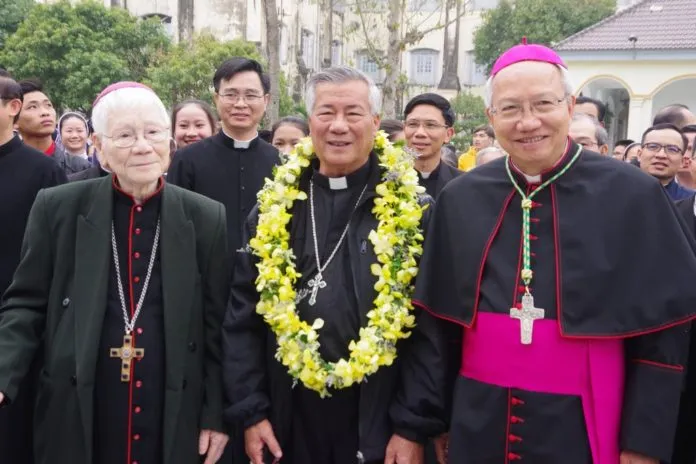
Beyond internal rebuilding, the post-1975 period required the Church to redefine its relationship with the Vietnamese state. The CBCV emerged as the primary interlocutor, engaging in patient dialogue to normalize relations and secure space for the Church’s mission. This diplomatic effort was not merely pragmatic; it was a pastoral strategy to enable the Church to serve society freely.
CBCV’s Official Messages on Constitutional Amendments and Church Position
A landmark in normalization was the CBCV’s formal engagement with constitutional reform. In 2013, the Conference submitted “Vietnamese Catholic Bishops’ Observations and Propositions on the 1992 Constitution Amendment Draft” to the National Assembly. This detailed document articulated the Church’s concerns about religious freedom, property rights, and the legal status of religious organizations.
The bishops argued for constitutional guarantees that would allow the Church to operate autonomously, manage its assets, and contribute to national development. This constructive participation demonstrated the CBCV’s role as a responsible partner in public life.
The dialogue contributed to incremental improvements in the legal framework for religious activities, fostering a more stable environment for the Church’s pastoral work. It also established a precedent for future consultations on social issues, showing how the Church could voice its interests within the political system.
Pastoral Strategies: Inculturation and Evangelization in Vietnamese Context
Inculturation—the adaptation of Catholic teachings and practices to local culture—became a central theme, championed by bishops like Bishop Joseph Đỗ Quang Khang. The Church incorporated traditional Vietnamese music, art, and architecture into liturgical celebrations, creating a worship experience that resonated with the people.
Seminary formation included dedicated studies on Vietnamese culture, history, and religions, equipping future priests to engage respectfully with the local context. Evangelization efforts targeted families and youth, using small Christian communities and modern communication tools like radio and later digital media. The CBCV promoted lay involvement, recognizing that a vibrant laity is essential for sustained renewal.
These strategies helped the Church not only survive but thrive, presenting Catholicism as a faith that respects and enhances Vietnamese identity. Academic works on inculturation in mission theology often cite the Vietnamese Church as a model of contextual theology in Asia.
Dialogue on Social Issues and Future Challenges
The normalization process extended to a broad range of social issues where the Church sought to contribute constructively:
- Religious freedom: Ongoing advocacy for the removal of restrictions and equal treatment of all religions before the law.
- Education: Negotiations for the operation of Catholic schools and the inclusion of religious education in curricula.
- Charitable work: Expanding the Church’s social services—including healthcare, poverty alleviation, and disaster relief—in partnership with government agencies.
- Land and property: Addressing historical confiscations and seeking restitution or fair compensation for Church properties seized after 1975.
- Future challenges: The bishops now confront secularization, the need for deeper inculturation, and engaging with Vietnam’s rapid economic changes while maintaining Catholic identity and moral teaching.
This ongoing dialogue reflects the CBCV’s commitment to being a “Church of the poor and for the poor,” as emphasized in recent pastoral letters.
The post-1975 rebuilding of the Vietnamese Catholic Church was a remarkable journey of resilience and adaptation. Beyond physical restoration, bishops redefined the Church’s role as a constructive partner in a socialist society, balancing fidelity to Catholic doctrine with engagement with the state. This delicate dance required wisdom, patience, and unwavering faith.
The normalization of Church-state relations through dialogue, exemplified by the CBCV’s constitutional messages, created space for the Church to flourish. Pastoral strategies like inculturation made the faith resonate deeply with Vietnamese culture, ensuring that renewal was not superficial but rooted in local identity.
Today, the Church continues to face challenges, but the foundation laid by post-war bishops remains strong. Readers can explore the ongoing work and history of Vietnamese bishops at the official CBCV portal, which provides up-to-date information on diocesan activities, current leadership, and ways to support the Church’s mission in Vietnam.
Frequently Asked Questions About Post-1975 Vietnamese Bishops
Why was Rizal excommunicated by the Catholic Church?
Jose Rizal was excommunicated by the Catholic Church for being a Mason in 1883. He was said to have rejected Masonry on the eve of his death, but his retraction letter remains controversial.
Is it illegal to be queer in Vietnam?
Vietnam is a relatively hassle-free destination for LGBTQIA+ travellers. In recent years, the country has made positive strides in recognising the role of the LGBTQIA+ community. Same-sex relationships and same-sex sexual acts are legal and a ban on same-sex marriages was lifted in January 2015.
What does 888 mean in Vietnam?
The number 8 is considered lucky in Vietnam. So 888 means prosperity, wealth, and good luck.