Vietnam’s 27 Catholic dioceses are organized into three ecclesiastical provinces that correspond to the country’s northern, central, and southern regions. This structure, established in 1960 and reorganized in 1980, is overseen by the Catholic Bishops’ Conference of Vietnam (CBCV). The Province of Hanoi covers the north with 10 dioceses, the Province of Hue serves the center with 6 dioceses, and the Province of Ho Chi Minh City encompasses the south with 10 dioceses.
This geographical distribution mirrors Vietnam’s traditional regional divisions, enabling effective pastoral coordination across diverse cultural and geographic landscapes. Each province is led by a metropolitan archdiocese, which provides leadership and support to its suffragan dioceses, ensuring unified spiritual guidance for the Catholic community throughout the nation.
Key takeaway
- Vietnam’s 27 Catholic dioceses are grouped into three ecclesiastical provinces: Hanoi (10), Hue (6), and Ho Chi Minh City (10).
- Each province covers a major geographic region: north, central, and south.
- The current structure was established in 1960 and reorganized in 1980.
- The Catholic Bishops’ Conference of Vietnam (CBCV) oversees all dioceses.
Geographical Distribution of Vietnam’s Dioceses by Ecclesiastical Province
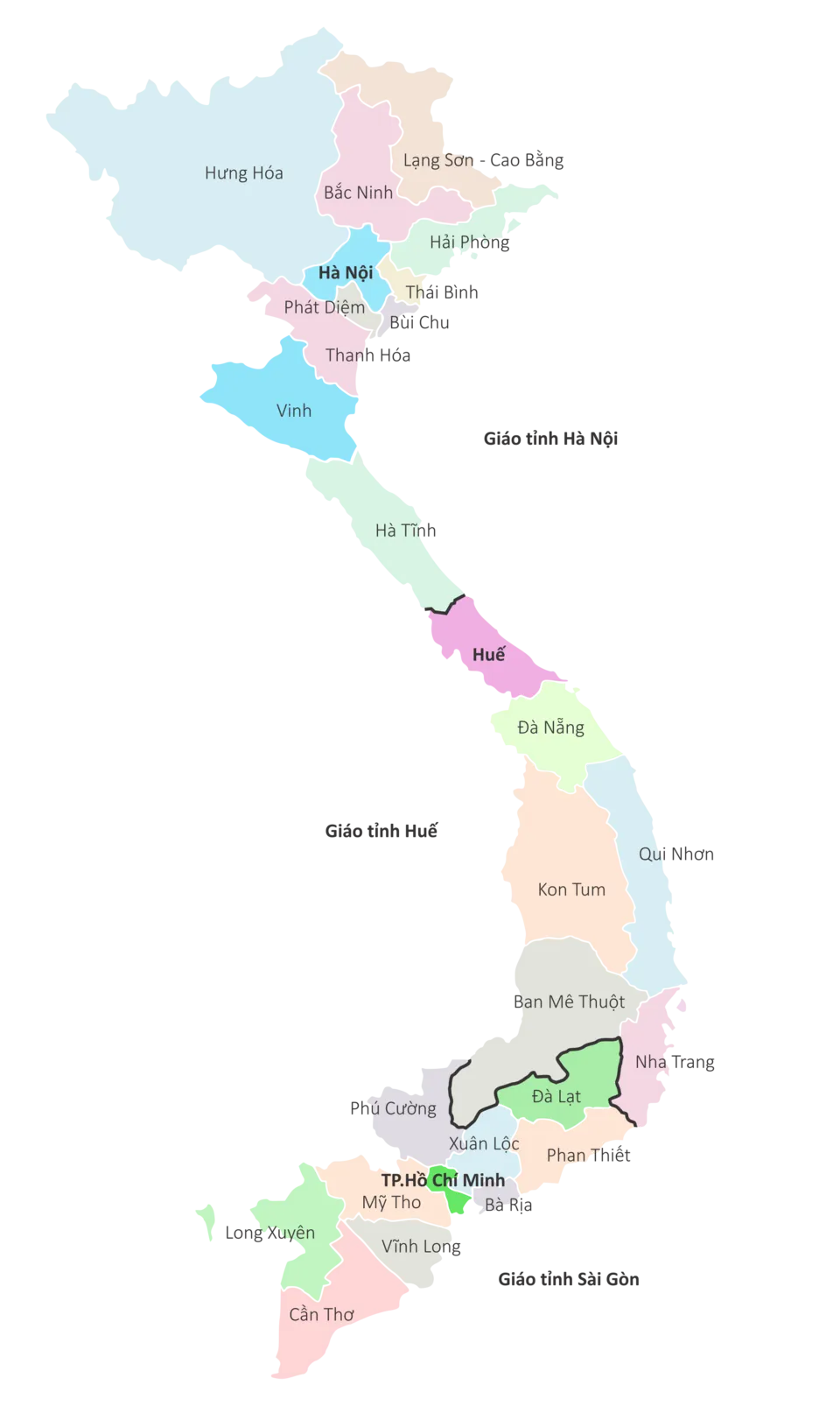
The three ecclesiastical provinces of Vietnam—Hanoi, Hue, and Ho Chi Minh City—form the backbone of the Catholic Church’s territorial organization in the country. Each province is centered around a metropolitan archdiocese and includes several suffragan dioceses, each playing a vital role in church administration, collectively covering the entire nation. This provincial structure aligns closely with Vietnam’s geographic regions: the northern mountains and Red River Delta, the central coastal strip and highlands, and the southern Mekong Delta and southeast.
Such organization facilitates coordinated pastoral planning, resource sharing, and episcopal collaboration through the Catholic Bishops’ Conference of Vietnam (CBCV). For a visual understanding, the Vietnam dioceses map clearly delineates these provincial boundaries and their alignment with national geography.
Northern Vietnam: The Ecclesiastical Province of Hanoi with 10 Dioceses
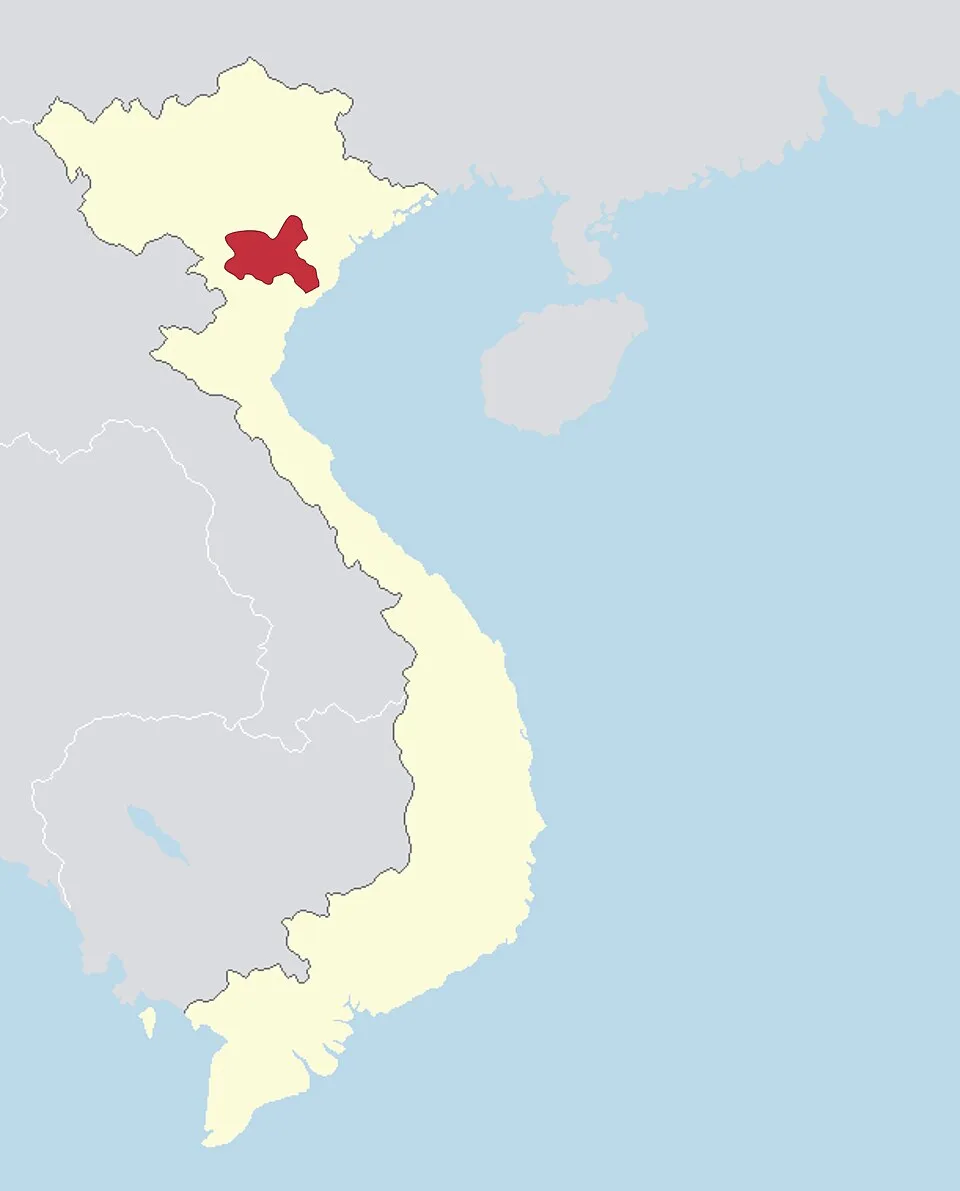
The Ecclesiastical Province of Hanoi encompasses the entire northern region of Vietnam, from the border with China down to the central highlands. Its metropolitan center, the Archdiocese of Hanoi, has been a spiritual hub since its establishment in 1659, making it one of the oldest Catholic jurisdictions in Asia. Based in the capital city, the archdiocese coordinates pastoral activities, hosts provincial synods, and provides guidance to its 10 suffragan dioceses.
These dioceses cover a diverse landscape that includes the densely populated Red River Delta, the mountainous northwest provinces such as Lao Cai and Ha Giang, and the northeastern border areas. The province’s boundaries ensure that even remote communities along the Chinese frontier receive regular sacramental and social support. The archdiocese itself manages numerous parishes, schools, and charitable institutions, setting a precedent for the entire northern province.
This province’s 10 dioceses represent the northern ecclesiastical jurisdiction, a number that reflects the deep historical roots of Catholicism in the north. Missionary activity began in the 16th century, with the Dominican and Jesuit orders establishing early communities in Hanoi, Bac Ninh, and other delta provinces. Over centuries, the faith took hold among the Kinh majority and various ethnic groups in the highlands.
The current distribution of dioceses ensures that the northern Catholic population, estimated to be significant but dispersed, has access to localized pastoral care. Each diocese maintains its own cathedral and curia, and the Catholic directory Vietnam facilitates finding parishes and diocesan offices, while these dioceses collaborate on regional initiatives such as clergy formation and lay leadership programs. The northern province’s structure demonstrates the Church’s commitment to serving both urban centers and isolated mountain villages, embodying the CBCV’s mission of integral evangelization.
Central Vietnam: The Ecclesiastical Province of Hue with 6 Dioceses
The Ecclesiastical Province of Hue covers central Vietnam, including the coastal provinces from Nghe An to Binh Thuan and the Central Highlands. Its metropolitan see, the Archdiocese of Hue, is located in the former imperial capital, a city rich in cultural heritage and historical significance. The archdiocese leads the province’s six suffragan dioceses, which serve a region known for its ethnic diversity, including the Cham, Ede, and other highland peoples.
The Central Highlands, in particular, have seen substantial growth in Catholic communities among indigenous groups, with dioceses like Kontum and Pleiku playing pivotal roles in inculturation and local evangelization. The province’s geography, characterized by mountain ranges and narrow coastal plains, presents unique challenges for pastoral outreach, requiring innovative approaches to transportation and communication.
With only 6 dioceses, this province is smaller than its northern and southern counterparts, a reflection of the region’s lower overall population density and the historical difficulties of mission work in the central highlands. Despite the smaller number, each diocese covers a vast area, often encompassing multiple provinces and remote villages. The Church in central Vietnam has a strong tradition of social service, operating hospitals, orphanages, and schools that serve both Catholic and non-Catholic populations.
The Province of Hue also fosters ecumenical and interreligious dialogue, given the presence of Buddhists, Cao Dai followers, and other religious groups. The metropolitan archdiocese organizes regular meetings of bishops and priests to address common pastoral concerns, ensuring that the Church’s voice is heard in the region’s socio-economic development.
Southern Vietnam: The Ecclesiastical Province of Ho Chi Minh City with 10 Dioceses
The Ecclesiastical Province of Ho Chi Minh City spans the southern part of Vietnam, including the Southeast region and the Mekong Delta. Its metropolitan archdiocese, based in the nation’s largest city, is the most populous Catholic jurisdiction in Vietnam and serves as the economic and administrative center of the province. The archdiocese coordinates the activities of its nine suffragan dioceses, which together number 10 dioceses in total.
This province covers a vast area that ranges from the urban sprawl of Ho Chi Minh City to the rural riverine provinces of the Mekong Delta such as Can Tho, My Tho, and Ca Mau. The diversity of contexts—from bustling metropolises to isolated delta hamlets—requires a flexible pastoral approach, with the archdiocese providing centralized support while respecting local adaptations.
The presence of 10 dioceses in the south mirrors the number in the north, a balance largely due to the mass migration of Catholics from the north after the 1954 partition, which swelled the southern Catholic population. Historical French colonial influence also contributed to the establishment of parishes and institutions in the south. Today, the province is known for its vibrant parish life, active lay movements, and extensive network of Catholic schools and hospitals.
The southern dioceses often engage in social justice initiatives, addressing issues like poverty, migration, and environmental concerns in the delta. The metropolitan archdiocese hosts annual gatherings of the province’s clergy and religious, fostering unity and shared mission across the diverse southern landscape. For insight into the spiritual heritage of these dioceses, one can explore the cathedrals of Vietnam dioceses, which stand as landmarks of faith and history.
Historical Background: The 1960 Establishment and 1980 Reorganization
- 1960: The diocesan hierarchy was formally established, creating 27 dioceses and three ecclesiastical provinces: Hanoi, Hue, and Ho Chi Minh City. This unified structure replaced earlier apostolic vicariates and aligned with Vietnam’s post-colonial administrative realities.
-
1980: A reorganization adjusted diocesan boundaries to better align with Vietnam’s geographic and administrative regions.
This refinement responded to demographic shifts and pastoral needs following the national reunification.
These two events fundamentally shaped the current geographical distribution of Vietnam’s dioceses. The 1960 establishment, occurring during a period of national transition, created a provincial structure that mirrored the country’s natural north-central-south divisions, with each province headed by a metropolitan archdiocese.
The 1980 reorganization, undertaken after the Vietnam War, fine-tuned boundaries to correspond with the new socialist administrative units and to accommodate the large-scale population movements, especially the influx of northern Catholics into the south. This resulted in the symmetrical allocation of 10 dioceses to both the northern and southern provinces, while the central province retained 6 dioceses due to its smaller Catholic population and more challenging terrain. The decisions were made in consultation with the Vatican’s Congregation for the Evangelization of Peoples, ensuring that the new boundaries served both administrative efficiency and evangelization goals.
The 1980 adjustments also involved elevating certain apostolic vicariates to dioceses, thereby increasing the number of dioceses in some areas to better serve growing Catholic communities. The historical evolution reflects the Church’s adaptability to political and social changes while maintaining a coherent pastoral framework under the CBCV.
Understanding this history explains why the provinces align so closely with Vietnam’s geographic regions and why the diocesan counts differ. For deeper analysis, see 27 dioceses Vietnam: historical reasoning.
The equal number of dioceses in the north and south (10 each) versus the center (6) is a striking pattern that reveals the impact of historical migrations on the Church’s territorial organization. After the 1954 partition, hundreds of thousands of Catholics fled the north for the south, balancing the demographic scales and leading to an equivalent number of dioceses in both regions. In contrast, the central region’s fewer dioceses reflect its lower Catholic density and the geographic challenges of the highlands.
For a complete directory of all 27 dioceses with their locations, parishes, and contact information, visit the official CBCV website at cbcvietnam.org/dioceses/. This resource provides up-to-date details for each diocese, including statistical data and pastoral contacts.