Among the 117 Vietnamese Martyrs canonized by Pope John Paul II in 1988, 59 were laypeople—ordinary men, women, families, and even children—whose stories of courage are essential to understanding the history of Vietnamese Catholicism. These lay faithful, often overlooked in favor of clerical figures, formed the backbone of the early Church, sustaining it through persecution by sheltering missionaries, teaching the faith underground, and embracing martyrdom with remarkable fortitude. The Vatican estimates that between 130,000 and 300,000 Christians were martyred in Vietnam from the 17th to 19th centuries (Catholic Bishops’ Conference of Vietnam, 2025), making this one of the largest collective witnesses in Church history.
- 59 of the 117 canonized martyrs were laypeople, including catechists, parents, and a 9-year-old child, per canonization records (Catholic.org, EWTN, 2022-2025).
- They sustained the early Church by sheltering missionaries, teaching faith underground, and sometimes cooperating with historical figures like Nguyen Anh (Catholic Bishops’ Conference of Vietnam, 2025).
- Their legacy lives on, inspiring modern Vietnamese lay leadership and councils as reported in 2022 (UCANews, 2022).
Who Were the Lay Vietnamese Martyrs?
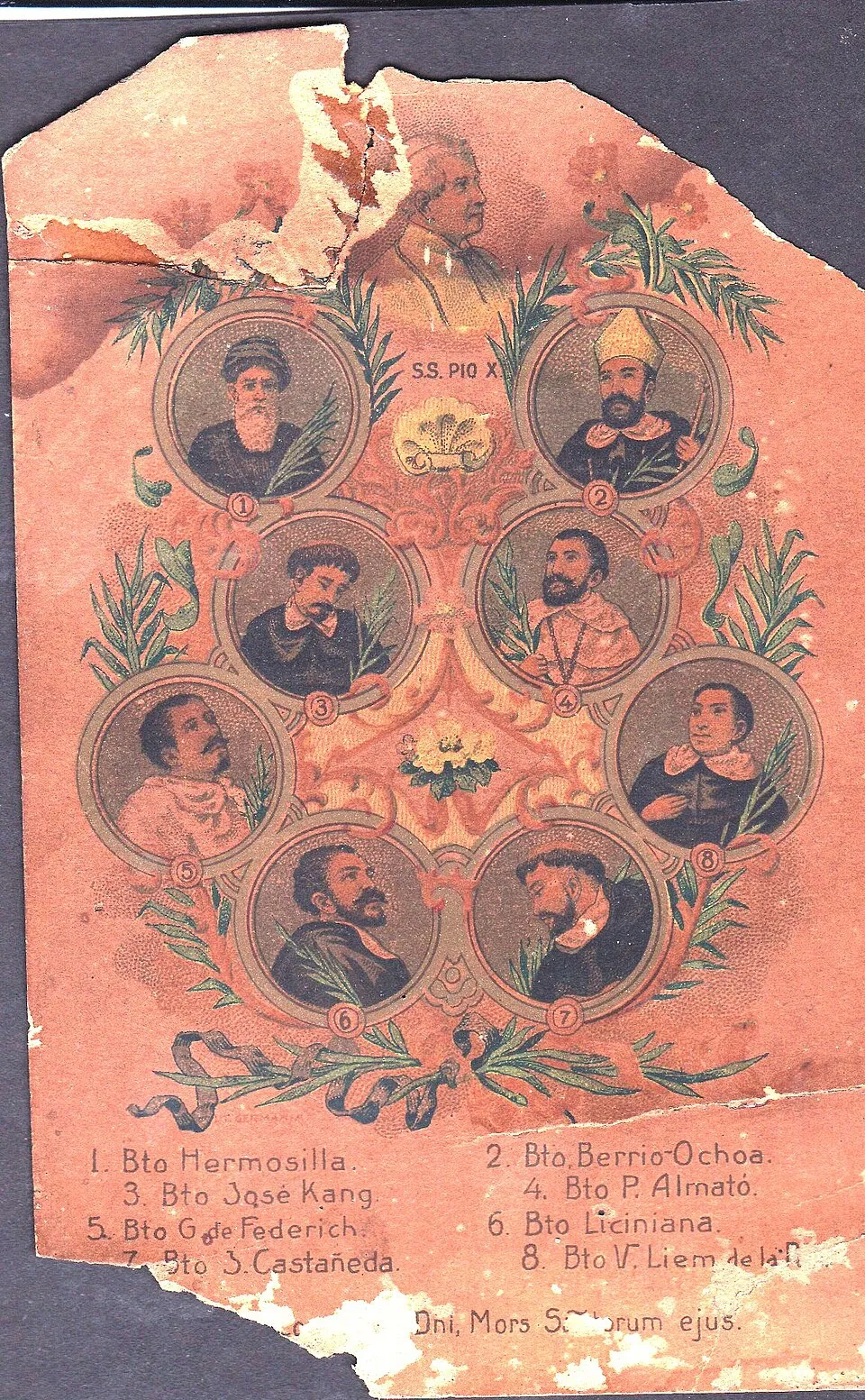
59 Lay Among 117 Canonized: Numbers and Breakdown
- Total canonized: 117 Vietnamese Martyrs were canonized on June 19, 1988, by Pope John Paul II in the 1988 ceremony and its lasting impact (Associated Press, 1988; The New York Times, 1988).
- Lay representation: 59 of the 117 canonized were laypeople, comprising just over half of the group (Catholic.org, EWTN, 2022-2025).
- Clerical composition: The remaining 58 included 8 bishops and 50 priests (Archdiocese of Hanoi, 2024).
- Lay demographics: The lay martyrs included men, women, entire families, and a 9-year-old child (linc-dio.solutiosoftware.com, 2020).
- Total canonized: 117 Vietnamese Martyrs were canonized on June 19, 1988, by Pope John Paul II (Associated Press, 1988; The New York Times, 1988).
- Lay representation: 59 of the 117 canonized were laypeople, comprising just over half of the group (Catholic.org, EWTN, 2022-2025).
- Clerical composition: The remaining 58 included 8 bishops and 50 priests (Archdiocese of Hanoi, 2024).
- Lay demographics: The lay martyrs included men, women, entire families, and a 9-year-old child (linc-dio.solutiosoftware.com, 2020).
This breakdown reveals that martyrdom was not confined to the clergy but permeated all levels of the Catholic community. The inclusion of a child underscores the totality of the persecution, which targeted even the youngest believers. The canonization of such a large lay group was unprecedented and highlighted the universal call to holiness and witness within the Vietnamese Church, adding to the spiritual legacy of Vietnamese saints.
Roles in the Early Church: Catechists, Parents, Villagers
- Catechists: Lay catechists secretly taught Christian doctrine to children and new converts, ensuring the faith could survive during bans (linc-dio.solutiosoftware.com, 2020).
- Parents: Mothers and fathers risked their lives to have their children baptized and to practice the faith at home, even under threat of persecution (Catholic Bishops’ Conference of Vietnam, 2025).
- Villagers: Entire communities hid missionaries in their homes and villages, creating a network of safety that allowed priests to continue their work (Catholic Bishops’ Conference of Vietnam, 2025).
- Punishment: Those caught often faced brutal torture, including being branded on the face with the words “tả đạo” (unorthodox religion) (Archdiocese of Hanoi, 2024).
These roles demonstrate how laypeople lived out their faith in practical, everyday ways that were essential for the Church’s survival. While clergy administered sacraments, the laity ensured the faith was taught, protected, and passed to future generations. Their contributions were not supplementary but foundational.
Comparison with Clerical Martyrs: Different Paths, Same Faith
Clerical martyrs—bishops and priests—focused on administering sacraments, preaching, and governing the Church, even at the cost of their lives. Lay martyrs, in contrast, embodied the faith in domestic and community settings: as parents nurturing baptismal grace, as catechists forming consciences, and as villagers offering refuge. Both groups faced identical persecutions under emperors like Minh-Mang, who in 1832 issued edicts banning Catholicism and ordering the destruction of churches, as part of Nguyễn Dynasty persecution (Nguyễn Dynasty, 1820s).
They endured torture and mutilation, including branding, beheading, and death by slow excision. The distinction lies not in the severity of suffering but in the context of their witness: clergy died for their sacred office, while laypeople died for living out their baptismal call in ordinary life. Together, they constitute a complete portrait of the Church as the Body of Christ, where every member’s sacrifice is equally precious.
Stories of Lay Courage: Profiles in Faith
St. Agnes Le Thi Thanh: Motherly Courage and Torture
Born in 1781, St. Agnes Le Thi Thanh was a Vietnamese laywoman and mother who became one of the most celebrated martyrs.
During the persecution under Emperor Cảnh Thịnh (1792–1802), she was arrested for harboring missionaries and refusing to renounce her faith. Her torturers subjected her to horrific treatments, including being bitten by snakes and having her flesh torn. Yet through it all, she maintained a serene composure.
When asked about her wounds, she famously called them “red roses”—a testament to her belief that suffering united her to Christ’s passion. Her story exemplifies the maternal courage of laywomen who protected both their families and the wider Church. She was canonized among the 117 in 1988 (Nelson MCBS, 2025).
Andrew of Phú Yên: The Young Protomartyr
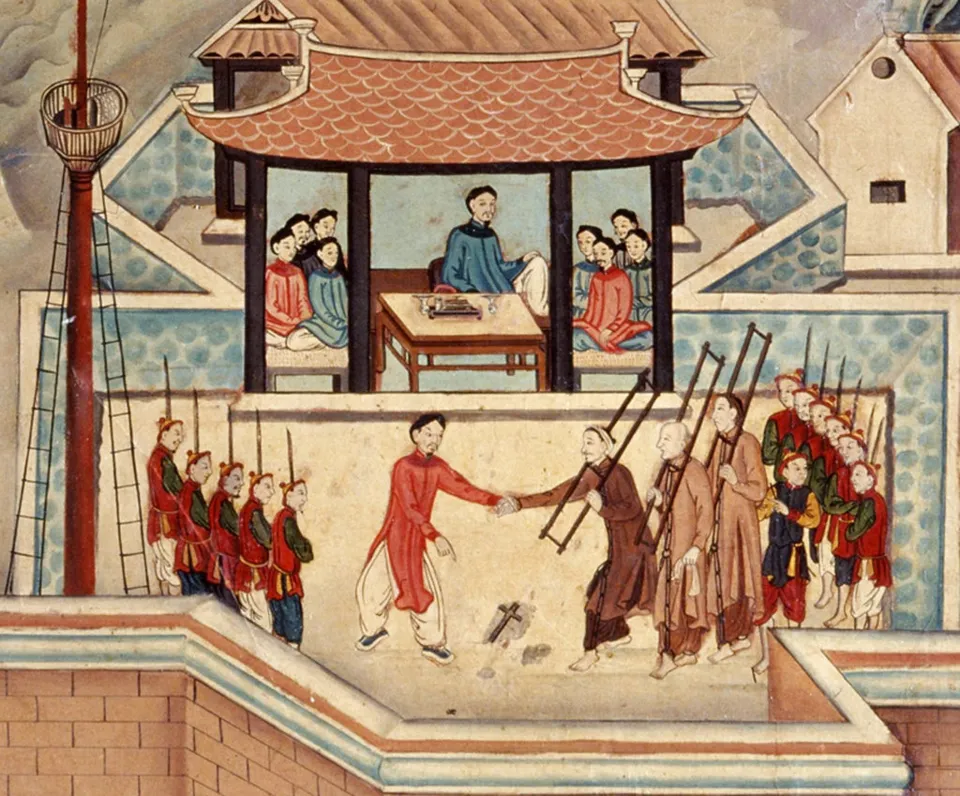
Andrew of Phú Yên holds the distinction of being the protomartyr of Vietnam, executed on July 26, 1644, at the age of 19, marking the start of a chronology of Vietnamese martyrs that spans centuries. Born in the coastal region of Phú Yên, he was a young layman who served as a catechist and assisted missionaries in a time when Christianity was still new to the region. His arrest came after he refused to trample on a cross, a common test of loyalty demanded by authorities.
Andrew’s steadfast refusal and subsequent beheading marked the beginning of a long lineage of Vietnamese martyrs. His feast day is celebrated locally on July 26, separate from the November 24 feast of the larger group (CatholicSaints.info, 2025). Andrew’s story shows that lay witness, including from youth, has been integral to Vietnamese Catholicism from its earliest days.
The 9-Year-Old Martyr: Innocence and Faith
Among the 117 canonized martyrs is a child of just nine years old, whose name is not recorded in the official lists but whose sacrifice is commemorated. This young martyr’s story illustrates the extreme lengths of the persecution, which spared no one regardless of age. Children were often targeted to break the spirit of families and communities.
The fact that a child was willing to die rather than renounce faith speaks volumes about the depth of religious conviction within Vietnamese Catholic families. It also highlights the role of children as witnesses, not merely passive victims. Their innocence and courage became a powerful testimony that inspired others to remain steadfast (linc-dio.solutiosoftware.com, 2020).
Families Who Sheltered Priests: Risks and Sacrifices
- Safe houses: Lay families converted their homes into hidden rooms and secret chapels where missionaries could celebrate Mass and administer sacraments (Catholic Bishops’ Conference of Vietnam, 2025).
- Collective punishment: If authorities discovered a hidden priest, they often executed or tortured the entire household, including children (Archdiocese of Hanoi, 2024).
- Community networks: These families operated within larger village networks, with neighbors alerting each other of patrols and sharing resources (linc-dio.solutiosoftware.com, 2020).
- Example: While specific names are often lost, the canonization records include entire families who were martyred together for harboring clergy (Catholic.org, EWTN, 2022-2025).
The familial dimension of martyrdom reveals that the early Vietnamese Church was built on household units. By sheltering priests, lay families became the logistical backbone of the Church, enabling the sacramental life to continue despite bans. Their sacrifice was not isolated but communal, reflecting the deeply relational nature of Vietnamese society and faith.
How Lay Martyrs Sustained the Early Church
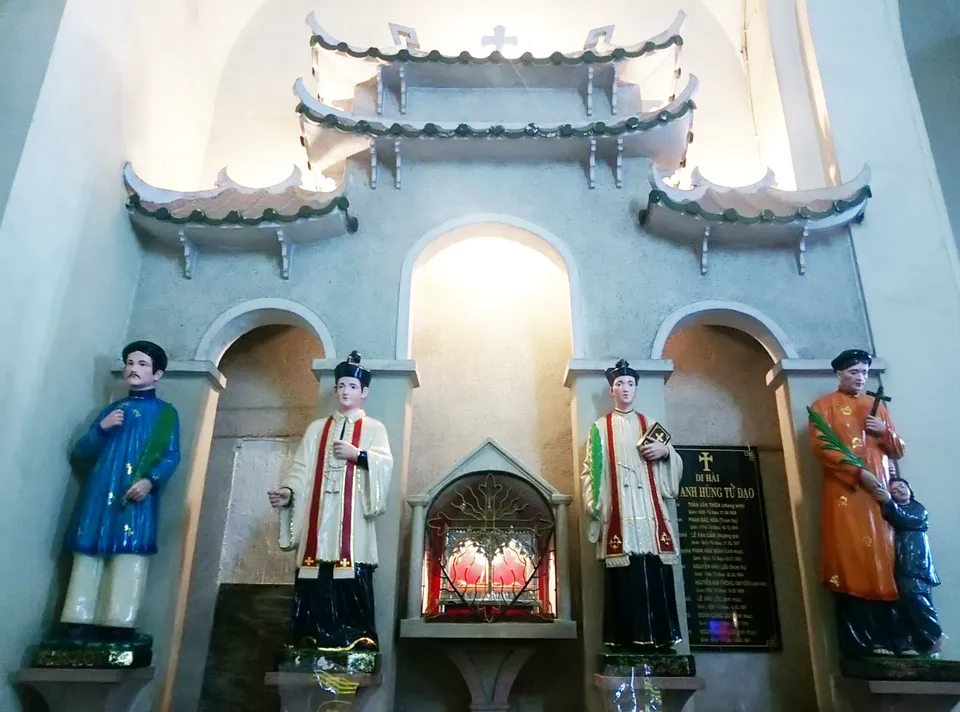
Sheltering Missionaries: Networks of Safety
- Hidden rooms and secret passages: Lay artisans constructed concealed spaces in homes, barns, and even under floors to hide missionaries from imperial patrols (Catholic Bishops’ Conference of Vietnam, 2025).
- Rural refuges: Remote villages in the mountains and deltas became sanctuaries where missionaries could live among sympathetic Catholic communities (Archdiocese of Hanoi, 2024).
- Cooperation with religious orders: Lay supporters worked closely with Dominican and MEP missionaries, providing food, intelligence, and escape routes during times of heightened persecution (Catholic Bishops’ Conference of Vietnam, 2025).
- Use of local knowledge: Villagers used their familiarity with the terrain to guide missionaries through hidden paths and across borders to safer regions (linc-dio.solutiosoftware.com, 2020).
These clandestine networks were the lifeline that allowed the priesthood to survive in Vietnam. Without the laity’s ingenuity and bravery, the Church would have been unable to maintain a native or missionary clergy. The lay faithful essentially became the Church’s infrastructure, turning ordinary homes into sanctuaries and villages into fortresses of faith.
Underground Catechesis: Passing Faith to Children
- Secret schools: In homes and hidden clearings, lay catechists taught children prayers, catechism, and scripture, often using memorization to avoid written records (Catholic Bishops’ Conference of Vietnam, 2025).
- Family instruction: Parents were the primary educators of the faith, instructing their children in private gatherings and during daily chores (Archdiocese of Hanoi, 2024).
- Youth involvement: The 9-year-old martyr exemplifies how children were not only recipients but also witnesses to the faith, sometimes even teaching younger siblings (linc-dio.solutiosoftware.com, 2020).
- Preservation of identity: This underground education ensured that Vietnamese Catholicism retained its distinct cultural expressions while remaining orthodox (Catholic Bishops’ Conference of Vietnam, 2025).
- Link to the 9-year-old martyr: The child’s martyrdom underscores the success of this underground catechesis—children understood the faith deeply enough to choose death over apostasy.
Through these efforts, the laity guaranteed the intergenerational transmission of faith. Even when churches were destroyed and priests exiled, the faith lived on in family rooms and village squares. This educational role was arguably as critical as the sacramental ministry of clergy, for without it, the Church would have died out within a generation.
Cooperation with Nguyen Anh: Political Alliances for Survival
During the Tây Sơn rebellion (1771–1802), Vietnam experienced widespread chaos that devastated many Catholic communities. However, some lay Catholics supported Nguyen Anh (later Emperor Gia Long) in his struggle against the Tây Sơn regime. This cooperation was not merely political but strategic: Nguyen Anh, grateful for the assistance of French Vicar Apostolic Pigneaux de Behaine and Catholic supporters, issued protections for missionaries after his victory in 1802, which facilitated the rise of indigenous clergy and religious in Vietnam.
This period of relief allowed the Church to revive and rebuild, setting the stage for the eventual establishment of a native hierarchy. Lay involvement in these political alliances demonstrates that Vietnamese Catholics were not passive victims but active agents who navigated complex power dynamics to safeguard their faith (Catholic Bishops’ Conference of Vietnam, 2025).
Legacy in Modern Vietnam: Lay Leaders Inspired by Martyrs
The spirit of the lay martyrs continues to shape Vietnamese Catholicism today. A 2022 report by UCANews highlighted the growth of lay councils and apostolates across Vietnam’s 27 dioceses, where lay men and women take on leadership roles in catechesis, charity, and parish administration. These modern leaders explicitly draw inspiration from the martyrs, seeing their own service as a continuation of the same witness.
The Catholic Bishops’ Conference of Vietnam (CBCV) has actively promoted lay empowerment, recognizing that the Church’s vitality depends on the active participation of the faithful, just as it did during the persecutions. This legacy transforms the martyrs from historical figures into living models for contemporary mission.
The Vietnamese Martyrs were not a clerical phenomenon but a people’s movement of faith. Ordinary families and individuals—the lay faithful—were the primary witnesses, forming the resilient backbone of the Church through their daily courage and communal support. Their legacy endures today in the vibrant lay leadership across Vietnam’s 27 dioceses.
To deepen your understanding of how these martyrs shaped the broader History of Vietnamese Catholicism, explore the comprehensive resources on the Catholic Bishops’ Conference of Vietnam website. Consider supporting modern lay apostolates in Vietnam through prayer or donation, helping to continue the mission that the martyrs so valiantly defended.