The Catholic martyrs of Vietnam comprise 117 individuals canonized by Pope John Paul II on June 19, 1988, who died between 1745 and 1862. They represent a fraction of the estimated 130,000 to 300,000 Vietnamese Catholics martyred from the 17th to 19th centuries. Their feast day is celebrated annually on November 24.
These martyrs, including both Vietnamese faithful and foreign missionaries, stand as powerful witnesses to faith amid persecution. This article traces their chronological history, examining the timeline of canonization, the scale of martyrdom across four centuries, and the early missionary arrival that set the stage for centuries of Catholic presence in Vietnam. The story of the Vietnamese Martyrs is integral to the broader History of Vietnamese Catholicism, reflecting the enduring strength of the faith in the face of adversity.
- 117 Vietnamese Martyrs were canonized by Pope John Paul II on June 19, 1988, representing both known and unknown martyrs.
- The feast day honoring all Vietnamese Martyrs is celebrated annually on November 24.
- Estimates suggest between 130,000 and 300,000 Vietnamese Catholics were martyred from the 17th to 19th centuries.
The 117 Canonized Vietnamese Martyrs: 1745-1862 Timeline
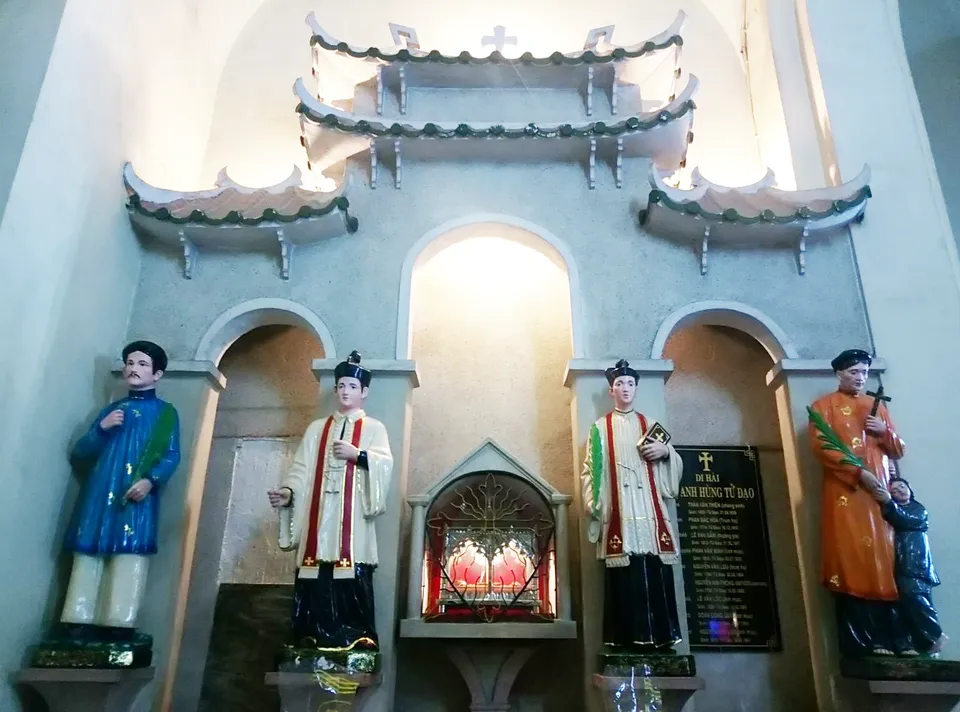
The 117 canonized Vietnamese Martyrs represent the most well-documented witnesses of the broader persecution. Their lives and deaths span the period from 1745 to 1862, covering the most intense phases of anti-Christian violence in Vietnam. This section examines the canonization event, the timeline of persecution, and the composition of this iconic group.
June 19, 1988 Canonization and November 24 Feast Day
On June 19, 1988, Pope John Paul II canonized 117 Vietnamese Martyrs in a historic ceremony at St. Peter’s Square, Vatican City. This event elevated these witnesses of faith to the status of saints in the Catholic Church.
The canonization recognized individuals who died between 1745 and 1862 during periods of intense persecution in Vietnam. The Pope deliberately chose to canonize this group as a single body rather than individually, emphasizing their collective witness and the vast number of unnamed martyrs they represent. This decision reflected the Vietnamese tradition of honoring ancestors and community.
The feast day for these martyrs was established as November 24 each year. This date was selected to commemorate the martyrs’ sacrifice and to provide a unified celebration for the Vietnamese Catholic community worldwide. The feast day honors not only the 117 canonized saints but also the estimated 130,000 to 300,000 other Vietnamese Christians who died for their faith.
For the Catholic Church in Vietnam, this canonization and feast day serve as powerful reminders of the faith’s deep roots and the cost of discipleship. The martyrs became patron saints of Vietnam, offering inspiration and intercession for the local Church and the Vietnamese people.
The canonization ceremony in 1988 was attended by thousands of Vietnamese Catholics from around the world, including many descendants of the martyrs. It marked a significant moment of recognition for the Vietnamese Church’s suffering and resilience. Pope John Paul II, in his homily, highlighted the martyrs’ “heroic virtue” and their “witness to Christ” that transcended cultural and political boundaries.
The inclusion of both Vietnamese and foreign missionaries in the canonization underscored the universal nature of the Church and the shared sacrifice across cultures. For more details on the ceremony, see the 1988 canonization ceremony and its lasting impact.
The feast day of November 24 is celebrated with special Masses, processions, and prayers in Vietnam and in Vietnamese diaspora communities worldwide. It serves as an annual opportunity to remember the martyrs’ legacy and to renew commitment to faith.
In Vietnam, despite historical restrictions, the feast day is now openly celebrated in registered Catholic churches, reflecting improved religious freedom conditions in recent years. The martyrs’ story continues to attract pilgrims to sites associated with their lives and deaths, such as the former apostolic vicariates of Tonkin and Cochinchina.
Timeline of Persecution: 1745-1862
The persecution of Vietnamese Catholics unfolded in distinct waves over more than a century. Understanding these periods helps contextualize the martyrdoms of the 117 canonized saints.
| Period | Description | Significance |
|---|---|---|
| 1745-1797 | Early martyrdoms under Nguyễn and Trịnh lords. Sporadic but intensifying persecution. Included Vietnamese catechists, priests, and foreign missionaries. | Beginning of systematic state-sponsored persecution. Established patterns of martyrdom for over a century. |
| 1798-1861 | Most severe persecution under Emperors Gia Long and Minh Mạng. Thousands executed, exiled, or dispossessed. Churches destroyed, missionaries expelled. | Peak of martyrdom; majority of the 117 canonized died here. Strengthened Catholic identity through heroic witness. |
| 1857-1862 | Final wave under Emperor Tự Đức. 115 native Vietnamese martyred including bishops and priests. Coincided with French military pressure. | Produced many well-documented martyrs. Marked end of large-scale persecution as French protectorate began. |
These three periods illustrate the escalating intensity of persecution that Vietnamese Catholics endured. The martyrs’ willingness to die rather than renounce their faith became a defining characteristic of the Vietnamese Church.
The final period, 1857-1862, saw the highest concentration of martyrdoms and directly preceded the end of independent Vietnamese persecution with the establishment of French colonial rule. The canonized martyrs represent all three periods, with the largest group from the 1798-1861 era of Minh Mạng’s persecutions.
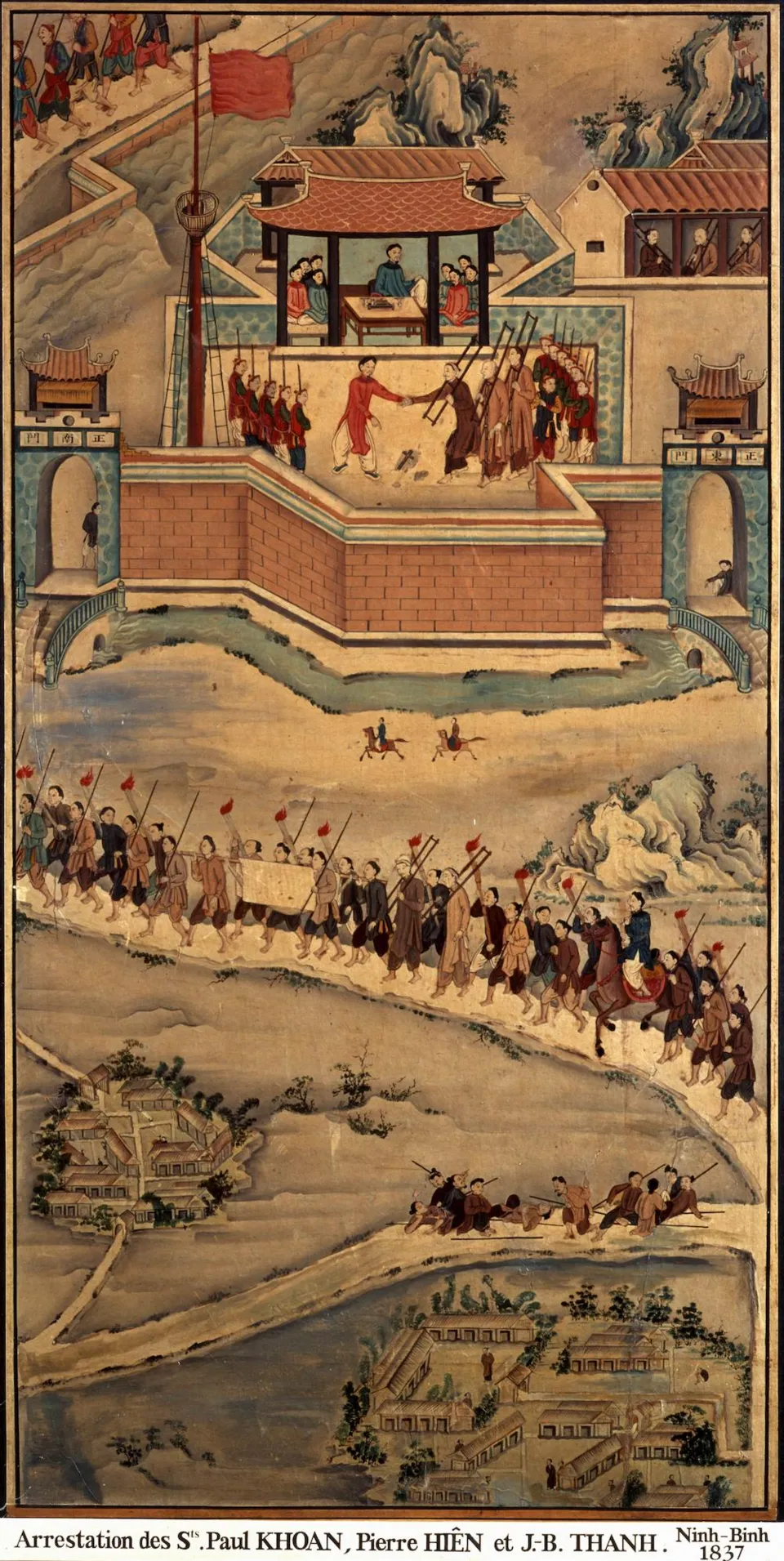
The table format provides a clear overview, but behind each entry lie countless individual stories of courage and sacrifice. For example, during the 1798-1861 period, Emperor Minh Mạng issued a series of anti-Christian edicts that ordered the destruction of churches, the expulsion of missionaries, and the forced apostasy of Vietnamese Christians. Those who refused faced execution by beheading, strangulation, or crucifixion.
The sheer number of martyrs from this era—estimated in the thousands—demonstrates the systematic nature of the persecution. Yet, these martyrdoms only strengthened the resolve of the surviving community, creating a culture of heroic fidelity that would characterize Vietnamese Catholicism for generations. For a deeper examination of the Nguyễn Dynasty’s role in these persecutions, consult Nguyễn Dynasty Persecution: How Imperial Edicts Shaped Catholic Martyrdom.
Who Were the 117? Vietnamese and Foreign Missionaries United
The 117 canonized Vietnamese Martyrs represent a diverse group united by their common sacrifice. Their composition reflects both the indigenous growth of the Church in Vietnam and the international missionary effort that established it.
- Vietnamese clergy: Including bishops, priests, and seminarians who provided spiritual leadership. Notable figures include Bishop Pierre Lambert de la Motte (though French, he worked extensively in Vietnam) and indigenous bishops like Bishop Jean-Louis Taberd’s companions. Vietnamese priests such as Andrew Dung-Lac (after whom one is named) served as pastors and catechists. Many were vicars apostolic overseeing vast territories with limited resources. They provided sacraments and guidance during times of crisis, often at great personal risk.
- Vietnamese laity: Men, women, and children from all walks of life—farmers, catechists, mothers, and even young people like the 9-year-old martyr mentioned in historical records. Vietnamese laity: Men, women, and children—including 59 laypeople who constitute over half the canonized group—witnessed to their faith through refusal to apostatize, even under torture. Among them were catechists who had received some formal religious education and served as bridges between missionaries and local communities. Their fidelity often inspired others and sustained the Church when clergy were absent.
- Spanish Dominicans: Missionaries from the Dominican Order who came from Spain via the Philippines. They were among the earliest European missionaries in Vietnam and played a crucial role in establishing the Church in the 17th century. Several Spanish Dominicans were among the first martyrs, including those who arrived with the first missions in the 1500s and 1600s. Their dedication to evangelization and their willingness to embrace martyrdom set a powerful example.
- French missionaries: Including members of the Paris Foreign Missions Society (Missions Étrangères de Paris) and other French religious orders. They arrived in the 17th and 18th centuries and sustained the mission through difficult periods. Many French bishops and priests were martyred during the persecutions, particularly under Minh Mạng. Their sacrifice demonstrated the international dimension of the Church’s mission and the solidarity of missionaries with the local faithful.
This diversity underscores that the Vietnamese Church was never merely a foreign implant but a true local church with indigenous leadership and lay participation, supported by international missionary collaboration. The 117 martyrs came from both northern Vietnam (Tonkin) and southern Vietnam (Cochinchina), showing the geographic spread of the faith. Their united witness demonstrates that martyrdom knows no cultural or national boundaries; all who bear witness to Christ become one in the Body of Christ.
The canonization of this mixed group as a single body emphasizes the Vietnamese Church’s catholicity—its universality and unity amid diversity. The diversity of the 117 martyrs is explored further in Vietnamese Saints: Spiritual Legacy and Liturgical Veneration.
How Many Vietnamese Martyrs Were There? 130,000-300,000 Across Four Centuries?
The staggering number of Vietnamese Catholic martyrs raises questions about how such estimates are derived and what they mean for understanding the Church’s history in Vietnam. This section examines the scale of martyrdom, the four-century timeline, and the reasons behind Catholicism’s early spread that made such large-scale persecution possible. Understanding these numbers requires examining both the historical records and the methodological challenges of estimating martyrdom in pre-modern societies.
Estimating the Numbers: 130,000 to 300,000 Vietnamese Catholics Martyred
The estimated number of Vietnamese Catholic martyrs ranges from 130,000 to 300,000 according to Vatican sources and historical scholarship. These figures represent all Christians killed for their faith in Vietnam from the 17th through the 19th centuries. The wide range reflects the difficulty of precise documentation given the chaotic circumstances of persecution, the destruction of records, and the often-mass nature of executions.
The estimates are derived from multiple sources: missionary reports, diocesan archives, Vietnamese historical records, and oral traditions. Scholars have cross-referenced these sources to arrive at plausible totals.
The lower bound of 130,000 is cited in recent Catholic publications including Vatican News (2024) and Catholic World Report (2025). The higher estimate of 300,000 appears in some historical accounts and represents the upper limit of scholarly consensus.
It is important to understand that the 117 canonized martyrs are not the total but a representative sample. Pope John Paul II deliberately chose to canonize a manageable number that could be individually recognized while symbolizing the vast multitude of unnamed martyrs. The canonization process involved extensive historical verification of each candidate’s death “in odium fidei” (in hatred of the faith).
The 117 were selected from among thousands of known cases to represent different time periods, geographic regions, and states of life (clergy, religious, laity). The selection process for the 117 canonized martyrs is detailed in The 117 Vietnamese Martyrs: Historical Context and Selection for Canonization.
These numbers underscore the extraordinary scale of sacrifice made by Vietnamese Catholics. For perspective, the estimated 130,000 to 300,000 martyrs over four centuries means an average of thousands per year—a staggering testament to the cost of faith in Vietnam’s history. The figures also highlight that martyrdom was not a one-time event but a persistent reality across generations.
Families and communities passed down stories of persecution, creating a living memory of sacrifice that shaped Vietnamese Catholic identity. The high number of martyrs relative to the total Catholic population at the time (which was much smaller than today’s 7 million+) indicates the intensity of the persecution and the willingness of Vietnamese Christians to die rather than renounce their faith.
Four Centuries of Martyrdom: 17th to 19th Century Timeline
The period of Vietnamese Catholic martyrdom spanned approximately four centuries, beginning in the 17th century and extending through the 19th century. This timeline reflects the entire era of sustained persecution from the first missionary arrivals until the establishment of French colonial protection.
During the 17th century (1600s), the first Catholic communities were established by Portuguese and French missionaries. Initial tolerance gradually turned to suspicion and then open hostility as Christianity was seen as a foreign threat to traditional Confucian order and royal authority.
The earliest martyrs died in this century, though records are sparse. These early witnesses set a pattern of fidelity that would inspire later generations.
The 18th century (1700s) saw increasing persecution as Vietnamese dynasties consolidated power and viewed Christianity with greater alarm. The period 1745-1797 marked the beginning of more systematic anti-Christian campaigns.
Many of the early canonized martyrs died during this time, setting patterns of witness that would continue. The century closed with the Tây Sơn rebellion, which temporarily reduced persecution but did not end it.
The 19th century (1800s) witnessed the most intense and widespread persecution. Under the Nguyễn Dynasty emperors Gia Long, Minh Mạng, and Tự Đức, anti-Christian edicts were enforced with brutal efficiency.
This century produced the majority of the 117 canonized martyrs, especially during the peak years 1798-1861 and the final wave 1857-1862. The persecution only began to subside after the French established a protectorate in the 1860s, which provided some legal protection for Christians.
The four-century span demonstrates that Catholic martyrdom in Vietnam was not an isolated historical episode but a sustained test of faith across multiple generations. Each century built upon the legacy of the previous, creating a deep tradition of witness that continues to inspire Vietnamese Catholics today.
The longevity of persecution—spanning 1600s through 1800s—makes the Vietnamese experience one of the longest continuous periods of martyrdom in modern Church history, comparable to Japan or China. For a comprehensive overview of Vietnamese Catholic history, including the rise of indigenous clergy, see Vietnamese Catholic History: The Rise of Indigenous Clergy and Religious.
Why Did Catholicism Spread? Early Missionary Arrival in the 1600s
Catholicism spread in Vietnam despite persecution because it arrived early via Portuguese and French missionaries in the 1600s, a foundational period examined in the History of Vietnamese Catholicism. Key factors include:
- Early missionary activity (1500s-1600s): Portuguese Dominicans and Franciscans were the first to bring Catholicism to Vietnam’s coastal regions in the late 16th century. They were soon joined by French Jesuits and members of the Paris Foreign Missions Society in the early 1600s. These missionaries learned Vietnamese, developed writing systems for the language (using Latin script), and produced religious texts including catechisms and dictionaries. Their linguistic work facilitated evangelization and allowed Vietnamese to access scripture in their own language.
- Strategic evangelization in northern Vietnam: Missionaries focused on the Red River Delta regions of Nam Dinh and Thai Binh, as well as the Hanoi area. These densely populated regions provided fertile ground for conversion. The faith spread through family networks and village communities, often starting with marginalized groups and then moving upward socially. By the 18th century, entire villages had converted, creating strongholds of faith that could withstand persecution.
- Indigenous clergy development: By the 17th century, Vietnamese men were being ordained as priests and trained as catechists. This indigenous leadership ensured the Church could survive even when foreign missionaries were expelled or killed. Figures like Andrew Dung-Lac (ordained 1824) exemplify this native clergy who provided sacraments and guidance during times of crisis. The training of local catechists created a lay leadership structure that was less vulnerable to external attacks.
- Cultural adaptation: Missionaries adapted Catholic teachings to Vietnamese cultural contexts while maintaining doctrinal integrity. They used familiar familial and social metaphors that resonated with Vietnamese Confucian values, such as emphasizing respect for parents and ancestors (though not worship). This approach made the faith feel less foreign and more compatible with local identity.
- Community resilience: Christian villages formed tight-knit communities that supported each other during persecutions. Families passed down faith through generations, creating a lay-led Church structure that could endure without priests. The tradition of house churches and secret worship spaces allowed continuity even when public worship was banned.
- Perception of moral integrity: Catholic teachings on family values, charity, and honesty attracted many Vietnamese, especially among the lower classes who appreciated the Church’s care for the poor and sick. The moral example of missionaries and early converts drew others to the faith, creating organic growth that could not be suppressed by force alone. Women played a particularly vital role in transmitting the faith within families and communities, often serving as catechists and spiritual leaders at the household level.
These factors combined to create a robust, indigenous Church that could withstand centuries of persecution and emerge as a significant religious minority in modern Vietnam. The early arrival in the 1600s meant that by the time severe persecution began in the late 18th century, there were already well-established Christian communities with deep roots.
The faith had become part of family identity for thousands of Vietnamese, making it impossible to eradicate through persecution alone. The role of lay faithful, including those who sheltered missionaries, is covered in Vietnamese Martyrs: The Untold Stories of Lay Faithful.
The most surprising finding is that the 117 canonized Vietnamese Martyrs represent only a tiny fraction—likely less than 0.2%—of the estimated 130,000 to 300,000 total martyrs. This vast discrepancy highlights how many faithful witnesses remain unnamed in official records, their sacrifices known only to God and local memory. The canonized saints serve as representatives of this immense cloud of witnesses, reminding us that the cost of faith in Vietnam was borne by hundreds of thousands over four centuries.
Their feast day on November 24 offers an annual opportunity to honor their memory and reflect on the cost of discipleship. In an era of religious freedom for Vietnamese Catholics, the martyrs’ example continues to inspire courage and fidelity. Their story reminds us that faith, once planted deeply, can endure even the most intense opposition.
To learn more about the Vietnamese Martyrs and their ongoing legacy, visit the Catholic Bishops’ Conference of Vietnam’s official website at https://www.cbcvietnam.org/history-of-vietnamese-catholicism/. There you will find detailed histories, information about the feast day celebrations, and resources for deeper understanding of this remarkable chapter in Church history.
Frequently Asked Questions About Catholic Martyrs Vietnam
Is Nguyen Van Thuan a saint?
He died in Rome at age 74 in 2002, and his cause for canonization began soon after. He was declared venerable by Pope Francis in 2017. Van Thuan's rules began with the Catholic community that nurtured him.
Why is Catholicism so big in Vietnam?
Catholicism was brought to Vietnam by Portuguese and French Catholic missionaries wayyyy before French colonization. Catholicism came in the 1600's, French colonization was in the 1800's. Most of the French missionaries heavily evangelized north Vietnam such as Nam Dinh and Thai Binh.
How many Catholic martyrs were there in Vietnam?
The Vatican estimates the number of Vietnamese martyrs at between 130,000 and 300,000. John Paul II decided to canonize both those whose names are known and unknown, giving them a single feast day.
What country is 100% Catholic?
The country with the largest percentage of its population having membership in the church is Vatican City at 100%, followed by Timor-Leste at 97%. According to the World Christian Database, there are 1.279 billion Catholics worldwide as of 2026, which constitute 47.8% of 2.674 billion Christians.