Bishop Joseph Đỗ Quang Khang is the current Bishop of the Diocese of Bắc Ninh, a role he has held since his appointment on June 17, 2023. This profile outlines his leadership, his pivotal work reforming priestly formation across Vietnam, and his biblical-based advocacy for the poor, clarifying that his episcopal see is Bắc Ninh, not Phát Diệm.
- He has led the Diocese of Bắc Ninh as bishop since June 2023, after serving as Coadjutor from 2021.
- He chairs the CBCV Commission for Clergy and Seminarians, spearheading the national revision of priestly formation guidelines.
- His pastoral approach integrates biblical theology with a strong call for the Church to serve the poor and marginalized.
Bishop Joseph Đỗ Quang Khang’s Current Episcopate and Leadership
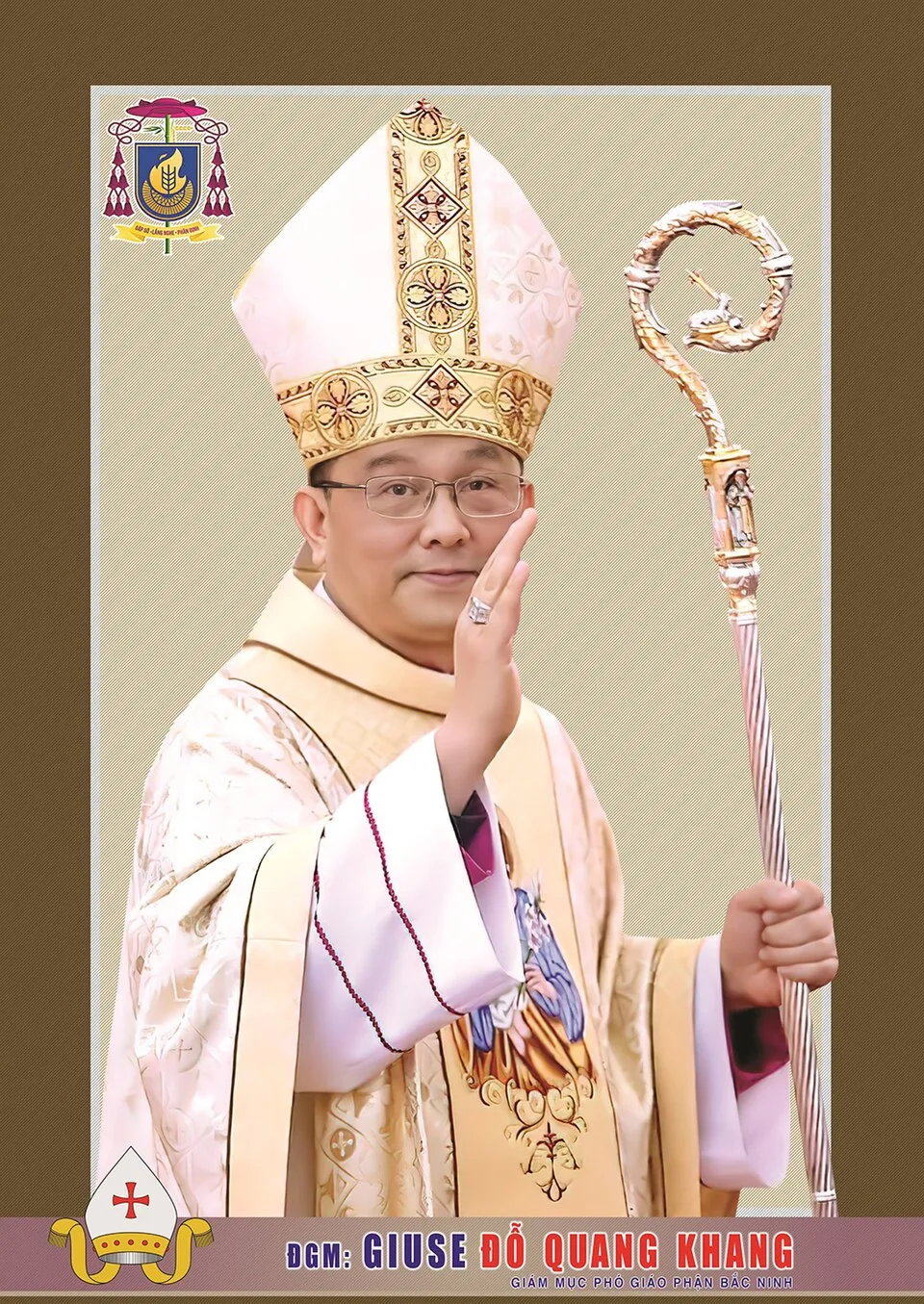
Bishop Joseph Đỗ Quang Khang’s primary identity is as the ordinary of the Diocese of Bắc Ninh, one of Vietnam’s historic Catholic centers located in the Red River Delta region, alongside dioceses like Bùi Chu led by Bishop Joseph Nguyễn Văn Bình. His appointment in June 2023 followed a two-year period as Coadjutor Bishop, a canonical arrangement that ensured smooth succession and continuity in diocesan leadership. This timeline reflects the Catholic Church’s careful planning for episcopal transitions in Vietnam’s vibrant yet complex religious landscape.
Appointment Timeline: From Coadjutor to Bishop of Bắc Ninh
The progression of Bishop Khang’s ecclesiastical appointments follows a clear, deliberate pattern:
| Milestone | Date | Significance |
|---|---|---|
| Born | November 7, 1965 | Thu Duc, Ho Chi Minh Ville |
| Ordained Priest | June 30, 1999 | Began pastoral ministry |
| Appointed Coadjutor Bishop of Bắc Ninh | October 2021 | Named to assist and succeed |
| Ordained Bishop | December 14, 2021 | Episcopal consecration |
| Appointed Bishop of Bắc Ninh | June 17, 2023 | Assumed full leadership |
The coadjutor period from October 2021 to June 2023 allowed Bishop Khang to work alongside his predecessor, learn the specific pastoral needs of Bắc Ninh’s approximately 150,000 Catholics, and build relationships with clergy and laity before assuming sole responsibility. This transitional model has become standard practice in Vietnam to ensure diocesan stability during leadership changes, as implemented in dioceses such as Hưng Hóa under Bishop Joseph Nguyễn Văn Tạo.
Episcopal Motto: “Occurrere – Auscultare – Discernere” and Its Meaning
Bishop Khang’s episcopal motto, “Occurrere – Auscultare – Discernere” (To Meet, To Listen, To Discern), encapsulates his pastoral methodology. Each Latin verb represents a sequential step in his approach to ministry and governance.
To Meet signifies proactive engagement. Rather than remaining in the chancery, Bishop Khang emphasizes going out to encounter his flock—visiting parishes, meeting with clergy, and entering into dialogue with the marginalized. This reflects the biblical model of Christ who “went about doing good” (Acts 10:38).
To Listen follows as the essential companion to meeting. In an era of rapid communication, Bishop Khang prioritizes attentive, empathetic listening.
This means hearing not just surface concerns but the deeper spiritual and practical needs of individuals and communities. His sermons frequently stress that authentic listening requires setting aside preconceptions and truly hearing the other.
To Discern completes the triad. After meeting and listening, Bishop Khang emphasizes prayerful discernment—seeking the Holy Spirit’s guidance before making decisions. This Benedictine-influenced approach ensures that his leadership, while informed by data and consultation, remains rooted in spiritual reflection rather than purely administrative efficiency.
Together, these three verbs create a pastoral rhythm that balances action with contemplation, presence with reflection, and engagement with wisdom.
Leadership Roles within the Catholic Bishops’ Conference of Vietnam (CBCV)
Beyond his diocesan responsibilities, Bishop Khang holds significant national influence through his appointment to key positions within the CBCV, which includes bishops such as Bishop Joseph Nguyễn Chí Linh. His primary role is Head of the Commission for Clergy and Seminarians, a committee responsible for overseeing the formation, ongoing education, and welfare of Vietnam’s approximately 2,500 priests and 1,200 seminarians.
This commission addresses critical issues including:
- Priestly identity and spirituality in contemporary Vietnam
- Continuing education for clergy
- Clergy health and retirement planning
- Seminarian recruitment and formation standards
- Relations between diocesan priests and religious orders
His appointment to this commission in 2025 places him at the center of the Church’s long-term planning for clergy development, working alongside bishops like Bishop Joseph Nguyễn Văn Tiếp in other CBCV initiatives. While specific additional committee assignments in 2026 are not detailed in available data, his role as a relatively recent bishop suggests he may also contribute to other CBCV working groups, particularly those related to biblical apostolate or youth ministry given his background.
Leading the Reform of Seminarian and Priestly Formation
Bishop Khang’s most documented initiative is his leadership in revising the Ratio Nationalis—the official directory governing priestly formation across Vietnam. This reform represents the most significant overhaul of seminary training in decades, aiming to create a unified, Christ-centered model that addresses both universal Church requirements and uniquely Vietnamese cultural contexts — Vietnamese bishops.
Chairing the Commission: Revising the Ratio Nationalis for Vietnam
The Ratio Nationalis is the foundational document that outlines how Vietnam’s 11 major seminaries should train candidates for priesthood. It covers everything from admission criteria and spiritual formation to academic curriculum and pastoral placement. The current revision, led by Bishop Khang’s commission, responds to several urgent needs:
First, Vietnam’s seminary system has historically operated with some regional variation, leading to inconsistencies in formation quality. The revised Ratio aims to standardize core elements while allowing legitimate adaptation to local contexts.
Second, the document must integrate the vision of Pope Francis’s Pastores Dabo Vobis (1992) and subsequent Vatican instructions on seminary formation, particularly the emphasis on “integral human formation” and “spirituality of communion.”
Third, it must address contemporary challenges: the rise of secularism, the need for priests skilled in digital evangelization, and the formation of clergy capable of serving Vietnam’s increasingly diverse Catholic population, including internal migrants and ethnic minorities.
Bishop Khang’s approach, as evidenced in his public statements, stresses that formation must produce priests who are simultaneously deeply biblical, pastorally effective, and Vietnamese in cultural expression. This requires moving beyond merely importing Western models to developing an authentically Asian theological anthropology for priestly identity.
Academic Foundation: Biblical Theology from Toulouse and Rome
Bishop Khang’s qualifications for this reform task rest on his substantial academic formation in biblical studies:
- Institut Catholique de Toulouse (France): Where he completed his initial graduate studies in theology, immersing himself in the French Catholic intellectual tradition that produced figures like Henri de Lubac and Yves Congar.
- Pontifical Biblical Institute (Rome): The world’s premier institution for advanced biblical studies, where he earned his doctorate. This gave him direct access to the latest biblical scholarship and formation in the magisterial approach to scripture—balancing academic rigor with fidelity to Church teaching.
This dual formation—French theological depth combined with Roman biblical precision—equips him to lead a reform that is both intellectually serious and pastorally practical. His background contrasts with bishops whose formation emphasizes canon law or pastoral theology alone, giving him a unique voice in discussions about how scripture should permeate every aspect of priestly training.
Vision for a Unified, Christ-Centered Priestly Training Model
Bishop Khang’s vision for seminary formation can be summarized as “unified yet incarnational.” Unified means all Vietnamese seminaries, regardless of location or managing diocese, share the same core curriculum, spiritual formation program, and human development benchmarks. Incarnational means this unified formation must take root in Vietnamese soil, respecting local cultures while maintaining Catholic identity.
His sermons to seminarians repeatedly emphasize that formation is not primarily about acquiring skills but about configuring the heart to Christ. He has urged young men in formation to embrace the “mind of Christ” (1 Corinthians 2:16) as the foundation for all future ministry. This biblical focus ensures that future priests will lead with theological clarity rather than merely administrative competence.
The reform under his leadership also stresses the “generous life”—a reference to his sermon theme “Living a Generous Life.” This translates into formation programs that cultivate priests willing to serve in remote areas, embrace simplicity, and prioritize evangelization over comfort.
A Biblical Theology of Service to the Poor and Marginalized
While Bishop Khang’s role in formation reform is his most visible current responsibility, his theological priority—rooted in scripture and directed toward the poor—permeates his entire episcopal ministry. This is not abstract social teaching but a concrete biblical mandate he preaches and models.
Sermon Analysis: Themes from “Poor in Faith” and “Living a Generous Life”
Two sermon titles alone reveal Bishop Khang’s theological orientation. “Poor in Faith” likely engages the Beatitude “Blessed are the poor in spirit” (Matthew 5:3), exploring what it means to cultivate spiritual poverty—total dependence on God—amid material comfort. In a rapidly developing Vietnam where Catholic communities often experience rising prosperity, this theme challenges believers to guard against spiritual complacency.
“Living a Generous Life” extends this to practical Christian ethics. Bishop Khang draws from 2 Corinthians 9, where Paul commends the Macedonian churches’ generosity “despite their extreme poverty.” His message likely argues that true generosity flows not from abundance but from trust in God’s providence—a counter-cultural stance in Vietnam’s competitive marketplace economy.
Together, these sermons suggest a two-part theology: first, cultivate personal detachment (poverty of spirit); second, express that detachment through concrete generosity to those in need. This mirrors the biblical pattern where inner transformation necessarily produces outward mercy.
Urging Religious Orders: Ordination Messages to Jesuits and Assumptionists
Bishop Khang’s advocacy for the poor is not limited to pulpit declarations; he has directly challenged major religious orders to embody this priority. In 2025, he ordained deacons from both the Jesuit and Assumptionist communities, two orders with distinct charisms but shared commitment to social engagement.
To the Jesuits, known for intellectual rigor and global missions, he likely emphasized the “faith that does justice” central to their modern identity. To the Assumptionists, with their tradition of publishing and parish ministry among the working class, he probably urged continuation of their historic service to the marginalized.
His directive to “serve the marginalized” was not a gentle suggestion but a commissioning charge—an episcopal mandate that these new deacons make preferential option for the poor a non-negotiable aspect of their ministry. This demonstrates how Bishop Khang uses his ordination authority to embed social concern into the DNA of Vietnam’s religious communities.
Pastoral Directives: Integrating Social Concern into Diocesan Life
While specific diocesan programs launched by Bishop Khang in Bắc Ninh are not detailed in available data, his theological framework suggests several likely developments:
First, he probably encourages parishes to conduct regular “solidarity visits” to understand local poverty, moving beyond anonymous almsgiving to personal encounter with those in need.
Second, given his biblical formation, he likely promotes “social catechism” programs that teach the biblical foundations of Catholic social teaching, ensuring parishioners understand that caring for the poor is not optional charity but biblical obligation.
Third, he may have established or strengthened diocesan structures—perhaps a Caritas office or Commission for Justice and Peace—to coordinate charitable works and advocacy on behalf of the poor.
The impact of such leadership in Bắc Ninh, a diocese with both urban and rural populations, could include increased parish-based outreach to the elderly, disabled, and families affected by economic migration. Bishop Khang’s approach ensures these works remain evangelistic—proclaiming the Gospel through service—rather than merely social work.
Bishop Khang’s unique profile combines deep biblical scholarship with a demanding call to social holiness. His leadership in revising priestly formation ensures future Vietnamese clergy will be trained with this dual focus at their core. For the most current reflections on his approach to poverty and faith, readers should visit the official Diocese of Bắc Ninh communications portal to access his recorded sermons and pastoral letters.