The 117 Vietnamese Martyrs are a specific group of saints canonized by Pope John Paul II on June 19, 1988, representing the estimated 100,000 to 300,000 Christians who suffered martyrdom in Vietnam between 1745 and 1862, a period central to the History of Vietnamese Catholicism. This article examines the historical persecution under the Trịnh, Tây Sơn, and Nguyễn dynasties and details the Vatican’s official process for selecting these 117 individuals for sainthood.
- They were killed during state-sponsored persecutions from 1745 to 1862 under the Trịnh, Tây Sơn, and Nguyễn dynasties, primarily due to suspicions of foreign Catholic influence.
- The canonized group of 117 is a carefully selected representation: 96 Vietnamese, 11 Spanish Dominicans, and 10 French Paris Foreign Missions priests, including bishops, priests, and laypeople.
- Their canonization on June 19, 1988, by Pope John Paul II followed decades of separate beatifications and honored both the native Vietnamese Church and the foreign missionary legacy.
The 18th-19th Century Persecution: Why Christians Were Targeted in Vietnam (1745-1862)
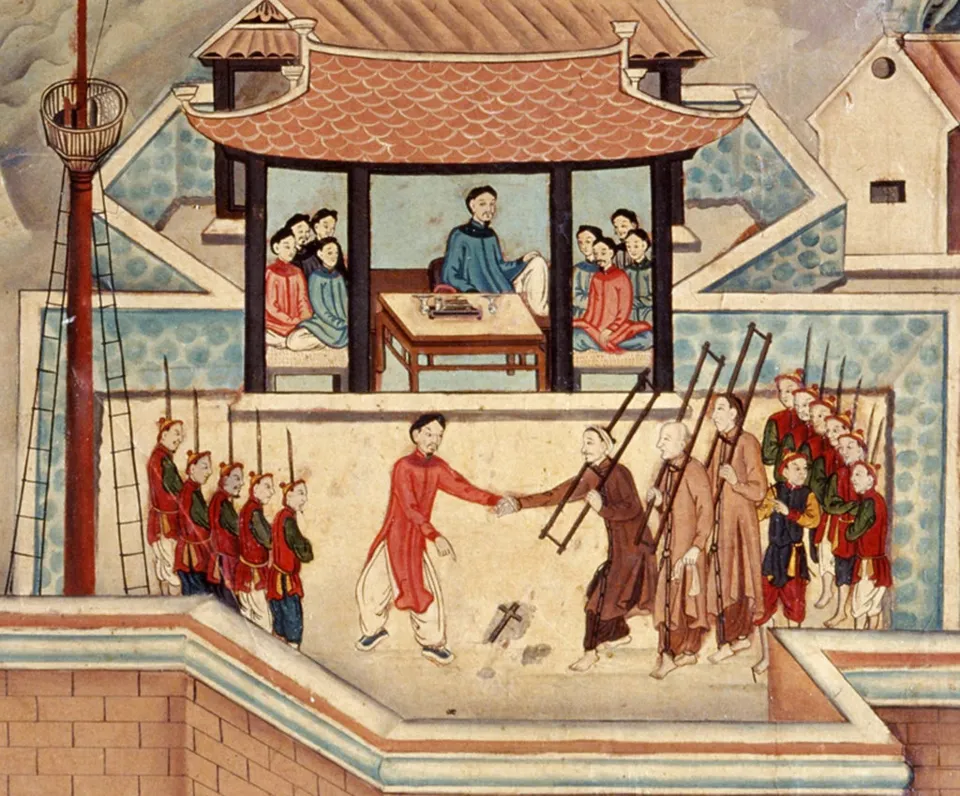
The persecution that produced the Vietnamese Martyrs spanned over a century under successive Vietnamese dynasties. The Trịnh lords controlled the north, the Tây Sơn rebellion swept through the center, and the Nguyễn dynasty unified the country in 1802. Rulers viewed Catholicism as a threat because it refused to participate in ancestor veneration, a cornerstone of Confucian loyalty.
This refusal was interpreted as political disloyalty and cultural subversion. Emperor Minh Mạng, who reigned from 1820 to 1841, was particularly severe, with historical records attributing 58 martyrs to his campaigns. For a detailed account of the Nguyễn dynasty’s role, see the Nguyễn Dynasty Persecution article.
Dynastic Threats: Persecution Under the Trịnh, Tây Sơn, and Nguyễn Rulers
The Trịnh lords (1527–1789) initiated early persecutions, suspecting Catholic loyalty to foreign powers. The Tây Sơn rebellion (1771–1802) disrupted the Church but also saw temporary alliances, such as between French missionary Pigneaux de Behaine and Nguyễn Ánh. After Nguyễn Ánh’s victory in 1802, he initially protected missionaries, but later emperors, especially Minh Mạng, Thiệu Trị, and Tự Đức, intensified persecution.
They issued edicts banning Christianity, forcing apostasy, and branding Christians with the mark “tả đạo” (unorthodox religion). Villages embracing Christianity faced destruction. The persecution was not merely religious but also political, aimed at eliminating foreign influence and consolidating national identity.
Methods of Martyrdom: Execution Statistics from Vatican Records
The Vatican’s records document the brutal methods used against the martyrs. These were not random acts but systematic executions intended to terrorize the faithful.
| Method of Execution | Number of Martyrs |
|---|---|
| Beheading | 76 |
| Suffocation | 21 |
| Burning alive | 6 |
| Mutilation | 5 |
| Death by torture/imprisonment | 9 |
The data reveals that beheading was the most common method, accounting for roughly 65% of the recorded executions. Suffocation, often by strangulation or confinement, was the second most frequent.
The use of burning alive and mutilation (including “death by a thousand cuts”) were reserved for particularly high-profile martyrs or as public spectacles. These statistics, compiled from Vatican beatification records, illustrate the calculated cruelty of the persecutions.
The 1862 Treaty with France: The Official End of State-Sponsored Persecution
Persecution ceased in 1862 when Vietnam signed the Treaty of Saigon with France after the Cochinchina Campaign. This treaty guaranteed religious freedom for Catholics, effectively ending state-sponsored violence. The cessation was not due to internal reform but to foreign military pressure.
This marked a turning point, allowing the Church to rebuild openly. For a complete chronological overview from the 17th to 19th centuries, consult Catholic Martyrs of Vietnam: A Chronology of Faith Across Centuries.
Composition of the 117: A Representative Group of Vietnamese and Foreign Missionaries
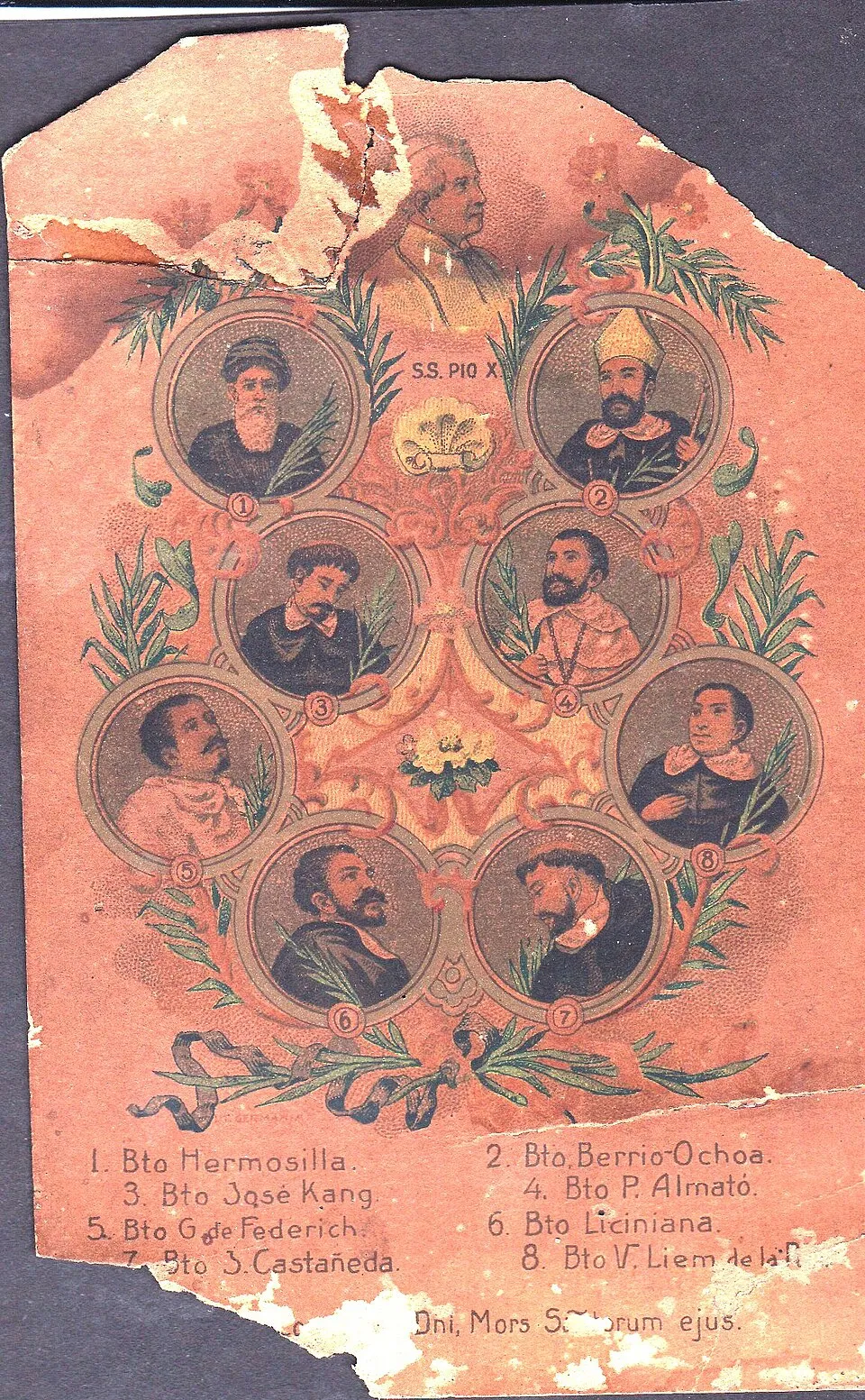
The 117 canonized martyrs were not a random selection but a carefully chosen cross-section representing the broader sacrifice. Their composition reflects both the indigenous Vietnamese Church and the international missionary effort.
The group includes 96 Vietnamese Catholics, 11 Spanish Dominicans, and 10 French members of the Paris Foreign Missions Society (Missions Etrangères de Paris). This diversity was intentional, symbolizing the universal Church.
National Breakdown: 96 Vietnamese, 11 Spanish, 10 French
- 96 Vietnamese: Native laypeople, catechists, and clergy who formed the local Church.
- 11 Spanish Dominicans: Members of the Dominican Order, including bishops and priests who served in Vietnam.
- 10 French Missionaries: Priests from the Paris Foreign Missions Society, a major force in Vietnamese evangelization.
This mix underscores that martyrdom spanned cultures and nationalities. The Spanish and French missionaries embraced Vietnam as their homeland and died alongside Vietnamese converts. Their inclusion honors the global nature of the Catholic mission.
Vocational Diversity: Bishops, Priests, and the Laity
The vocational breakdown shows a Church community in microcosm:
- 8 bishops: Hierarchical leaders who shepherded the Church.
- 50 priests: Diocesan and religious clergy who administered sacraments.
- 59 laypeople: Including catechists, mothers, and families who supported the Church.
The lay group was essential; without them, the Church could not have survived underground. Their courage demonstrates that sainthood is not reserved for clergy.
The stories of these ordinary faithful, though less documented than clerical martyrs, are vital to understanding the Church’s resilience. For more on lay experiences, see Vietnamese Martyrs: The Untold Stories of Lay Faithful.
Who Was St. Andrew Dũng-Lạc? The Namesake and His Significance
St. Andrew Dũng-Lạc (born Trần An Dung, c. 1795–1839) was a Vietnamese diocesan priest.
He converted to Catholicism as a child, became a catechist, and later a priest. Arrested in 1839 during Minh Mạng’s persecution, he was beheaded after refusing to renounce his faith. His name leads the group because he was among the first beatified in 1900 and serves as a representative figure of Vietnamese clergy.
The official title “St. Andrew Dũng-Lạc and Companions” highlights his role as a primus inter pares—first among equals—among the 117. His story encapsulates the native Church’s strength.
Canonization on June 19, 1988: The Vatican’s Selection and Beatification History
The path to canonization spanned nearly a century, reflecting the Vatican’s careful recognition of these martyrs. The process began with local veneration and advanced through multiple beatifications before the final canonization by Pope John Paul II.
From Beatification to Canonization: A Process Spanning Nearly a Century
The 117 martyrs were beatified in four separate groups:
- May 27, 1900: 64 martyrs beatified by Pope Leo XIII.
- May 20, 1906: 8 martyrs beatified by Pope Pius X.
- May 2, 1909: 20 martyrs beatified by Pope Pius X.
- April 29, 1951: 25 martyrs beatified by Pope Pius XII.
Beatification allows local veneration within a specific region or community. Canonization, the final step, declares the individual a universal saint worthy of veneration by the entire Church. Pope John Paul II canonized all 117 together on June 19, 1988, in St.
The ceremony, attended by thousands of overseas Vietnamese, was one of the largest such events in history and is examined in Vietnamese Martyrs Canonization: The 1988.
Why 1988? The Significance of Pope John Paul II’s Canonization
Pope John Paul II, whose papacy highlighted the “blood of martyrs” as the seed of the Church, deliberately chose 1988 for this canonization. The event served multiple purposes: it honored the Vietnamese Church’s endurance, provided a feast day (November 24) for the universal calendar, and sent a powerful message to the communist government of Vietnam, which had opposed the ceremony.
The Pope’s decision to canonize both named and unnamed martyrs together underscored the vast scale of sacrifice. The feast day is now celebrated annually on November 24 as part of the Vietnamese Saints: Spiritual Legacy and Liturgical Veneration, though some martyrs have additional local memorials.
Selection Criteria: Representing the “Hundreds of Thousands”
The Vatican explicitly stated that the 117 were chosen to represent the estimated 100,000 to 300,000 total martyrs. Their selection was not exhaustive but symbolic. The criteria included:
- Diversity of nationality (Vietnamese, Spanish, French) to reflect the international missionary effort.
- Diversity of vocation (bishops, priests, laypeople) to show the whole Church’s witness.
- Historical spread across the 1745–1862 period.
This representative approach allowed the Church to honor the countless unnamed martyrs while focusing veneration on a manageable group with well-documented stories. The canonization thus became an act of collective memory.
The 1988 canonization of the 117 Vietnamese Martyrs was a masterstroke of ecclesiastical diplomacy, uniting a diverse group—native and foreign, clergy and laity—into a single symbol of faith. It recognized that the Vietnamese Church was built on the sacrifices of many, not just a few.
For current liturgical celebrations and to understand how these saints are venerated in Vietnam’s 27 dioceses today, visit the official website of the Catholic Bishops’ Conference of Vietnam at CBCV. Their legacy continues to inspire the growth of Catholicism in Vietnam, which now comprises approximately 7–9% of the population.
Frequently Asked Questions About 117 Vietnamese Martyrs
Who were the 117 Vietnamese martyrs?
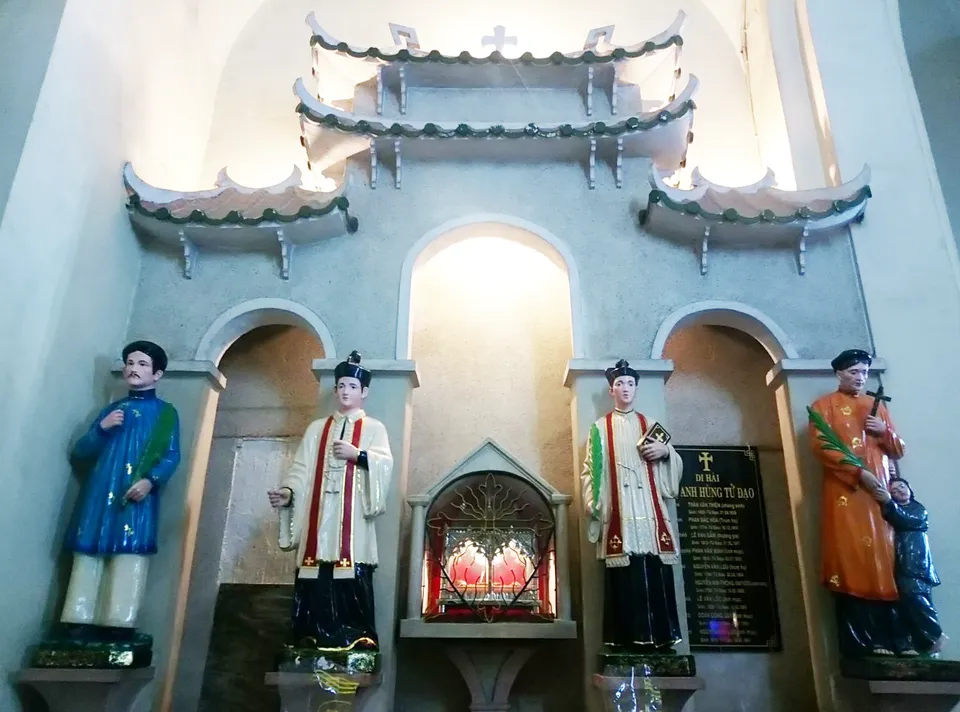
The seed of the Church One man, a priest, gives his name to today's feast, but the one stands for many: 117 Vietnamese faithful. They were bishops, priests, and many laypeople, a mother of six and even a nine-year-old child, who gave their lives for Christ between the 17th and the 19th centuries.
When were the Vietnamese martyrs canonized?
On June 19, 1988, Pope John Paul II canonized a group of 117 martyrs who died for the Roman Catholic Faith in Vietnam during the nineteenth century. The group was made up of 96 Vietnamese, 11 Spaniards, and 10 French. Eight of the group were bishops, 50 were priests and 59 were lay Catholics.
Are most Vietnamese Americans Catholic?
While Christians, primarily Roman Catholics, make up about 10% of Vietnam's population, they make up approximately 36% of the Vietnamese American population.
What country is 100% Catholic?
The country with the largest percentage of its population having membership in the church is Vatican City at 100%, followed by Timor-Leste at 97%. According to the World Christian Database, there are 1.279 billion Catholics worldwide as of 2026, which constitute 47.8% of 2.674 billion Christians.
What happens at 3am Catholic?
Church teaching says nothing about the time of 3 a.m. However, in popular culture it has become known as the “devil's hour.” This is because Gospel tradition reports that Jesus died at 3 p.m., and so—because the devil likes to mock God— the inverse hour of 3 a.m.