The bishops of Thai Binh Vietnam shepherd a diocese deeply rooted in the agricultural heartland of the Red River Delta, where 160,000 Catholics form a vibrant faith community amidst rice paddies and farming villages. Under the guidance of Bishop Dominic Đặng Văn Cầu, the Diocese of Thai Binh has pioneered rural evangelization strategies that align with the agricultural calendar, ensuring that spiritual life flourishes alongside the planting and harvest seasons. Established in 1960 as a suffragan to the Archdiocese of Hanoi, this diocese exemplifies how Vietnamese bishops serve rural populations.
The diocese’s commitment to lay ministry development and material support for farming families reflects a pastoral vision that meets both spiritual and practical needs. For an overview of all Vietnamese bishops and their dioceses, visit the Catholic Bishops’ Conference of Vietnam website.
- Bishop Dominic Đặng Văn Cầu currently leads the Diocese of Thai Binh, established in 1960 as a suffragan to Hanoi.
- The diocese serves 160,000 Catholics across the agricultural Red River Delta, emphasizing lay ministry and material support for farming families.
- Rural evangelization strategies are tailored to agricultural rhythms, with vocational formation through Sacred Heart Major Seminary.
- Thai Binh is one of 27 dioceses within the Catholic Bishops’ Conference of Vietnam (CBCV), preserving faith traditions in a rural context.
Bishop Dominic Đặng Văn Cầu and Rural Evangelization in Thai Binh
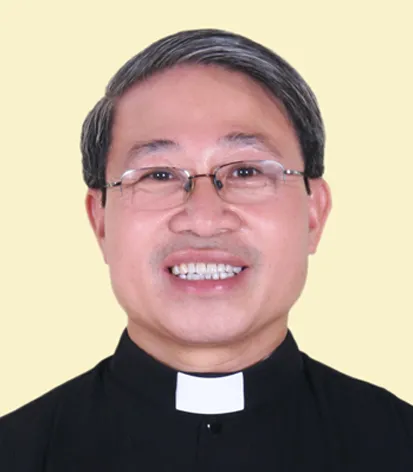
Bishop Dominic Đặng Văn Cầu: Appointment and Pastoral Vision
Bishop Dominic Đặng Văn Cầu serves as the current ordinary of the Diocese of Thai Binh, appointed to shepherd a predominantly agricultural region. His pastoral vision centers on adapting Catholic evangelization to the realities of rural life, where farming rhythms dictate community schedules. Bishop Cầu emphasizes that the Church must be present in the fields as much as in the sanctuary, advocating for a ministry that integrates faith with daily work.
Under his leadership, the diocese has launched initiatives that train lay leaders to serve in remote parishes, ensuring that sacraments and catechesis remain accessible even where priests are scarce. Bishop Cầu’s approach reflects the broader priorities of the Catholic Bishops’ Conference of Vietnam, which encourages dioceses to develop context-specific pastoral plans. His focus on rural evangelization has made Thai Binh a model for other agricultural dioceses in the country, such as Bùi Chu under Bishop Joseph Nguyễn Văn Bình, demonstrating that vibrant Catholic life can thrive outside urban centers.
The bishop frequently visits farming families during harvest seasons, celebrating Mass in fields and listening to the challenges faced by agricultural workers. This hands-on leadership style has earned him deep respect among the diocese’s 160,000 Catholics, who see in him a shepherd who truly understands their way of life.
Lay Ministry Development in Rural Parishes
Given the vast rural expanse of Thai Binh province, the diocese relies heavily on lay ministers to extend pastoral care to scattered farming communities. The diocese has established comprehensive training programs that equip lay Catholics—both men and women—to lead prayer services, facilitate faith formation groups, and provide basic catechesis in villages where a priest may visit only once a month. These lay ministers, often farmers themselves, are uniquely positioned to evangelize within their own neighborhoods, bridging the gap between the Church and everyday rural life.
Initiatives include “family faith communities” that gather in homes for Scripture reflection and prayer, especially during the busy planting and harvest periods when traveling to the parish church is difficult. The diocese also organizes regular workshops for lay leaders on topics such as Catholic social teaching applied to agriculture, marriage and family ministry in rural settings, and care for the elderly and sick in isolated areas.
This strategy of empowering the laity aligns with the universal call to holiness emphasized by the Second Vatican Council and has proven essential for maintaining a Catholic presence across the Red River Delta’s countryside. The success of these lay-led efforts is evident in the steady number of baptisms and the active participation of families in parish life, despite the challenges of rural dispersion.
Evangelization Strategies for Farming Communities
The Diocese of Thai Binh tailors its evangelization programs to the agricultural cycles that define life in the Red River Delta. Recognizing that farmers’ availability varies dramatically with the seasons, the diocese schedules major catechetical events, retreats, and sacramental preparations during the lulls between planting and harvest. For example, Lenten missions and Easter celebrations are often planned for the post-harvest period when families have more time and resources to engage.
Conversely, during the peak planting and harvesting months, the Church focuses on brief, accessible forms of prayer and support—such as blessing of fields, short Gospel reflections delivered at village meeting points, and mobile confession services that travel to remote hamlets. The diocese also addresses the economic vulnerabilities of farming families by integrating practical assistance with spiritual outreach. This includes providing seeds or fertilizers during times of scarcity, offering financial literacy workshops, and connecting families with cooperative marketing opportunities.
Such holistic evangelization—addressing both material and spiritual needs—reflects the Church’s preferential option for the poor and resonates deeply with agricultural communities that experience the uncertainties of weather, pests, and market fluctuations. By speaking the language of the land, Thai Binh’s bishops and clergy make the Gospel message tangible and relevant to those who work the soil.
Vocational Training Through Sacred Heart Major Seminary
A cornerstone of the Diocese of Thai Binh’s long-term strategy is the formation of priests and religious who are prepared to serve in rural settings. The diocese operates the Sacred Heart Major Seminary, which has been expanded in recent years to accommodate more seminarians from agricultural backgrounds. According to reports from the National Catholic Register, the seminary building project reflects a commitment to providing quality theological education while maintaining a connection to the diocese’s rural character.
Seminarians from Thai Binh and other northern dioceses receive not only academic training but also practical experience in parish assignments that expose them to the challenges and joys of rural ministry. The curriculum includes courses on agricultural ethics, rural sociology, and community development, ensuring that future clergy can engage meaningfully with farming communities. Bishop Cầu personally oversees the seminary’s development, recognizing that sustainable evangelization in Thai Binh depends on a steady stream of priests who understand and appreciate agricultural life.
The seminary currently forms about 150 seminarians, many of whom come from farming families themselves. This investment in human resources ensures that the diocese will continue to have shepherds who can walk alongside their flock in the fields as well as in the church, preserving the faith traditions that have sustained Thai Binh’s Catholics for generations.
Historical and Demographic Context of Thai Binh Diocese
Thai Binh Diocese: Key Statistics at a Glance
The following table presents essential data about the Diocese of Thai Binh:
| Statistic | Value |
|---|---|
| Establishment Year | 1960 |
| Catholic Population | 160,000 |
| Suffragan Archdiocese | Hanoi |
| Number of Dioceses in CBCV | 27 |
These figures situate Thai Binh within the broader ecclesiastical landscape of Vietnam. With 160,000 Catholics, it is a mid-sized diocese, representing roughly 5.9% of the total Catholic population in the 27 dioceses of the Catholic Bishops’ Conference of Vietnam (CBCV). Established in 1960, Thai Binh is relatively young compared to ancient sees such as Hanoi or Huế, reflecting the Church’s growth in northern Vietnam after the partition period.
Its suffragan relationship to the Archdiocese of Hanoi means that the Archbishop of Hanoi serves as the metropolitan, overseeing certain judicial and administrative matters for Thai Binh and other suffragan dioceses in the province. This structure ensures unity while allowing Thai Binh to maintain its own diocesan identity and pastoral priorities.
The diocese covers the entire Thai Binh province, a flat, fertile region in the Red River Delta where rice cultivation dominates the economy and lifestyle. Understanding these statistics provides a foundation for appreciating how the bishops of Thai Binh navigate the challenges and opportunities of rural evangelization in a specific geographic and demographic context.
Establishment in 1960 and Suffragan Relationship to Hanoi
The Diocese of Thai Binh was erected in 1960 by papal decree, during a period of significant change for the Catholic Church in Vietnam. Its creation responded to the growing Catholic population in the Red River Delta and the need for more localized pastoral governance. As a suffragan diocese, Thai Binh is part of the ecclesiastical province of Hanoi, which also includes other northern dioceses such as Bac Ninh, Lang Son, and Hai Phong.
The metropolitan Archbishop of Hanoi holds limited authority over Thai Binh, primarily in cases of appeal and in ensuring adherence to universal Church law. This arrangement allows the Bishop of Thai Binh to exercise ordinary jurisdiction over his diocese while remaining in communion with the wider Church in northern Vietnam. The suffragan status also fosters collaboration among the bishops of the province, who meet regularly to discuss common challenges, such as clergy formation and rural evangelization strategies.
Historically, the establishment of Thai Binh reflected the Vatican’s confidence in the local Church’s ability to sustain itself, and indeed, the diocese has grown steadily over the past six decades. Today, under Bishop Dominic Đặng Văn Cầu, Thai Binh continues to benefit from its connection to Hanoi, drawing on the archdiocese’s resources for seminary education and social programs while maintaining its distinct focus on serving agricultural communities.
This balance of autonomy and communion exemplifies the Catholic Church’s organizational wisdom in Vietnam. For a deeper look at the historical evolution of the Vietnamese episcopate, see the article on Bishops in French Indochina.
Our Lady of La Vang: The Vietnamese Marian Devotion
Our Lady of La Vang is a revered title of the Blessed Virgin Mary in Vietnamese Catholicism, associated with a Marian apparition that tradition says occurred in 1798 during the persecution of Catholics under Emperor Cảnh Thịnh. According to the account, the Virgin Mary appeared to Vietnamese Catholics who had fled into the jungle of La Vang, comforting them and urging them to pray with rosemary leaves when they could not access sacraments. This devotion has become a powerful symbol of Vietnamese Catholic identity and resilience.
In the Diocese of Thai Binh, as in many rural dioceses, La Vang is a central focus of popular piety. Many families maintain home shrines with an image of Our Lady of La Vang, and parishes celebrate her feast day on September 8 with processions, Masses, and communal meals that often incorporate local agricultural products. The devotion’s emphasis on hope amid persecution resonates with farming communities that face their own uncertainties—floods, droughts, and market volatility—and find in Mary a mother who understands suffering.
The bishops of Thai Binh have promoted La Vang as a model of inculturation, showing how Catholic faith can be expressed through Vietnamese cultural symbols. This Marian devotion also connects Thai Binh to the national Church, as the Sanctuary of La Vang in Quang Tri province remains a major pilgrimage site for Catholics across Vietnam, including those from the Red River Delta. Through La Vang, the diocese preserves a unique aspect of Vietnamese Catholic tradition while evangelizing in a culturally resonant way.
The Catholic Church and the Vietnam War: Papal Diplomacy
The Catholic Church’s engagement with the Vietnam War era shaped its contemporary role in Vietnamese society. Pope John XXIII, who convened the Second Vatican Council, was a vocal opponent of the war, using his 1963 encyclical Pacem in Terris to call for peace and disarmament. He opened channels for dialogue between warring parties and encouraged the Vietnamese Church to act as a bridge for reconciliation.
His successor, Pope Paul VI, continued these diplomatic efforts, making the Vietnam conflict a focus of his papacy. In 1965, Paul VI sent Cardinal Agostino Casaroli on a mission to Hanoi and Saigon to explore peace possibilities, and he consistently appealed for an end to hostilities, emphasizing the suffering of civilians, including the rural population. These papal initiatives established a precedent for the Church’s involvement in social issues and its advocacy for the vulnerable.
In the post-war period, the Church in Vietnam, including dioceses like Thai Binh, has worked to rebuild communities torn by conflict, focusing on humanitarian aid and reconciliation. The memory of papal diplomacy also informs the bishops’ approach to government relations today, as they navigate a complex environment where religious freedom is guaranteed but regulated.
For Thai Binh’s farmers, the Church’s historical stance on peace translates into a continued commitment to non-violence, social justice, and the protection of families affected by economic hardship—a legacy that remains relevant in the fields of the Red River Delta. The role of bishops during that turbulent period is explored in Bishops during the Vietnam War Period: Leadership Amid Conflict.
Support for Agricultural Communities and Family Ministry in Thai Binh
Material Support Programs for Farming Families
The Diocese of Thai Binh operates several programs that provide direct material support to farming families facing economic hardship. These initiatives are funded through diocesan resources, parish collections, and international Catholic charities that partner with Thai Binh. During the lean season between harvests, the diocese distributes rice, cooking oil, and other staples to vulnerable households, particularly those with many children or elderly members.
In years of poor harvest due to drought or flood, the diocese coordinates emergency relief, including seeds for the next planting season and small cash grants to purchase fertilizer. Additionally, the diocese runs a microfinance program that offers low-interest loans to farmers unable to secure credit from state banks, enabling them to buy equipment or livestock. These material supports are not merely charity; they are integrated into the Church’s evangelization mission, as assistance is often accompanied by visits from catechists who pray with families and share Scripture.
The diocese also organizes agricultural workshops where experienced farmers teach sustainable techniques, such as integrated pest management and water conservation, to improve yields and resilience. By addressing the practical needs of farmers, the bishops of Thai Binh demonstrate the Church’s preferential option for the poor and build trust that opens doors for deeper spiritual ministry. The impact is measurable: parishes report higher Mass attendance and increased participation in sacraments among families who have received aid, indicating that material support can be a bridge to faith formation.
Lay-Led Initiatives in Rural Evangelization
Lay Catholics are the backbone of evangelization in Thai Binh’s vast countryside, where the ratio of priests to Catholics is approximately 1:3,000. The diocese has therefore invested heavily in forming lay leaders who can sustain Christian community life in remote villages. These lay ministers—often called “evangelization agents”—undergo a year-long training program covering Bible studies, basic theology, and community organizing.
Upon completion, they are commissioned to serve specific clusters of families, leading weekly prayer meetings, preparing children for First Communion, and accompanying couples through marriage preparation. A particularly effective initiative is the “Harvest Gospel” program, where lay ministers join farmers in the fields during harvest time, sharing brief reflections on the Sunday Gospel while workers take short breaks. This contextualized approach respects the farmers’ time constraints and brings the Word directly to where they labor.
Additionally, the diocese encourages the formation of “family evangelization teams” where parents take turns hosting neighbors for faith sharing, creating a network of small Christian communities that multiply organically. The success of these lay-led initiatives is evident in the number of vocations that arise from these villages—many young men and women who first encountered the faith through a lay catechist later enter seminary or religious life.
This bottom-up model of evangelization aligns with the Catholic Bishops’ Conference of Vietnam’s emphasis on lay empowerment and has become a hallmark of Thai Binh’s pastoral strategy. Other bishops, such as Bishop Joseph Đỗ Quang Khang and Bishop Joseph Nguyễn Chí Linh, have also championed lay empowerment in their dioceses, demonstrating a nationwide trend toward lay involvement.
Preserving Faith Traditions in Agricultural Settings
Despite the dispersion of population across rural areas, the Diocese of Thai Binh has preserved vibrant Catholic traditions that bind communities together. Sacramental life remains robust, with baptisms, weddings, and funerals celebrated in ways that incorporate local customs. For instance, weddings often include the “bride’s farewell to the ancestors” ritual, adapted to express gratitude for family heritage while affirming Christian marriage.
Feast days, such as the patronal feast of a parish, are marked by processions that wind through rice fields, with statues of saints carried on bamboo platforms and accompanied by traditional drumming. These celebrations not only honor the saints but also give thanks for the harvest, linking faith with the agricultural cycle. The diocese also maintains popular devotions like the Stations of the Cross during Lent, with each station placed along a village path, allowing farmers to meditate on Christ’s passion as they walk from their homes to the fields.
Traditional Vietnamese Catholic music and dance are taught to youth groups, ensuring that cultural expressions of faith are passed to future generations. In an era of urbanization and migration, these traditions anchor Catholics to their roots and provide a sense of continuity. The bishops of Thai Binh have been careful to inculturate these practices, ensuring they remain authentically Catholic while resonating with the local culture.
This preservation effort is not nostalgic; it is a strategic response to the challenge of maintaining community identity in a rapidly changing rural Vietnam. By keeping faith traditions alive in agricultural settings, Thai Binh offers a model for other dioceses facing similar pressures of modernization and diaspora.
Thai Binh’s bishops have shown that rural dioceses can flourish by embracing their agricultural identity rather than resisting it. The integration of lay leadership, material support, and culturally resonant traditions creates a sustainable model of evangelization that meets both spiritual and practical needs. This approach, developed under Bishop Dominic Đặng Văn Cầu, positions Thai Binh as a laboratory for rural ministry within the Catholic Bishops’ Conference of Vietnam.
For those interested in exploring how other Vietnamese dioceses adapt to their local contexts—whether coastal, urban, or highland—the CBCV website provides detailed profiles and updates. The story of Thai Binh reminds us that the Gospel can take deep root in any soil, even the rice paddies of the Red River Delta, when the Church listens to the rhythms of the people it serves. Similarly, the Diocese of Da Nang, led by Bishop Joseph Nguyễn Văn Tiếp, adapts its ministry to an urbanizing context; see Bishop Joseph Nguyễn Văn Tiếp: Bishop of Đà Nẵng for its story.
Frequently Asked Questions About Bishops Of Thai Binh Vietnam
What is the Vietnamese version of the Virgin Mary?
Our Lady of La Vang (Vietnamese: Đức Mẹ La Vang) is a Roman Catholic title of the Blessed Virgin Mary associated with a purported Marian apparition during the persecution of Christians in Vietnam.
What are the five sins that only the pope can forgive?
Apostasy, heresy, schism. Violation of consecrated species. Physical attack on a pope or bishop.
A priest who absolves an accomplice in sexual sin. Unauthorized ordination of a bishop.
Direct violation by a confessor of the seal of confession. Anyone who reveals the overheard confession of another.
What are the unspoken rules in Vietnam?
Most Vietnamese will avoid public displays that could compromise their reputation. As a general rule, keep your cool and avoid loud arguments, making a scene, berating others for mistakes, or pointing out anything that may cause the locals to feel shamed.