Vietnamese bishops advance social justice through accompaniment and participation, not just charity, as proclaimed in their 1980 Pastoral Letter calling the Church to live “in the heart of the nation.” Under the guidance of the Catholic Bishops’ Conference of Vietnam (Catholic Bishops’ Conference of Vietnam), this mission is implemented by Caritas Vietnam, which investigated 163 human trafficking cases in 2024 alone and educated over 6,000 people in anti-trafficking awareness. With 70% of Vietnam’s population on social media, digital safety has become critical, while the bishops’ 27 dioceses work locally to uplift the poor and marginalized.
- The bishops’ social justice mission centers on accompaniment and participation, not just charity, as established in their 1980 Pastoral Letter calling the Church to live ‘in the heart of the nation’.
- Caritas Vietnam, re-established in 2008, is the primary implementing body, investigating 163 human trafficking cases in 2024 and educating over 6,000 people in anti-trafficking awareness.
- With 70% of Vietnam’s population on social media, the bishops prioritize digital safety education, while the synodal process ensures the poor are active participants in church life and social initiatives.
Vietnamese Bishops’ Social Justice Philosophy: Accompaniment and Participation

The Catholic Bishops’ Conference of Vietnam (CBCV) shapes a social justice approach that prioritizes walking alongside people rather than simply providing aid. This philosophy, deeply rooted in Vietnam’s historical journey—including the complex era of Bishops in French Indochina and later Bishops during the Vietnam War period—emphasizes that poverty and injustice often stem from societal structures, not individual failings.
The bishops call for systemic change while ensuring the marginalized lead the response. For a broader view of the bishops’ organizational context, see CBCV’s organizational structure.
The 1980 Pastoral Letter: ‘Living in the Heart of the Nation’
Issued shortly after Vietnam’s reunification, the 1980 Pastoral Letter marked a decisive moment for the Church’s social mission. The document declared that the Church must “live in the heart of the nation,” meaning it should fully integrate into Vietnamese society, serve all people without distinction, and address the nation’s pressing social wounds. This shifted the Church from a purely spiritual role to one of active solidarity with the poor and suffering.
The letter’s call to “read the signs of the times” continues to guide bishops as they respond to modern challenges like human trafficking and digital misinformation. It remains the foundational text for all CBCV social justice initiatives, framing charity as an expression of faith that engages the whole person and community.
Preferential Option for the Poor: From Theology to Action
The theological principle of a “preferential option for the poor” is lived out through concrete diocesan programs across Vietnam. The bishops emphasize that poverty is often a consequence of societal structures, so their response combines direct aid with advocacy for change. Key manifestations include:
- Accompaniment over aid: Programs walk alongside the poor, listening to their needs rather than imposing solutions. This ensures aid respects dignity and context.
- Structural advocacy: Bishops teach that poverty stems from unjust systems, so the Church advocates for policy changes that protect workers, families, and ethnic minorities.
- Dignity protection: All initiatives, from education to healthcare, uphold the inherent worth of every person, rejecting any treatment that reduces people to mere recipients.
- Community empowerment: Dioceses run programs that equip the poor with skills and resources to improve their livelihoods, fostering self-reliance.
- Inclusive participation: The poor are included in church decision-making bodies, ensuring their voices shape pastoral priorities and resource allocation.
Synodal Process: Ensuring Marginalized Voices Lead
The synodal process, adopted from the universal Church’s emphasis on listening and discernment, is uniquely adapted in Vietnam to ensure the poor and marginalized are active participants, not just recipients. Dioceses conduct regular consultations where low-income families, ethnic minorities, and trafficking survivors contribute to program design. For example, Caritas Vietnam includes survivors in developing anti-trafficking curricula, ensuring materials address real risks.
This bottom-up approach aligns with the bishops’ conviction that those most affected by injustice must help lead the solution. By embedding synodality at the parish level, the Church in Vietnam fosters a culture where every voice, especially the excluded, can influence the social justice mission.
Human Trafficking Crisis: Caritas Vietnam’s Data-Driven Response (2024-2025)
Human trafficking has emerged as a critical social justice issue in Vietnam, with Caritas Vietnam leading a coordinated, data-driven response. As the Commission on Charity and Social Actions of the CBCV, Caritas Vietnam leverages its network across all 27 dioceses to investigate cases, educate vulnerable groups, and combat online threats. The 2024 statistics reveal a crisis of alarming scale and complexity.
163 Cases Investigated: The Scale of Modern Slavery in Vietnam
Caritas Vietnam’s 2024 data underscores the pervasive nature of trafficking nationwide:
| Statistic | 2024 Data | Analysis |
|---|---|---|
| Total Cases Investigated | 163 | Represents a sharp increase from 98 cases in 2023, indicating both rising incidents and improved detection by Caritas Vietnam’s network. |
| Victim Demographics | Ethnic minorities comprise over 60% | Highlights disproportionate vulnerability among ethnic minority communities, linked to poverty, isolation, and limited access to education. |
| Geographic Spread | All 64 provinces affected | Confirms trafficking is a nationwide crisis, not confined to border areas, requiring a unified national response. |
The trend shows trafficking is expanding, fueled by economic inequality and digital platforms. The extreme overrepresentation of ethnic minorities—who make up roughly 15% of Vietnam’s population—reveals deep-seated marginalization that the bishops’ social justice mission must address.
6,000+ Participants: Awareness Campaigns Targeting Youth
Caritas Vietnam’s anti-trafficking education reached over 6,000 participants in 2024, with a strong focus on youth and vulnerable communities. Given that 70% of Vietnam’s population uses social media, online safety is a core component. Key program elements include:
- School workshops: Age-appropriate sessions teaching students to recognize grooming, fake job offers, and safe online behavior.
- Social media campaigns: Using Facebook and YouTube to disseminate anti-trafficking messages tailored to young audiences.
- Community outreach: Partnering with local parishes to reach rural and ethnic minority youth who may have limited internet access.
- Online safety training: Teaching digital literacy skills to verify information, protect personal data, and report suspicious activity.
- Youth leader training: Equipping young people to become peer educators, multiplying the impact within their networks.
These efforts directly target the demographic most at risk—youth lured by promises of education or employment—and leverage the digital landscape where trafficking often begins.
Combating Misinformation: Protecting Future Generations Online
The digital dimension of trafficking, including fake job advertisements and online grooming, demands a modern response. Caritas Vietnam addresses this by integrating digital literacy into its awareness programs, teaching youth to critically evaluate online content and verify opportunities. This aligns with the bishops’ emphasis on “reading the signs of the times”—using contemporary tools to confront contemporary threats.
By focusing on misinformation, Caritas Vietnam not only prevents trafficking but also empowers young people to navigate the digital world safely. This proactive stance reflects the bishops’ broader social justice philosophy: protecting dignity requires engaging with the cultural and technological realities shaping people’s lives.
How Does Caritas Vietnam Operationalize the Bishops’ Social Justice Mandate?
Caritas Vietnam translates the bishops’ vision into action through a structured network that balances central coordination with local adaptation. Re-established in 2008 as the CBCV’s official charity arm, it operates across all 27 dioceses to implement programs that reflect the preferential option for the poor and the synodal spirit.
Re-established in 2008: The Primary Implementing Body
Caritas Vietnam’s origins trace back to the 1960s, but it was re-established in 2008 after a period of disruption. Its canonical status as the “Commission on Charity and Social Actions of the Catholic Bishops’ Conference of Vietnam” gives it authority to coordinate all social justice initiatives nationwide. This body receives direct directives from the bishops, develops strategic plans, allocates resources, and monitors impact.
It serves as the bridge between the CBCV’s teachings and grassroots action, ensuring that every program—from anti-trafficking to poverty alleviation—aligns with the Church’s social doctrine. By centralizing expertise while decentralizing execution, Caritas Vietnam maximizes both efficiency and contextual relevance.
27 Dioceses Network: Localizing Social Justice Initiatives
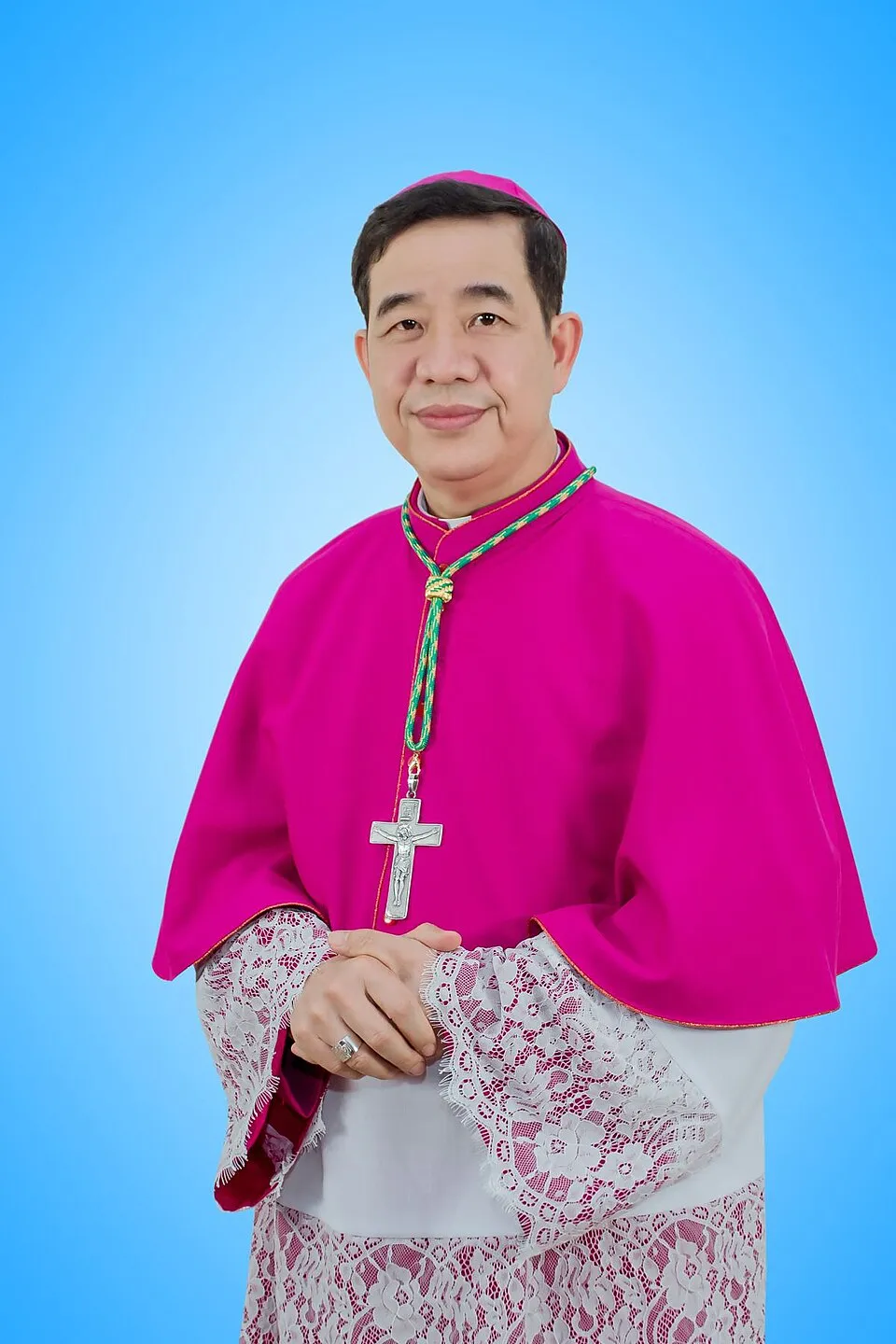
Through its network of 27 dioceses—including the Diocese of Bùi Chu under Bishop Joseph Nguyễn Văn Bình—Caritas Vietnam tailors activities to local needs while maintaining unified goals.
- Education campaigns: Literacy and life skills training for youth, especially in ethnic minority areas where school dropout rates are high.
- Water and sanitation projects: Building wells and toilets to improve health and dignity in remote villages.
- Microfinance initiatives: Providing small loans to poor families, particularly women, to start income-generating businesses.
- Trafficking prevention: Local workshops in partnership with police and NGOs, focusing on high-risk provinces.
- Healthcare access: Supporting clinics in underserved regions with medicines, staff training, and mobile health units.
Each diocese adapts these to its context—for instance, the urban Diocese of Đà Nẵng under Bishop Joseph Nguyễn Văn Tiếp addresses migrant worker vulnerabilities.
Global Partnerships: Leveraging Caritas Internationalis
Caritas Vietnam’s work is distinguished by its unique challenges, yet it shares common strategies with other Asian Caritas organizations through its affiliation with Caritas Internationalis and the Federation of Asian Bishops’ Conferences (FABC). Compared to Caritas Philippines—which focuses heavily on disaster response due to frequent typhoons—or Caritas India—which tackles vast urban poverty—Caritas Vietnam emphasizes anti-trafficking and digital safety due to Vietnam’s specific vulnerabilities. Its high social media penetration (70%) and ethnic minority trafficking rates (over 60% of victims) shape a distinct program mix.
Global partnerships provide funding, technical expertise, and advocacy platforms, while FABC fosters regional collaboration on migration and environmental stewardship. This blend of local adaptation and global solidarity amplifies the bishops’ social justice impact across Asia.
The bishops’ social justice mission in Vietnam reveals a surprising reality: ethnic minorities, a small fraction of the population, constitute over 60% of trafficking victims, exposing extreme systemic neglect. Readers can support this mission by donating to or sharing Caritas Vietnam’s awareness campaigns on social media—leveraging the 70% online population to amplify prevention messages and protect vulnerable youth.