Catholic bishops in Vietnam navigate a unique relationship with the socialist state through ongoing dialogue, as evidenced by the 12th round of Vatican-Vietnam bilateral talks in September 2025. This dual mandate of pastoral leadership and state engagement defines their role. This article examines the evolving responsibilities, organizational structure, and historical context of bishops in the Socialist Republic of Vietnam, highlighting how they shepherd faith amid societal transformation.
- The Catholic Bishops’ Conference of Vietnam (CBCV) coordinates 27 dioceses in dialogue with state authorities, as seen in the 12th Vatican-Vietnam bilateral round (Sept 2025).
- Historical foundation: In 1889, the Vietnamese Church had 9 bishops, 356 Vietnamese priests, and 930 churches, showing deep roots despite challenges.
- Bishops designated 2026 as the Year of ‘Every Christian as a Missionary Disciple’ to address evangelization in a rapidly modernizing society.
How Do Catholic Bishops Navigate Vietnam’s Socialist State?
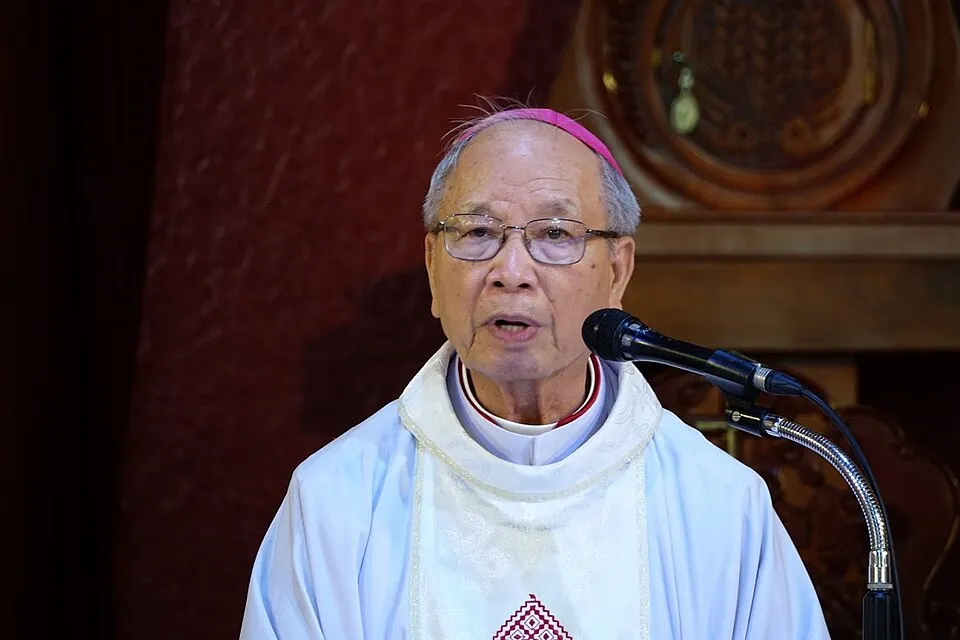
Vatican-Vietnam Dialogue: Progress in the 12th Bilateral Round (2025)
The September 2025 12th round of Vatican-Vietnam bilateral dialogue marked a significant milestone in Church-state relations. Both delegations praised the Catholic community’s role as a force for Gospel witness and civic contribution, underscoring the constructive partnership between the Holy See and Vietnamese authorities. According to Zenit’s September 15, 2025 report, the discussions focused on mutual cooperation and the Church’s social contributions.
This ongoing dialogue, which the Vatican hopes will lead to improved relations with the Vietnamese government, provides bishops with a framework to operate within the socialist system while maintaining pastoral integrity. EWTN News noted the Vatican’s optimism for further diplomatic progress. For bishops, this bilateral engagement translates into practical support for their diocesan ministries, allowing them to navigate complex state regulations while serving the faithful.
Constitutional Advocacy: Bishops’ Observations on Religious Law Amendments
- Formal submission: The CBCV’s Messages page contains “Vietnamese Catholic Bishops’ Observations and Propositions on the 1992 Constitution Amendment Draft (revision in 2013)” (Source: cbcvietnam.org).
- Dialogue mechanism: Bishops engage directly with government authorities through structured consultations on constitutional amendments affecting religious practice.
- Legal framework influence: These observations demonstrate the Church’s active participation in shaping Vietnam’s religious legal landscape, advocating for protections within the socialist constitutional order.
- Strategic approach: The bishops’ advocacy reflects a commitment to religious freedom that works within Vietnam’s legal system rather than opposing it outright.
This constitutional advocacy represents a key dimension of how bishops exercise their public role. By submitting formal observations on draft amendments, the CBCV leverages its recognized status to influence policy from within the system.
The 2013 revision process showed bishops addressing specific concerns about religious freedom guarantees, demonstrating that their engagement extends beyond purely spiritual matters into the legal domain that governs their ability to operate. This approach balances principle with pragmatism, acknowledging Vietnam’s socialist framework while seeking reasonable accommodations for religious practice.
2026 Pastoral Year: Every Christian as a Missionary Disciple
Vietnamese bishops designated 2026 as the Year of “Every Christian as a Missionary Disciple,” a pastoral initiative announced by Vatican News on February 6, 2026. This designation responds directly to the challenges of evangelization in a rapidly modernizing socialist society where traditional methods may be less effective. The initiative aims to strengthen lay missionary discipleship, empowering ordinary Catholics to witness to their faith in everyday contexts.
For bishops, this represents a strategic shift toward activating the entire Catholic community rather than relying solely on clergy and religious. The theme addresses the reality that in Vietnam’s context, where direct missionary activity faces certain constraints, every baptized person becomes an ambassador of the Gospel through their personal and professional lives. This pastoral year integrates with the bishops’ broader vision of forming Catholics who can contribute to both Church and society while maintaining their distinct religious identity within the socialist state.
Youth Engagement: 5,000+ at Hanoi Archdiocesan Youth Congress 2026
- Scale: Over 5,000 young Catholics gathered for the 2026 Hanoi Archdiocesan Youth Congress, according to Facebook posts and Vatican News coverage.
- Leadership: The Archdiocese of Hanoi organized the event, demonstrating episcopal commitment to youth ministry at the highest diocesan level.
- Focus: The congress centered on forming young people as missionary disciples, aligning with the bishops’ 2026 pastoral year theme.
- Significance: This large-scale gathering shows how bishops prioritize engaging Vietnam’s youth in faith formation amid rapid social change.
The Hanoi Youth Congress exemplifies bishops’ strategic investment in the next generation. With over 5,000 participants, the event provided formation, community building, and missionary training for young Catholics.
Such gatherings are crucial in a society where traditional family religious practice may be weakening due to urbanization and modernization. By mobilizing archdiocesan resources for youth ministry, bishops address long-term sustainability of the Church in Vietnam. The congress also serves as a visible demonstration of the Church’s vitality to both the faithful and state authorities, showing that Catholic youth are being formed as responsible citizens and disciples simultaneously.
Organizational Structure: CBCV Governance and Diocesan Network
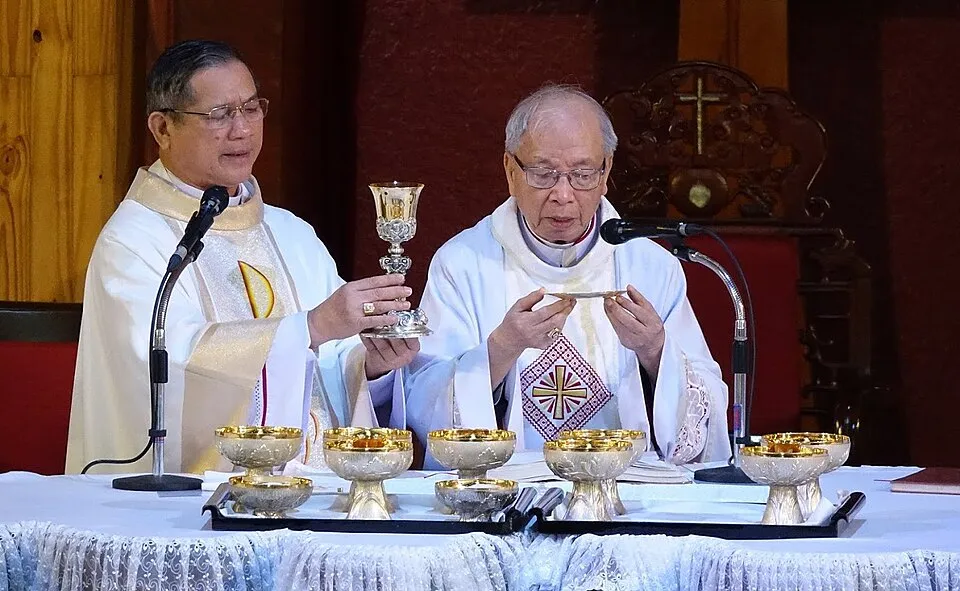
CBCV Leadership: Committees and Episcopal Representation (2022-2025 Term)
| Committee/Structure | Primary Focus | Role in Governance |
|---|---|---|
| Standing Committee | Executive leadership and coordination | Leads day-to-day operations between plenary assemblies |
| Social Communications Committee | Media relations, information dissemination | Manages CBCV’s public presence and official communications |
| Laity Committee | Lay apostolate and formation | Coordinates lay movements and diocesan lay councils |
| Other Committees | Various pastoral and administrative areas | Support specific domains like liturgy, education, charity |
The CBCV’s committee structure for the 2022-2025 term enables bishops to govern collaboratively across Vietnam’s diverse dioceses. This organizational model distributes responsibilities while maintaining episcopal unity. The Standing Committee, composed of elected bishops, provides executive leadership between the full conference’s plenary meetings.
Specialized committees—such as Social Communications and Laity—allow bishops with particular expertise to address specific pastoral needs. This structure reflects the bishops’ need to coordinate complex ministries across 27 dioceses while engaging with state authorities through a single recognized entity. The committee system also ensures representation from different regions and perspectives within Vietnam’s Catholic community.
Diocesan Distribution: 27 Dioceses Across Vietnam’s Ecclesiastical Provinces
- Total dioceses: The CBCV represents bishops from 27 dioceses across Vietnam (Source: cbcvietnam.org).
- Ecclesiastical provinces: These dioceses are organized into three archdioceses that serve as metropolitan sees.
- Geographic coverage: The network extends from the northern border with China to the southern Mekong Delta, covering all 58 provinces.
- Parish scale: The 27 dioceses encompass 2,228 parishes served by 2,668 priests (based on verified Church statistics).
The 27-diocese structure represents the complete ecclesiastical organization of Vietnam’s Catholic Church. Each diocese is led by a bishop responsible for local pastoral care, while the CBCV coordinates national-level initiatives and external relations.
This distribution reflects both the historical spread of Catholicism and Vietnam’s administrative geography. The network’s density—with parishes in nearly every province—demonstrates the Church’s institutional presence throughout the country. For bishops, this structure means balancing diocesan autonomy with collective responsibility through the CBCV, particularly in matters requiring unified engagement with state authorities.
Episcopal Authority: The Five Reserved Sins Only the Pope Can Forgive
In Catholic canon law, certain grave offenses are reserved to the Pope’s exclusive authority to absolve. The five categories include: apostasy, heresy, and schism; violation of consecrated species (physical desecration of the Eucharist); physical attack on the Pope or a bishop; a priest absolving an accomplice in sexual sin; unauthorized ordination of a bishop; and direct violation of the seal of confession. These reserved sins underscore the Pope’s supreme authority in the Church’s hierarchical structure.
For Vietnamese bishops, this limitation clarifies the boundaries of their ordinary jurisdiction—they exercise extensive pastoral and administrative authority within their dioceses but remain subject to papal primacy in these exceptional cases. This theological framework shapes how bishops understand their role: they are chief shepherds of local churches, yet part of a universal college of bishops in communion with Rome. The reserved sins particularly emphasize the sacred nature of episcopal office, as physical attacks on bishops themselves fall under papal jurisdiction, highlighting the special protection afforded to the episcopal order.
Historical Development and Contemporary Challenges
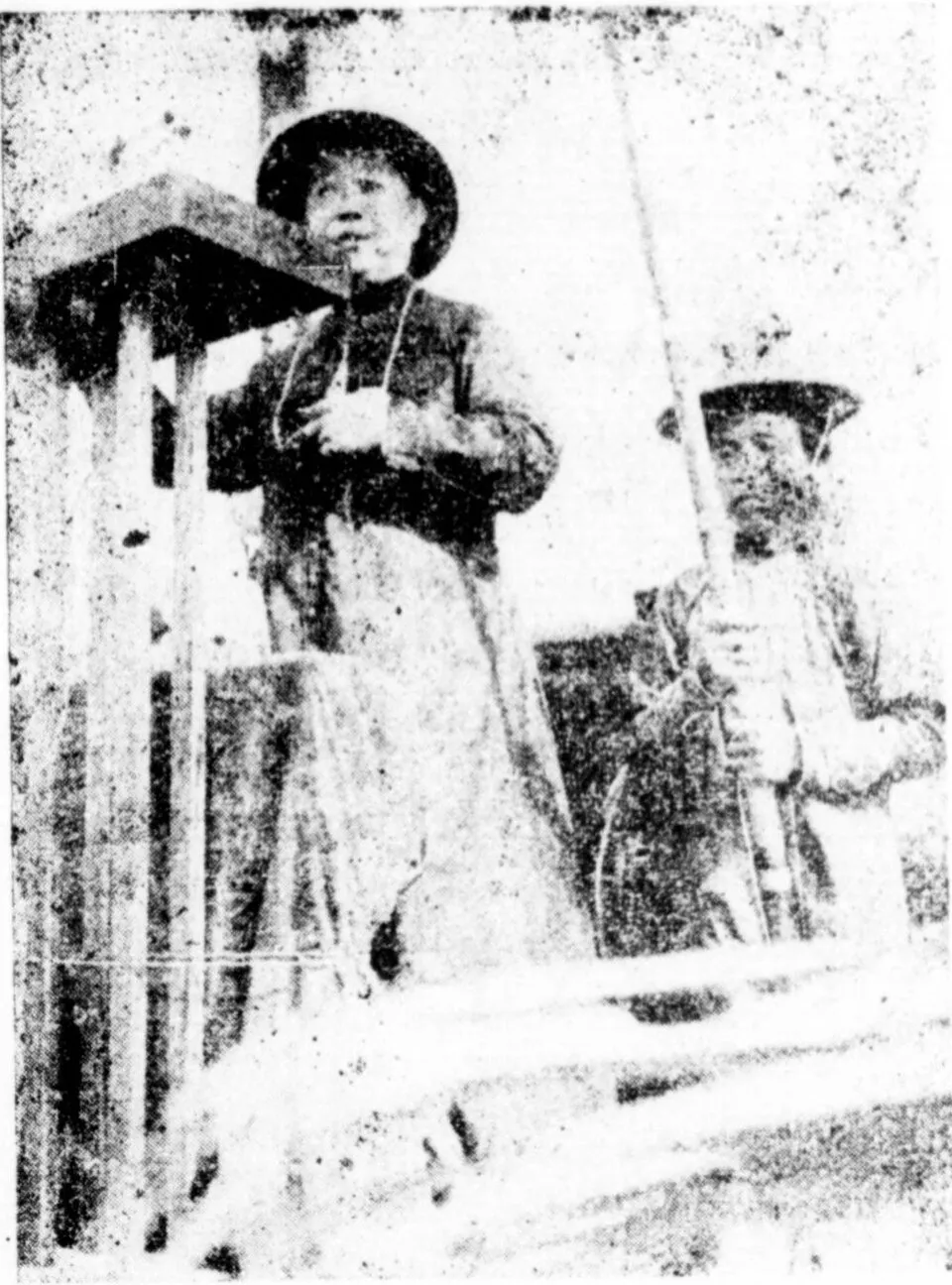
1889 Statistical Snapshot: Foundation of Vietnamese Catholic Church
| Category | 1889 Statistics | Significance |
|---|---|---|
| Bishops | 9 | Established hierarchical leadership |
| Missionary priests | 219 | Foreign missionary presence |
| Vietnamese priests | 356 | Growing local clergy development |
| Churches | 930 | Physical infrastructure for worship |
| Seminarians | 1,243 | Future clergy pipeline |
The 1889 statistics reveal a Vietnamese Church that was already well-established with a clear hierarchical structure. The presence of 9 bishops indicates a fully organized ecclesiastical province with diocesan boundaries. Notably, the number of Vietnamese priests (356) exceeded missionary priests (219), showing significant progress in local clergy formation—a crucial step toward an indigenous Church.
The 930 churches and 1,243 seminarians demonstrate both existing infrastructure and investment in future leadership. This snapshot, documented by the CBCV’s own history page, proves that Catholicism had deep roots in Vietnam long before the socialist era, contradicting any notion that the Church is merely a foreign import. The 1889 figures represent the foundation upon which today’s 27-diocese structure was built.
From 16th Century to Present: Key Historical Milestones
Catholicism arrived in Vietnam during the 16th century, with historical records like the Khâm Định Việt Sử Thông Giám Cương Mục referencing a 1663 decree banning the faith (Source: cbcvietnam.org History page). The Church endured periods of persecution and gradual acceptance, including the leadership of bishops during the Vietnam War, developing a distinct Vietnamese Catholic identity over four centuries. The establishment of the Catholic Bishops’ Conference of Vietnam in 1980 marked a pivotal moment, occurring four years after national reunification under socialist rule.
This founding represented the Church’s adaptation to the new political reality, creating a unified episcopal conference for the entire country after the previous division between North and South. The post-1976 reorganization required bishops to navigate entirely new relationships with state authorities.
The Church’s growth continued, and in 2015, Pope Francis elevated Nguyễn Văn Thuận to the College of Cardinals, recognizing his service and the Vietnamese Church’s maturity within the global Catholic community. This historical arc—from 16th-century arrival through colonial periods, division, reunification, to the present—shows bishops’ continuous leadership despite changing political systems.
Modern Challenges: Religious Freedom and Legal Frameworks
Vietnamese bishops currently operate within a complex legal environment regarding religious freedom. The Vietnamese government maintains that it guarantees religious freedom within a consistent policy and robust legal framework, as reported by SGGP in 2026. However, international bodies like the U.S.
Commission on International Religious Freedom (USCIRF) note that religious affairs are regulated through state-sponsored organizations, creating operational constraints. In March 2026, Vietnam pushed back against a U.S. religious freedom report, calling it biased and interfering, as covered by UCANews on March 27, 2026. Bishops navigate this tension through constitutional advocacy, as seen in their formal observations on the 1992 Constitution amendment draft.
Their approach combines public witness with discreet dialogue, seeking to expand religious practice space within the existing system rather than confronting it. The bishops’ dual role—as religious leaders and as citizens engaged in civic discourse—requires careful calibration.
They must uphold Church teachings on freedom of religion while working within Vietnam’s socialist legal structure, where all religious organizations must operate under state oversight. This balancing act defines the contemporary challenge for Vietnam’s episcopate.
The most surprising finding is that despite being a socialist state, Vietnam has maintained continuous episcopal leadership since 1889 with 9 bishops, and today’s bishops actively shape both Church and society through dialogue and pastoral innovation rather than opposition. Readers seeking the latest updates on bishops’ initiatives and Vatican-Vietnam relations should follow CBCV’s official communications at cbcvietnam.org. Those interested in the historical evolution of Vietnamese bishops can explore the Bishops in French Indochina: Historical Roles and Legacy page, while those wanting current structural details should consult the Vietnamese bishops directory for complete episcopal listings.