Cardinal François Xavier Nguyễn Văn Thuận biography: A Life of Faith, Imprisonment, and Diplomacy
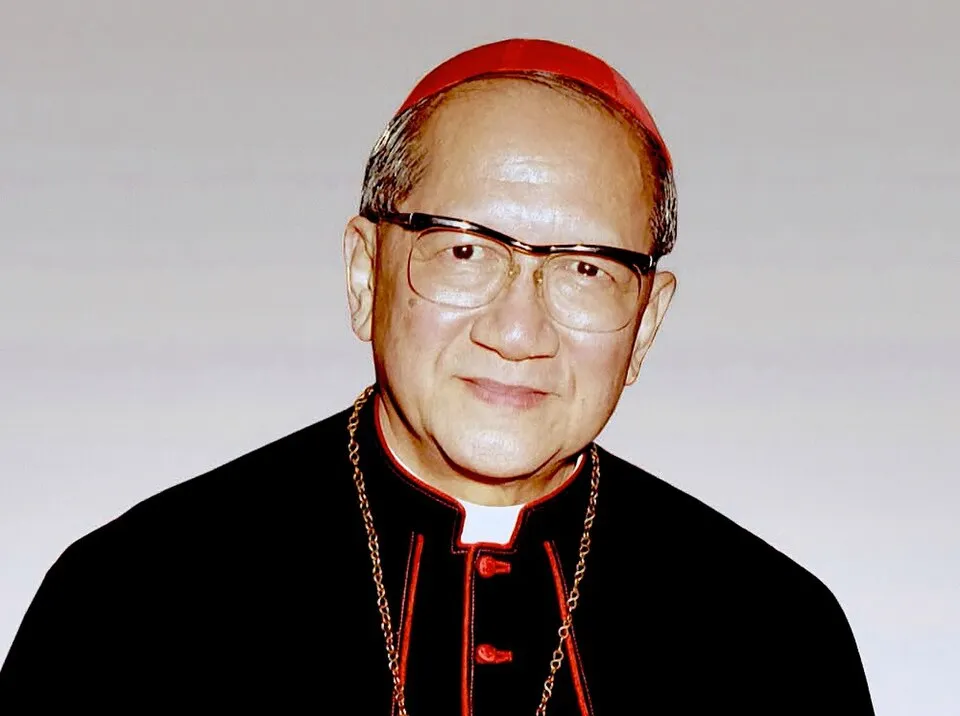
Venerable Cardinal François Xavier Nguyễn Văn Thuận (1928–2002) survived 13 years as a political prisoner in Vietnam—nine of them in solitary confinement—to become a cardinal and a worldwide witness to hope. Arrested in 1975 en route to Saigon, just after being named Coadjutor Archbishop, he endured re-education camps yet maintained his faith, celebrating Mass with smuggled elements and writing the spiritual classic The Road of Hope on stolen scraps of paper.
His life exemplifies how profound suffering can be transformed into a global ministry of reconciliation, justice, and spiritual leadership. His story remains a powerful testament to the resilience of faith under persecution.
- Cardinal Thuận was arrested in 1975 en route to Saigon and spent 13 years in re-education camps, with 9 in isolation.
- He wrote the influential book The Road of Hope and developed his “10 Rules of Life” while imprisoned.
- After release, he served in the Roman Curia as President of the Pontifical Council for Justice and Peace and was made a cardinal in 2001.
- His cause for sainthood advanced when Pope Francis declared him Venerable in 2017.
13 Years of Imprisonment: Faith Amid Solitary Confinement
Arrest and the Re-Education Camp System: 1975–1991
| Year/Period | Event |
|---|---|
| 1928 | Born in Vietnam |
| 1967 | Appointed Bishop of Nha Trang by Pope Paul VI; takes motto “Gaudium et Spes” (Joy and Hope) |
| April 24, 1975 | Named Coadjutor Archbishop of Saigon |
| April 30, 1975 | Fall of Saigon to Communist forces |
| May 1975 | Arrested en route to Saigon |
| 1975–1991 | Imprisoned in re-education camps (13 years total) |
| 1991 | Released and exiled to Rome |
The Communist government operated a network of re-education camps where former government officials, intellectuals, and religious leaders were sent for political “rehabilitation.” Conditions were harsh: forced labor, inadequate food, and isolation from families. Cardinal Thuận was targeted due to his high-profile role in the Catholic Church and his family’s historical ties to the former South Vietnamese regime—his sister was married to a Ngô Đình Diệm official. The regime saw him as a political threat who could mobilize Catholic opposition.
His arrest occurred just days after the Fall of Saigon, cutting short his appointment as Coadjutor Archbishop. The camps aimed to break his spirit and force him to renounce his faith, but instead they became the crucible for his spiritual witness.
He was arrested in 1975 and spent 13 years in camps, including 9 years in solitary. His experience reflects the broader challenges faced by Vietnamese bishops during this turbulent period, as documented in the history of bishops in French Indochina.
For a full list of current Vietnamese bishops and their dioceses, see the official roster maintained by the Catholic Bishops’ Conference of Vietnam.
Nine Years in Solitary: Daily Life and Spiritual Resistance
For nine of his thirteen years, Cardinal Thuận was held in solitary confinement in a small, dim cell with minimal human contact. He endured limited food, hard labor, and the psychological torment of isolation. Yet he chose to see this period not as punishment but as an opportunity for deep spiritual retreat.
He famously wrote, “I realized that it was God’s turn to speak and for me to listen.” In that silence, he cultivated an intense prayer life: he memorized Scripture, prayed the rosary mentally, and practiced constant awareness of God’s presence. He refused to let his mind be enslaved by bitterness or despair. Instead, he viewed his suffering as participation in Christ’s passion, finding meaning in offering it for the Church and his persecutors.
This mental discipline—focusing on the present moment, on love, on forgiveness—became the foundation of his later spiritual teachings. His physical hardships were real, but his spirit remained free, demonstrating that no regime can control the interior life.
Celebrating Mass in Prison: Smuggled Bread and Wine
Despite the absence of liturgical items, Cardinal Thuận found ways to celebrate the Eucharist, the source and summit of his faith.
- Smuggled hosts: Fellow prisoners or sympathetic guards managed to bring him consecrated hosts, often hidden in pieces of ordinary bread.
- A few drops of wine: Similarly, a small amount of wine was smuggled in, allowing him to fulfill the essential elements of the sacrament.
- Hands as paten: With no paten or chalice available, he used his own hands to hold the host and receive the wine, turning his body into a living altar.
- Sustenance for the soul: These clandestine Masses provided not only spiritual nourishment for him but also a powerful sign of hope for other prisoners who learned of his devotion.
These acts of defiance, performed in secret, embodied his motto “Gaudium et Spes”—finding joy and hope even in the darkest circumstances. The Eucharist became his lifeline to the universal Church, a tangible reminder that Christ was present with him.
This same Eucharistic devotion and joyful endurance has inspired other Vietnamese bishops, such as Bishop Joseph Đỗ Quang Khang, who have emphasized the centrality of the sacraments in pastoral life. Bishop Joseph Đỗ Quang Khang’s profile illustrates how this legacy continues.
Spiritual Writings and the 10 Rules of Life from Prison
The Road of Hope (Đường Hy Vọng): A Gospel from Captivity
During his imprisonment, Cardinal Thuận wrote reflections, prayers, and meditations on any scrap of paper he could obtain—old newspapers, toilet paper, wrappers. These writings were smuggled out piece by piece and eventually compiled into a book titled The Road of Hope (Đường Hy Vọng). Published after his release, it became an international bestseller, translated into dozens of languages and reaching millions of readers.
The book’s core message is that hope never disappoints because God is always present, even in the most extreme suffering. It offers a practical theology of suffering, showing how one can find meaning, joy, and intimacy with God in any circumstance.
The Road of Hope has become a spiritual classic, studied by Catholics and non-Catholics alike, and stands as a testament to the power of faith under persecution. Its simple, direct style reflects the author’s prison conditions, yet its depth has made it a timeless guide for those seeking to understand the redemptive value of suffering.
Cardinal Thuận’s spiritual influence extends to contemporary Vietnamese bishops such as Bishop Joseph Nguyễn Chí Linh, who have drawn on his teachings to guide their faithful.
The 10 Rules of Life: A Guide to Present-Moment Holiness
From his prison experience, Cardinal Thuận distilled ten spiritual rules for daily living. These rules focus on living fully in the present, infusing love into actions, and cultivating trust in God. They are:
- Live the present moment to the full – Do not dwell on the past or worry about the future; fully engage with now.
- Put love into everything you do – Infuse every action with charity and compassion.
- Begin each day with a fresh spirit – Treat each morning as a new start, free from yesterday’s burdens.
- Use the present to do good – Act now to help others and build the Kingdom of God.
- Do not be burdened by the past – Let go of regrets and forgive those who have wronged you.
- Do not be anxious about the future – Trust in God’s providence and plan.
- Trust in God’s providence – Believe that God provides all that is needed.
- Forgive those who have hurt you – Release resentment and pray for your enemies.
- Pray constantly – Maintain a continuous dialogue with God throughout the day.
- See Christ in everyone – Recognize the divine presence in each person you meet.
These concise principles, born in a prison cell, offer a practical roadmap for holiness in everyday life. They emphasize mindfulness, active love, and radical trust—values that have shaped the spirituality of many Catholics, including Bishop Joseph Nguyễn Văn Bình, who shepherds the faithful in the Bùi Chu diocese with similar emphasis on hope and compassion. Bishop Joseph Nguyễn Văn Bình’s profile highlights this ongoing influence.
Vatican Diplomacy and the Path to Sainthood
Why was Cardinal Nguyễn Văn Thuận imprisoned?
Cardinal Thuận‘s imprisonment stemmed directly from his appointment as Coadjutor Archbishop of Saigon on April 24, 1975. Six days later, the city fell to Communist forces. The new regime viewed the Catholic Church as a pillar of the old order and targeted its leaders.
Cardinal Thuận, already a prominent bishop, was seen as a political threat due to his high-profile position and his family’s connections to the Ngô Đình Diệm government—his sister was married to a Diệm official. While traveling to Saigon to assume his new role, he was arrested and charged with “re-education.” The regime intended to break his will and force him to renounce his faith, but instead they created a martyr-witness whose resilience would ultimately amplify his voice on the global stage.
From Exile to the Roman Curia: President for Justice and Peace
Released in 1991 after 13 years of detention, Cardinal Thuận was immediately exiled to Rome, never permitted to return to Vietnam. This exile, however, opened a new chapter in his ministry. Pope John Paul II appointed him to the Pontifical Council for Justice and Peace, and in 2001 he became its president.
In this role, he brought the perspective of a persecuted Church to the Vatican’s diplomatic and social teaching efforts. His firsthand knowledge of communist repression informed his advocacy for religious freedom, human dignity, and the rights of the poor. He worked to apply Catholic social doctrine to contemporary global issues, becoming a respected voice in international Catholic circles.
His work also influenced the approach of bishops during the Vietnam War period, who sought to mediate conflict and protect civilians amid the chaos. Bishops during the Vietnam War provides further context on that challenging era.
His legacy continues to inspire bishops like Bishop Joseph Nguyễn Văn Tiếp of Đà Nẵng, who serve the Church in modern Vietnam with similar dedication.
Cardinal and Venerable: The Cause for Sainthood
Cardinal Thuận‘s contributions were recognized when Pope John Paul II created him a cardinal in 2001, the first Vietnamese cardinal in the modern era. He died of cancer in Rome in 2002 at age 74. His reputation for heroic virtue led to the opening of his cause for canonization.
On May 4, 2017, Pope Francis declared him Venerable, confirming his life of exemplary holiness. The diocesan phase of his beatification process continues, with many devotees praying for his intercession. His journey from prisoner to prince of the Church exemplifies the transformative power of faith.
The paradox of Cardinal Thuận‘s life is that the regime sought to silence him by locking him away, but it was in that absolute isolation that he found the universal language of hope that would later speak to the world. His 13 years of imprisonment did not diminish his influence—they refined it, giving him the spiritual depth and moral authority that would shape his Vatican diplomacy and inspire millions. To truly understand his message, one must go to the source: read The Road of Hope, the book he wrote on stolen scraps of paper, and practice one of his 10 Rules each day this week.
His legacy continues through the official Nguyễn Văn Thuận website and Catholic publishers like Ignatius Press. For more on the contributions of Vietnamese bishops to the universal Church, see the profile of Vietnamese bishops on the Catholic Bishops’ Conference of Vietnam website.
Frequently Asked Questions About Cardinal François Xavier Nguyễn Văn Thuận Biography
Are there any Vietnamese Catholic cardinals?
Nguyễn Văn Thuận’s service and dedication to the Church were further recognized when Pope Francis created and proclaimed him cardinal in the consistory of February 15, 2015, assigning him the Title of San Tommaso Apostolo (St. Thomas the Apostle).
Is Nguyễn Văn Thuận a saint?
He died in Rome at age 74 in 2002, and his cause for canonization began soon after. He was declared venerable by Pope Francis in 2017. Nguyễn Văn Thuận’s cause began with the Catholic community that nurtured him.
What happens at 3am Catholic?
Church teaching says nothing about the time of 3 a.m. However, in popular culture it has become known as the “devil’s hour.” This is because Gospel tradition reports that Jesus died at 3 p.m., and so—because the devil likes to mock God— the inverse hour of 3 a.m.
Is restoration church LGBTQ friendly?
We trust the power of the Holy Spirit and the sovereignty of God to lead His people, while we embrace our call to love All People. We desire for Restoration to be a place of healing, belonging and safety for our queer siblings, for them to experience the transformational love of Jesus here.