Cardinal Pierre Nguyễn Văn Nhơn contributed significantly to Vietnamese Catholicism through his steady leadership in key roles and his persistent advocacy for unity between the Church and the Vietnamese state. Serving as Bishop of Đà Lạt, Archbishop of Hanoi, and President of the Catholic Bishops’ Conference of Vietnam (CBCV), he guided the Church through a transformative period. His 2015 elevation to Cardinal by Pope Francis further strengthened Vatican-Vietnam ties and underscored the global importance of the Vietnamese Church.
- Cardinal Pierre Nguyễn Văn Nhơn served as Bishop of Đà Lạt (1994-2010), Archbishop of Hanoi (2010-2018), and CBCV President (2007-2013), providing steady leadership during a transformative period for Vietnamese Catholicism.
- His 2015 elevation to Cardinal by Pope Francis strengthened Vatican-Vietnam diplomatic ties and highlighted the importance of the Vietnamese Church within the global Catholic community.
- As a trusted mediator, he advocated for Church-state unity, promoted lay involvement, and worked towards religious freedom, leaving a lasting legacy of dialogue and hope.
Leadership Contributions: Bishop of Đà Lạt, Archbishop of Hanoi, and CBCV President
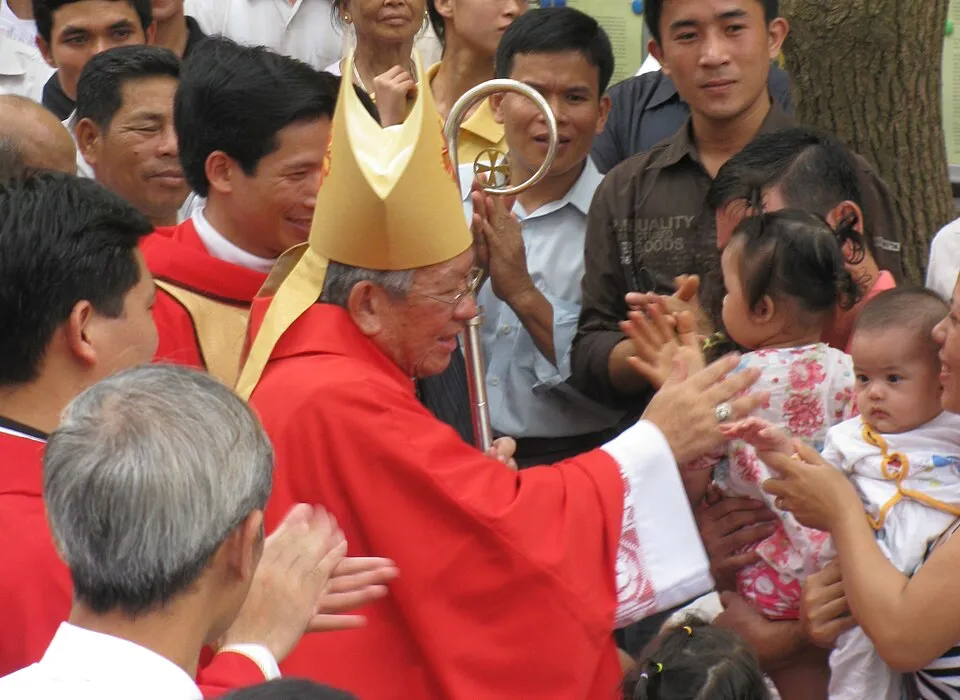
Cardinal Nguyễn Văn Nhơn’s leadership formed the bedrock of his contributions. Each position built upon the last, giving him a comprehensive view of the Vietnamese Church’s needs at the local, national, and episcopal levels.
His long tenure in Đà Lạt provided deep pastoral experience, which he brought to the national stage as CBCV President and later to the primatial see of Hanoi. This progression allowed him to address challenges with a holistic understanding, from parish life to international diplomacy.
Bishop of Đà Lạt (1994-2010): 16 Years of Pastoral Leadership
- Appointed Coadjutor Bishop: October 11, 1991
- Succeeded as Bishop: June 24, 1994
- Tenure Length: 16 years of service (1994-2010)
- Local Roots: Born in Đà Lạt on April 1, 1938, providing deep personal connection to the region
- Education: Studied philosophy and theology at Pius X Pontifical College in Đà Lạt (1958-1968)
- Priestly Ordination: December 21, 1967, for the Diocese of Đà Lạt
His 16-year episcopacy in Đà Lạt was foundational. Leading the diocese where he was born and educated allowed him to implement pastoral programs with intimate knowledge of local needs.
This period established his reputation as a caring shepherd focused on priestly formation and parish revitalization. The experience directly prepared him for the broader responsibilities of national leadership within the CBCV.
Archbishop of Hanoi (2010-2018): Leading the Capital Archdiocese
- Coadjutor Appointment: April 22, 2010
- Succeeded as Archbishop: May 13, 2010
- Resignation Accepted: November 17, 2018
- Service Duration: 8 years as head of the primatial see
- Significance: Led the Archdiocese of Hanoi, the historical and political center of the Vietnamese Church
- Context: Oversaw the archdiocese during ongoing Church-state dialogue and internal development
Leading the Archdiocese of Hanoi placed him at the heart of the Church’s relationship with the national government. As the capital’s archbishop, every pastoral decision carried national symbolic weight.
His tenure here coincided with his final years as a cardinal, allowing him to serve as a key bridge between the local Vietnamese Church and the Vatican. This role required diplomatic skill and a deep commitment to the Church’s mission in a complex social environment.
President of CBCV (2007-2013): Guiding the Episcopal Conference
- Election: Became President of the Catholic Bishops’ Conference of Vietnam in 2007
- Term Length: Served two consecutive six-year terms, concluding in 2013
- Era: Led the bishops’ conference during a significant period of transition in Church-state relations
- Priority: Focused on strengthening episcopal collegiality and unity among Vietnam’s bishops
- Challenge: Guided the CBCV through complex and sometimes difficult negotiations with state authorities
His presidency of the CBCV was arguably his most influential national role. For six years, he was the primary spokesperson and leader for the entire Vietnamese episcopate.
This period required him to balance the diverse perspectives of bishops from all regions while presenting a unified Church position to the government. His leadership style emphasized consultation and consensus, which helped maintain internal harmony during externally challenging times.
Cardinalate and Vatican Relations: Strengthening Ties with Rome
The creation of Cardinal Nguyễn Văn Nhơn by Pope Francis was a watershed moment. It was a clear signal of the Vatican’s commitment to the Vietnamese Church and a recognition of its growing global role.
This honor elevated his personal influence and provided a direct, senior Vietnamese voice within the College of Cardinals. His cardinalate was not just a personal accolade but a diplomatic tool that he used to foster greater understanding between Hanoi and the Holy See, building on the groundwork laid during his CBCV presidency.
Elevation to Cardinal by Pope Francis in February 2015
| Event | Date | Significance |
|---|---|---|
| Announcement by Pope Francis | January 4, 2015 | Public revelation of his appointment, alongside Myanmar’s first cardinal, highlighting Asia’s importance |
| Consistory and Creation | February 14, 2015 | Formal ceremony in St. Peter’s Basilica where he became a Cardinal-Priest |
| Title Assignment | February 14, 2015 | Named Cardinal-Priest of the titular church of San Tommaso Apostolo in Rome |
| Impact on Relations | 2015 onwards | Strengthened diplomatic channels between the Vatican and Vietnam; gave Vietnam a permanent electoral voice in future conclaves until age 80 |
This table shows the deliberate and historic nature of his appointment. Being named cardinal at age 76 meant his voting role in a papal conclave was brief, but his advisory role was immediate and profound.
The timing, during the early years of Pope Francis’s pontificate, signaled a new phase of engagement with Asia. For Vietnam, having a native-born cardinal in Rome was an unprecedented diplomatic asset, a status previously held only by the late Cardinal Nguyễn Văn Thuận.
Is There a Cardinal from Vietnam? His Historic Significance
- Historical Rarity: He is one of only two Vietnamese cardinals in modern history, alongside Cardinal Francis-Xavier Nguyễn Văn Thuận (1928-2002).
- Milestone in Relations: His creation in 2015 marked a concrete milestone in the warming of Vatican-Vietnam diplomatic ties, which had been without formal relations for years.
- Global Representation: As a cardinal, he represented Vietnamese Catholicism within the universal Church’s governing body, the College of Cardinals.
- Electoral Role: He served as an electoral advisor (a cardinal eligible to vote in conclaves) until he turned 80 in April 2018.
- Symbolic Importance: His presence amplified the Vietnamese Church’s voice and concerns on the global Catholic stage, moving it from a regional to a more internationally recognized position.
The question “Is there a cardinal from Vietnam?” has a definitive, significant answer.
Cardinal Nguyễn Văn Nhơn’s elevation provided an affirmative response that carried immense weight. It demonstrated that the Vietnamese Church, after decades of complex relations, had achieved a level of maturity and international recognition worthy of the highest lay office in the Catholic Church. This status was not merely ceremonial; it altered the dynamics of dialogue, giving Vatican diplomats a respected Vietnamese peer to consult.
Role as Cardinal-Priest of San Tommaso Apostolo
His assignment to the titular church of San Tommaso Apostolo (St. Thomas the Apostle) in Rome was rich with symbolism. A titular church is the cardinal’s official link to the Diocese of Rome and, by extension, to the Pope as the Bishop of Rome.
Cardinal Nguyễn Văn Nhơn took possession of this title on December 6, 2015. This act formally incorporated him into the Roman clergy, symbolizing his unity with the universal Church’s center.
For the Vietnamese Church, it meant its leader was now literally “of Rome,” strengthening the bond with the Holy See. This role required him to periodically visit Rome for consistories and meetings, maintaining his active involvement in global Church affairs even after his resignation as Archbishop of Hanoi.
Advocacy for Church-State Unity and Dialogue
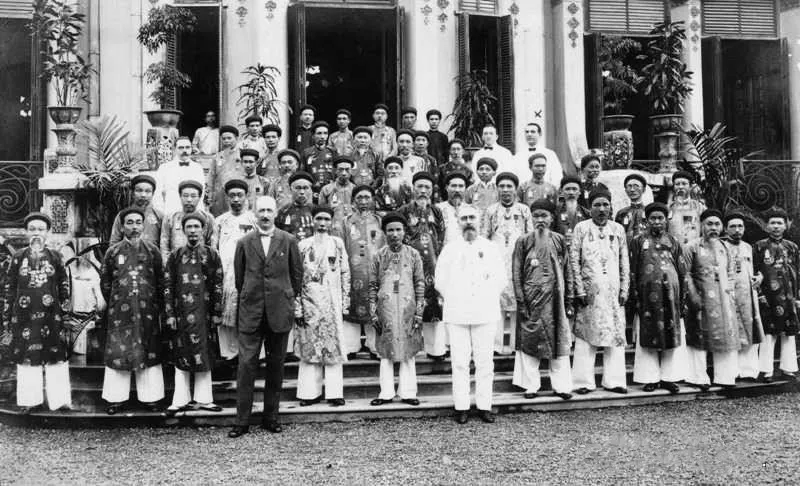
Beyond his official titles, Cardinal Nguyễn Văn Nhơn’s defining contribution was his advocacy. He consistently worked to build bridges, reduce tensions, and promote a constructive relationship between the Catholic Church and the Vietnamese government.
This was not a passive role; it required active mediation, public statements of optimism, and a strategic focus on areas of common ground like social service. His approach was characterized by patience and a long-term view, believing that dialogue was more effective than confrontation in advancing the Church’s mission and religious freedom.
Mediating Tensions Between Church and Government
As CBCV President and later as Archbishop of Hanoi, he frequently mediated difficult tensions. These often involved issues of religious freedom, property rights for Church assets, and the legal status of Catholic organizations. His mediation style was not one of public protest but of quiet, persistent dialogue.
He built personal relationships with state officials at various levels, creating channels for communication that could defuse crises. For instance, he worked to resolve long-standing disputes over properties confiscated after 1954, advocating for their return or fair compensation through negotiation rather than litigation. This bridge-building role earned him respect from both sides, even when agreements were slow to materialize.
Promoting Religious Freedom and Optimism for Future Relations
He publicly expressed consistent optimism about the trajectory of Church-state relations. He pointed to the 2007 Vietnam-Holy See Agreement—which established a permanent Vatican representative in Hanoi—as a foundational positive step. His advocacy for religious freedom was framed within the context of Vietnam’s constitutional guarantees and the country’s development needs.
He argued that a healthy Church could contribute to social stability and poverty reduction, aligning with state goals. This constructive engagement, rather than adversarial confrontation, defined his public posture. He encouraged Catholics to be model citizens while faithfully practicing their religion, a message that aimed to reduce suspicion and build mutual trust over time.
Emphasis on Lay Involvement in Church and Society
A key part of his legacy is his strong emphasis on empowering the laity. He believed that for the Church to thrive and engage society effectively, laypeople needed to move beyond passive participation. He actively promoted their involvement in healthcare, education, and parish administration.
His view, echoed in statements to outlets like AsiaNews, was that lay Catholics are “essential for the Church’s mission in Vietnam.” He supported the formation of lay leaders and Catholic associations that could operate in the social sphere. This focus ensured that the Church’s contribution to Vietnamese society was visible and widespread, not confined to sacramental life alone. It also created a larger base of engaged Catholics who could be ambassadors for the faith in their daily lives and professions.
The most surprising aspect of Cardinal Nguyễn Văn Nhơn’s legacy is his ability to maintain a mediating role and express genuine optimism despite the deep historical wounds and periodic tensions between the Vietnamese Church and state. Born in 1938, he lived through the wars and the post-1975 consolidation period, yet he consistently chose dialogue over division. His leadership proved that steady, patient engagement could yield progress even in the most complex relationships.
The most surprising aspect of Cardinal Nguyễn Văn Nhơn’s legacy is his ability to maintain a mediating role and express genuine optimism despite the deep historical wounds and periodic tensions between the Vietnamese Church and state. Born in 1938, he lived through the wars and the post-1975 consolidation period, yet he consistently chose dialogue over division. His leadership proved that steady, patient engagement could yield progress even in the most complex relationships.
For readers inspired by his example of bridge-building, the best next step is to visit the official website of the Catholic Bishops’ Conference of Vietnam to learn about the current generation of bishops carrying this work forward. His story also connects to the broader history of the Vietnamese episcopate, which can be explored through resources on Vietnamese bishops, including articles on bishops in French Indochina and the biographies of other significant figures like Bishop Joseph Nguyễn Văn Bình.