The Cha Diep site is the Tac Say Pilgrimage Center in Ca Mau Province, Mekong Delta, dedicated to Venerable Father Francis Xavier Truong Buu Diep, a Vietnamese priest martyred in 1946. His beatification, scheduled for July 2, 2026, by Pope Francis, makes this location a focal point for pilgrimage tourism in 2026.
This site is distinct from the historic martyr memorials in northern provinces like Nam Dinh. The center attracts millions of visitors annually and will see a surge for the beatification ceremony.
- The site is the Tac Say Pilgrimage Center in the Mekong Delta, honoring a priest martyred in 1946 for staying with his flock.
- Father Diep’s beatification on July 2, 2026, is a major event authorized by Pope Francis following Vatican recognition of his martyrdom in 2024.
- The center includes a church enshrining his remains, a 5-story accommodation building for 600 pilgrims, and a 5-hectare park for large gatherings.
Who Was Father Francis Xavier Truong Buu Diep and Why Is He Venerated?
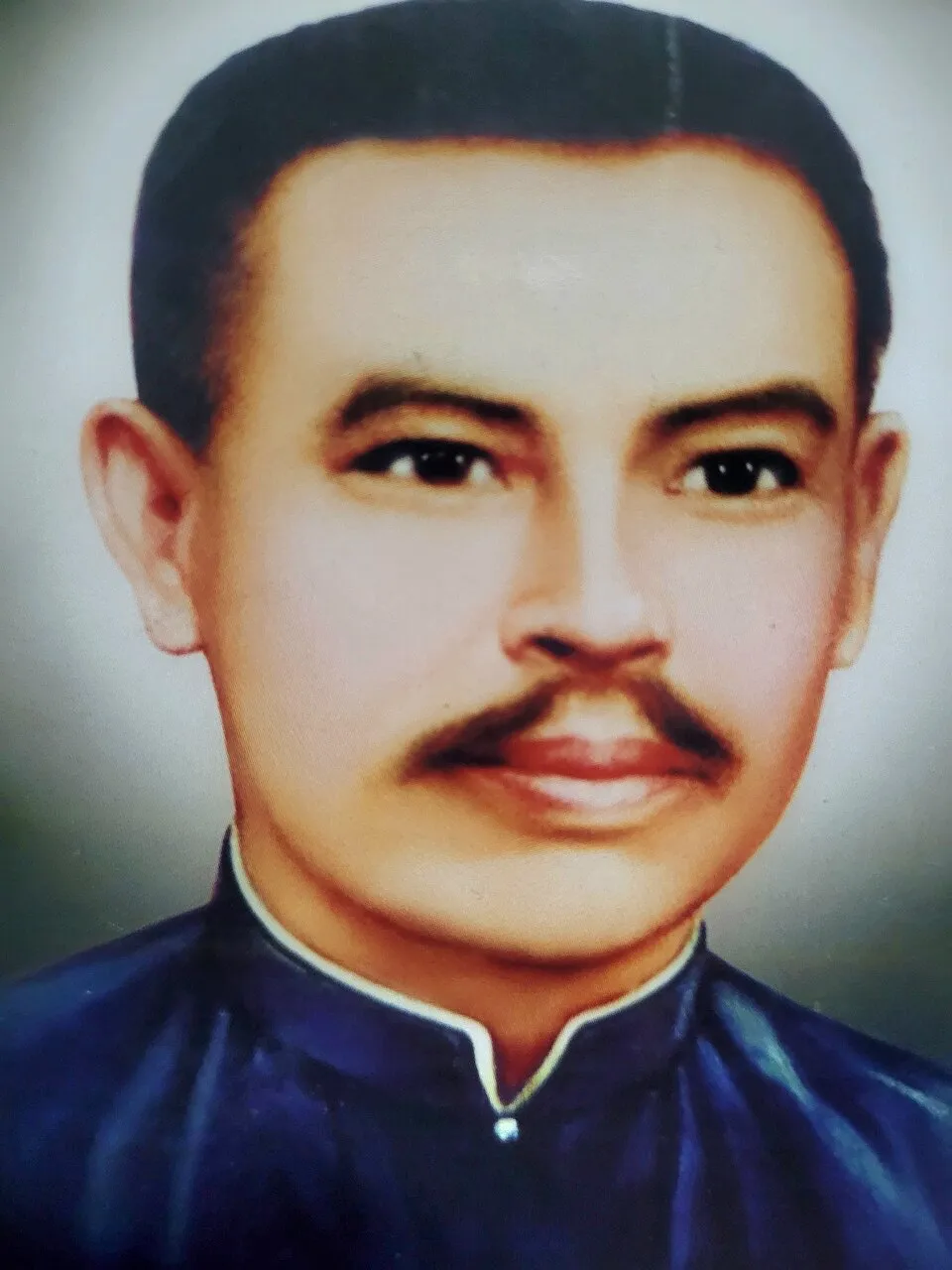
Lifespan and Path to Priesthood
Father Francis Xavier Truong Buu Diep was born on January 1, 1897, in Vietnam. He entered the priesthood and dedicated his ministry to the people of the Mekong Delta region. His pastoral work focused on serving the rural communities of southern Vietnam, where he became known for his humility and deep connection with his parishioners.
Unlike many clergy of his era, he lived among the people, sharing their struggles and joys. This grassroots approach defined his legacy and set the stage for his ultimate sacrifice. As a Vietnamese priest, he embodied the local Church’s growth during the French colonial period.
His life reflected the Catholic Church’s expansion in the southern delta, where he built parishes and catechist communities. He was widely respected across religious lines for his charitable works.
The 1946 Martyrdom: “I Will Die Among My Sheep”
During the chaotic First Indochina War, Japanese forces occupied Vietnam. On March 12, 1946, in Tac Say, Ca Mau, Japanese deserters confronted Father Diep. They demanded he abandon his parish to save himself.
He refused, stating his famous words: “I live among my sheep, and if I must die, I will die among them.” The soldiers killed him on the spot. This act of solidarity—choosing death over leaving his flock—sealed his reputation as a martyr.
The Vatican later recognized that he died in odium fidei (in hatred of the faith), a crucial criterion for beatification. His martyrdom occurred in the Mekong Delta, far from the northern battlegrounds, highlighting the nationwide persecution of Catholics during that era.
The circumstances of his death were witnessed by local Catholics, who secretly recovered his body and gave him a proper burial. His remains were later moved to the church that now bears his name. The story spread quickly, inspiring devotion among Vietnamese Catholics who saw in him a model of pastoral courage.
The Japanese deserters were likely part of the chaotic aftermath of Japan’s surrender, when lawlessness swept the region. Father Diep’s death was not just a personal tragedy but a symbol of the suffering endured by the Church in Vietnam during the transition from colonial rule to the First Indochina War. According to UCA News, his martyrdom became a cornerstone of popular devotion, with many reporting graces through his intercession.
A Figure of Deep Popular Devotion
Father Diep’s veneration extends far beyond Ca Mau. Catholics across Vietnam invoke his intercession, reporting miraculous healings and spiritual graces. Shrines dedicated to him appear in many parishes, and his feast day on March 12 draws pilgrims from all regions.
His popularity stems from his relatable story—a modern priest who chose to die with his people—rather than the distant 19th-century martyrs of northern provinces like Nam Dinh. While Nam Dinh honors saints such as Saint Dominic Trach and Bishop Pierre Dumoulin-Borie, who died during the great persecutions of the 1800s, Father Diep represents a 20th-century witness. This distinction makes his beatification particularly meaningful for younger Vietnamese Catholics seeking contemporary models of faith.
The faithful see him as a bridge between the historic martyrs and today’s Church, a shepherd who literally laid down his life for his sheep in the relatively recent past. According to the National Catholic Reporter, his cause for beatification has been supported by countless testimonies of answered prayers. For a complete directory of Vietnam’s pilgrimage destinations, including both northern and southern sites, see the official overview.
The 2026 Beatification: A Historic Event for Vietnamese Catholics
July 2, 2026: The Ceremony Authorized by Pope Francis
Pope Francis has authorized the beatification of Father Francis Xavier Truong Buu Diep on July 2, 2026. This ceremony will take place in Vietnam, likely at the Tac Say Pilgrimage Center or a nearby venue capable of hosting hundreds of thousands of attendees. Beatification is a step toward sainthood, recognizing that the candidate lived and died in heroic virtue and is now in heaven.
It allows public veneration with the title “Blessed.” The Vatican’s direct involvement underscores the global significance of Father Diep’s witness. For Vietnamese Catholics, this event is a milestone, marking the first beatification of a 20th-century Vietnamese martyr from the southern region.
The date, July 2, 2026, is now a focal point for pilgrimage planning and spiritual preparation across the country. The Catholic Bishops’ Conference of Vietnam (CBCV) is coordinating with the Vatican to ensure the ceremony reflects both liturgical norms and local devotional traditions.
Recognition of Martyrdom in 2024: The Path to Beatification
The path to beatification required the Vatican to officially recognize Father Diep’s death as a martyrdom in odium fidei—in hatred of the faith. In 2024, the Congregation for the Causes of Saints issued this recognition, confirming that his killers targeted him because of his Catholic identity and pastoral leadership. This theological determination is essential; without it, beatification could not proceed.
The 2024 announcement cleared the final canonical hurdle, enabling Pope Francis to set the 2026 date. The process involved extensive historical documentation, witness testimonies, and theological scrutiny.
For the Vietnamese Church, the 2024 recognition validated long-standing popular devotion and provided the formal Church approval needed for the beatification ceremony. According to Vatican News, the recognition emphasized that Father Diep’s death was directly linked to his ministry, making him a true martyr of the faith.
Significance for the Vietnamese Catholic Church Today
For the Vietnamese Catholic Church, this beatification reinforces its identity as a community of martyrs and saints, connecting its 17th-century origins to the present. It also serves as a reminder of the cost of discipleship and the power of staying with one’s community. In 2026, the world will witness Vietnam’s vibrant faith through this ceremony, highlighting the CBCV’s role in preserving and promoting this heritage.
The event is expected to attract hundreds of thousands of pilgrims to the Mekong Delta, rivaling major feast days at La Vang, a historic national shrine. The beatification also offers an opportunity for the Church to reflect on its mission in a rapidly developing Vietnam, where religious freedom has improved but challenges remain.
For the Vietnamese Catholic Church, this beatification reinforces its identity as a community of martyrs and saints, connecting its 17th-century origins to the present. It also serves as a reminder of the cost of discipleship and the power of staying with one’s community.
In 2026, the world will witness Vietnam’s vibrant faith through this ceremony, highlighting the CBCV’s role in preserving and promoting this heritage. The beatification also offers an opportunity for the Church to reflect on its mission in a rapidly developing Vietnam, where religious freedom has improved but challenges remain.
Tac Say Pilgrimage Center: Facilities, Preparations, and Pilgrimage Experience
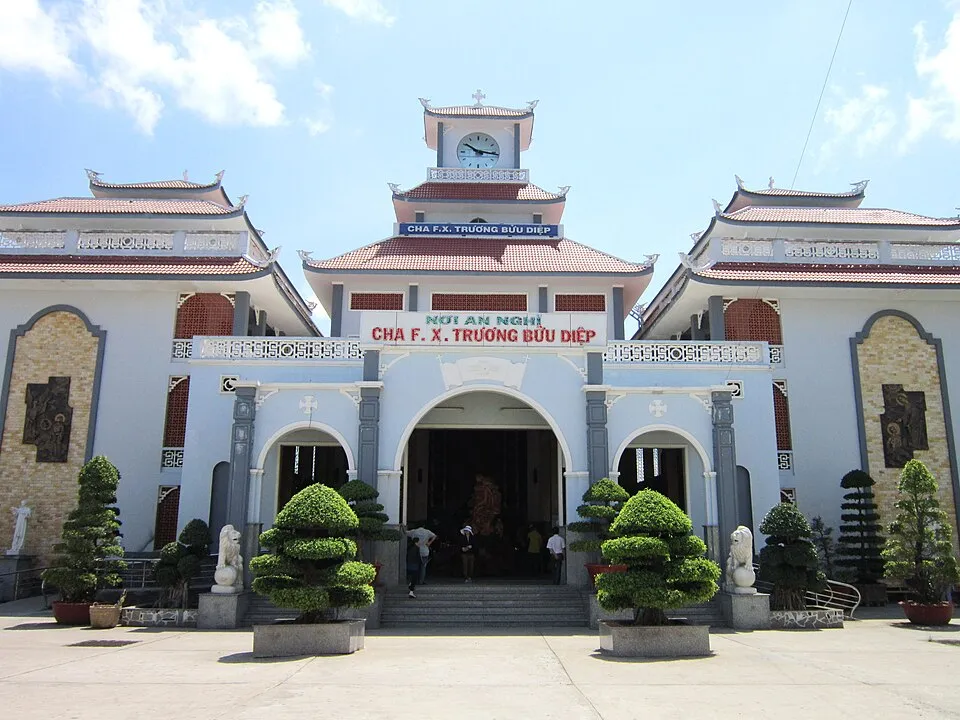
Location and Core Sacred Structures
- Location: Tac Say, Ca Mau Province, Mekong Delta, Southern Vietnam.
- Tac Say Church: The main church where Father Diep’s remains are enshrined. This is the spiritual heart of the pilgrimage site.
- Shrine to Father Diep: A dedicated shrine honoring his life and martyrdom, often the focus of devotional prayers and votive offerings.
These structures form the core sacred landscape. The church houses the physical relics, making it the primary destination for pilgrims seeking to pray at the tomb. The separate shrine provides space for meditation on his virtues and often displays votive offerings from those who have received graces.
Together they create a cohesive pilgrimage experience that blends liturgical worship with personal devotion. The simplicity of the structures reflects the humble origins of Father Diep’s ministry, while their careful maintenance shows the deep reverence of the local Catholic community. Visitors often note the peaceful atmosphere, enhanced by the surrounding tropical foliage of the Mekong Delta.
The site’s design encourages pilgrims to walk meditationally between the church and shrine, following a traditional pattern of prayer and reflection. For many, the combination of these elements makes Tac Say a place of profound spiritual encounter.
Accommodation and Large-Event Infrastructure
- Pilgrimage Accommodation Building: A five-storied structure offering free overnight stays for up to 600 pilgrims. This facility ensures that even those from remote areas can spend multiple days in prayer and reflection at the site.
- Five-Hectare Event Park: For the 2026 beatification, organizers are utilizing a nearby five-hectare park to handle the anticipated hundreds of thousands of attendees. This open space will host the outdoor Mass, food stalls, and crowd management.
- Scalable Infrastructure: The combination of built accommodation and expansive outdoor areas demonstrates the site’s readiness for mass gatherings while maintaining a spirit of humility and service.
These facilities reflect the site’s evolution from a simple shrine to a major pilgrimage hub.
The free accommodation embodies the Church’s hospitality, removing financial barriers for the faithful. The large park shows foresight in planning for the beatification’s unprecedented crowds. Together they support both daily pilgrims and extraordinary events.
Pilgrimage Patterns and What Visitors Experience
Tac Say Pilgrimage Center draws millions of visitors each year, with peaks on Father Diep’s feast day, March 12, and during major events such as the upcoming beatification. Pilgrims come to pray at his tomb, attend Mass, and experience the serene yet powerful atmosphere of a martyr’s shrine. The site’s layout encourages walking meditation, with Stations of the Cross and quiet gardens.
Visitors often report a deep sense of peace and spiritual renewal. The presence of free accommodation allows for extended stays, fostering community among pilgrims from diverse regions. For 2026, the beatification will transform the site into a global destination, with organized groups from across Vietnam and abroad converging to witness history.
The experience combines liturgical celebration with cultural expressions of Vietnamese Catholic identity, including traditional music and processions. For those planning a visit, the CBCV’s Religious Travel Guides for Vietnam offer practical tips on timing, transportation, and etiquette. Tac Say ranks among the best pilgrimage sites in Vietnam for its intimate connection to a modern martyr.
The Cha Diep site offers a unique perspective on Vietnamese Catholic heritage: a 20th-century southern martyrdom that contrasts with the 19th-century northern persecutions. This modern narrative of pastoral sacrifice resonates deeply with today’s faithful, making Tac Say a living center of faith rather than a distant historical monument. As the 2026 beatification approaches, the site will become a focal point for global Catholic attention.
The Cha Diep site offers a unique perspective on Vietnamese Catholic heritage: a 20th-century southern martyrdom that contrasts with the 19th-century northern persecutions. This modern narrative of pastoral sacrifice resonates deeply with today’s faithful, making Tac Say a living center of faith rather than a distant historical monument. As the 2026 beatification approaches, the site will become a focal point for global Catholic attention.
For the most current information on the ceremony, authorized pilgrimage packages, and travel logistics, visit the official website of the Catholic Bishops’ Conference of Vietnam at www.cbcvietnam.org. There, you will find verified updates and resources to plan your journey to this historic shrine. Additionally, explore the CBCV’s pilgrimage tourism portal for a comprehensive overview of sacred sites across Vietnam, including details on historic Catholic pilgrimage routes that trace the nation’s faith journey.