The Catholic Bishops’ Conference of Vietnam (CBCV) represents 27 dioceses with over 20 active bishops of Vietnamese origin serving both in Vietnam and internationally as of 2026. This includes prominent figures such as Cardinal Francis Xavier Nguyễn Văn Thuận, known for his endurance during imprisonment, and Archbishop Joseph Nguyễn Năng, the current CBCV President.
The Vietnamese Catholic community, comprising approximately 7% of the population, sustains a vibrant clerical formation with 11,713 seminarians across eight major seminaries, according to the CBCV. For detailed biographical sketches of Vietnamese bishops, the official CBCV website offers authoritative profiles.
- Vietnamese bishops have demonstrated remarkable resilience through imprisonment and political challenges, exemplified by Cardinal Nguyễn Văn Thuận’s 13 years in prison.
- The Vietnamese Catholic community represents approximately 7% of the population with 11,713 seminarians in formation across eight regional major seminaries.
- Current leadership includes Archbishop Joseph Nguyễn Năng as CBCV President, Archbishop Joseph Vũ Văn Thiên as Vice-President, and Bishop Joseph Đỗ Mạnh Hùng as General Secretary.
Historical Origins and Formation of Vietnamese Bishops
First Vietnamese Catholic bishops and the birth of an indigenous hierarchy
The history of Vietnamese bishops traces back to the gradual transition from foreign missionary leadership to an indigenous hierarchy. According to a 2008 JSTOR study on the first Vietnamese bishops, this shift marked the emergence of an independent Vietnamese Catholic Church, distinct from missionary oversight.
The process was shaped by the witness of the Vietnamese Martyrs, 117 of whom were canonized, embodying the faith’s resilience during periods of persecution. These martyrs, from the 17th to 19th centuries, became foundational symbols of Catholic identity in Vietnam.
The first native bishops emerged in the early 20th century, signaling a new era where Vietnamese clergy could lead their own Church. This indigenization was crucial for the Church’s deep integration into Vietnamese culture and society, allowing for a more contextualized expression of faith. The establishment of local seminaries, such as Saint Joseph Seminary in Saigon, played a key role in training native clergy.
By the mid-20th century, Vietnamese bishops were leading major dioceses, guiding the Church through colonial rule, war, and communist takeover. Their leadership ensured the continuity of Catholic traditions while adapting to Vietnam’s unique cultural context. The spirit of the martyrs, who chose death over renouncing their faith, provided a powerful model for episcopal courage and fidelity.
This historical foundation underpins the current CBCV’s emphasis on evangelization and social service, rooted in a deep sense of national identity and universal Catholic communion. For more on the early bishops during the colonial period, see Bishops in French Indochina: Historical Roles and Legacy.
Key figures in 20th century leadership: From Paul Nguyen Van Binh to Philippe Nguyen Kim Dien
- Archbishop Paul Nguyễn Văn Bình (1966–1980): Served as the first Archbishop of Ho Chi Minh City after the reunification of Vietnam, leading the Church through significant political change and restrictions. His tenure focused on maintaining Church operations under the new socialist government.
- Archbishop Philippe Nguyễn Kim Điển: Served as Archbishop of Huế and was placed under house arrest for opposing government control over the church, becoming a symbol of ecclesiastical resistance.
- Cardinal Francis Xavier Nguyễn Văn Thuận: Appointed Coadjutor Archbishop of Saigon in 1975 just before the communist takeover, he spent 13 years in prison, including 9 in solitary confinement, yet continued his ministry secretly. His experiences during the war and its aftermath are explored in Bishops during the Vietnam War Period: Leadership Amid Conflict.
These bishops exemplify the Vietnamese Church’s resilience during the tumultuous 20th century.
Their leadership spanned colonial transition, war, and communist rule, requiring diplomatic skill and spiritual fortitude. Archbishop Bình navigated the early post-reunification years, while Archbishop Điển’s house arrest highlighted tensions between Church and state. Cardinal Thuận’s imprisonment and secret ministry transformed him into a worldwide witness to hope.
Collectively, they laid the groundwork for the CBCV’s current approach of constructive engagement with authorities while preserving religious freedom. Their stories continue to shape the identity of Vietnamese bishops today, emphasizing courage, pastoral care, and fidelity to the universal Church.
Contemporary Bishops: Leadership in Vietnam and the Global Diaspora
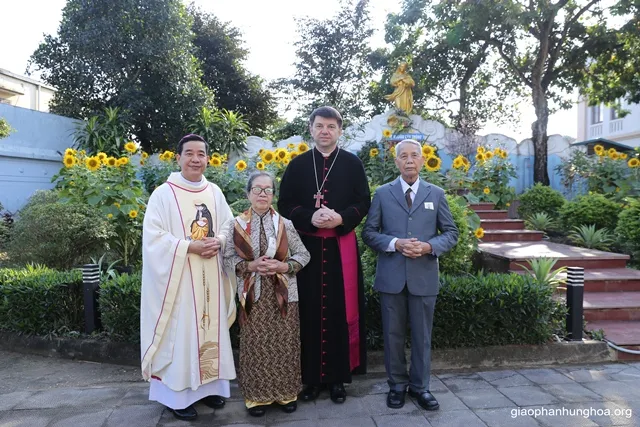
Current CBCV leadership structure and diocesan bishops in Vietnam
| Bishop | Diocese | CBCV Position | Role/Notes |
|---|---|---|---|
| Archbishop Joseph Nguyễn Năng | Ho Chi Minh City | President | Serving since 2022 |
| Archbishop Joseph Vũ Văn Thiên | Hanoi | Vice-President | — |
| Bishop Joseph Đỗ Mạnh Hùng | Phan Thiết | General Secretary | — |
| Bishop Thomas Vũ Đình Hiệu | Bùi Chu | Committee on Charitable and Social Actions | — |
| Bishop Antoine Vũ Huy Chuong | Da Lat (Emeritus) | — | — |
The CBCV’s structure includes numerous committees covering various aspects of Church life, such as evangelization, family, and migration. Bishop Joseph Đỗ Quang Khang leads the Committee on Clergy and Seminarians, while Bishop Joseph Nguyễn Chí Linh heads the Committee on Migration. These assignments reflect the diverse pastoral needs of Vietnam’s Catholic community.
Bishop Joseph Nguyễn Chí Linh’s biography details his work with migrant communities, and Bishop Joseph Đỗ Quang Khang’s profile highlights his focus on priestly formation. This committee system ensures coordinated pastoral response across the 27 dioceses.
Other notable dioceses include Bùi Chu, currently led by Bishop Thomas Vũ Đình Hiệu but historically shepherded by Bishop Joseph Nguyễn Văn Bình, whose life and ministry are chronicled here. Additionally, the Diocese of Đà Nẵng is guided by Bishop Joseph Nguyễn Văn Tiếp, with his profile available.
Vietnamese-born bishops serving internationally: A global presence
- Bishop Peter Dai Bui: Appointed auxiliary bishop of Phoenix, USA in December 2025, consecrated February 2026. A Vietnamese refugee, he is the fifth Vietnamese-American bishop, serving a growing diaspora community.
-
Bishop Michael Pham: Auxiliary bishop of San Diego, appointed in 2023.
Ordained a priest in 1967 in Đà Nẵng, he brings decades of pastoral experience to his role.
- Bishop Thanh Thai Nguyen: Auxiliary bishop of Orange, California, since 2017. He has been active in ministering to Vietnamese Catholics in the United States.
- Bishop Vincent Nguyen: Auxiliary bishop of Toronto, Canada, since 2010, and the first Canadian bishop of Asian descent. His appointment reflects the multicultural face of the Church in Canada.
- Bishop Joseph Phuong Nguyen: Bishop of Kamloops, Canada, serving the local Catholic community.
- Bishop Joachim Thinh Xuan Nguyen: Appointed auxiliary bishop of Melbourne, Australia in late 2024, extending the Vietnamese episcopal presence to Oceania.
The presence of Vietnamese-born bishops abroad underscores the global dispersion of Vietnam’s Catholic community. Many of these bishops arrived as refugees or immigrants following the Vietnam War, carrying their faith to new lands.
Their appointments by the Holy See recognize both their pastoral abilities and the importance of cultural representation within the Church. They serve as bridges between the Vietnamese diaspora and the universal Church, often maintaining ties with the CBCV.
This global ministry also enriches the local Churches in their host countries with Vietnamese spiritual traditions and pastoral sensitivity. The continued appointment of Vietnamese bishops internationally demonstrates the vitality and recognition of Vietnam’s Catholic heritage on the world stage.
Is Cardinal Nguyen Van Thuan a saint? Understanding his cause for canonization
Life, imprisonment, and secret ministry during persecution
Cardinal Francis Xavier Nguyễn Văn Thuận was born on April 17, 1928, in Phú Cam, Huế. According to the official biography at cardinalvanthuan.org, his episcopal appointment came at a pivotal moment: on 24 April 1975, just days before the fall of Saigon, he was named Coadjutor Archbishop of Saigon. This timing placed him directly in the path of the communist takeover.
He was arrested in 1975 and spent the next 13 years in prison, with nine of those years in solitary confinement. Conditions were harsh, yet he continued his ministry secretly, celebrating Mass with minimal items and sharing spiritual writings on scraps of paper. His resilience became legendary; even after his release in 1988, he remained under house arrest until 1991, when he was allowed to go to Rome.
He died in Rome on 16 September 2002, at age 74. Throughout his ordeal, he maintained a deep prayer life and wrote extensively, including the famous “The Road of Hope” and “Five Loaves and Two Fish.” His experience exemplifies the Vietnamese Church’s capacity for forgiveness and hope amid suffering.
Beatification process and current status as Venerable
The cause for Cardinal Thuận’s canonization began in 2010, initiated by the CBCV and supported by widespread devotion. On 27 June 2017, Pope Francis declared him Venerable, recognizing that he lived the Christian virtues to a heroic degree. This status is a key step toward sainthood, indicating that the Vatican has approved his life as a model of holiness.
However, he is not yet beatified or canonized; a miracle attributed to his intercession would be required for beatification, and a second for canonization. The ongoing process reflects the careful scrutiny of the Church. Many Vietnamese Catholics already regard him as a saint due to his profound spiritual writings and his witness of forgiveness—he famously said, “I learned to love my enemies.” His concept of a “civilization of love and life,” promoted by the CBCV, stems from his theology of hope.
As of 2026, his cause continues, with prayers offered for his eventual beatification. The question “Is Nguyen Van Thuan a saint?” is thus answered: he is Venerable, a step short of beatification, but his legacy of faith under persecution already sanctifies the Church in Vietnam and beyond.
The most striking insight from these biographical sketches is the Vietnamese Catholic Church’s ability to produce over 11,700 seminarians across eight major seminaries despite being a 7% minority in a largely non-Christian society. This demonstrates a vibrant vocational culture that sustains episcopal leadership. The global diaspora of Vietnamese bishops also highlights how the faith has taken root far from home, with prelates serving in the United States, Canada, and Australia.
Their stories of refugee resilience and pastoral adaptation offer powerful testimonies. The CBCV’s official portal remains the authoritative source for verified biographical information, ensuring accuracy and reverence for these shepherds of the Church. For ongoing updates on Vietnamese bishops and their ministries, visit cbcvietnam.org.
Frequently Asked Questions About Biographical Sketches Of Vietnamese Bishops
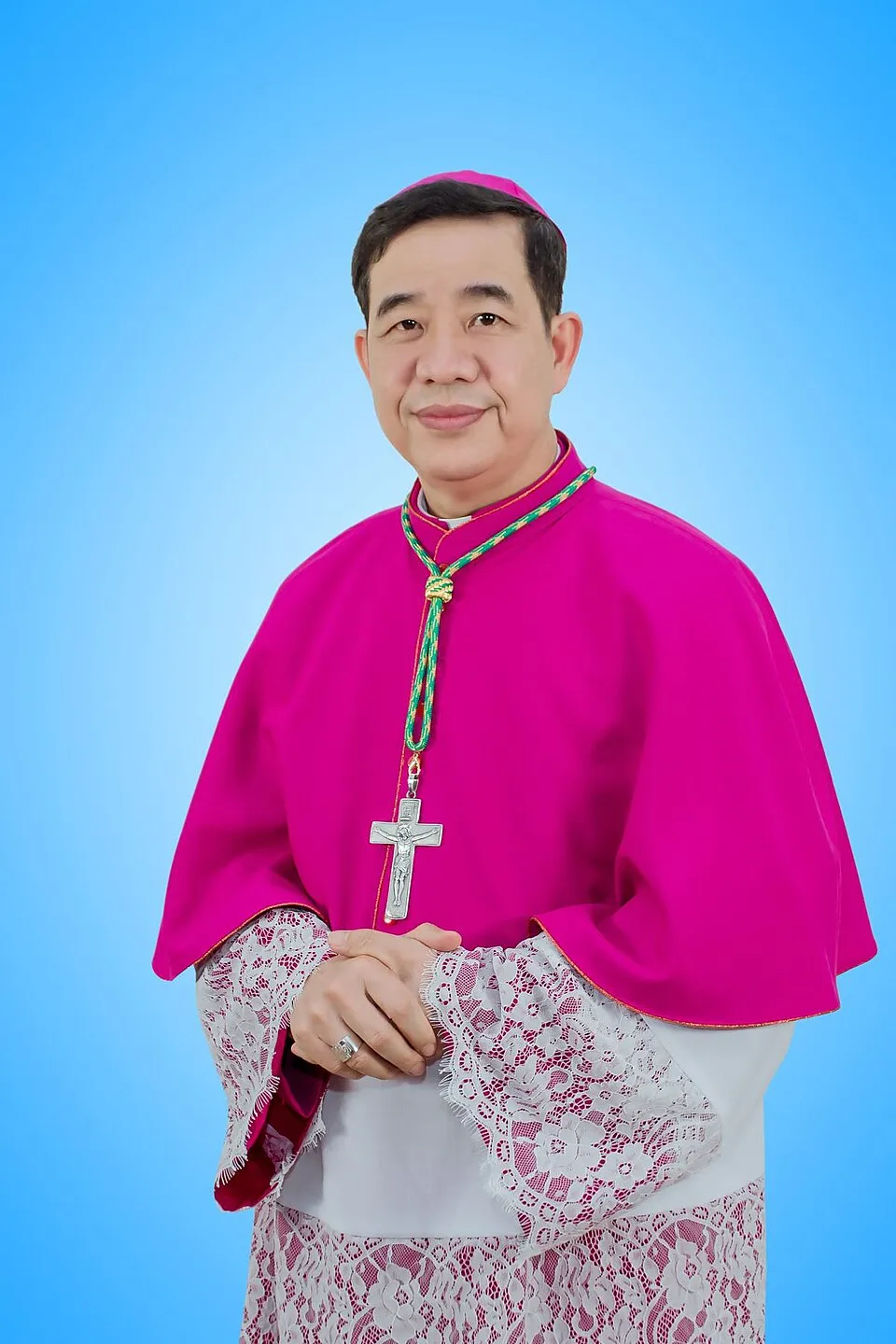
Who is the current President of the Catholic Bishops' Conference of Vietnam (CBCV)?
Archbishop Joseph Nguyễn Năng is President, serving since 2022, and leads the Ho Chi Minh City Archdiocese.
Which bishop serves as General Secretary of the CBCV?
Bishop Joseph Đỗ Mạnh Hùng is General Secretary, representing the Phan Thiết Diocese.
Who was the Archbishop of Ho Chi Minh City from 1966 to 1980?
Archbishop Paul Nguyễn Văn Bình served from 1966 to 1980, a key historical figure in Vietnamese episcopal leadership.
Is Cardinal Nguyen Van Thuan a saint?
Cardinal Nguyen Van Thuan was declared venerable by Pope Francis in 2017; his cause for canonization is ongoing, as detailed in the article's third section.
What CBCV committee does Bishop Thomas Vũ Đình Hiệu chair?
Bishop Thomas Vũ Đình Hiệu of Bùi Chu chairs the Committee on Charitable and Social Actions.