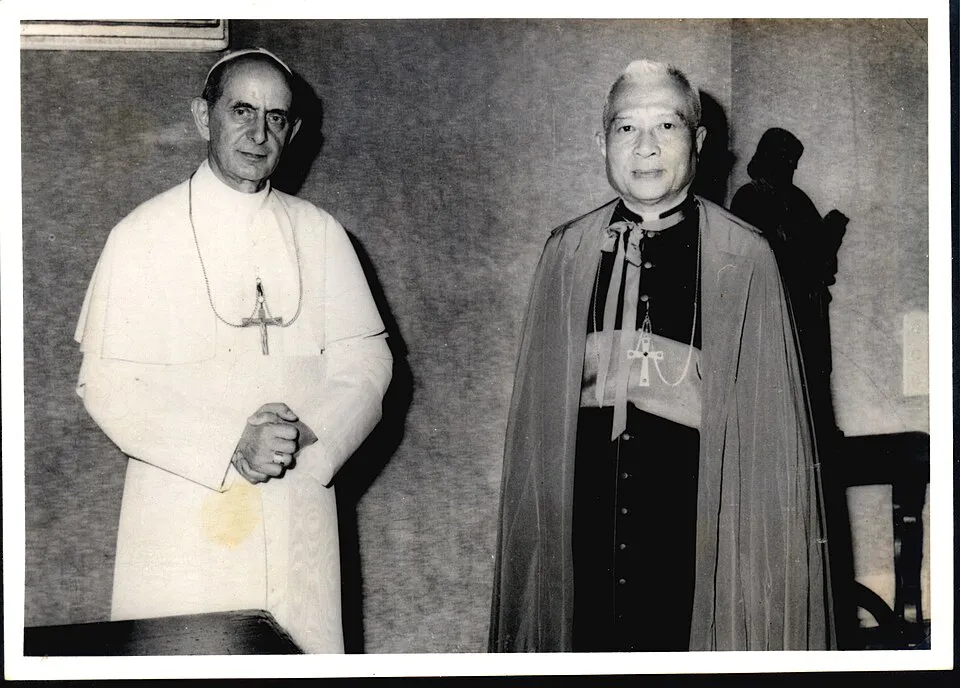
Bishop Joseph Phạm Văn Thiên was appointed by Pope Paul VI on October 14, 1965, as the first bishop of the newly established Diocese of Phú Cường, a role he held for 28 years until 1993. His episcopal leadership was defined by building church infrastructure from the ground up and establishing charitable outreach programs that served marginalized communities during a period of significant social upheaval in Vietnam. The “Trung tâm Bác Ái” (Charity Center) in Lá stands as his most enduring legacy of service to the poor.
- First Bishop of Phú Cường: Appointed by Pope Paul VI in 1965 to lead the newly established diocese covering five provinces north of Saigon.
- 28-year episcopate: Served from 1965 to 1993, building the diocese’s infrastructure and pastoral programs from the ground up.
- Charitable leadership: Known for his commitment to serving the poor and marginalized, leaving a lasting legacy of pastoral care and charitable initiatives.
First Bishop of Phú Cường: A 28-Year Ministry of Service (1965-1993)
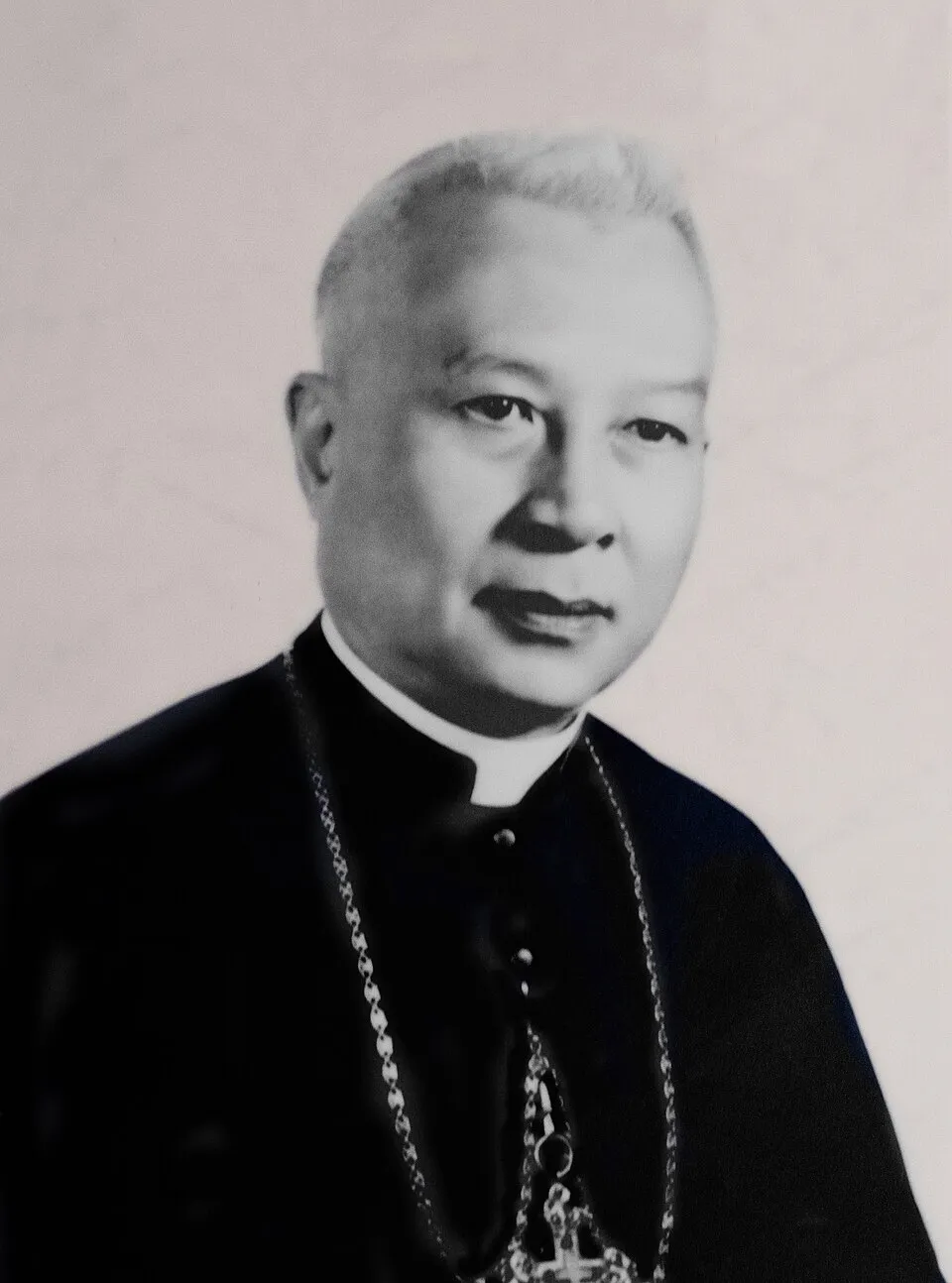
Bishop Joseph Phạm Văn Thiên’s appointment as the inaugural bishop of Phú Cường represented both a personal milestone and a pivotal moment for the Catholic Church in southern Vietnam. The diocese’s establishment in 1965 created a new ecclesiastical jurisdiction covering five provinces north of Saigon, requiring foundational leadership to build all structures of diocesan life. Bishop Thiên’s 28-year tenure provided the stability and vision needed to develop this new diocese from its initial 51,000 Catholics into a mature local church with established parishes, clergy, and charitable programs.
1907-1965: Early Life, Seminary Formation, and Priesthood
Joseph Phạm Văn Thiên was born on May 2, 1907, in Đất Đỏ, Bà Rịa – Vũng Tàu, into a devout Catholic family that nurtured his early religious vocation. His formation began in 1918 when he entered the minor seminary in Saigon, marking the start of his journey toward priesthood. After completing his philosophical and theological studies at the major seminary, he was ordained a priest on March 17, 1934, by the Archdiocese of Saigon.
Father Thiên’s pastoral assignments included service as pastor of several parishes: Bà Rịa, Chí Hoa, and Vũng Tàu. These early ministries provided him with direct experience serving Catholic communities in the region that would later become part of his diocese.
His leadership qualities became evident when he was appointed the first Vietnamese director of Saint Joseph Major Seminary in Saigon, a position that placed him at the forefront of priestly formation for the Vietnamese Church. This role demonstrated his capability to lead and educate future clergy, preparing him for the episcopal responsibilities that awaited.
1965-1966: Appointment, Consecration, and Assumption of Leadership
The Vatican’s decision to establish the Diocese of Phú Cường on October 14, 1965, created the need for a founding bishop who could build the diocese from nothing. Pope Paul VI selected Father Phạm Văn Thiên for this monumental task.
His episcopal consecration took place on January 6, 1966, and he officially took possession of his new diocese on January 12, 1966. Upon assuming leadership, he chose the motto “Gratia Dei mecum” (God’s grace with me), which reflected his understanding that building a new diocese required reliance on divine providence.
The challenges facing Bishop Thiên were substantial. The diocese encompassed five provinces—Tây Ninh, Phước Thành, Bình Long, Bình Dương, and Hậu Nghĩa—with a scattered Catholic population of approximately 51,000 people (7.2% of the total population). At its inception, the diocese had 6 deaneries, 106 churches, 36 parishes with resident priests, and 43 priests total.
Bishop Thiên’s task was to strengthen this foundation, establish proper diocesan structures, and ensure pastoral care reached all corners of his territory. His 28-year service until 1993 allowed him to see this vision through to fruition.
How Did Bishop Thiên Build the Diocese of Phú Cường?
Bishop Thiên’s approach to diocesan development balanced infrastructure building with pastoral innovation, always with an eye toward serving the poor. The geographic scope of his diocese presented both opportunities and challenges, requiring a strategy that could reach rural communities while strengthening urban centers. His establishment of the Charity Center in Lá demonstrated that social outreach was not an afterthought but integral to the diocese’s mission from its earliest days.
Geographic Scope: The Five Provinces North of Saigon
- Tây Ninh: Located furthest northwest, bordering Cambodia, with significant Catholic communities in rural areas
- Phước Thành: Situated northeast of Saigon, encompassing both agricultural and developing urban zones
- Bình Long: Central province within the diocese, requiring careful pastoral coordination
- Bình Dương: Province immediately north of Saigon, experiencing rapid growth and industrialization
- Hậu Nghĩa: Western province with diverse terrain and population distribution
This configuration placed the Diocese of Phú Cường in a strategically important position relative to Saigon, serving as a bridge between the capital region and outlying provinces. The diocese’s territory included areas that would later become part of Vietnam’s economic transformation, making Bishop Thiên’s early investments in church infrastructure particularly valuable for future growth. The five-province structure meant that pastoral care required extensive travel and decentralized parish development, challenges Bishop Thiên addressed through strategic priest placement and the establishment of additional parishes over his 28-year tenure.
Infrastructure, Pastoral Programs, and Charitable Legacy
Bishop Thiên’s building strategy focused on creating sustainable institutions that could serve generations of Catholics. He prioritized constructing churches, establishing parishes with resident priests, and developing training programs for catechists and lay leaders.
His background as a seminary director informed his emphasis on proper formation for clergy and laity alike. The diocese’s growth from 43 priests at its founding to a larger, more stable presbyterate reflected his success in priestly recruitment and formation.
The bishop’s commitment to charitable outreach materialized most concretely in the “Trung tâm Bác Ái” (Charity Center) in Lá. This institution became the operational hub for serving the poor and marginalized throughout the diocese.
The center provided direct assistance—food, clothing, medical care—to those in need, embodying Bishop Thiên’s conviction that the Church must be a field hospital for the suffering. His episcopal motto “Gratia Dei mecum” (God’s grace with me) guided this work: the bishop saw charitable service not as optional charity but as the natural expression of a community that had received God’s grace and must share it.
Bishop Thiên’s legacy includes both physical structures—churches, seminaries, charity centers—and a pastoral culture that prioritized the poor. His leadership during the pre-1975 period of conflict and the subsequent post-war transitions demonstrated adaptability and steadfast commitment to his flock. The Diocese of Phú Cường that he built provided a stable foundation for his successors, with the Charity Center continuing its mission long after his retirement in 1993 and his death in 1997.
For contemporary Catholics seeking to understand social justice leadership in the Vietnamese Church, Bishop Thiên’s model offers clear principles: begin with solid institutional foundations, integrate charitable outreach into diocesan identity from the start, and lead with the conviction that God’s grace compels service to the marginalized. His work with the Vietnamese bishops on liturgical commissions further shows how local diocesan leadership contributes to the broader national church.
The most surprising aspect of Bishop Thiên’s legacy is how his charitable vision anticipated the later development of Caritas Vietnam and other national Catholic charitable organizations. While he worked at the diocesan level, his model of integrated pastoral and social outreach influenced the entire conference of bishops in French Indochina and their successors. His 28-year episcopate demonstrates that lasting social impact requires both immediate relief work and long-term institutional building.
To honor Bishop Thiên’s legacy today, Catholics can support the ongoing work of the Trung tâm Bác Ái in Phú Cường or similar charitable initiatives in their own dioceses. The bishop’s example shows that effective social justice ministry requires both direct service to the poor and the development of sustainable structures that outlast any single leader.