During the First Indochina War (1946–1954), Vietnamese bishops established autonomous zones covering approximately 1,070 square miles to protect over 2 million Catholics from Viet Minh attacks, as reported by Time Magazine in 1951. These zones, led by bishops Thaddeus Lê Hữu Từ of Phát Diệm and Pham Ngoc Chi of Bùi Chu, functioned as de facto safe havens where the Church maintained sacraments, education, and welfare despite ongoing conflict. Their leadership combined spiritual guidance with temporal defense, shaping the Catholic community’s survival and later mass migration.
- Bishops Thaddeus Lê Hữu Từ (Phát Diệm) and Pham Ngoc Chi (Bùi Chu) controlled 1,070 sq miles, 650 churches, and militias of 2 regular + 5 militia battalions.
- The 1951 pastoral letter denouncing communism marked a decisive break from the Viet Minh and alignment with French forces.
- Post-1954, bishops led approximately 1 million northern Catholics south in one of the 20th century’s largest refugee movements.
How Did Bishops Protect Catholics During the First Indochina War?
The Catholic Church in northern Vietnam faced existential threats during the First Indochina War as Viet Minh forces targeted clergy and laity perceived as aligned with French colonialism. In response, bishops Thaddeus Lê Hữu Từ of Phát Diệm and Pham Ngoc Chi of Bùi Chu created semi-autonomous enclaves that combined religious authority with localized military defense. These zones allowed the Church to operate independently, preserving sacramental life and community cohesion.
Their approach was not merely defensive but also political, as they navigated between Viet Minh, French, and emerging Cold War pressures to ensure the survival of their flock. The legacy of this period includes both the militarization of Church protection and the demographic shift that followed the 1954 Geneva Accords, themes central to bishops’ historical roles in French Indochina.
Phát Diệm and Bùi Chu: 1,070 Square Miles Under Episcopal Control
The territories under episcopal control in Phát Diệm and Bùi Chu formed a contiguous Catholic stronghold in northern Vietnam. According to Time Magazine (1951), these two dioceses together covered approximately 1,070 square miles, housed over 2 million people, and contained 650 churches. Bishop Thaddeus Lê Hữu Từ governed Phát Diệm from 1945 to 1959, while Bishop Pham Ngoc Chi led Bùi Chu.
Their administration blended civil and religious functions, effectively creating a “principality” where canon law and local ordinances coexisted. This arrangement functioned as a safe haven by allowing bishops to mobilize resources, coordinate defense, and maintain pastoral activities without interference from warring factions.
The zones initially resisted full French military control, emphasizing their autonomy. However, this semi-independence was temporary, as external pressures eventually brought them under French oversight.
| Diocese | Key Bishop | Approx. Area (sq miles) | Population | Churches |
|---|---|---|---|---|
| Phát Diệm | Thaddeus Lê Hữu Từ | Part of 1,070 | Part of 2M+ | Part of 650 |
| Bùi Chu | Pham Ngoc Chi | Part of 1,070 | Part of 2M+ | Part of 650 |
| Total | Both Bishops | ~1,070 | Over 2,000,000 | ~650 |
The table above illustrates the combined scale of episcopal control. These zones were not merely geographic areas but organized communities where bishops exercised temporal power. They levied taxes, administered justice, and oversaw welfare, all while ensuring that Masses, baptisms, and schools continued.
The presence of churches—one for roughly every 3,300 people—underscored the region’s Catholic density. This density facilitated collective defense and made the zones formidable. The bishops’ ability to govern such a large population with limited resources demonstrated remarkable administrative skill, turning wartime constraints into an opportunity for ecclesial self-determination.
Armed Defense: 2 Regular and 5 Militia Battalions
Protection of Catholics relied on armed forces directly under episcopal command. Research from Viet Studies (2016) indicates that the Phát Diệm militia comprised 2 regular battalions and 5 militia battalions, totaling around 1,500–2,000 men. Bishop Lê Hữu Từ personally led these forces against Viet Minh incursions, as documented by the Université du Québec à Montréal (2023).
The militias’ primary role was to shield clergy and laity from attacks, securing parishes, convents, and refugee routes. Their strategic significance extended beyond defense: by guaranteeing safety, they enabled the uninterrupted celebration of sacraments, operation of schools, and distribution of aid. This ensured that the Church remained a visible, functional institution amid chaos.
The militias also served as a deterrent, making the zones costly targets for Viet Minh forces who preferred softer targets. However, this armed posture drew criticism from some quarters who saw it as compromising the Church’s spiritual mission.
- Force Composition: 2 regular battalions (better trained/armed) + 5 militia battalions (local volunteers)
- Leadership: Bishop Thaddeus Lê Hữu Từ as commander-in-chief
- Primary Mission: Defend clergy, laity, and church properties from Viet Minh attacks
- Strategic Impact: Maintained sacramental life, education, and social services during wartime
- Limitations: Relied on limited French arms supplies; ultimately insufficient against coordinated Viet Minh offensives after 1951
These forces exemplify the bishops’ pragmatic turn from mediation to self-reliance. While the Vatican officially discouraged clerics from bearing arms, the dire circumstances in Vietnam led to a de facto acceptance of defensive militias.
The bishops framed this as a last resort to protect the innocent, a stance that resonated with local Catholics who had experienced Viet Minh persecution. The militias’ presence also fostered a sense of communal solidarity, reinforcing Catholic identity under threat.
Political Navigation: From Armed Neutrality to French Alignment
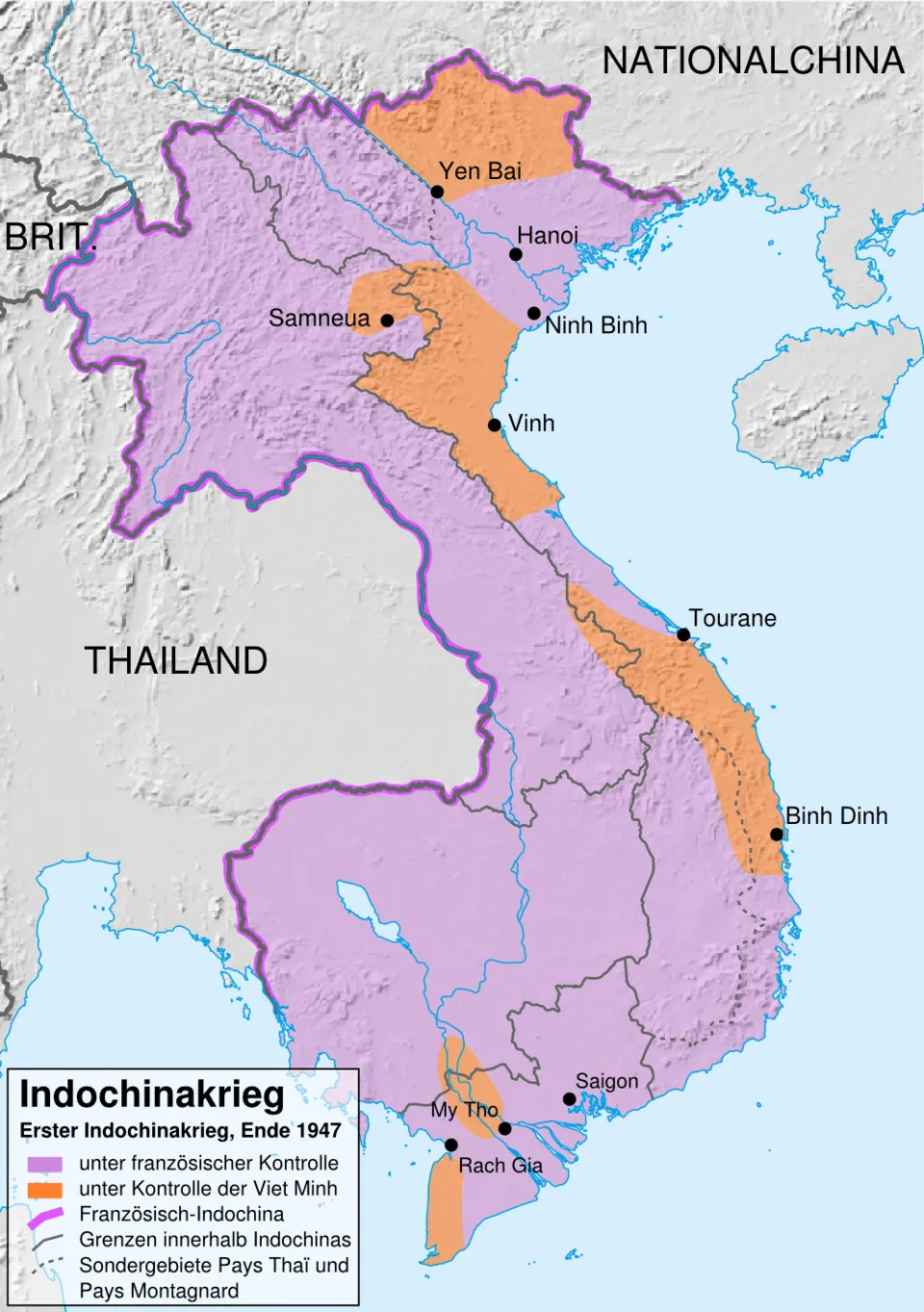
Initially, Vietnamese bishops pursued a policy of armed neutrality after the August Revolution of 1945, hoping to secure independence from both French colonialism and communist ideology. They briefly engaged with Ho Chi Minh’s Democratic Republic of Vietnam (DRV), seeing potential for a sovereign Vietnam that would respect religious freedom. However, this cooperation fractured as the Viet Minh embraced communism and persecuted Catholics.
The Vatican’s staunch anti-communist stance further pushed bishops toward alignment with French forces. This political evolution culminated in the 1951 pastoral letter, which publicly denounced communism and effectively ended any pretense of neutrality. Subsequently, French military control tightened over the autonomous zones, dissolving their semi-autonomy by 1951.
Initial Cooperation with Ho Chi Minh’s DRV (1945-1949)
In the immediate aftermath of Japan’s surrender in 1945, Vietnamese bishops cautiously welcomed Ho Chi Minh’s proclamation of the DRV, attracted by its nationalist rhetoric against French restoration. They sought to negotiate a neutral status for Catholic regions, hoping to avoid entanglement in the emerging conflict. This period saw bishops like Lê Hữu Từ acting as intermediaries, advocating for Catholic rights within the new government.
Their strategy of armed neutrality meant organizing local defense while avoiding formal alliances. However, the Viet Minh’s communist orientation became clear by 1947–1948, with land reforms targeting wealthy landowners—many of whom were Catholic—and violent campaigns against “reactionary” religious groups. The bishops’ break with the DRV was formalized in a 1951 pastoral letter that condemned communist ideology as incompatible with Catholic teaching, as noted in studies by Viet-Studies.com.
This shift was reinforced by the Vatican’s global anti-communist policies, which encouraged alignment with Western powers. Additionally, the indigenization of the Vietnamese hierarchy—with native bishops replacing French missionaries—strengthened their autonomy but also their resolve to resist communist influence.
The 1951 Pastoral Letter and French Military Takeover
The 1951 pastoral letter represented a definitive pivot. Before it, bishops maintained a delicate balance, offering tacit cooperation to both sides while building defensive capacities. After its issuance, they openly aligned with French forces, seeking military support to sustain their zones.
This alignment, however, came at the cost of autonomy. As Time Magazine (1951) reported, French commanders moved to integrate the episcopal militias into the French Far East Expeditionary Corps, effectively ending the bishops’ independent military command. By late 1951, French military control was established across the Phát Diệm and Bùi Chu territories, dissolving their semi-autonomous governance.
The bishops traded temporal sovereignty for protection, a decision that preserved lives but compromised their earlier neutrality. This French oversight lasted until the 1954 Geneva Accords, which redrew Vietnam’s political map and triggered the Catholic exodus.
| Aspect | Before 1951 Pastoral | After 1951 Pastoral |
|---|---|---|
| Political Stance | Armed neutrality; tentative DRV engagement | Open alignment with French forces |
| Military Control | Episcopal command of militias | French integration and oversight |
| Relationship with Viet Minh | Avoidance, limited contact | Hostile; denounced as communist |
| Autonomy Level | Semi-autonomous governance | Reduced to French oversight |
| Vatican Influence | Indirect guidance | Direct anti-communist alignment |
The comparison above highlights the stark reversal. The pastoral letter did not merely reflect changed circumstances—it actively reshaped them. By condemning communism, bishops forfeited any remaining goodwill from the Viet Minh and committed to the French side.
This decision, while controversial, was framed as necessary for survival. The French takeover, though diminishing episcopal temporal power, provided arms and training that temporarily bolstered defense. Yet it also tied the Church’s fate to a colonial power losing popular support, setting the stage for the 1954 collapse and subsequent refugee crisis.
The 1954 Catholic Exodus: Bishops Leading Refugees South
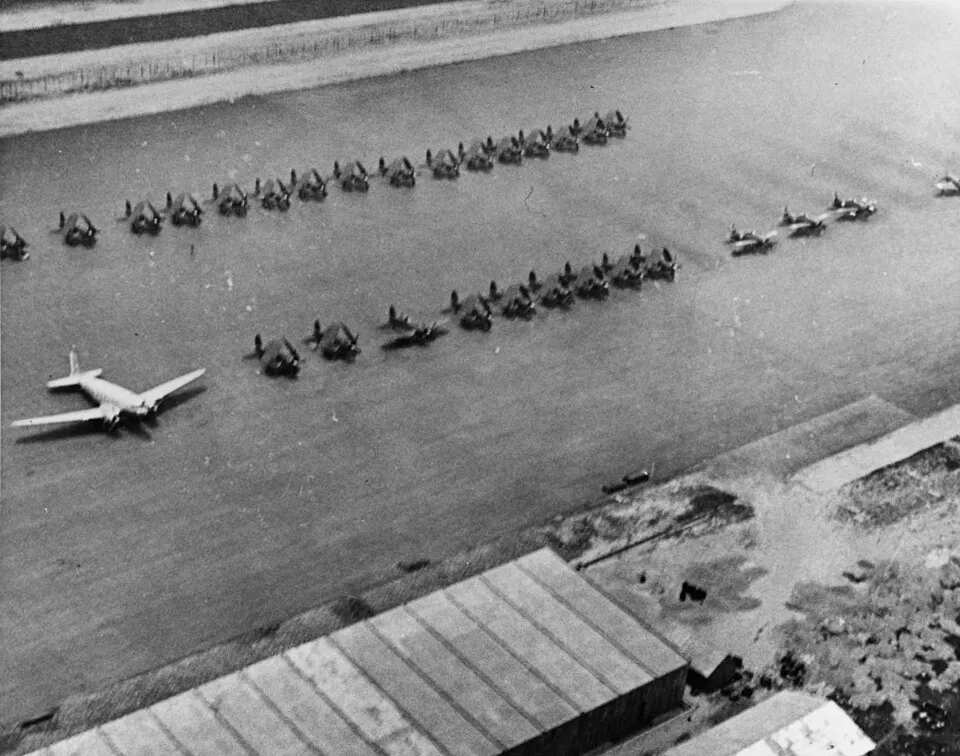
The Geneva Accords of July 1954 partitioned Vietnam at the 17th parallel, creating a communist North and an anti-communist South. For northern Catholics, many of whom had fought alongside French forces or lived in episcopal zones, staying meant facing probable persecution. Bishops immediately organized a mass migration, leveraging their existing networks and authority.
This movement, known as Operation Passage to Freedom, became one of the 20th century’s largest refugee crises, with approximately 1 million northern Catholics relocating southward. Bishops Thaddeus Lê Hữu Từ and Pham Ngoc Chi played central roles, coordinating transportation, food, and shelter. Their leadership ensured that the migration was not a panic-driven flight but an organized community transfer, preserving Church structures in the south.
Geneva Accords 1954: Partition and the Catholic Exodus
The Geneva Accords, signed in July 1954, ended the First Indochina War and temporarily divided Vietnam at the 17th parallel. The accords allowed for a 300-day period of free movement between zones. For northern Catholics, the prospect of life under a communist government—given the Viet Minh’s past persecution of religious groups—was unacceptable.
Bishops, having already experienced conflict and lost their autonomous zones, mobilized their pastoral networks to facilitate migration. They worked with French and American authorities, as well as Catholic relief agencies, to secure ships, trucks, and safe passages.
The scale was immense: estimates suggest 60% of the 1.14 million Catholics in the north fled south, according to records cited in Wikipedia’s entry on Operation Passage to Freedom. This exodus fundamentally altered Vietnam’s religious demography, strengthening the Catholic Church in the south and creating a refugee community that would later influence the Vietnam War era.
Operation Passage to Freedom: ~1 Million Refugees
The refugee movement’s statistics underscore its magnitude and the bishops’ pivotal role:
- Total Migrants: Approximately 1 million northern Catholics moved south (viet-studies.com).
- Proportion: About 60% of the northern Catholic population of 1.14 million (Wikipedia/Operation Passage to Freedom).
- Leadership: Bishops organized parish-by-parish departures, ensuring community cohesion and sacramental continuity.
- Destinations: Primarily to the Dioceses of Huế, Saigon, and surrounding areas, where new parishes were rapidly established.
- Long-term Impact: The migration created a Catholic stronghold in the south, with lasting political and social implications.
The bishops’ involvement went beyond spiritual comfort; they negotiated with military commanders, secured transport, and managed refugee camps. Their authority lent legitimacy to the operation, encouraging ordinary Catholics to trust the perilous journey.
Without this episcopal coordination, the migration might have been fragmented and far less successful. The operation also demonstrated the Church’s capacity for large-scale humanitarian action, a legacy that would inform its later role during the Vietnam War.
The most surprising finding is that bishops transformed wartime defense into a migration blueprint, using the same organizational networks that had protected Catholics in autonomous zones to orchestrate a mass exodus. This continuity—from militia-led safe havens to refugee convoys—reveals an adaptive leadership that prioritized communal survival above all. For readers seeking to understand this legacy, explore the Catholic Bishops’ Conference of Vietnam for deeper historical context on how these wartime experiences shaped the modern Church.