Vietnam has produced four cardinals since 1976, with the first appointment occurring just one year after the end of the Vietnam War. These cardinals have served in the College of Cardinals, advising popes and participating in the governance of the universal Church, while also shaping the local Vietnamese bishops community amid complex political circumstances. The appointments reflect the Vatican’s recognition of the Vietnamese Catholic Church’s resilience and growth despite decades of conflict and isolation.
Each cardinal brought unique experiences—from imprisonment to pastoral leadership—that enriched the global Church’s understanding of faith under pressure. Their stories are integral to understanding modern Vietnamese Catholicism.
- Four Vietnamese cardinals appointed between 1976-2015: Trịnh Như Khuê (1976), Nguyễn Văn Thuận (2001), Phạm Minh Mẫn (2003), and Nguyễn Văn Nhơn (2015).
- Vietnamese cardinals under age 80 can vote in papal conclaves; Nguyễn Văn Nhơn lost voting eligibility in 2018 at age 80.
- The Vietnamese Church today has 8 major seminaries with 11,713 seminarians (2025), reflecting strong priestly formation.
The Four Cardinals from Vietnam: Appointments and Historical Context
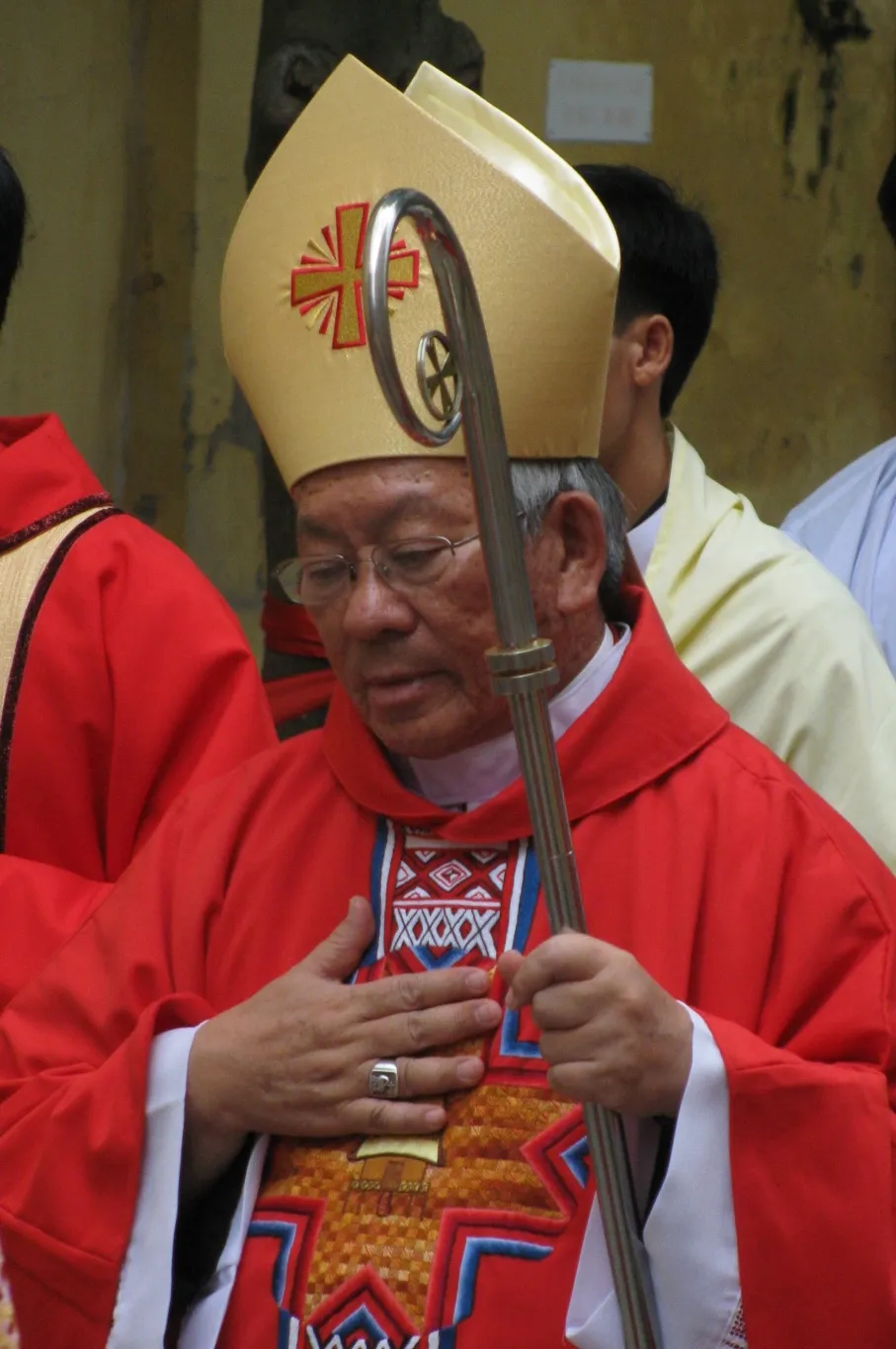
Vietnamese Cardinals by Appointment: 1976-2015
| Name | Appointment Year | Appointing Pope | Current Status/Age | Key Notes |
|---|---|---|---|---|
| Joseph Mary Trịnh Như Khuê | February 1976 | Pope Paul VI | Deceased (2004, age 88) | First Vietnamese cardinal; Archbishop of Hanoi (CBC Vietnam, Dec 2025) |
| Francis Xavier Nguyễn Văn Thuận | 2001 | Pope John Paul II | Deceased (2002, age 74) | Imprisoned 13 years (9 solitary); author of “The Road of Hope”; declared Venerable 2017 (Catholic Culture, 2019; Cardinal F.X. Thuan Foundation, 2019) |
| Jean-Baptiste Phạm Minh Mẫn | 2003 | Pope John Paul II | Deceased 2026 (age 92) | Archbishop of Ho Chi Minh City 1998-2014; died March 2026 (Aleteia, March 2026) |
| Pierre Nguyễn Văn Nhơn | 2015 | Pope Francis | Age 85 (born 1938) | Archbishop of Hanoi 2010-2023; lost voting rights 2018 (College of Cardinals Report, 2015) |
The timeline of cardinal appointments reveals a pattern closely tied to Vietnam’s political and ecclesiastical history. The first appointment in February 1976 by Pope Paul VI came just one year after the fall of Saigon, signaling the Vatican’s commitment to maintaining a visible Church presence in the newly unified socialist republic (CBC Vietnam, December 2025). A 25-year gap followed before the next cardinal was created in 2001, reflecting the challenging period of Church-state relations and limited diplomatic engagement.
The appointments of Phạm Minh Mẫn in 2003 and Pierre Nguyễn Văn Nhơn in 2015 marked a thaw in relations, coinciding with improved Vatican-Vietnam dialogue and the Church’s growing confidence. These four cardinals, representing different eras, collectively embody the Vietnamese Catholic journey from persecution to recognized partnership in the universal Church.
Pioneers of Faith: Trịnh Như Khuê and Nguyễn Văn Thuận
Joseph Mary Trịnh Như Khuê, appointed cardinal in February 1976, was the first Vietnamese to receive this honor. As Archbishop of Hanoi, he led the Church through the immediate post-war years, rebuilding institutions under a new communist government (CBC Vietnam, December 2025). His appointment provided crucial legitimacy and hope for Vietnamese Catholics during a time of great uncertainty, building on the legacy of bishops in French Indochina who had established the Church’s foundation.
Francis Xavier Nguyễn Văn Thuận, created cardinal in 2001 by Pope John Paul II, endured 13 years in re-education camps, nine in solitary confinement (Catholic Culture, 2019). During imprisonment, he smuggled out reflections that became “The Road of Hope,” inspiring millions worldwide (Cardinal F.X. Thuan Foundation, 2019).
His cause for canonization opened in 2017 when Pope Francis declared him Venerable (Vatican, 2017). Thuận’s family ties to South Vietnam’s first president, Ngô Đình Diệm, added political complexity to his witness, a challenge faced by bishops during the Vietnam War period.
Both cardinals exemplify the Vietnamese Catholic experience: Trịnh Như Khuê navigating post-war reconstruction, Thuận transforming persecution into a global symbol of hope. Their lives demonstrate how faith can thrive even under restriction, shaping the Church’s identity in Vietnam and influencing bishops like Joseph Nguyễn Chí Linh who lead today.
What Roles Do Vietnamese Cardinals Play in the College of Cardinals?
Conclave Voting Rules: The Age 80 Limit and Vietnamese Cardinals
Cardinals under the age of 80 are eligible to vote in papal conclaves, while those 80 and older participate only in an advisory capacity (Code of Canon Law, can. 351 §3). This rule determines which cardinals directly influence the election of a new pope.
Pierre Nguyễn Văn Nhơn, appointed cardinal in 2015, turned 80 in 2018 and consequently lost his voting rights (College of Cardinals Report, 2015). As of 2026, none of the four Vietnamese cardinals are under 80, meaning Vietnam has no voting representation in a future conclave.
This absence highlights a broader issue: many Asian Churches, despite large populations, have relatively few voting cardinals due to age restrictions and limited appointments. The lack of a Vietnamese electoral voice may affect the College’s geographic and cultural diversity in papal elections, though Vietnamese cardinals still contribute through their counsel and global ministry.
Cardinal Duties: From Papal Advice to Vatican Leadership
- Advising the Pope on doctrinal, pastoral, and administrative matters
- Participating in consistories and synods to discuss Church governance
- Overseeing Vatican dicasteries when appointed to leadership positions
Nguyễn Văn Thuận exemplified these duties during his tenure as President of the Pontifical Council for Justice and Peace from 1994 to 2002 (Vatican, 1994). In that role, he addressed global issues such as Third World debt, economic justice, and human rights, bringing a perspective shaped by his experiences in a developing nation (Telegraph, 2002). His work demonstrated how Vietnamese cardinals can influence universal Church policy beyond their local context, a model continued by Bishop Joseph Đỗ Quang Khang in social engagement.
Through such roles, Vietnamese cardinals contribute to the global Church’s mission while advocating for the concerns of Asian Catholics.
Impact on the Vietnamese Catholic Church
Church-State Relations: Dialogue Under Communist Governance
The Catholic Church in Vietnam has operated under communist governance since 1975, requiring a delicate balance between religious mission and state regulations. Vietnamese cardinals have navigated this complex relationship by promoting dialogue and protecting Church interests while avoiding confrontation.
All four cardinals symbolized resilience in the post-Vietnam War era. Trịnh Như Khuê stabilized the Hanoi archdiocese during early socialist transformation. Nguyễn Văn Thuận’s imprisonment made him a global witness to religious freedom.
Phạm Minh Mẫn led Ho Chi Minh City through economic doi moi reforms, expanding Church activities. Nhơn continued this pastoral leadership in Hanoi until retirement, a legacy carried forward by Bishop Joseph Nguyễn Văn Bình in Bùi Chu.
These prelates practiced inculturation—adapting Catholic worship to Vietnamese culture—while maintaining doctrinal integrity. Their diplomatic approach allowed the Church to maintain a visible presence, operate schools and charities, and train seminarians despite restrictions. The cardinals’ ability to engage state authorities set a precedent for other Asian Churches facing similar challenges.
Seminarian Statistics: 8 Seminaries, 11,713 Students (2025)
| Metric | 2025 Data |
|---|---|
| Major Seminaries | 8 |
| Total Seminarians | 11,713 |
| Dioceses Served | 26 |
| Vietnamese Martyrs | ~130,000 |
The 2025 statistics from the Catholic Bishops’ Conference of Vietnam reveal a thriving Church with significant growth potential. Eleven thousand seven hundred thirteen seminarians across eight regional major seminaries serve twenty-six dioceses, indicating a robust pipeline of future priests (CBC Vietnam, 2025). This number contrasts sharply with priest shortages in many Western countries and underscores the Vietnamese Church’s vitality.
The approximately 130,000 Vietnamese martyrs, commemorated in these statistics, connect today’s seminarians to a legacy of faith sacrifice (CBC Vietnam, 2025). Cardinals have consistently promoted priestly formation, recognizing seminaries as the Church’s future.
Their support for these institutions ensures that the Vietnamese Catholic community will continue to grow and sustain its leadership for decades to come, including bishops like Joseph Nguyễn Văn Tiếp. For a comprehensive overview of the episcopal structure, see the Vietnamese bishops page.
The most surprising finding is that Cardinal Jean-Baptiste Phạm Minh Mẫn died in 2026, marking the passing of the generation that led the Vietnamese Church through the difficult post-war decades. With all four original cardinals now either deceased or over 80, the next phase of Vietnamese cardinal representation will require new appointments from a younger generation of bishops. For current information on the College of Cardinals and the leadership of the Vietnamese Catholic Church, visit the official CBCV website at cbcvietnam.org.