Vietnamese church architecture, as a key expression of Catholic culture, uniquely blends French colonial Gothic styles with traditional Vietnamese elements, creating a distinctive hybrid that has evolved from 19th-century imports to modern localized designs. According to the Catholic Bishops’ Conference of Vietnam (CBCV), this fusion is visible in iconic structures like Saigon’s Notre Dame Cathedral and the pagoda-inspired Phat Diem Cathedral, and continues today with new churches incorporating local materials and forms. Understanding this evolution reveals how Catholic faith has been inculturated into Vietnam’s built environment.
- French colonial churches (1880s) feature Gothic spires, red brick, and imported materials like Marseilles tiles.
- Hybrid “Indochine Style” churches blend European layouts with Vietnamese tiled roofs, as seen in Cua Bac Church.
- Indigenous adaptation, exemplified by Phat Diem Cathedral (1899), uses wood-and-stone to resemble Sino-Vietnamese pagodas.
- Modern churches like Tam Toa emphasize local aesthetics with massive stone forms and cultural symbolism.
French Colonial Church Architecture in Vietnam
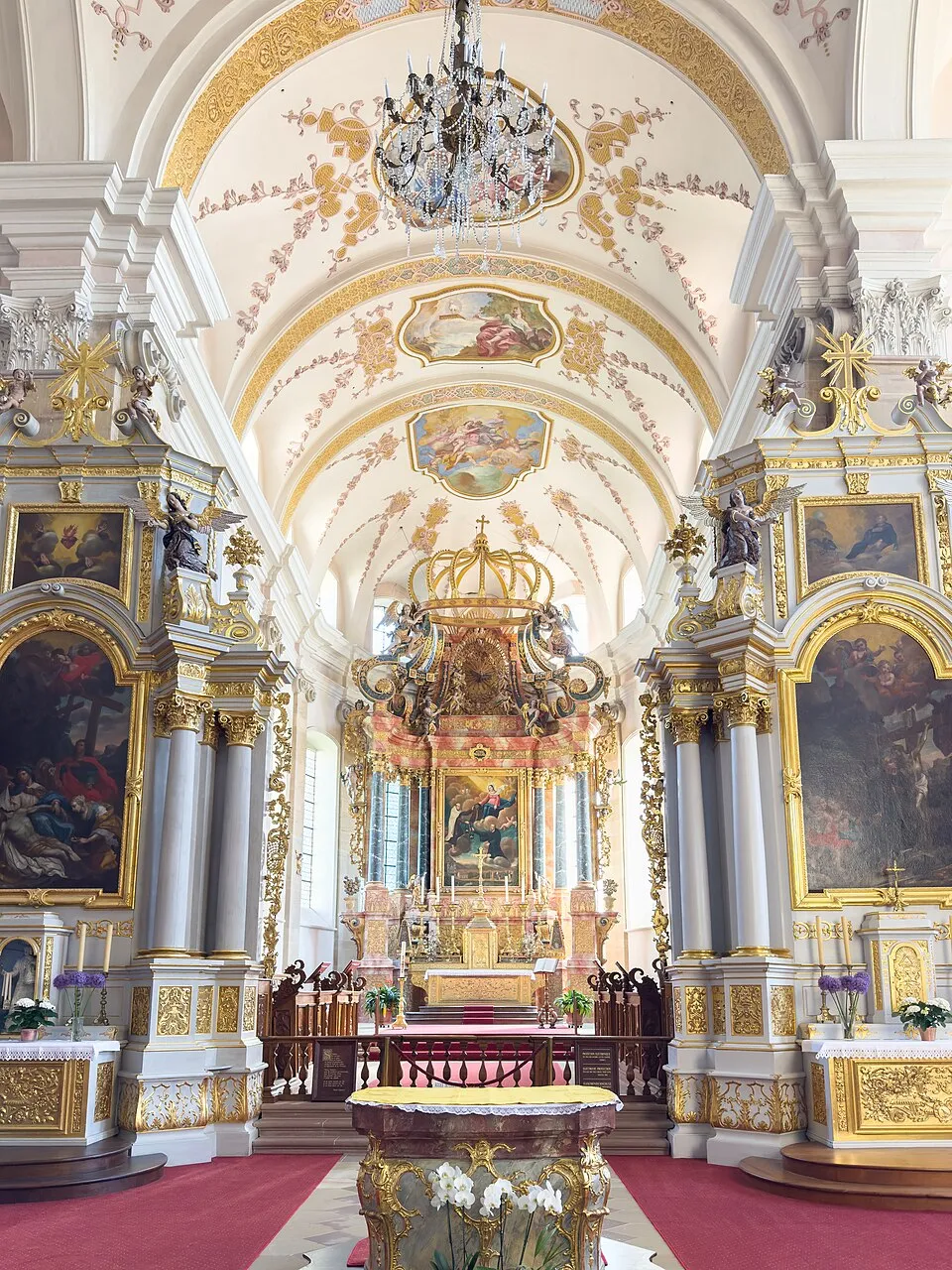
The French colonial period (mid-19th to mid-20th century) introduced European ecclesiastical architecture to Vietnam, primarily in the Gothic and Neo-Romanesque styles. These churches were often designed by French architects and built with imported materials, serving both as places of worship and symbols of colonial power. They established a visual language that would later be adapted and reinterpreted by Vietnamese builders.
Notre Dame Cathedral Basilica of Saigon: French Gothic Import (1880)
Notre Dame Cathedral Basilica of Saigon, completed in 1880, stands as the purest example of French Gothic architecture transplanted to Vietnam. Constructed under the direction of French bishop Isidore Colombert, the cathedral was built using materials shipped from France, including red tiles from Marseilles and stained glass from Chartres. The design follows the plan of Notre Dame de Paris, featuring a cruciform layout, ribbed vaults, and a towering spire that reaches 60 meters.
The red brick facade, fired locally but following French techniques, gives the building its distinctive color. Inside, the stained-glass windows depict biblical scenes and were crafted by French artisans. The cathedral’s bell system includes six bells cast in France in 1885, installed in the two square towers.
This church became a focal point for Saigon’s Catholic community and remains an active parish today. Its construction represented French technological and cultural superiority, but over time it has been embraced by Vietnamese Catholics as a beloved spiritual home. The building’s durability is notable; it survived the Vietnam War with minimal damage and continues to host major liturgical celebrations, including Christmas and Easter masses that draw thousands.
St. Joseph’s Cathedral: Notre Dame de Paris Replica (1886)
St. Joseph’s Cathedral in Hanoi, completed in 1886, was explicitly modeled after Notre Dame de Paris. Designed by French architect Louis Dourdel, the cathedral replicates key features of its Parisian namesake, including twin towers, pointed arches, and a rose window.
The construction used local bricks but followed French Gothic principles. The cathedral’s bell tower houses four bells imported from France, and the interior retains original wooden pews and altars.
Located in the heart of Hanoi’s Old Quarter, St. Joseph’s serves as the seat of the Archbishop of Hanoi. Its cruciform plan and soaring vaults create an acoustically rich space for sacred music in Vietnamese churches, a tradition that continues with the cathedral’s famous organ.
The building’s significance extends beyond architecture; it was a center of resistance during periods of persecution and remains a symbol of Catholic identity in northern Vietnam. The cathedral’s exterior, while weathered, maintains its Gothic character, and recent restorations have preserved its historic fabric.
The building’s significance extends beyond architecture; it was a center of resistance during periods of persecution and remains a symbol of Catholic identity in northern Vietnam. The cathedral’s exterior, while weathered, maintains its Gothic character, and recent restorations have preserved its historic fabric.
Architectural Features of French Colonial Churches
French colonial churches in Vietnam share several defining characteristics that signal their European origins:
- Red brick facades: Bricks were often fired locally but laid in patterns mimicking French Gothic construction, creating a uniform reddish surface.
- Towering spires: Spires typically rise 50–70 meters above street level, serving as visual landmarks and housing bells.
- Stained glass windows: Depicting saints, biblical scenes, and sometimes local motifs, these windows filter light into vibrant interior colors.
- Imported materials: Tiles from Marseilles, bells from French foundries, statues from European workshops, and sometimes marble altars.
- Cruciform floor plans: The cross-shaped layout is standard, with a long nave, transepts, and a choir or sanctuary.
- Pointed arches and ribbed vaults: These Gothic elements distribute weight and create verticality.
- Bell towers: Usually positioned at the front or flanking the facade, often with multiple bells tuned to musical scales.
These features created a sense of familiarity for French colonists while projecting an aura of timeless European sacredness. The buildings were designed to withstand Vietnam’s tropical climate, with high ceilings for ventilation and overhanging roofs to deflect rain.
Comparing Key French Colonial Churches
The three major French colonial churches in Vietnam illustrate both consistency and adaptation:
| Church | Year Built | Primary Style | Distinctive Feature | Materials |
|---|---|---|---|---|
| Notre Dame Cathedral (Saigon) | 1880 | Gothic | Red brick spire, imported Marseilles tiles | French stained glass, Marseilles tiles, local bricks |
| St. Joseph’s Cathedral (Hanoi) | 1886 | Neo-Gothic | Twin towers, French bells | Imported bells, local bricks, wooden vaults |
| Da Nang Cathedral (Pink Church) | early 20th century | Gothic | Pink facade, rooster weathercock | Pink-painted plaster, local stone, French-style stained glass |
While all three follow Gothic prototypes, Da Nang Cathedral’s pink color and rooster weathercock represent local whimsy. The rooster, a symbol of vigilance and also associated with French heraldry, adds a playful touch.
The pink paint, likely applied in the mid-20th century, gives the church a distinct identity among Vietnam’s typically red brick colonial churches. These variations show how even within the colonial framework, local conditions and tastes prompted minor adaptations.
Hybrid Vietnamese-European Church Architecture
As French colonial rule continued, architects began intentionally blending European forms with Vietnamese traditions, creating the “Indochine Style” that illustrates the intersection of faith and culture. This hybrid approach responded to both practical climate considerations and a growing awareness of cultural inculturation. The result is a unique architectural dialogue where European spatial organization meets Vietnamese rooflines and decorative motifs.
Cua Bac Church: European Layout with Vietnamese Tiled Roofs
Cua Bac Church in Hanoi exemplifies the early hybrid approach. Built during the French colonial period (exact year not recorded), the church retains a European cruciform floor plan but tops it with traditional Vietnamese curved tile roofs.
The roof’s sweeping curves, reminiscent of pagoda roofs, are covered with glazed ceramic tiles in typical Vietnamese style. The facade combines French arched windows with Vietnamese decorative elements such as latticework and carved wooden details.
The church’s location in Hanoi’s Old Quarter places it near Buddhist temples, making the Vietnamese roofline a gesture of cultural harmony. Inside, the altar area may incorporate local woodcarving, while the Stations of the Cross sometimes include Vietnamese script.
Cua Bac served as a model for later hybrid churches, demonstrating that European sacred space could be “Vietnamese” without losing its Catholic identity. The church remains active and is a popular site for weddings and cultural events, reflecting Catholic cultural practices in Vietnam.
Cua Bac served as a model for later hybrid churches, demonstrating that European sacred space could be “Vietnamese” without losing its Catholic identity. The building remains active and is a popular site for weddings and cultural events.
The Indochine Style: A Colonial Fusion Approach
The Indochine Style emerged in the early 20th century as a deliberate architectural policy. French architects like Ernest Hébrard and others promoted this style for government buildings, museums, and churches to make colonial structures more acceptable to local populations. The style combines:
- European structural systems: Load-bearing walls, arches, and columns based on classical or Gothic principles.
- Vietnamese roof forms: Curved, overhanging roofs with multiple tiers, often covered in glazed tiles.
- Local decorative motifs: Carved dragons, lotus patterns, and other symbols from Vietnamese and Chinese traditions.
- Adapted materials: Use of local stone, wood, and brick alongside imported elements.
In churches, the Indochine Style often meant keeping the nave and sanctuary in European proportions while crowning the building with a Vietnamese-style roof. This compromise addressed both liturgical requirements and cultural aesthetics.
The style was not universally embraced; some French clergy preferred pure Gothic, while Vietnamese Catholics sometimes saw it as a half-measure. Nevertheless, it left a lasting mark on Vietnam’s religious architecture, with several parish churches in the Red River Delta exhibiting these hybrid features.
Tan Dinh Church: Saigon’s Pink Gothic Gem
Tan Dinh Church answers the common question: “What is the architectural pink church in Vietnam?” Located in central Saigon, this church is famous for its pastel-pink exterior, which glows softly in the tropical sun. Built in the early 20th century, Tan Dinh follows a Gothic Revival plan but with a uniquely Vietnamese twist: the facade is plastered and painted pink, while the roof uses traditional curved tiles. Inside, the church boasts refined Gothic vaulted ceilings, intricate wood carvings, and shimmering stained-glass windows that cast colored light across the nave.
The pink color is believed to be a local aesthetic choice, possibly inspired by pastel hues used in some French colonial buildings or by the pinkish tones of nearby flowers. It has become a major tourist attraction and a favorite spot for photography. The church’s popularity demonstrates how a simple color change can transform a building into an iconic landmark.
Tan Dinh also hosts a vibrant parish community, with masses in Vietnamese and a strong devotion to the Virgin Mary. Its success as a hybrid building lies in balancing European sacred geometry with a locally beloved visual identity.
Indigenous and Modern Church Architecture in Vietnam
The most profound inculturation, documented in Catholic traditions in Vietnam, occurred when Vietnamese clergy and architects took the lead in designing churches. Starting in the late 19th century, figures like Father Tran Thi Thanh (a priest-carpenter) created buildings that looked more like traditional Vietnamese structures than European imports. This indigenous adaptation continued into the modern era, with new churches reflecting Vietnam’s cultural resilience and contemporary aesthetics.
Phat Diem Cathedral: Pagoda-Inspired Design (1899)
Phat Diem Cathedral, built in 1899 in Ninh Binh province, is the masterpiece of indigenous adaptation. Designed by Vietnamese priest-carpenter Father Tran Thi Thanh, the complex comprises a main church and several chapels, all constructed mostly of wood and stone. The main church’s most striking feature is its series of layered roofs that closely resemble a Sino-Vietnamese pagoda.
These roofs curve upward at the corners, are covered with glazed tiles, and are supported by intricate wooden trusses. The stone base and walls provide stability, while the upper stories are timber-framed.
The cathedral’s layout follows a cruciform plan, but the exterior silhouette is unmistakably pagoda-like. Statues of saints stand in niches that mimic Buddhist temple shrines. The bell tower is a separate, slender structure that echoes the shape of a pagoda’s spire.
Inside, the altar is adorned with Vietnamese-style woodcarving and lacquer work, showcasing Catholic art in Vietnam. Phat Diem was built with funds raised from local Catholics and labor provided by the community, making it a truly native achievement. It remains an active pilgrimage site and a testament to how Catholic worship can be expressed through indigenous architectural language.
Phat Diem was built with funds raised from local Catholics and labor provided by the community, making it a truly native achievement. It remains an active pilgrimage site and a testament to how Catholic worship can be expressed through indigenous architectural language, embodying Catholic national traditions.
Tam Toa Cathedral: Modern Stone-Heavy Design
Tam Toa Cathedral in Quang Tri province represents the modern evolution of Vietnamese church architecture. Built in the 1970s–1980s after the Vietnam War, the cathedral was constructed using massive local stone blocks.
Its design is minimalist, with thick walls, small windows, and a simple gable roof. The stone gives the building a fortress-like appearance, symbolizing resilience amid the region’s wartime destruction.
Unlike the ornate colonial churches, Tam Toa emphasizes solidity and simplicity. The interior is plain, with unpainted stone walls and a wooden altar. The bell tower is integrated into the main mass rather than standing separate.
This aesthetic reflects a post-colonial confidence: the church is built with Vietnamese materials (stone from nearby mountains) and designed for a Vietnamese context, not as an import. Tam Toa’s architecture speaks of endurance and local identity, aligning with the spirit of a community that rebuilt after the war. It shows how modern Vietnamese churches can be both functional and deeply symbolic without relying on European ornamentation.
Contemporary Trends: Local Materials and Cultural Aesthetics
Today, Vietnamese church architecture continues to evolve, driven by a growing Catholic population and a desire to express faith through local forms. The Catholic Bishops’ Conference of Vietnam reports that in 2026, Vietnam’s 11,713 seminarians across eight regional major seminaries indicate active church growth, which in turn fuels new construction. Contemporary trends include:
- Use of local stone, bamboo, and recycled materials: Architects source stone from regional quarries, bamboo for scaffolding and decorative elements, and recycled timber from old houses.
- Incorporation of Vietnamese roof curves: Even modern concrete churches often feature curved, overhanging roofs that echo traditional dwellings and pagodas.
- Community-focused layouts: New churches include multipurpose halls, classrooms, and outdoor spaces for festivals, reflecting the parish as a community hub.
- Sustainable design: Passive cooling through high ceilings, natural ventilation, and shading devices reduces reliance on electricity.
- Cultural symbolism: Carvings, color schemes, and spatial arrangements reference Vietnamese cosmology and Catholic symbolism.
Examples abound: the new cathedral in Phan Thiet uses laterite stone and a pagoda-inspired silhouette; a parish in the Central Highlands combines concrete frames with thatched roof elements; and urban churches incorporate glass and steel but retain a curved roofline. These designs show that inculturation is not a historical footnote but a living process. Architects, often trained in Vietnam’s universities, are reinterpreting Catholic sacred space through a Vietnamese lens, creating buildings that feel both universal and uniquely local.
The most surprising insight is that Vietnamese church architecture is not frozen in the colonial past—it actively adapts. New churches like Tam Toa prove that local materials and cultural forms remain central to Catholic worship spaces today. To see this evolution firsthand, visit these historic sites or explore CBCV’s online photo archive of Vietnamese church architecture, which documents how faith and culture continue to build together.
Frequently Asked Questions About Church Architecture
Is there a Catholic cardinal in Vietnam?
Dedicated to a divided nation. Reflecting on the life of the Vietnamese Venerable, Cardinal Michael Czerny, prefect of the Dicastery for Promoting Integral Human Development, described Cardinal Văn Thuận as not only a promoter of justice and peace but also an embodiment of “these values in word and a…
What is the architectural pink church in Vietnam?
Tan Dinh Church stands out in the heart of Saigon with a pastel-pink façade that glows like a brushstroke of color against the city's rhythm. Nicknamed the “Pink Church,” it captivates visitors with its refined Gothic architecture, towering vaulted ceilings, intricate carvings, and shimmering stained-glass…
Which country is 100 percent Catholic?
The country with the largest percentage of its population having membership in the church is Vatican City at 100%, followed by Timor-Leste at 97%. According to the World Christian Database, there are 1.279 billion Catholics worldwide as of 2026, which constitute 47.8% of 2.674 billion Christians.
What country is 100% Catholic?
The country with the largest percentage of its population having membership in the church is Vatican City at 100%, followed by Timor-Leste at 97%. According to the World Christian Database, there are 1.279 billion Catholics worldwide as of 2026, which constitute 47.8% of 2.674 billion Christians.
What are the unspoken rules in Vietnam?
Most Vietnamese will avoid public displays that could compromise their reputation. As a general rule, keep your cool and avoid loud arguments, making a scene, berating others for mistakes, or pointing out anything that may cause the locals to feel shamed.