Catholic culture, as defined by the Catholic Bishops’ Conference of Vietnam (CBCV), is the incarnation of Catholic ideas in the concrete circumstances of the social order, spanning 1.279 billion adherents worldwide as of 2026 according to the World Christian Database. This global tradition encompasses sacraments, sacred arts, architecture, devotions, and inculturation—adapting the universal faith to local cultures while maintaining unity. In Vietnam, the CBCV oversees 27 dioceses with a history dating back to the 16th century, illustrating how Catholic culture takes root in specific contexts.
- Catholic culture is fundamentally incarnational—God becomes present through material reality (water, bread, art, architecture) to sanctify all creation
- It spans 1.279 billion adherents (2026) across 24 rites, with fastest growth in Africa and Asia, and includes diverse expressions like Simbang Gabi and Guadalupe
- The tradition includes 2,000 years of artistic patronage—from Michelangelo’s Pietà to Gregorian chant—as sacramentals lifting the faithful to God
The Incarnational Worldview: Foundation of Catholic Culture
The cornerstone of Catholic culture is an incarnational worldview: the belief that God enters human history through material reality, sanctifying the physical world. This theology shapes every aspect of Catholic life, from sacraments to art. Unlike purely spiritual religions, Catholicism teaches that spiritual grace is communicated through tangible elements—water, oil, bread, wine, images, and buildings.
The Catholic Bishops’ Conference of Vietnam emphasizes this principle in its teachings, highlighting how faith integrates with daily life and local customs across Vietnam’s 27 dioceses through Catholic cultural practices that shape devotional rhythms.
Core principles: Incarnation, sacraments, and sacramentals
- Incarnational worldview: God becomes present through material reality (water, bread, art, architecture) to sanctify all creation. This principle asserts that the spiritual and material are not opposed but intertwined, reflecting the Incarnation of Christ.
-
Seven Sacraments: Baptism, Confirmation, Eucharist, Penance, Anointing of the Sick, Holy Orders, Matrimony.
These are visible signs instituted by Christ that confer grace, using physical elements (water, oil, bread, wine) to make spiritual realities tangible.
- Sacramentals: Objects such as rosaries, holy water, crucifixes, and scapulars—approved by the Church—to dispose believers to receive God’s grace. They extend the sacramental principle into daily life, blessing ordinary materials for sacred use.
Each component makes spiritual reality visible by employing material means. The Incarnation itself—God becoming human in Jesus—validates the use of physical things to convey divine life.
Sacraments transform ordinary elements (like water or bread) into vehicles of grace, while sacramentals invite continuous prayer and reminders of faith throughout the day. This system ensures that Catholic culture is not abstract but lived through the body and senses, embedding worship into the rhythms of everyday existence.
Living the faith: Devotions and 2026 mission focus
Key devotions embody the incarnational worldview by engaging the whole person—body, emotions, and senses. Marian devotion honors Mary as mother and intercessor, often through prayers like the Rosary, which uses beads to count prayers, making meditation tactile.
The Communion of Saints connects believers with holy men and women across history, whose feast days and relics provide tangible links to the divine. Eucharistic adoration, where the consecrated host is displayed in a monstrance, allows visual prayer before the real presence of Christ.
In 2026, the World Mission Sunday theme “One in Christ, United in Mission” highlights global solidarity, reflecting the incarnational call to serve the world. St.
John Paul II’s Theology of the Body further deepens this by presenting human sexuality and embodiment as sacred gifts, calling Catholics to live their physical lives as reflections of divine love. These practices demonstrate how Catholic culture moves beyond doctrine into daily rhythms, using material actions—kneeling, signing oneself with the cross, lighting candles—to express and nurture faith.
How Does Catholic Culture Manifest Across the Globe?
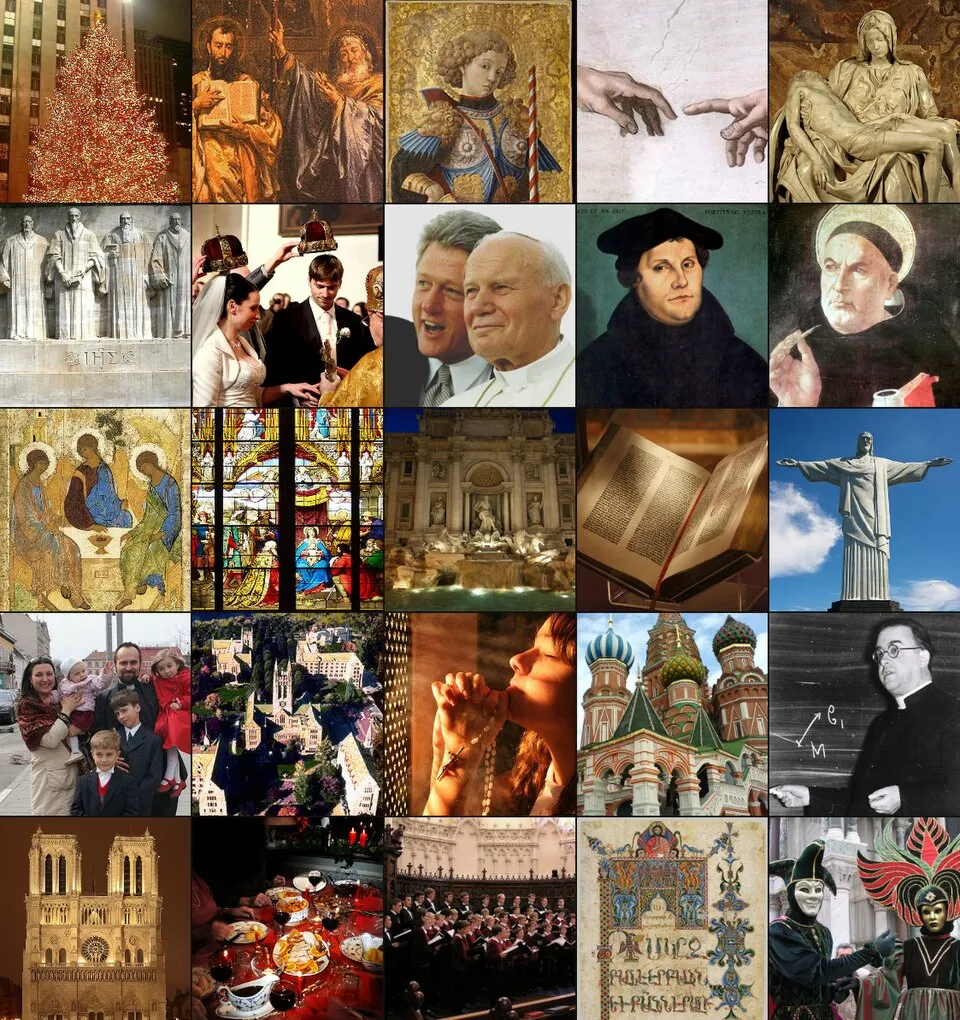
Catholic culture’s global expression reveals both unity and diversity. With over 1.279 billion adherents (World Christian Database, 2026) or over 1.422 billion (Annuario Pontificio, 2026) depending on methodology, Catholicism spans every continent. The Americas hold the highest percentage of Catholics, while Africa and Asia are the fastest-growing regions, signaling a demographic shift from traditional Western strongholds.
As of 2024, there are 407,421 priests worldwide, serving this vast community. This diversity is not fragmentation but a lived inculturation—adapting universal Catholic practices to local contexts while preserving core unity, as seen in Vietnam’s 27 dioceses and the 24 Eastern Catholic Churches with distinct rites like Byzantine and Maronite.
Global statistics and regional trends
| Source | Catholic Population (2026) | Methodology Notes | Regional Highlights |
|---|---|---|---|
| World Christian Database | 1.279 billion | Represents 47.8% of 2.674 billion Christians | Americas highest percentage; Africa and Asia fastest-growing |
| Annuario Pontificio | over 1.422 billion | Different counting methods; includes all baptized | Global coverage with Vatican administrative data |
The table shows significant variation in population counts due to differing methodologies—one based on Christian database estimates, the other on Vatican records. Both confirm Catholicism’s massive scale and its growth surge in Africa and Asia.
The priest count (407,421 in 2024) indicates pastoral resources, though distribution varies widely. These statistics underscore that Catholic culture is not monolithic but a global tapestry of local expressions, each shaped by history, language, and customs while sharing common sacramental and doctrinal roots.
Inculturation in practice: From Vietnam to the Americas
Inculturation is the process by which Catholic practice adapts to local cultures without compromising essential teachings. In Vietnam, the Catholic Bishops’ Conference of Vietnam guides 27 dioceses in integrating Vietnamese customs with liturgy and devotions, a tradition since Catholicism’s arrival in the 16th century. This yields unique expressions, such as blending ancestral veneration with Christian prayer or using local music in Mass.
Globally, iconic examples abound: In the Philippines, Simbang Gabi are pre-dawn Christmas Masses that accommodate agricultural work schedules, turning predawn darkness into a communal celebration of hope. In Mexico, Our Lady of Guadalupe appeared as an indigenous woman, merging Marian devotion with Aztec symbolism and becoming a national unifying figure.
In Poland, oplatki (Christmas wafers) are shared with wishes for blessing, echoing ancient bread-sharing rituals. These instances show how inculturation makes Catholic culture feel native, not foreign, while the 24 Eastern Catholic Churches demonstrate liturgical diversity (e.g., Byzantine chant, Maronite liturgy) within full communion with Rome.
Sacred Arts and Architecture: Material Expressions of Faith
Catholic culture’s artistic legacy spans two millennia, treating beauty as a pathway to God. Sacred architecture, visual arts, and music function as sacramentals—holy things that lift the faithful toward divine mystery. From Gothic cathedrals reaching heavenward to the polyphonic harmonies of Palestrina, these arts are not decorative but catechetical, teaching doctrine through beauty.
The U.S. Conference of Catholic Bishops’ document Built of Living Stones (2000) affirms that sacred spaces should incarnate theological truths, making the invisible visible through stone, glass, and sound.
Sacred architecture: Gothic and Baroque as incarnational spaces
Gothic architecture, exemplified by Chartres Cathedral in France, uses soaring verticality, ribbed vaults, and stained glass to create a heavenly vision on earth. The glass windows depict biblical stories, teaching an illiterate populace through color and light. This style embodies the Incarnation by making divine light (God’s presence) physically tangible through glass.
Baroque architecture, as seen in St. Peter’s Basilica in Rome, employs theatrical space, dramatic light, and emotional grandeur to engage the senses and inspire awe. Its curved lines, gold leaf, and monumental scale aim to overwhelm the viewer with God’s majesty, reflecting the Counter-Reformation’s desire to reaffirm faith through beauty.
Both styles serve as sacramentals: they are not merely buildings but sacred environments that facilitate worship. The USCCB’s Built of Living Stones (2000) guides modern church design to continue this incarnational principle, ensuring that architecture remains a material expression of spiritual reality. In Vietnam, church architecture blends colonial European influences with local elements, demonstrating inculturation in brick and mortar.
Visual arts and music: From Michelangelo to Gregorian chant
Catholic visual arts have historically served as “Bible of the poor,” conveying scripture and doctrine through images. Michelangelo’s Pietà in St. Peter’s Basilica sculpts Mary holding the dead Christ with such lifelike tenderness that viewers encounter the Incarnation and compassion physically.
Fra Angelico’s frescoes in the Convent of San Marco, Florence, offer meditative scenes for monastic prayer, each panel a window into divine mysteries. These works are sacramentals: they make spiritual truths present through beauty and skill.
Sacred music similarly lifts the mind to God. Gregorian chant, with its monophonic, unaccompanied melodies, has been the liturgical soundtrack for centuries, its free rhythm encouraging prayerful contemplation. Palestrina’s polyphony later balanced clarity of text with rich harmonies, showing how complexity can serve worship.
In Vietnam, sacred music incorporates local instruments and melodies, creating a hybrid sound that remains Catholic at its core. These arts function as catechetical tools—teaching faith through beauty—and as sacramentals, sanctifying time and space through sound and sight.
The most surprising finding is the stark discrepancy between the two major 2026 Catholic population statistics: 1.279 billion (World Christian Database) versus over 1.422 billion (Annuario Pontificio). This gap of over 140 million souls highlights how methodology shapes our understanding of global Catholicism—whether counting baptized members or active participants.
For a concrete action, explore how Catholic culture lives in Vietnam’s 27 dioceses by visiting the Catholic Bishops’ Conference of Vietnam official portal, which offers resources on local traditions, history, and Catholic traditions in Vietnam that blend faith with Vietnamese identity. You can also discover Catholic art in Vietnam or the intersection of faith and culture among Vietnamese Catholics today.