Vietnamese Catholic traditions, as a fundamental aspect of Catholic culture, are defined by inculturation—the dynamic blending of Catholic theology with Vietnamese cultural practices such as filial piety and ancestor veneration. This synthesis, documented in recent research, allows Vietnamese Catholics to fully participate in national traditions while maintaining their faith identity.
The result is a unique “adaptation within boundaries” that has evolved from early missionary prohibitions to a mature symbiosis between Church and culture. Understanding this inculturation reveals how Catholic practices like the La Vang pilgrimage, Tet Masses, and family devotions have become distinctly Vietnamese expressions of universal faith.
- Inculturation in Vietnam has evolved from early missionary prohibitions to a ‘symbiosis’ between Catholicism and local culture (Source: ResearchGate, Herald Malaysia).
- The La Vang shrine, site of the 1798 Marian apparition, saw over 90,000 attendees at its 2025 Assumption celebration, demonstrating living devotion (Source: Vatican News).
- Unique practices like hái lộc thánh during Tet and ancestor altars placed below Christian symbols illustrate how Vietnamese Catholics integrate faith with national traditions (Source: UCA News, ResearchGate).
How is Catholic Faith Inculturated in Vietnamese Culture?
Vietnamese Catholicism exemplifies how the universal faith takes on local character through inculturation—a process that has transformed religious practice in Vietnam. This section explores the historical evolution, socio-political framework, and core synthesis that define Vietnamese Catholic identity. The result is a vibrant faith that feels both deeply Catholic and authentically Vietnamese, as seen in daily life, liturgical celebrations, and community structures.
From Prohibition to Symbiosis: The Evolution of Catholic Adaptation
The inculturation of Catholic faith in Vietnam has undergone a significant historical shift. Early missionaries in the 16th–19th centuries prohibited ancestor veneration, viewing it as incompatible with Christian worship (Source: ResearchGate). This prohibition forced Vietnamese Catholics to choose between cultural participation and religious conformity, creating a painful divide that hindered full integration of faith and culture.
Today, the approach has transformed into a ‘symbiosis’ between Catholicism and local culture (Source: Herald Malaysia, SARC Publisher). The Church now recognizes that filial piety and ancestor veneration can be purified and integrated into Catholic practice. This shift occurred gradually through the 20th century as theologians developed a deeper understanding of cultural contexts.
Vietnamese Catholics can now honor ancestors through rituals that respect Christian monotheism while preserving essential cultural values. This evolution represents a mature inculturation that respects both theological boundaries and cultural heritage, allowing faith to take root authentically in Vietnamese soil. The journey from prohibition to symbiosis illustrates the Church’s capacity to learn and adapt, fostering a more holistic expression of faith that resonates with the Vietnamese experience.
Socialist-Oriented Adaptation: Faith Within Vietnam’s Framework
Vietnamese Catholic inculturation operates within a unique framework known as ‘socialist-oriented adaptation’ (Source: SARC Publisher). This approach navigates both Vietnam’s socialist legal framework and traditional cultural principles, allowing the Church to function within the nation’s political system while maintaining religious identity. It represents a pragmatic theology that engages with state structures without compromising doctrine.
A key manifestation is how parishes, especially in Northern Vietnam, function as socio-cultural units integrated with local life (Source: SARC Publisher). These parishes are not merely places of worship but community centers that engage with local development, education, and social services. They often collaborate with government initiatives on poverty reduction, healthcare, and environmental protection.
This integration ensures Catholicism remains relevant to everyday Vietnamese experience, blending spiritual practices with community responsibilities. The model demonstrates how religious institutions can adapt to socialist contexts while preserving core teachings, creating a distinctive Vietnamese Catholic identity that is both faithful and culturally embedded. This approach has been particularly successful in maintaining Church presence and growth in a socialist society, showing that faith can thrive within diverse political systems when it engages constructively with the surrounding culture.
Filial Piety and Ancestor Veneration: The Core Synthesis
The reconciliation of filial piety with Christian faith stands at the heart of Vietnamese Catholic inculturation. This synthesis is most visibly expressed through ancestor altar practices that balance cultural obligation with theological integrity. The following points detail how Vietnamese Catholics achieve this integration:
- Ancestor altars are common in Vietnamese Catholic homes, maintaining the cultural practice of honoring deceased family members (Source: ResearchGate, Catholic Virginian). These altars typically include photos, incense, and offerings like fruit or tea, reflecting Confucian traditions of filial piety that emphasize respect for elders and lineage. Their presence in Catholic households signals a deliberate embrace of cultural heritage.
- Altars are placed below Christian symbols such as crucifixes or images of the Virgin Mary (Source: ResearchGate, Catholic Virginian). This physical arrangement visually subordinates ancestor veneration to Christian worship, affirming that ultimate honor belongs to God while respecting cultural traditions. The placement ensures that Catholic identity remains primary in the household sacred space.
- The practice balances filial piety with Christian faith by allowing Catholics to fulfill cultural obligations without violating monotheistic principles (Source: ResearchGate). Ancestors are honored as remembered family members, not worshipped as divine beings, creating a theological synthesis that satisfies both cultural and religious requirements. This balance is often explained in parish catechesis.
- Ritual actions around the altar include lighting incense, offering prayers, and sharing meals during significant anniversaries or Tet. These acts maintain cultural continuity while being framed within a Christian understanding of remembrance and prayer for the dead, which Catholic doctrine supports (2 Maccabees 12:46).
- Family devotions often incorporate both traditions, with prayers before the ancestor altar followed by Catholic prayers before the crucifix. This daily practice reinforces the integrated identity of Vietnamese Catholics, showing how faith permeates family life and cultural routines.
La Vang Pilgrimage: Vietnam’s Marian Heritage and Modern Devotion
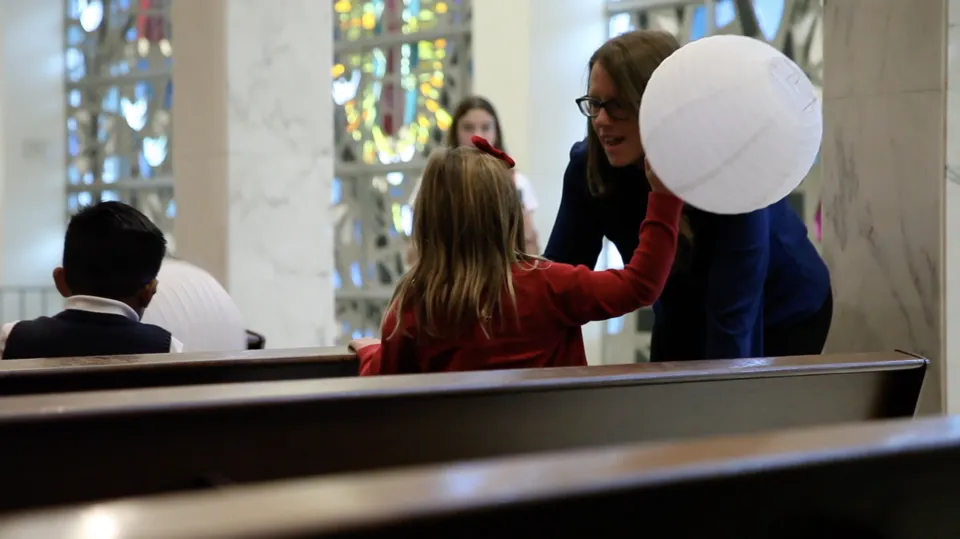
The shrine of Our Lady of La Vang stands as the most beloved Marian pilgrimage site in Vietnam, embodying the nation’s Catholic identity. Located in Quang Tri province, La Vang draws millions of Vietnamese Catholics across generations and dioceses.
Its history, from a 1798 apparition to a 2025 gathering of over 90,000 faithful, illustrates how Marian devotion has been inculturated and remains a living tradition. The shrine’s significance extends beyond religious piety; it represents resilience, national unity, and the capacity of Catholic faith to absorb and transform local cultural expressions.
1798 Apparition to 2025 Celebrations: A Timeline of Growth
The history of Our Lady of La Vang is marked by key milestones that illustrate its growing importance from a local apparition to a national symbol. The following timeline highlights three pivotal moments:
| Year | Event | Significance | Source |
|---|---|---|---|
| 1798 | Marian apparition occurs to persecuted Catholics hiding in the La Vang forest. The Blessed Mother appears in a simple dress, comforting the faithful and promising protection. | This event establishes La Vang as a refuge and source of hope during intense persecution, embedding it deeply in Catholic memory as a symbol of divine consolation. | Vatican News, multiple sources |
| 2021 | Basilica at La Vang is inaugurated after years of construction, providing a permanent shrine structure that can accommodate large pilgrimages. | The basilica’s completion signifies official Church recognition and infrastructure to support growing devotion, transforming the site into a major pilgrimage destination. | AI Overview |
| 2025 | Over 90,000 Catholics attend the Assumption celebration on August 15, one of the largest gatherings in recent Vietnamese Catholic history. | This massive turnout demonstrates the shrine’s continued vitality, national unity, and the enduring power of Marian devotion in Vietnam’s Catholic culture. | Vatican News |
These milestones reveal La Vang’s journey from hidden forest to monumental shrine. The 2025 celebration, with its unprecedented attendance, shows how this 1798 apparition continues to inspire and unite Vietnamese Catholics in the 21st century, bridging centuries of history with contemporary faith expression.
Cultural Expressions: Mary in Vietnamese Attire and Music
Marian devotion at La Vang and throughout Vietnam incorporates traditional Vietnamese cultural elements, creating a uniquely local expression of Catholic piety. These adaptations demonstrate how faith can be lived through familiar cultural forms:
- Depictions of Mary in traditional Vietnamese attire such as the áo dài (long tunic) and khăn đóng (traditional headpiece) are common in Vietnamese Catholic churches and homes (Source: UCA News). These images present the Blessed Mother as a Vietnamese woman, making her more relatable and culturally resonant. The attire varies by region, reflecting Vietnam’s diverse ethnic groups, and emphasizes Mary’s role as a mother who understands Vietnamese life and struggles. To explore how Catholic art has evolved in Vietnam, see Catholic art in Vietnam: From missionary icons to local expressions.
- Folk melodies and traditional music accompany Marian devotions, especially during processions and shrine celebrations (Source: UCA News). Local musicians play instruments like drums, gongs, and flutes, blending Catholic liturgical music with Vietnamese musical traditions. This fusion creates a unique soundscape that distinguishes Vietnamese Marian worship from Western expressions. For more on how sacred music shapes Catholic worship in Vietnam, read Sacred Music Catholic: The Sound of Faith in Vietnamese Churches.
- Traditional dances and processional elements incorporate Vietnamese aesthetics, with participants wearing regional costumes and carrying culturally symbolic items such as lanterns or bamboo structures. These expressions transform Marian feasts into vibrant displays of Catholic identity intertwined with national heritage, turning religious processions into community festivals.
- Floral offering rites often feature arrangements using native Vietnamese flowers and plants, connecting Mary’s purity with local natural beauty and agricultural traditions. These offerings may include orchids, lotuses, or seasonal blossoms, each carrying symbolic meaning in Vietnamese culture.
- Language and prayers: Marian prayers are sometimes composed in Vietnamese poetic forms, using local metaphors and imagery to express devotion, further inculturating the theology of Mary. Hymns may incorporate folk tunes, making them instantly familiar to congregations.
Pilgrimage as Faith and Identity: The 2025 Gathering
The 2025 Assumption celebration at La Vang, with over 90,000 attendees, stands as a powerful testament to the living faith of Vietnamese Catholics (Source: Vatican News). This gathering, one of the largest in recent Church history in Vietnam, demonstrates how Marian devotion unites Catholics across regions, generations, and even diaspora communities.
The massive turnout reflects La Vang’s role as a national symbol of hope and resilience. Pilgrims travel from all 26 dioceses, many walking for days, to honor Mary and seek her intercession.
The event transcends religious boundaries, drawing families and communities together in shared devotion. It also showcases the inculturated expressions discussed earlier: Vietnamese attire, folk music, and traditional rituals permeate the celebration, creating a uniquely Vietnamese Catholic experience that feels both universal and locally rooted.
Beyond its spiritual dimension, the pilgrimage reinforces Catholic identity within Vietnam’s multicultural society. The sheer scale of participation signals the vibrancy of the Church and its ability to maintain traditions while engaging contemporary realities. For many Vietnamese Catholics, attending the La Vang Assumption is a lifelong aspiration, a tangible connection to their heritage and faith that strengthens communal bonds and personal devotion.
The 2025 gathering, in particular, highlighted the Church’s growth and the enduring power of inculturation to make the Gospel feel truly Vietnamese. The architecture of the new basilica itself, blending modern design with traditional elements, offers a glimpse into how church architecture in Vietnam embodies this cultural synthesis.
Tet and Family Devotions: Catholic Traditions in Vietnamese Homes
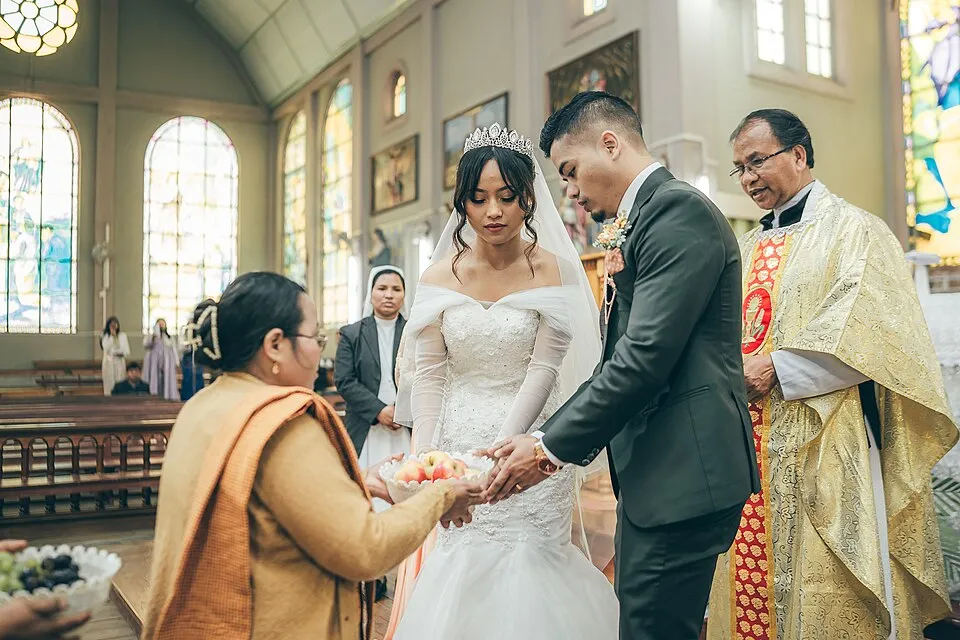
Tet, the Vietnamese Lunar New Year, represents the most important cultural celebration of the year. For Vietnamese Catholics, Tet is not only a national holiday but also a profoundly religious time when family devotions and church rituals intertwine.
Catholic traditions during Tet—such as hái lộc thánh, ancestor altar practices, and special Masses—demonstrate how inculturation shapes domestic and communal religious life within Catholic culture. These practices allow Vietnamese Catholics to honor their heritage while deepening their faith, creating a seamless integration of cultural and religious identity.
Hái Lộc Thánh: Replacing Superstition with Scripture
During Vietnamese Tet (Lunar New Year), Catholic parishes practice hái lộc thánh (“picking holy buds”), a tradition that replaces superstitious luck-seeking with scriptural guidance (Source: UCA News, Vietnam Catholic Tours). In this ritual, parishioners—often children and youth—select Bible verses—called Lời Chúa—hung on branches or small trees, believing these words offer divine direction for the coming year. The verses are carefully chosen by parish catechists to be uplifting and applicable to daily life.
This practice intentionally moves away from superstitious luck associated with traditional Tet customs like fortune-telling, lucky money in red envelopes, or consulting oracles (Source: UCA News). Instead, Catholics seek spiritual wisdom directly from Scripture, framing the new year within God’s will rather than random chance. The activity is typically organized after Mass or during parish gatherings, turning it into a communal event that strengthens faith bonds.
Hái lộc thánh has become a beloved Tet tradition that allows Vietnamese Catholics to fully participate in the national holiday while maintaining a distinctively Christian focus on God’s word as the source of true blessing and guidance. It exemplifies inculturation: taking a cultural form (picking tokens for luck) and infusing it with Catholic meaning (receiving Scripture).
The practice has spread to many parishes across Vietnam, demonstrating how local customs can be adapted to express faith authentically. This creative adaptation reflects the broader principle of Catholic cultural practices in Vietnam, where daily life becomes a canvas for religious expression.
Ancestor Altars: Placement and Symbolism in Catholic Homes
The presence of ancestor altars in Vietnamese Catholic households is a visible sign of inculturation. These altars follow specific placement and symbolism that balance cultural tradition with Catholic theology:
- Placement below Christian symbols: In Vietnamese Catholic homes, ancestor altars are typically positioned lower than crucifixes or images of the Virgin Mary (Source: ResearchGate, Catholic Virginian). This physical hierarchy visually communicates that while ancestors are honored, ultimate worship belongs to God alone, maintaining Catholic monotheism.
- Location within the home: The altar is often placed in a prominent area such as the living room or main hall, but always in a subordinate position to the Christian sacred space. This arrangement integrates cultural practice into the household while affirming Catholic identity.
- Symbolic objects: Altars include photos of deceased relatives, incense burners, and offerings like fruit, tea, or candles. These items carry cultural meanings of respect and remembrance, which Catholics adapt as prayers for the dead—a practice supported by Church doctrine (2 Maccabees 12:46).
- Ritual actions: Family members may bow or incense before the altar, especially on death anniversaries or Tet. These gestures are reinterpreted as signs of filial piety rather than worship, reflecting the Catholic teaching that honoring saints and ancestors is distinct from adoration due to God.
- Theological balance: The setup embodies the inculturation principle of “purification rather than rejection.” Cultural elements are retained but given new meaning within a Christian framework, allowing Vietnamese Catholics to live out both their faith and cultural heritage without compromise.
- Frequency of use: Ancestor altars are tended daily or weekly, with regular offerings and prayers, making them a living part of family devotion rather than a mere decorative element. This regular engagement reinforces intergenerational connections and cultural continuity within a Catholic context.
Tet Masses: Prayers for Ancestors, Peace, and the Nation
During the Tet (Lunar New Year) period, Catholic churches across Vietnam hold special Masses that integrate Catholic liturgy with national traditions (Source: UCA News, Vietnam Catholic Tours). These celebrations, often well-attended, typically include prayers for ancestors, peace, and the nation, aligning with the Vietnamese cultural emphasis on family, harmony, and collective well-being that defines the Tet spirit.
The Masses for ancestors reflect the Catholic doctrine of praying for the dead, offering suffrage for souls in purgatory. This practice resonates deeply with Vietnamese filial piety, allowing Catholics to honor their deceased loved ones within the sacramental life of the Church rather than through separate rituals. It provides a theological bridge between Catholic teaching and cultural expectation.
Simultaneously, prayers for peace and the nation echo the traditional Tet wish for a prosperous year, framing these hopes within a Christian context of God’s providence and the intercession of saints. The prayers often mention Vietnamese leaders and the country’s future, showing the Church’s engagement with societal concerns.
These Tet Masses often feature inculturated elements such as Vietnamese music, decorations with traditional motifs like plum blossoms or lanterns, and the aforementioned hái lộc thánh activity afterward. By blending the universal Catholic liturgy with local cultural expressions, these celebrations become accessible and meaningful to Vietnamese Catholics of all ages.
They demonstrate how the Church can embrace national traditions while remaining faithful to its worship, making Tet a time when faith and culture reinforce each other in the life of the community. This integration has become a hallmark of Vietnamese Catholic identity and illustrates how Catholic national traditions in Vietnam celebrate both saints and national heritage.
The most striking example of inculturation is the placement of ancestor altars below Christian symbols in Vietnamese Catholic homes. This physical arrangement visually encapsulates the theological synthesis: honoring cultural heritage while affirming the supremacy of Christian worship. It shows how deeply inculturation has permeated daily domestic life, turning ordinary spaces into sites of integrated identity.
To experience these traditions firsthand, consider attending a Tet Mass at a Vietnamese parish or making a pilgrimage to La Vang. These lived experiences reveal the vibrant faith that emerges when Catholicism embraces local culture.
Such visits offer a window into a living heritage that continues to shape Vietnamese Catholic identity in 2026, demonstrating that tradition and modernity can coexist in dynamic harmony. For a broader understanding of how faith and culture intersect in Vietnam’s global context, explore The Intersection of Faith and Culture: Vietnamese Catholics in a Globalized World.