Digital resources on Vietnamese bishops provide researchers with unprecedented access to biographies, pastoral letters, and historical records spanning centuries of Catholic history in Vietnam. The Catholic Bishops’ Conference of Vietnam portal (cbcvietnam.org) serves as the authoritative starting point for contemporary data on all 27 dioceses, while deeper historical research leads to Vatican archives, missionary society collections, and specialized digital libraries that preserve the cultural context of Vietnamese Catholicism. These platforms collectively enable comprehensive study from current episcopal leadership to the earliest missionary records.
- cbcvietnam.org is the official portal for current data on all 27 dioceses and their bishops.
- Historical archives like the Vatican Apostolic Archive and MEP Archives hold primary records from the missionary era.
- Specialized digital libraries such as Digitizing Việt Nam provide cultural context through Hán-Nôm manuscripts and religious documents.
What Are the Primary Digital Platforms for Vietnamese Bishops’ Research?
Researchers seeking comprehensive information on Vietnamese bishops have access to a robust ecosystem of digital platforms that serve both contemporary reference and historical scholarship. These resources range from official episcopal portals providing real-time data on active bishops to third-party databases aggregating biographical details, and specialized libraries preserving archival collections.
The landscape reflects the Catholic Church’s commitment to transparency and historical preservation, while also incorporating academic digital humanities initiatives that contextualize ecclesiastical history within Vietnam’s broader cultural heritage. Understanding which platform serves which research need is essential for efficient and thorough investigation.
cbcvietnam.org: The Official Portal for Vietnam’s 27 Dioceses
The Catholic Bishops’ Conference of Vietnam portal at cbcvietnam.org stands as the definitive official source for current information on Vietnam’s episcopal leadership. As the English-language portal of the CBCV, it provides authoritative data on all 27 dioceses across the country, making it the indispensable first stop for any researcher. The site’s structure organizes content into clear sections: “CBCV’s Messages” contains pastoral letters and official statements; “Church Documents” houses canonical and doctrinal texts; “Dioceses” offers a complete listing with links to individual diocesan information; and “Bishops” provides biographical profiles of current and retired prelates.
Researchers using this portal can identify the current bishop of any diocese, access their official biography, and review recent pastoral initiatives. The site’s news section tracks episcopal activities, including ordinations, appointments, and public statements. Because it is maintained by the Conference itself, the information reflects the most current data available, with updates following any changes in diocesan leadership.
For scholars studying contemporary Vietnamese Catholicism or verifying current episcopal assignments, cbcvietnam.org offers the highest level of official accuracy. The portal also serves as a gateway to deeper resources, as diocesan pages often link to local archives and historical materials maintained at the diocesan level. For the most reliable information on Vietnamese bishops, this official portal is the primary reference.
Vietnam Conference of Catholic Bishop’s Library: Archival Collections and Publications
The Vietnam Conference of Catholic Bishop’s Library (thuvienhoidonggiammucvietnam.org) functions as a dedicated digital archive preserving literature on the Vietnamese Catholic Church. Unlike the official CBCV portal which focuses on current data, this library specializes in archival collections and publications that support scholarly research into the Church’s historical development. The repository stores and promotes books, magazines, and electronic files covering Bible studies, theology, philosophy, and both global Church doctrine and local Vietnamese ecclesial expressions.
The library’s digital collection includes historical publications, episcopal writings, and theological works produced within Vietnam’s Catholic context. Researchers can access materials that document the evolution of Vietnamese Catholic thought, pastoral practice, and ecclesial governance over decades. The platform serves as a centralized access point for scattered archival materials, many of which might otherwise be inaccessible due to physical location or language barriers.
For those investigating specific bishops’ contributions, the library may contain their published works, speeches, and pastoral letters that are not available on the official CBCV site. The library also collects materials on Vietnamese Catholic martyrs and saints, providing essential background for understanding the spiritual heritage that shapes contemporary episcopal ministry.
Catholic-Hierarchy.org: Comprehensive Biographical Data and Ordination Records
Catholic-Hierarchy.org provides a practical third-party database that aggregates biographical data, ordination dates, and career timelines for bishops worldwide, including comprehensive coverage of Vietnam. The site’s Vietnam section categorizes information by diocese, presenting both current and retired bishops in an easily navigable format. For each bishop, the database typically includes:
- Full name (including Vietnamese diacritics where available)
- Date of birth
- Date of priestly ordination
- Date of episcopal consecration
- Positions held (including previous assignments before becoming a diocesan bishop)
- Diocese to which they were appointed
This platform excels at providing quick factual reference for verifying basic biographical timelines and appointments. Researchers can trace a bishop’s career progression from auxiliary to diocesan bishop, or identify previous assignments that shaped their ministry. The data helps establish chronological frameworks for deeper archival research—knowing exact dates allows targeted searches in Vatican or missionary archives for relevant documents.
However, users should note that Catholic-Hierarchy.org is not an official church source; while generally reliable, it may occasionally lag behind official appointments or lack the detailed biographical narratives found on official diocesan pages. The site is best used as a cross-reference tool and a starting point for identifying which bishops to research further in primary sources.
Historical Archives and Specialized Collections
For researchers probing beyond current episcopal leadership into the historical depths of Vietnamese Catholicism, several specialized archives provide essential primary source materials. These collections, often housed in European institutions or curated through digital humanities projects, contain the documentary records that illuminate how the Church developed in Vietnam from the earliest missionary contacts through the colonial era and into the modern period.
The Vatican’s own archives maintain the official ecclesiastical correspondence, while missionary societies preserve the on-the-ground reports of those who first established Christian communities. Complementing these are digital library initiatives that digitize Vietnamese-language materials, offering perspectives from within the culture itself.
Vatican and MEP Archives: Ecclesiastical Records from the Missionary Era
The Vatican Apostolic Archive (Archivio Apostolico Vaticano) holds extensive records regarding the Catholic Church in Vietnam, particularly the formal Ad Limina visits that Vietnamese bishops have made to the Holy See over centuries. These visits—”to the threshold” of the apostles—required bishops to submit detailed reports on the state of their dioceses, including statistics on Catholics, clergy, churches, schools, and challenges faced.
The resulting documents provide invaluable insight into diocesan conditions, episcopal priorities, and the Vatican’s guidance to Vietnamese prelates. Access to these archives requires formal application, but digitization initiatives have made increasing portions available online, though many Vietnamese-related records remain in physical form in Rome.
The Paris Foreign Missions Society (MEP) Archives complement the Vatican’s perspective with on-the-ground missionary correspondence and reports from French priests who established and served Vietnamese dioceses from the 17th through 20th centuries. The MEP has digitized substantial portions of its collection, including letters, mission reports, and administrative documents that detail the day-to-day challenges of building the Church in Vietnam. These records are crucial for studying bishops from the colonial period, as they often contain candid assessments of episcopal appointments, conflicts with civil authorities, and the inculturation of Catholic practice.
The MEP archives provide the granular local detail that official Vatican summaries omit, revealing how Vietnamese bishops navigated complex political landscapes while shepherding their flocks. For context on bishops serving during the French Indochina period, researchers should consult the dedicated article on bishops in French Indochina.
Digitizing Việt Nam and Southeast Asia Digital Library: Hán-Nôm Heritage and Vietnamese Texts
Two major digital humanities platforms—Digitizing Việt Nam and the Southeast Asia Digital Library (SEADL)—provide essential cultural and historical context that surrounds the ecclesiastical records. While not exclusively focused on bishops, their collections of Vietnamese texts, manuscripts, and periodicals frame the world in which Vietnamese Catholicism developed and within which bishops exercised their ministry.
| Platform | Core Resources | Historical Scope | Relevance to Bishops’ Research |
|---|---|---|---|
| Digitizing Việt Nam | Hán-Nôm manuscripts, maps, documents on religious beliefs | Pre-20th century to modern | Provides cultural context for early Christian inculturation; may contain references to bishop activities in historical texts. |
| Southeast Asia Digital Library (SEADL) | Digital collections of Vietnamese texts, periodicals, images | 19th-20th centuries | Hosts materials on Vietnamese history and culture that frame the bishops’ societal role during key periods like the colonial era and Vietnam War. |
These platforms complement church archives by supplying the broader cultural and political backdrop against which Vietnamese bishops operated. Digitizing Việt Nam’s Hán-Nôm manuscripts offer insight into the classical Chinese-influenced literary culture that early missionaries encountered and that later Vietnamese Catholic intellectuals mastered. Maps and documents on religious beliefs reveal how Catholic practice intersected with indigenous traditions and state policies.
SEADL’s collections of 19th- and 20th-century Vietnamese periodicals capture the public discourse in which bishops’ statements were published and debated. Together, these resources help researchers understand not just what bishops did, but the cultural world they inhabited and the societal forces they addressed. For bishops serving during the Vietnam War, the SEADL collections are particularly valuable for understanding the media environment and public sentiment.
Specialized Collections: Cardinal Nguyễn Văn Thuận and Vietnam War Documents
Two specialized collections provide focused resources for studying individual influential bishops and specific historical moments. Online collections dedicated to Cardinal Nguyễn Văn Thuận—a prominent Vietnamese cardinal who endured imprisonment and later served in the Roman Curia—contain his writings, speeches, interviews, and biographical materials. These resources offer direct access to the theological reflections and pastoral strategies of one of Vietnam’s most internationally recognized prelates, whose experience spanned persecution, reconciliation, and global Church leadership.
The Vietnam War Petition Collection, housed at the Catholic University of America and accessible through digital platforms, contains documents relevant to U.S.-Vietnam Church relations during the 1960s. This collection reveals how Vietnamese bishops navigated the extraordinary pressures of the war period, including petitions to both South Vietnamese and American authorities, statements on neutrality and peace, and communications with the Vatican about the conflict’s impact on Catholic communities. The documents show bishops attempting to protect their flocks while maintaining ecclesial autonomy amid competing political pressures.
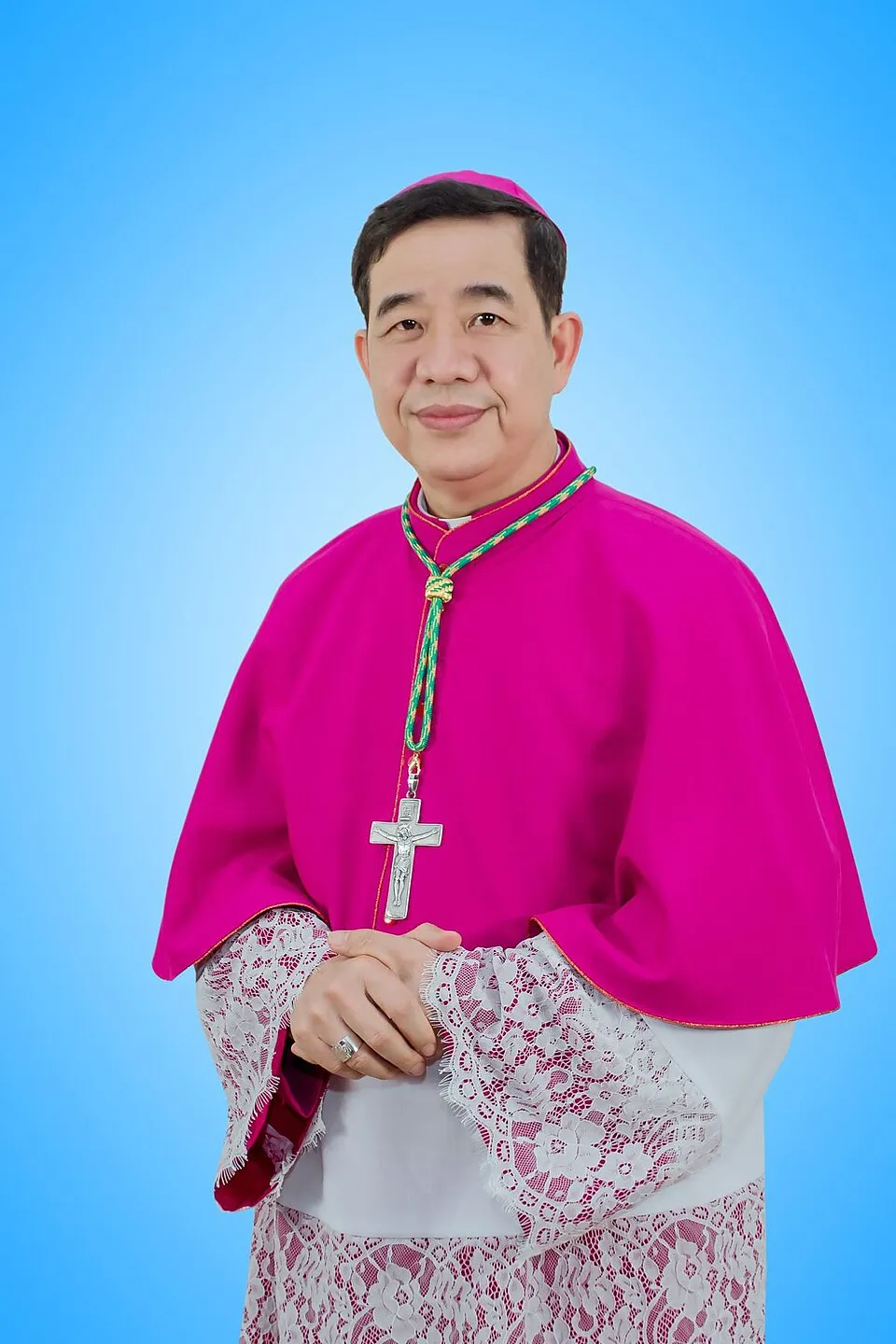
For researchers examining how episcopal authority functions under extreme political duress, this collection provides primary source evidence of pastoral letters, private appeals, and public statements that illuminate the bishops’ strategic choices. The challenges faced during this era contrast sharply with the more recent leadership of figures like Bishop Joseph Nguyễn Chí Linh, highlighting evolving episcopal roles.
Cultural and Devotional Research Resources
Understanding Vietnamese bishops’ ministry requires appreciation of the cultural and devotional landscape that shapes Catholic expression in Vietnam. Digital resources that document major devotions and cultural symbols provide essential context for interpreting bishops’ pastoral letters, homilies, and public statements.
These cultural elements are not peripheral but central to how Vietnamese Catholics experience faith and how bishops communicate with their flock. Two particularly significant areas—Marian devotion and numerical symbolism—appear frequently in Vietnamese Catholic materials and carry layers of meaning that researchers must recognize.
Our Lady of La Vang: Digital Archives and Marian Devotion in Vietnam
Our Lady of La Vang (Đức Mẹ La Vang) stands as the most significant Marian devotion in Vietnamese Catholicism, associated with a purported apparition during the intense persecutions of the late 18th century. According to tradition, Catholics fleeing into the jungle of La Vang encountered the Blessed Virgin Mary, who consoled them and gave guidance.
This devotion became a powerful symbol of Vietnamese Catholic identity, resilience, and inculturation—the Virgin appearing not in European guise but as a Vietnamese woman in simple robes. Bishops throughout Vietnam’s history have promoted and regulated this devotion, issuing pastoral letters that define its liturgical celebration and theological significance.
Digital platforms like Digitizing Việt Nam, with its curated “documents on religious beliefs,” are essential for researching the historical development of La Vang devotion. These archives contain early accounts of the apparition, episcopal decrees authorizing its liturgical feast, theological reflections on its meaning, and artistic representations that show how Vietnamese Catholics visualized Mary. Understanding La Vang is crucial for interpreting bishops’ documents, as references to Mary under this title appear constantly in pastoral letters, homilies, and diocesan announcements.
A bishop’s position on La Vang—whether emphasizing its historical authenticity, liturgical celebration, or devotional practices—reveals much about his theological orientation and pastoral priorities. Researchers must therefore consult cultural archives alongside ecclesiastical ones to grasp the full context of episcopal ministry. Key resources include:
- Digitizing Việt Nam’s collection on religious beliefs
- The Vatican’s documentation on Marian apparitions
- Diocesan archives with local La Vang histories
The Number 888: Cultural Symbolism in Vietnamese Catholic Context
In Vietnamese culture, the number 8 carries profound positive associations—it sounds similar to words meaning “prosperity” and “wealth,” making it the most auspicious digit. The triple repetition 888 amplifies this symbolism, representing triple prosperity, good fortune, and success.
This cultural numerology permeates Vietnamese society, appearing in business, addresses, phone numbers, and personal preferences. Within Vietnamese Catholicism, the symbolism extends to church names, parish dedications, charitable initiatives, and even the selection of dates for important events.
For researchers analyzing digital archives of Vietnamese Catholic materials, recognizing the significance of 888 aids interpretation of numerous documents. Diocesan announcements may highlight fundraising campaigns using the number; parish names like “St. Joseph 888” or charitable programs with “888” in their title carry cultural weight beyond their literal meaning.
Bishops’ pastoral letters might reference “triple blessings” or use the number symbolically. Understanding this cultural layer prevents misreading such references as mere coincidence or commercial gimmickry. Instead, researchers see how bishops engage with deep cultural symbols to communicate effectively with their flock, embedding Catholic messaging within familiar cultural frameworks.
The number 888 thus exemplifies the inculturation that characterizes Vietnamese Catholicism—a synthesis of universal Catholic faith with indigenous cultural expressions that bishops both navigate and shape. Contexts where 888 appears include:
- Parish and church names
- Charitable fundraising campaigns
- Diocesan anniversary designations
- Religious publication titles
The most valuable digital resources for Vietnamese bishops’ research extend beyond official church sites to include cultural archives that reveal the Vietnamese worldview shaping the Church. Begin your investigation at the official CBCV portal (cbcvietnam.org) for current bishops and their latest documents, then branch into the Vatican Apostolic Archive and MEP Archives for historical depth on missionary-era prelates, and finally explore Digitizing Việt Nam and SEADL to understand the cultural and devotional soil in which Vietnamese Catholicism developed. This multi-layered approach yields a full-spectrum view from present leadership to centuries of accumulated tradition.
For a broader understanding of episcopal structure, see the comprehensive overview of Vietnam’s episcopal structure. Those interested in specific modern bishops can explore profiles such as,,. The represents another critical period accessible through specialized digital collections.
Frequently Asked Questions About Digital Resources On Vietnamese Bishops
What is the Vietnamese version of the Virgin Mary?
Our Lady of La Vang (Vietnamese: Đức Mẹ La Vang) is a Roman Catholic title of the Blessed Virgin Mary associated with a purported Marian apparition during the persecution of Christians in Vietnam.
Is there a Catholic cardinal in Vietnam?
Dedicated to a divided nation Reflecting on the life of the Vietnamese Venerable, Cardinal Michael Czerny, prefect of the Dicastery for Promoting Integral Human Development, described Cardinal Văn Thuận as not only a promoter of justice and peace but also an embodiment of “these values in word and a…
What does 888 mean in Vietnam?
The number 8 is considered lucky in Vietnam. So 888 means prosperity, wealth, and good luck.
What happens at 3am Catholic?
Church teaching says nothing about the time of 3 a.m. However, in popular culture it has become known as the “devil's hour.” This is because Gospel tradition reports that Jesus died at 3 p.m., and so—because the devil likes to mock God— the inverse hour of 3 a.m.