SAPO (intro paragraph, NO heading):
On June 19, 1988, Pope John Paul II canonized 117 Vietnamese martyrsin St. Peter’s Square, representing a vast history of persecution that claimed the lives of over 130,000 Vietnamese Catholics between the 18th and 19th centuries. The ceremony proceeded over the opposition of Vietnam’s Communist government, which barred official representatives, yet thousands of overseas Vietnamese gathered to witness this historic affirmation of faith.
- Pope John Paul II canonized 117 Vietnamese martyrs on June 19, 1988, in a ceremony at the Vatican’s St. Peter’s Square.
- The 117 canonized individuals represent a historic group of over 130,000 Vietnamese Catholics killed for their faith between the 18th and 19th centuries.
- The canonization proceeded over the opposition of Vietnam’s Communist government, highlighting the martyrs’ significance as symbols of religious freedom.
The 1988 Canonization Ceremony by Pope John Paul II
The canonization of the Vietnamese Martyrs on June 19, 1988, stands as one of the largest such ceremonies in modern Catholic history. Pope John Paul II presided over the mass beatification in St.
Peter’s Square, elevating 117 individuals to sainthood in a single ceremony. The event was organized by Monsignor Trần Văn Hoài and drew thousands of overseas Vietnamese worldwide, creating a powerful moment of unity for the global Vietnamese Catholic diaspora according to the Vatican’s official records (La Santa Sede, 2021).
The atmosphere combined festive celebration with solemn reverence as families and parishes from around the world gathered. This was not a small Vatican ritual but a major global event that signaled the universal Church’s recognition of Vietnam’s martyrs. The ceremony’s scale reflected both the historical magnitude of the persecution and the vibrant faith of Vietnamese Catholics scattered across continents.
Date, Location, and Global Attendance
The ceremony took place on June 19, 1988, in St. Peter’s Square, Vatican City.
This date was deliberately chosen to allow maximum participation from the Vietnamese diaspora, many of whom had fled their homeland after the Vietnam War. The square was filled with Vietnamese flags, traditional dress, and prayers in both Vietnamese and Latin, creating a visually striking blend of cultural identity and Catholic worship.
Attendance estimates vary, but multiple sources confirm thousands of overseas Vietnamese traveled from countries like the United States, France, Australia, and Canada to attend. The Los Angeles Times reported on the event as a “defiance” of Hanoi’s government, noting the ceremony’s political and spiritual significance (Los Angeles Times, June 20, 1988). For many attendees, this was their first opportunity to venerate these saints collectively, as the Vietnamese government had suppressed such celebrations for decades.
The Number Canonized: 117 Martyrs
The canonization specifically included 117 martyrs, a precise number that represents the officially named individuals whose stories have been preserved and verified by the Vatican. The composition of this group, as documented by the Catholic Bishops’ Conference of Vietnam and other sources, breaks down as follows:
- 96 Vietnamese faithful, including both clergy and laity
- 11 Spanish Dominicans (missionary bishops and priests)
- 10 French missionaries from the Paris Foreign Missions Society (Missions Étrangères de Paris)
Among the 117, the hierarchical distribution was:
- 8 bishops
- 50 priests
- 59 laypeople (catechists, mothers, and other lay faithful)
This breakdown demonstrates that the canonized group was not exclusively clerical but included ordinary men, women, and families who bore witness through their daily lives and ultimate sacrifice. The inclusion of such a large lay component (50% of the total) was significant for recognizing the broader Catholic community’s role in sustaining the faith under persecution.
Pope John Paul II’s Homily: Comparing to Early Christians
In his homily, Pope John Paul II drew a powerful parallel between the Vietnamese martyrs and the persecuted Christians of the Roman Empire’s first centuries. According to Lumen Media’s coverage of the event, the Pope explicitly compared the Vietnamese witnesses to the early Christians who faced martyrdom under Roman rule (Lumen Media, 2024). This comparison was not merely rhetorical—it placed the Vietnamese experience within the universal Church’s foundational narrative of blood witness.
The theological significance of this comparison is profound. Early Christian martyrs are revered as the “seed of the Church,” their sacrifice believed to have fertilized the growth of Christianity.
By linking the Vietnamese martyrs to this era, John Paul II declared their blood equally foundational for the Church in Vietnam and for global Catholicism. This framing elevated the Vietnamese experience from a regional tragedy to a cornerstone of universal Christian heritage — History of Vietnamese Catholicism.
The Pope’s words carried an implicit challenge: just as early Christians transformed the Roman Empire through their steadfast faith, so too could the Vietnamese martyrs’ witness transform their homeland. This message resonated deeply with the diaspora audience, many of whom had lost family members to persecution and saw in the canonization a vindication of their heritage.
Who Were the 117 Canonized Martyrs?
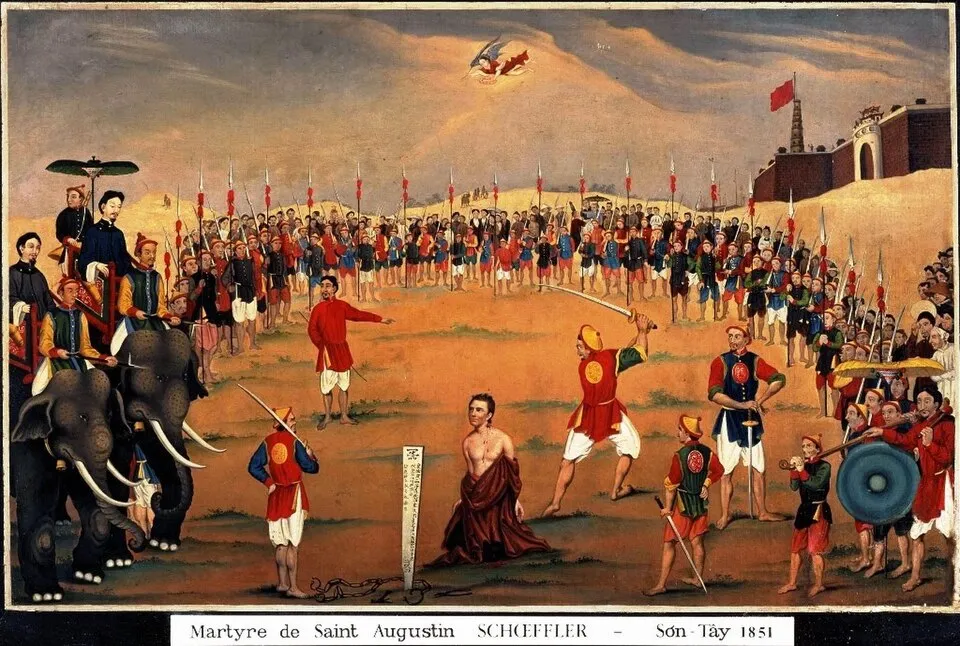
Understanding who these 117 individuals were requires looking beyond the number to the historical reality they represent. These martyrs came from diverse social backgrounds and died over a span of more than a century, yet they share a common witness to faith amid systematic persecution. Their stories reflect the complex interplay of Vietnamese dynastic politics, foreign missionary activity, and local Christian community formation.
Time Period of Martyrdom: 1745 to 1862
The martyrs did not die in a single persecution event but rather during multiple waves of violence spanning 1745 to 1862 (Wikipedia, citing Archdiocese of Hanoi, 2024). This 117-year period covers the reigns of several Vietnamese dynasties: the Trịnh lords in the north, the Tây Sơn rebellion, and the Nguyễn dynasty that consolidated power in 1802.
Six of the canonized martyrs died during the 18th century, while the remaining 111 died in the 19th century. The concentration in the 1800s corresponds to the particularly severe persecutions under Emperors Minh Mạng, Thiệu Trị, and Tự Đức. These rulers viewed Catholicism as a threat to Vietnamese traditions and sovereignty, often equating it with foreign colonialism despite the faith’s deep indigenous roots.
The time span also reveals that persecution was not constant but fluctuated with political circumstances. Brief periods of tolerance alternated with violent crackdowns, creating a pattern where Christians lived under the constant threat of discovery and punishment. The final year of the range, 1862, marks the treaty with France that officially guaranteed religious freedom—a turning point that ended the era of state-sponsored martyrdom.
Social Ranks: From Bishops to Young Laypeople
At the highest level were bishops such as St. Andrew Dũng-Lạc, exemplifying the rise of indigenous clergy in Vietnam, who served as diocesan leaders and were primary targets for elimination.
Andrew Dũng-Lạc, who served as diocesan leaders and were primary targets for elimination. Below them were parish priests who administered sacraments and catechized the faithful in secret.
The lay component reveals the breadth of the persecution’s impact. Among the 59 laypeople canonized were:
- Catechists who taught the faith when priests were unavailable
- Mothers who raised children in the faith despite threats
- Young people like Andrew of Phú Yên, executed at age 19 in 1644 (though beatified separately in 2000, he represents the youth among the martyred)
- Families who sheltered priests at the risk of their own lives
This diversity underscores that martyrdom was not limited to clerical leaders but extended to ordinary believers who refused to renounce their faith. The presence of women and children among the canonized particularly emphasizes how persecution engulfed entire households, not just religious professionals.
The Canonization Process: Beatifications Leading to 1988
The 1988 canonization was the culmination of a century-long process of beatification. The 117 martyrs were beatified in four separate groups by different popes, reflecting the gradual historical recognition of their witness:
- 64 martyrs beatified by Pope Leo XIII on May 27, 1900
- 8 martyrs beatified by Pope Pius X on May 20, 1906
- 20 martyrs beatified by Pope Pius X on May 2, 1909
- 25 martyrs beatified by Pope Pius XII on April 29, 1951
This staggered beatification process occurred as historical documentation became available and as the Vatican’s Congregation for the Causes of Saints verified individual cases. Each beatification required proof of martyrdom “in odium fidei” (in hatred of the faith) and often involved extensive archival research across multiple countries.
Pope John Paul II’s decision to canonize all 117 together as a single group was highly symbolic. Rather than elevating individuals separately, he presented them as a corporate witness—the Vietnamese Martyrs as a collective body.
This approach emphasized their shared experience and the idea that their blood formed a unified sacrifice for the Church. The 1988 ceremony thus became the first time in modern history that such a large, diverse group of martyrs from one nation was canonized simultaneously.
Representing Over 130,000 Faithful: The Scope of Persecution
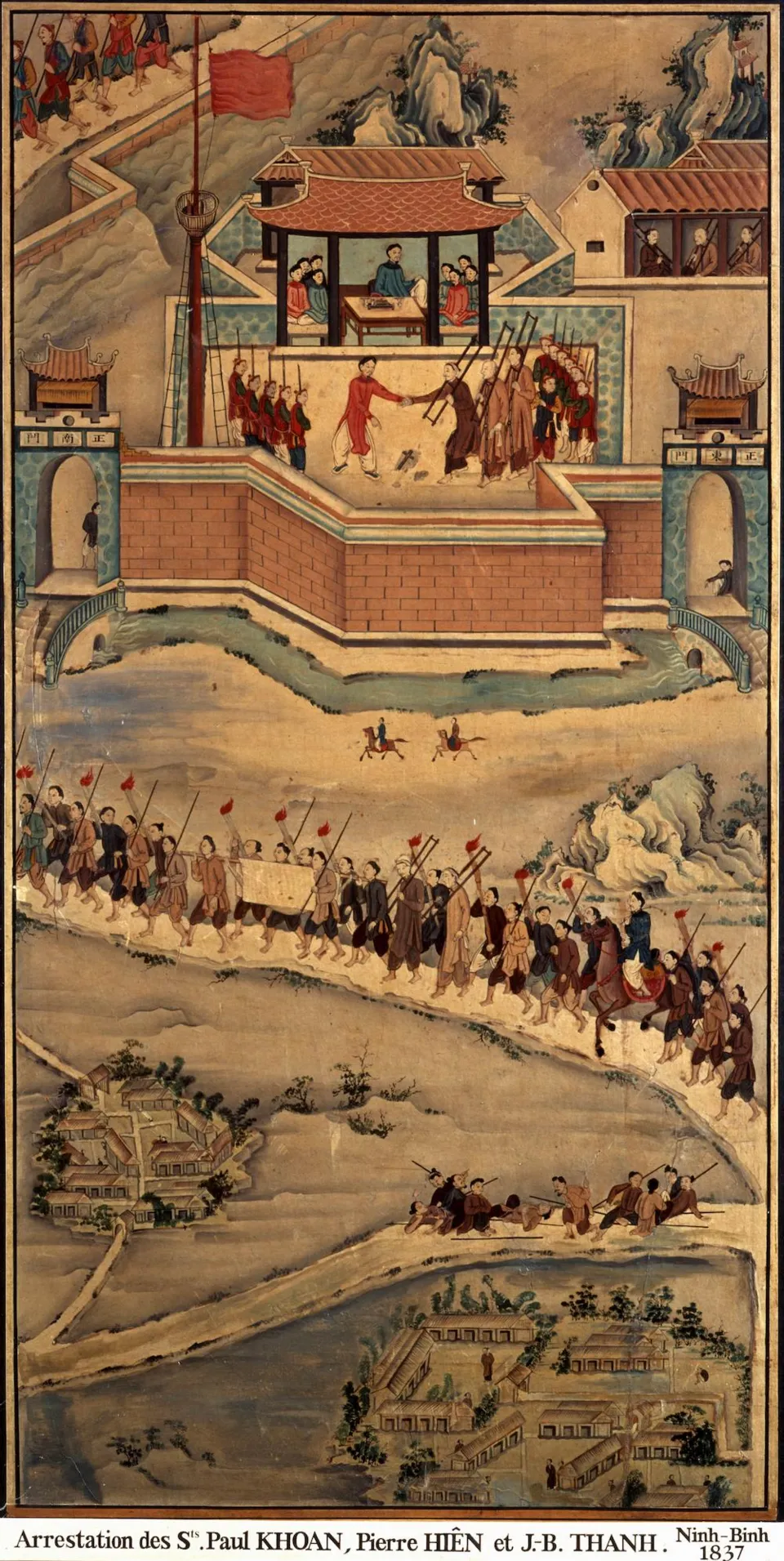
The number 117 might seem small compared to the actual scale of suffering. The Vatican’s own estimates place the total number of Vietnamese martyrs between 130,000 and 300,000 (laudes.org; Catholic World Report, 2025). This vast discrepancy between the canonized and the total martyred raises important questions about the canonization process and how the Church honors anonymous witnesses.
The 117 as a Representative Sample
The 117 canonized martyrs are intended to represent over 130,000 faithful who were martyred in Vietnam over four centuries, according to laudes.org’s analysis. This is a deliberate theological and pastoral choice: the Church cannot possibly name every unknown martyr, so it selects a representative sample that stands for the whole.
The selection criteria aimed for diversity in:
- Geographic origin (different regions of Vietnam)
- Social status (clergy and laity, men and women, adults and children)
- Time period (spanning the 18th and 19th centuries)
- Circumstances of death (various methods of execution)
By canonizing this specific group, the Vatican provided the global Church with a set of named saints whose collective story points to the larger, unnamed multitude. The 117 become symbols of the 130,000+, their feast day a celebration of all who died rather than just the few whose names survive.
Historical Estimates of the Martyred
Estimates of total martyrs vary widely among sources, reflecting the difficulty of precise historical documentation:
- 130,000 to 300,000: Vatican estimate (most authoritative)
- Over 130,000: laudes.org and Catholic World Report (2025)
- More than 100,000: Fides.org (2021)
- Hundreds of thousands: Catholic Times Columbus (2022)
These figures are estimates, not exact counts. The persecution spanned nearly three centuries and occurred in remote areas where record-keeping was sporadic.
Many deaths went unrecorded, and entire Christian villages were destroyed, their inhabitants killed without documentation. The wide range (100,000–300,000) indicates scholarly uncertainty rather than disagreement about the basic fact: the scale was immense.
What all sources agree on is that the 117 canonized are a small fraction—likely less than 0.1%—of the total martyred. This reality makes the canonization both a tribute to the named and a memorial for the nameless.
Feast Day: November 24th
The universal feast day for the Vietnamese Martyrs is November 24, as inscribed in the General Roman Calendar. This date is separate from the canonization anniversary (June 19) and was assigned by Pope John Paul II when he established the memorial globally.
From 1925 to 1990, the Vietnamese Church commemorated the martyrs on the first Sunday of September, a local tradition that reflected the community’s devotional practices. The shift to November 24 unified the global celebration, allowing Vietnamese Catholics worldwide to observe the same day as the universal Church.
The feast is formally titled “Saint Andrew Dũng-Lạc and Companions,” using the name of the most prominent Vietnamese priest among the group as a representative figure. Many of the individual martyrs have secondary memorials on the local calendars of Vietnamese dioceses, but November 24 remains the primary celebration for all 117 together.
The feast day serves both liturgical and cultural functions. In diaspora communities, it becomes an occasion for Vietnamese-language masses, traditional foods, and processions that blend Catholic veneration with Vietnamese cultural expressions. This dual character reflects the martyrs’ own identity: Vietnamese in culture, Catholic in faith.
The canonization of 117 Vietnamese martyrs by Pope John Paul II on June 19, 1988, did more than add new saints to the Church’s calendar—it provided a unifying narrative for a people scattered by war and persecution. The ceremony’s defiance of Hanoi’s communist government resonated with refugees who had lost their homeland, while the representation of over 130,000 unnamed martyrs honored the scale of sacrifice.
This event simultaneously looked backward to centuries of suffering and forward to a renewed Vietnamese Catholic identity in diaspora. The martyrs became ancestors of faith for a community seeking to preserve its heritage in new lands.
For the official historical record and current activities of the Catholic Church in Vietnam, visit the Catholic Bishops’ Conference of Vietnam’s portal at www.cbcvietnam.org/history-of-vietnamese-catholicism. There you will find deeper context about how these martyrs shaped the Church’s resilience through centuries of persecution and continue to inspire Vietnamese Catholics today.
Frequently Asked Questions About Pope John Paul II Vietnamese Martyrs
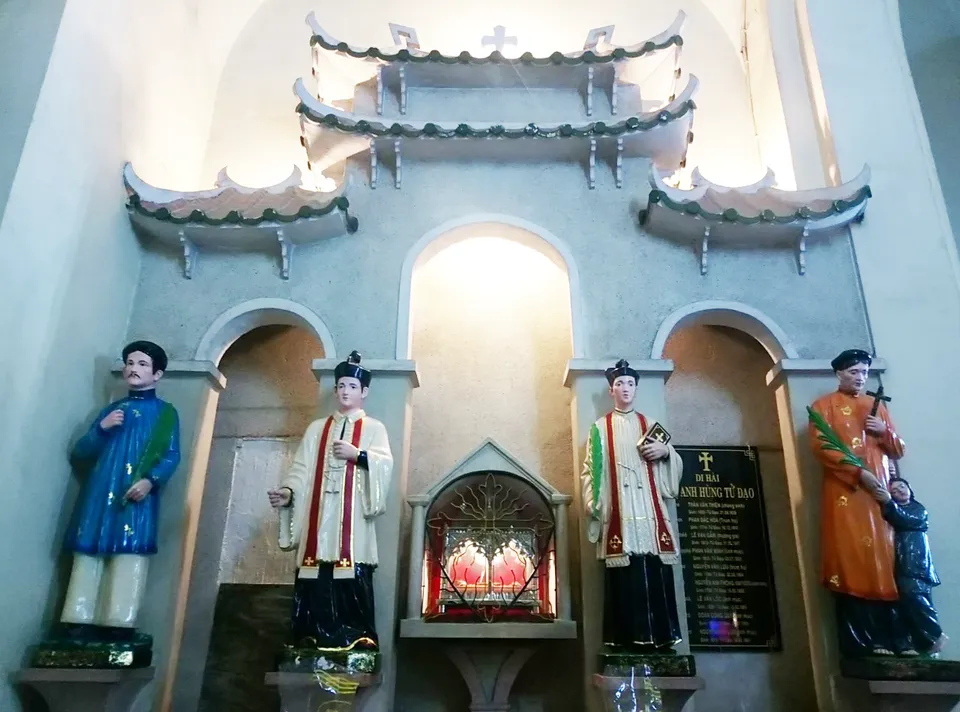
When did Pope John Paul II canonize the Vietnamese martyrs?
June 19, 1988. Pope John Paul II canonized 117 Vietnamese martyrs on this date in a ceremony at St. Peter's Square.
How many of the canonized martyrs were Vietnamese?
96 out of 117. The group includes 96 Vietnamese, along with 11 Spanish Dominicans and 10 French missionaries.
What is the breakdown of the 117 martyrs by role?
8 bishops, 50 priests, and 59 laypeople. These individuals were killed between 1745 and 1862, with 111 dying in the 19th century.
How many faithful are represented by the 117 martyrs?
Over 130,000. The canonized martyrs symbolize the broader persecution experienced by more than 130,000 Vietnamese Christians.
During which centuries did the martyrs die?
From 1745 to 1862, spanning the 18th and 19th centuries. Specifically, 111 of the 117 martyrs died in the 19th century.