The Catholic Church comprises 24 distinct liturgical traditions, known as rites in Catholicism, united under the Pope. These rites, from the widely practiced Latin Rite to the diverse Eastern Catholic traditions, each preserve unique ceremonies, spiritualities, and disciplines while sharing the same sacraments and faith.
In Vietnam, home to Asia’s fifth-largest Catholic population of approximately 7 million, these rites come alive through vibrant inculturation, especially during Tet, the Lunar New Year. In 2026, the convergence of Tet and Lenten observances offers a profound glimpse into how Vietnamese Catholics blend ancient customs with universal Catholic worship.
- The Catholic Church has 24 distinct liturgical rites (sui iuris churches) sharing full communion but preserving unique traditions.
- Vietnam’s 7 million Catholics practice a unique inculturation, blending Roman liturgy with Vietnamese customs like ancestor veneration and traditional instruments.
- Eastern Catholic Churches (23 of the 24 rites) serve as ecumenical bridges between Rome and Eastern Orthodoxy.
What Are the 24 Rites of Catholicism?
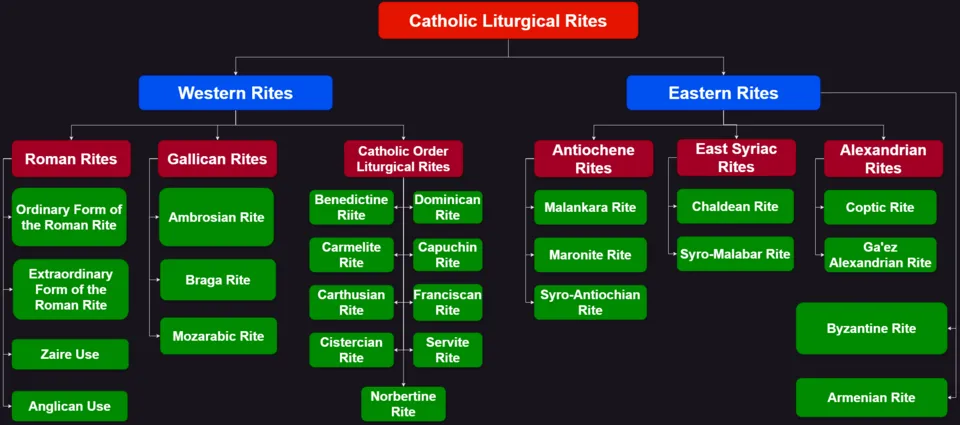
The 24 Sui Iuris Churches: Autonomy Within Unity
The term ‘sui iuris’ means ‘of its own law’ in Latin, referring to the 24 autonomous particular churches that constitute the Catholic Church. Each sui iuris church possesses its own liturgical, spiritual, and canonical traditions while remaining in full communion with the Bishop of Rome. According to Ascension Press, the Catholic Church encompasses exactly 24 such churches, a number that has been stable since the 20th century as Eastern Catholic Churches were recognized or restored.
This autonomy allows each rite to preserve its unique heritage—whether it’s the Byzantine chant of the Melkite Church or the Syro-Malabar Qurbana—without compromising the essential unity of Catholic faith. The Pope serves as the central authority for all 24 rites, ensuring doctrinal consistency while respecting their distinct expressions.
The theological basis for these autonomous churches is explained in Catholic doctrine articles on cbcvietnam.org, providing deeper insights into the structure of the Church. This structure reflects the Church’s catholicity: a single body embracing diverse cultural and liturgical forms, all oriented toward the same Eucharistic sacrifice.
Latin and Eastern Catholic Churches: The Two Main Branches
| Branch | Number of Rites | Examples |
|---|---|---|
| Latin (Roman) Rite | 1 | Roman Rite (with minor variants like Ambrosian) |
| Eastern Catholic Churches | 23 | Byzantine, Armenian, Chaldean, Coptic, Maronite, Melkite, Syro-Malabar, Syro-Malankara, and 15 others |
Despite this numerical division, both branches share full communion and administer the same seven sacraments, instituted by Christ. The Latin Rite, though only one of the 24, includes over 1.2 billion Catholics, making it by far the largest. The Eastern Catholic Churches, with approximately 18 million members, represent a rich tapestry of ancient liturgical traditions that pre-date the Great Schism of 1054.
Their existence challenges the misconception that ‘Catholic’ equates to ‘Latin,’ showcasing the Church’s inherent diversity. Each Eastern Catholic Church operates under its own synod of bishops and canon law, yet recognizes the Pope’s primacy, embodying a model of unity that respects legitimate plurality. For a comprehensive overview of the rites and sacraments, consult the rites and sacraments guide for Vietnamese Catholics.
Distinct Liturgical, Spiritual, and Disciplinary Traditions
While all 24 rites celebrate the same core sacraments—Baptism, Confirmation, Eucharist, Penance, Anointing of the Sick, Holy Orders, and Matrimony—their liturgical expressions vary significantly. The Roman Rite, for instance, emphasizes sobriety and precise rubrics, while Byzantine traditions feature elaborate chants, incense, and icon veneration. Spiritual traditions also differ: Eastern rites often incorporate mystical theology and hesychasm, whereas Latin spirituality tends toward Scholasticism.
Disciplinary norms encompass fasting rules, clerical celibacy, and the calendar of saints. For example, the Ukrainian Greek Catholic Church maintains married priesthood, while the Latin Rite generally requires celibacy. These distinctions are not divisions but enrichments, allowing the one Church to speak through many cultural voices.
The Catechism notes that liturgical rites are ‘the diverse traditions in which the one catholic and apostolic faith has come to be expressed’ (CCC 1200). For specific guidelines on the sacrament of matrimony in Vietnam, refer to the Catholic marriage guidelines in Vietnam.
Vietnamese Catholic Rites in 2026: Tet Celebrations That Blend Faith and Culture
Tet 2026: Lunar New Year Coincides with Ash Wednesday (February 18)
In 2026, Vietnamese Catholics experience a rare liturgical alignment: the second day of Tet (Lunar New Year) falls on Ash Wednesday, February 18, 2026. This juxtaposition places the joyous celebrations of family reunions and ancestral honors directly against the Lenten call to repentance and fasting. The Catholic Bishops’ Conference of Vietnam has designated 2026’s pastoral theme as ‘Every Christian as a Missionary Disciple,’ encouraging the faithful to witness their faith even within cultural festivities.
During Tet, many Vietnamese Catholics attend special Masses that incorporate traditional music and decorations, yet on Ash Wednesday they receive ashes and begin the Lenten journey. This dual observance highlights the Church’s ability to embrace cultural identity while maintaining universal rhythms.
For Vietnamese Catholics, Tet is not merely a cultural add-on but an integrated expression of their Catholic identity, where gratitude to God for the past year and hope for the future are prayerfully offered within the liturgical framework. The 2026 pastoral theme is elaborated in Catholic pastoral guides for Vietnam.
Four Special Masses: The Vietnamese Bishops’ Tet Liturgical Framework
The Vietnamese Bishops’ Conference has established four specific Masses for the first three days of Tet, each with a distinct Vietnamese name and spiritual purpose:
- Thánh Lễ Tất Niên (Year-End Thanksgiving Mass): Celebrated on the last day of the lunar year, this Mass gives thanks to God for protection and blessings over the past year, asking for a peaceful transition into the new year.
- Thánh Lễ Giao Thừa/Tân Niên (Prayer for Peace Mass): Held at midnight on New Year’s Eve or on the first day of Tet, this Mass prays for peace, family harmony, and national blessing, aligning with the Vietnamese tradition of seeking auspicious beginnings.
- Thánh Lễ Tưởng Niệm Cha Mẹ và Tổ Tiên (Commemoration of Ancestors and Parents) on the second day of Tet: This Mass specifically honors deceased parents and ancestors, reflecting the Confucian value of filial piety. Prayers include petitions for the souls of the departed, and the rite often incorporates the veneration of ancestors with incense and flowers.
- Thánh Lễ Cầu Anh Cho Sự Lao Động (Blessing of Work and Labor) on the third day: This Mass sanctifies the labor of the coming year, asking God to bless all work and provide for families’ needs, tying into the Vietnamese tradition of returning to work after Tet.
These liturgies demonstrate how the universal Catholic calendar is inculturated to resonate with Vietnamese cultural values, creating a unique yet authentically Catholic celebration of the Lunar New Year. The framework for these Masses is part of the broader pastoral resources for effective ministry in Vietnam’s Church.
Ancestor Veneration: Incense and Flowers, Not Food Offerings
Catholic ancestor veneration in Vietnam adapts traditional practices to align with Catholic theology. Rather than offering food, tea, or paper money—common in non-Catholic Vietnamese customs—Catholics use incense and flowers at a dedicated altar or table, focusing on prayers for the deceased’s souls. This practice, officially recognized by the Church as a key component of filial piety, often incorporates the veneration into the entrance rites of Mass, where families may place incense and flowers before the altar while praying for their ancestors.
The distinction is theological: Catholics honor ancestors as a sign of respect and love, praying for their purification, but do not worship them as deities, which would violate the First Commandment. The Catholic Bishops’ Conference of Vietnam has affirmed that such veneration, when stripped of superstitious elements, enriches the faith by connecting Vietnamese Catholics to their heritage.
During Tet, this practice becomes especially visible, as families gather for Mass and then visit ancestral graves, blending Catholic ritual with cultural memory in a way that strengthens both identity and devotion. Common questions about these practices are addressed in pastoral guides Q&A for Vietnamese Catholics.
Eastern Catholic Churches: Bridges to Christian Unity
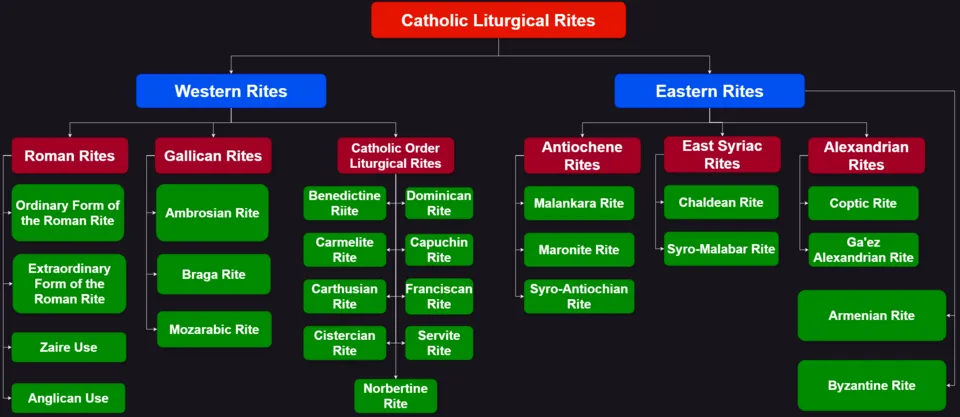
The 23 Eastern Catholic Churches: An Overview
The 23 Eastern Catholic Churches, together with the Latin Rite, complete the 24 sui iuris churches of the Catholic communion. These churches—such as the Syro-Malabar and Syro-Malankara Churches of India, the Maronite Church of Lebanon, and the Melkite Greek Catholic Church of the Levant—maintain autonomous governance and preserve their Eastern liturgical heritage, often tracing their origins to apostolic times. Despite historical separations, they entered or re-entered communion with Rome while retaining their distinctive traditions, including the use of leavened bread in the Eucharist, married clergy, and the Divine Liturgy of St.
John Chrysostom. With approximately 18 million members worldwide, they represent a minority within the Catholic Church but a majority in regions like parts of Ukraine, Lebanon, and Kerala, India. Their existence challenges the misconception that ‘Catholic’ equates to ‘Latin,’ showcasing the Church’s inherent diversity.
Each Eastern Catholic Church operates under its own synod of bishops and canon law, yet recognizes the Pope’s primacy, embodying a model of unity that respects legitimate plurality. The historical development of these churches is covered in official Catholic doctrine resources.
Ecumenical Bridge: How Eastern Catholics Foster Christian Unity
Eastern Catholic Churches serve as living bridges between Catholicism and Eastern Orthodoxy, demonstrating that union with Rome does not necessitate Latinization. They embody the principle of ‘unity in diversity’ by maintaining Eastern theological, liturgical, and spiritual traditions while affirming Catholic doctrines defined ecumenically. This bridge function is twofold: internally, they remind Latin Catholics that the Church’s face is not solely Western; externally, they offer a tangible example of how separated Eastern Christians might one day reunite with Rome without losing their identity.
For instance, the Ukrainian Greek Catholic Church, the largest Eastern Catholic body, shares the Byzantine rite with the Orthodox Church of Ukraine, creating natural avenues for dialogue and joint prayer. However, this role is not without tension; some Orthodox churches view Eastern Catholics as ‘Uniates’ who broke communion historically, though recent ecumenical efforts have reframed them as sister churches in a shared journey toward full unity.
The Second Vatican Council’s decree Orientalium Ecclesiarum explicitly encouraged Eastern Catholics to preserve their traditions, thereby strengthening their witness as authentically Eastern Catholics. In this way, they advance Christian unity by showing that diversity and communion are not opposites but complementary expressions of the one Church of Christ.
Orientalium Ecclesiarum: Vatican II’s Protection of Eastern Heritage
The Vatican II decree Orientalium Ecclesiarum (1964) is a landmark document that safeguards the liturgical and disciplinary heritage of Eastern Catholic Churches. It affirms their right to maintain their unique practices—such as the Byzantine Divine Liturgy, the East Syriac Qurbana, or the Armenian Rite—without pressure to conform to Latin norms. The decree states that ‘the Catholic Church attaches great importance to the external appearance and interior order of the sacred liturgy,’ and that Eastern traditions ‘are to be preserved and fostered with the greatest care.’ This protection was crucial because centuries of Latinization had suppressed many Eastern customs, from the use of icons to the calendar of feasts.
Orientalium Ecclesiarum mandated a return to authentic Eastern practices, empowering Eastern Catholics to reclaim their identity. It also encouraged mutual enrichment: Latin Catholics could learn from Eastern traditions, and Eastern Catholics could benefit from Latin theological developments. The decree’s legacy is evident today in the revival of Eastern liturgies worldwide and in the Vatican’s support for Eastern Catholic hierarchies.
For Vietnamese Catholics, who follow the Latin Rite, this decree underscores the broader Catholic principle that inculturation—like that seen in Tet celebrations—is not merely permitted but encouraged as a means of expressing the faith in diverse cultural contexts. The principles of inculturation are further explained in canon law explained for Vietnamese Catholics.
Vietnamese Catholics’ integration of ancestor veneration, traditional instruments, and Tet liturgies reveals that inculturation is not dilution but deepening. Their practice shows how faith can be authentically lived within one’s cultural soil, enriching both.
To experience this firsthand, attend a Vietnamese Catholic Tet celebration—perhaps at a parish in Ho Chi Minh City or Hanoi—where the scent of incense mingles with the sounds of đàn tranh during Mass. Alternatively, study the Vietnamese Bishops’ liturgical guidelines for Tet, available on cbcvietnam.org, to understand how universal Catholic rites are beautifully adapted to Vietnam’s heritage.