The history of Vietnamese bishops spans over four centuries, beginning with the arrival of Catholicism in 1533 and culminating in the consecration of the first native bishop, Nguyễn Ba Tông, in 1933. This journey reflects a profound transition from foreign missionary leadership to an indigenous episcopacy that now guides approximately 7 million Catholics across 27 dioceses. The formal establishment of the Vietnamese hierarchy by Pope John XXIII in 1960 and the subsequent founding of the Catholic Bishops’ Conference of Vietnam in 1980 mark pivotal moments in the Church’s self-governance within a socialist context.
- Catholicism arrived in Vietnam in 1533 via Western missionaries, but the first Vietnamese bishop, Nguyễn Ba Tông, was not consecrated until 1933—a 400-year journey of missionary leadership.
- Pope John XXIII formally established the Vietnamese Catholic hierarchy on November 24, 1960, creating three provinces (Hanoi, Huế, Saigon) and 17 dioceses.
- The Catholic Bishops’ Conference of Vietnam (CBCV), founded in 1980, now shepherds 27 dioceses and approximately 7 million Catholics amid a socialist context.
Early Missionary Bishops and the Apostolic Vicariates (1533-1)
The First Gospel and Early Jesuit Missions (1533-17th Century)
The seeds of Catholicism in Vietnam were sown in 1533 when a Western missionary named Ignatius first brought the Gospel to the kingdom of Đại Việt (vietnamcatholictours.vn). This initial evangelization effort was spearheaded by Portuguese, Spanish, and French missionaries who arrived over the following decades. Among these, the Jesuits emerged as particularly influential figures in the 17th century.
The most celebrated was Alexandre de Rhodes, a French Jesuit who not only preached but also made an enduring contribution to Vietnamese culture by developing the romanized script known as chữ Quốc ngữ. This writing system, which de Rhodes refined and promoted, would later become the foundation of modern Vietnamese literacy. The Jesuits’ approach combined theological instruction with cultural adaptation, learning local languages and creating dictionaries and catechisms in Vietnamese.
Their missionary strategy emphasized inculturation—presenting Catholic teachings in forms accessible to the Vietnamese people—which laid the groundwork for the Church’s eventual growth despite periodic persecutions. The early period was marked by both conversion and conflict, as the new faith sometimes clashed with Confucian orthodoxy and royal authority, setting the stage for centuries of complex Church-state relations that would test the resilience of the fledgling Vietnamese Catholic community. For a comprehensive overview of the bishops who have led the Vietnamese Church through its various historical phases, including detailed biographies and chronological timelines, see the dedicated page on Vietnamese bishops.
Establishment of Apostolic Vicariates (1659)
In 1659, Pope Alexander VII issued a papal bull that fundamentally shaped the ecclesiastical landscape of Vietnam by establishing the first two Apostolic Vicariates. These jurisdictions would serve as the primary administrative units for the Catholic Church in Vietnam for the next three centuries:
- Apostolic Vicariate of Dang Trong (South): Covering the southern regions of Vietnam, this vicariate was initially entrusted to Bishop Lambert de la Motte, a French missionary from the Paris Foreign Missions Society. The southern jurisdiction included areas around modern-day Ho Chi Minh City and the Mekong Delta, regions that would later become the ecclesiastical province of Saigon.
- Apostolic Vicariate of Dang Ngoai (North): Overseeing the northern territories, this vicariate was placed under the leadership of Bishop François Pallu, also French. The northern jurisdiction encompassed the Red River Delta and regions around Hanoi, which would eventually form the provinces of Hanoi and Huế.
- Geographical Division: The two vicariates roughly corresponded to the historical division between the Nguyen-ruled south and the Trinh-controlled north, reflecting the political fragmentation of the time. This structure allowed for more focused missionary activity but also meant that bishops often operated under the authority of local rulers who were sometimes hostile to Christianity.
- Missionary Jurisdiction: As apostolic vicariates, these territories were not yet dioceses but were directly subject to the Holy See, with bishops appointed by the Pope. This status reflected the missionary nature of the Church in Vietnam and the need for direct Vatican oversight during a period of instability and persecution.
- Long-term Impact: The 1659 division created a template that would persist, with modifications, until the 1960 establishment of the full hierarchy. The boundaries and names evolved, but the concept of northern and southern jurisdictions remained central to Vietnamese Catholic administration for nearly 300 years.
The role of bishops in French Indochina during this period was complex and often politically charged. For a deeper examination of their historical roles and legacy, see this dedicated analysis.
Persecution, Martyrdom, and Notable Missionary Bishops
The 18th and 19th centuries represent the most tragic and heroic period in early Vietnamese Catholic history, marked by systematic state persecution that claimed countless lives. Yet amidst this suffering, certain missionary bishops distinguished themselves through extraordinary contributions.
| Category | Details | Time Period |
|---|---|---|
| Severe Persecution | Under the Nguyen Dynasty, the Vietnamese state launched brutal campaigns against Catholics, resulting in the martyrdom of over 130,000 faithful, including numerous foreign missionary bishops and local priests. Churches were destroyed, sacraments forbidden, and Catholics forced to renounce their faith or face execution. | 18th-19th centuries |
| Bishop Pigneau de Béhaine (Bá Đa Lộc) | A French missionary bishop who became deeply involved in Vietnamese politics, supporting Nguyễn Ánh (later Emperor Gia Long) in his struggle against the Tây Sơn rebellion. Pigneau provided military assistance and diplomatic connections to France, playing a decisive role in the eventual establishment of the Nguyen Dynasty. His political activism made him both influential and controversial. | Late 18th century (d. 1799) |
| Bishop Jean-Louis Taberd | A French bishop renowned for his linguistic scholarship. Taberd produced one of the first comprehensive Vietnamese-Latin dictionaries and contributed significantly to the standardization of Vietnamese orthography using the romanized script. His work advanced both missionary communication and Vietnamese literary development. | Early-mid 19th century |
These three elements—widespread martyrdom, political engagement, and linguistic scholarship—characterize the complex legacy of missionary bishops during Vietnam’s era of intense persecution. Their sacrifices and labors created a foundation upon which the native episcopacy would later build.
When Did Vietnam Get Its First Native Bishop? (1933-1960)
June 11, 1933: Consecration of Bishop Nguyễn Ba Tông
The historic moment arrived on June 11, 1933, when Most Reverend Joseph (JB) Nguyễn Ba Tông was consecrated as a bishop in the magnificent St. Peter’s Basilica at the Vatican. The principal consecrator was Pope Pius XI himself, an extraordinary honor that underscored the event’s global significance for the Catholic Church.
Nguyễn Ba Tông, a Vietnamese priest from the Phát Diệm region, became the first native Vietnamese to receive episcopal ordination. This milestone shattered a colonial assumption that had long prevailed among French missionaries and colonial authorities: that Vietnamese clergy lacked the capacity for episcopal leadership. His consecration represented not merely a personal achievement but a watershed in the inculturation of the Church in Vietnam.
For the first time, the local hierarchy would be shepherded by someone who shared the language, culture, and lived experience of the Vietnamese faithful. The ceremony, attended by Vietnamese Catholics from across Europe and Asia, symbolized a new era—one where the Church in Vietnam would gradually transition from foreign missionary oversight to indigenous governance.
This momentous occasion paved the way for the gradual emergence of a native episcopacy that would eventually assume full responsibility for the Vietnamese Church. Nguyễn Ba Tông would serve as bishop of the Apostolic Vicariate of Phát Diệm, demonstrating through his leadership that Vietnamese bishops could effectively guide their flock through both ordinary times and extraordinary challenges.
The Impact of Maximum Illud (1919)
Pope Benedict XV’s 1919 apostolic letter Maximum Illud (“The Greatest Thing”) fundamentally redefined the Church’s approach to missionary territories, directly challenging the colonial attitudes that had hindered the development of native clergy in Vietnam and elsewhere. Its key provisions included:
- Call for Indigenous Clergy: The document explicitly urged missionaries to prioritize the training and ordination of local priests, stating that the ultimate goal of missions is to establish self-governing, self-supporting, and self-propagating local churches. This principle directly contradicted the French colonial preference for foreign bishops and priests.
- Cultural Adaptation: Maximum Illud encouraged missionaries to respect and incorporate local cultures into liturgical and catechetical practices, rather than imposing European customs. This validated the work of missionaries like Alexandre de Rhodes who had already embraced inculturation.
- Education and Formation: The letter emphasized the need for proper theological and pastoral formation of native clergy, addressing concerns about their preparation while insisting that with adequate training, they could lead their own communities.
- Rejection of Colonial Superiority: Perhaps most radically, Maximum Illud warned against missionaries bringing “the spirit of domination” or treating native clergy as inferior. It called for genuine partnership between foreign missionaries and local priests.
- Long-term Vision: The document framed missions as a temporary phase, with the endpoint being a mature local hierarchy capable of independent leadership—a vision that would take root in Vietnam over the subsequent decades.
These principles gradually shifted Vatican policy, creating canonical and spiritual support for the ordination of Vietnamese bishops that culminated in 1933.
The Road to a Native Hierarchy
The consecration of Bishop Nguyễn Ba Tông in 1933 was not an isolated event but the beginning of a steady process. Over the next 27 years, the Vatican progressively appointed additional Vietnamese bishops, each consecration chipping away at the foreign-dominated hierarchy. While exact numbers vary in historical records, the trend was clear: Vietnamese priests were increasingly being considered for episcopal roles.
This development faced resistance from some French missionaries and colonial officials who clung to the belief that only Europeans could adequately lead the Church. Nevertheless, the success of early native bishops like Nguyễn Ba Tông, who demonstrated capable leadership in his vicariate, helped dispel doubts about Vietnamese readiness. Simultaneously, Vietnamese seminaries expanded, producing a growing pool of well-educated clergy.
The turning point came after World War II and the First Indochina War, as France’s colonial grip weakened. The Geneva Accords of 1954 and the subsequent division of Vietnam created new political realities that accelerated the need for a fully native hierarchy. By the late 1950s, the Holy See judged that conditions were ripe to formalize the Vietnamese Church’s independence from missionary oversight.
This culminated on November 24, 1960, when Pope John XXIII issued a decree establishing the complete Vietnamese hierarchy with three ecclesiastical provinces and 17 dioceses—all led by Vietnamese bishops. The 1933-1960 period thus represents the crucial bridge between the first native bishop and the full indigenous episcopal conference that would emerge in the following decades.
The Modern Vietnamese Episcopacy: Hierarchy and Conference (1960-Present)
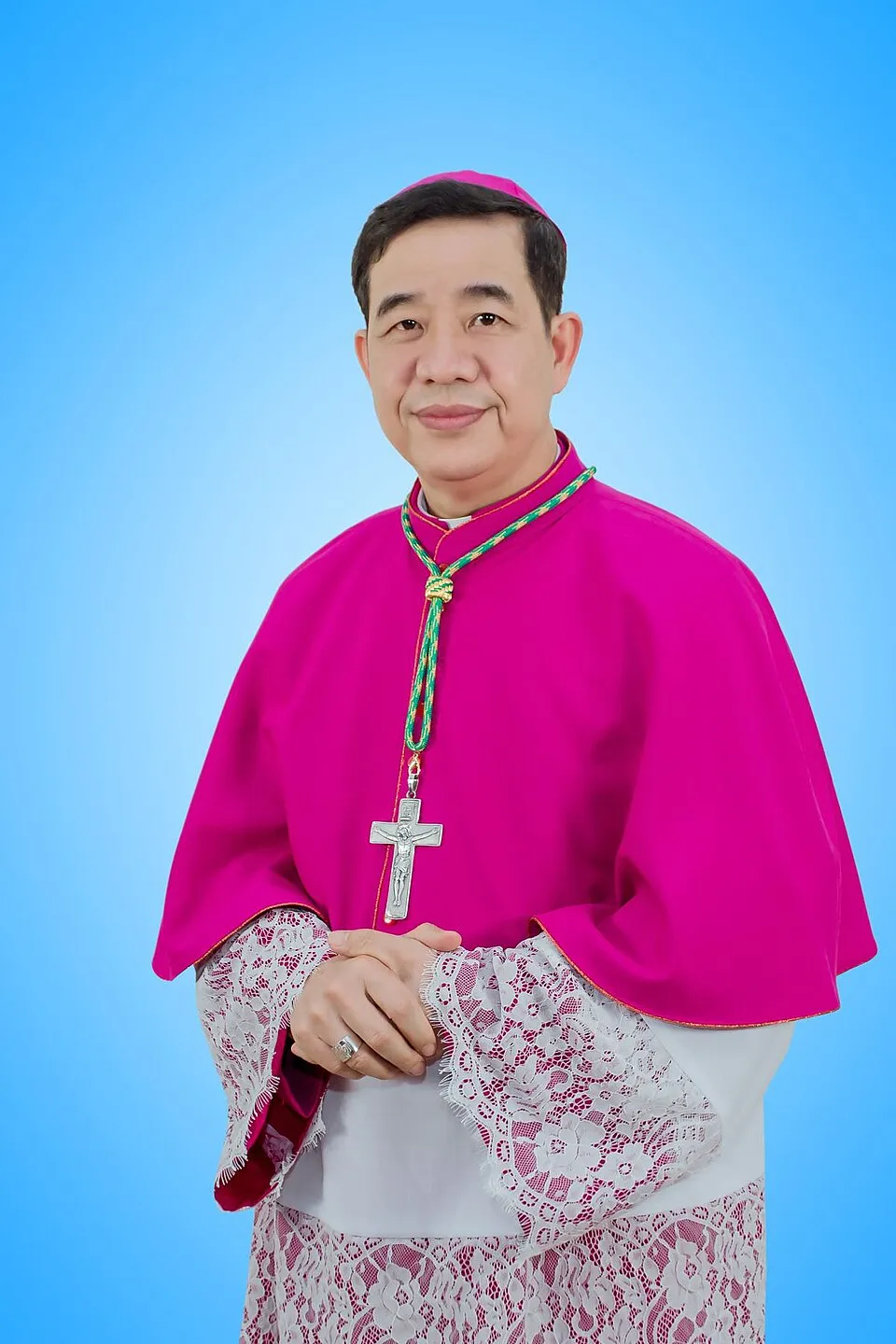
November 24, 1960: Establishment of the Vietnamese Hierarchy
Pope John XXIII’s decree of November 24, 1960 marked the formal end of the missionary era in Vietnam and the birth of a fully native hierarchical Church. The key elements of this landmark decision were:
- Three Ecclesiastical Provinces: The Pope established the metropolitan sees of Hanoi, Huế, and Saigon, each with its own archbishop and suffragan dioceses. This structure mirrored the geographical and administrative divisions of the country.
- Seventeen Dioceses: The decree initially created 17 dioceses across the three provinces, each headed by a Vietnamese bishop. These dioceses covered the entire territory of South Vietnam (as North Vietnam was under communist control and had no formal hierarchy at that time).
- End of Apostolic Vicariates: The apostolic vicariates that had existed since 1659 were either elevated to dioceses or reorganized, signifying the Church’s maturity and stability in Vietnam.
- Self-Governance: With this decree, the Vietnamese Church gained the right to elect its own bishops (subject to papal approval) and manage its internal affairs without direct missionary oversight. The bishops now formed a college that could collectively govern through what would later become the CBCV.
- Canonical Status: The establishment of a hierarchy meant Vietnam was no longer considered a mission territory but a normal part of the universal Church, with all the rights and responsibilities that entailed.
- Historical Significance: This moment represented the culmination of a 400-year journey from the first Gospel in 1533 to a fully indigenous episcopacy. It was a testament to the perseverance of Vietnamese Catholics through centuries of persecution and foreign rule.
The 1960 hierarchy provided the canonical foundation for the Church to operate independently, though it would face new challenges in the decades ahead, including the Vietnam War and subsequent socialist governance.
The CBCV: Episcopal Unity After Reunification (1980)
In the aftermath of Vietnam’s reunification under communist rule in 1975, the Catholic Church faced an uncertain future. The need for a unified episcopal body to navigate the new political landscape became increasingly apparent. Consequently, in 1980, the Catholic Bishops’ Conference of Vietnam (CBCV) was officially founded, bringing together all active bishops from across the country.
The CBCV’s primary mission is to foster communion among the bishops, coordinate collaboration on pastoral initiatives, and provide a collective voice for the Church in dialogue with the government. Based in Hanoi, the conference serves as the central organizing body for the Vietnamese Catholic hierarchy.
A significant milestone occurred when the number of dioceses expanded from the original 17 to 27 by the early 21st century, reflecting the Church’s growth and the need for more localized pastoral care. Today, the CBCV stands as the official assembly representing all Vietnamese bishops, working to shepherd approximately 7 million Catholics through the complexities of a socialist context while preserving the faith traditions passed down through generations.
The bishops who led during the Vietnam War period navigated extraordinary challenges; their leadership is examined in this dedicated article. Among contemporary bishops, Joseph Nguyễn Chí Linh, Joseph Đỗ Quang Khang, Joseph Nguyễn Văn Bình, and Joseph Nguyễn Văn Tiếp are recognized for their pastoral contributions, embodying the continuity from missionary origins to the present.
Key Modern Figures and Recent Milestones
The modern Vietnamese episcopacy has been shaped by several remarkable leaders and historic developments:
| Figure/Milestone | Contribution/Significance | Years |
|---|---|---|
| Cardinal Francis Xavier Nguyễn Văn Thuận | Imprisoned by the communist government for 13 years (1975-1988), he became a global symbol of faith under persecution. After his release, he served in the Vatican and was elevated to the College of Cardinals in 2001. His writings on hope and reconciliation continue to inspire Catholics worldwide. | 1975-1988 imprisonment; Cardinal 2001 |
| Archbishop Philippe Nguyễn Kim Điền | Served as Archbishop of Huế during the most difficult years following reunification. He provided steady leadership that kept the Church together under state pressure, earning deep respect from clergy and laity alike. | Died 1988 |
| Joseph Mary Trịnh Như Khuê | Appointed by Pope Paul VI as the first Vietnamese Cardinal in 1976, breaking another barrier in the native hierarchy. As Archbishop of Hanoi, he led the northern Church through war and its aftermath. | Cardinal 1976-1990 |
| Resident Papal Representative | In 2023, the Holy See and Vietnam agreed to establish a Resident Papal Representative (Archbishop Marek Zalewski), a diplomatic milestone after decades of strained relations. This position enhances direct communication between the Vatican and the Vietnamese Church. | 2023-present |
| 7 Million Faithful | The Vietnamese Catholic community has grown to approximately 7 million members, making it one of the largest Catholic populations in Asia. This demographic strength supports a vibrant Church with numerous vocations and active lay participation. | 2023 estimate |
These figures and milestones illustrate the Vietnamese episcopacy’s maturation from a nascent native hierarchy to a confident, globally connected Church that maintains its distinct identity within Vietnam’s socialist framework.
The most surprising aspect of Vietnamese bishops’ history is the speed of transition after 1933. Once the first native bishop was consecrated, it took only 27 years—not centuries—to establish a complete indigenous hierarchy.
This rapid development contrasts sharply with the 400-year wait for that first bishop. The 1960 decree created 17 dioceses, which later expanded to 27, demonstrating sustained growth.
For readers interested in deeper exploration, the Catholic Bishops’ Conference of Vietnam official website offers current directories of all 27 dioceses and their bishops, providing up-to-date information on the modern episcopacy that traces its roots to 1533. Understanding this history helps appreciate the resilience and adaptability of Vietnam’s Catholic leadership through colonialism, war, and socialism.
Meta Description: Discover the full history of Vietnamese bishops: from 16th-century missionaries to the first native bishop in 1933, the 1960 hierarchy, and today’s CBCV. Key figures, milestones, and the Church’s journey.
Slug: vietnamese-bishops-through-history
Tags: [“Catholic Bishops’ Conference of Vietnam”, “Alexandre de Rhodes”, “Pope Pius XI”, “Pope John XXIII”, “Nguyễn Ba Tông”, “Maximum Illud”, “Apostolic Vicariates”]
Keywords: [“Vietnamese bishops”, “history of Catholic bishops in Vietnam”, “first Vietnamese bishop”, “Vietnamese Catholic hierarchy”, “CBCV”, “Apostolic Vicariates Vietnam”, “Nguyễn Ba Tông”, “Maximum Illud”, “Vietnamese episcopacy”, “Catholic Church Vietnam history”]