Title: The Intersection of Faith and Culture: Vietnamese Catholics in a Globalized World
Meta description: Discover how Vietnamese Catholics navigate the intersection of faith and culture in a globalized world. Explore church structure, history, and modern challenges from CBCV.
Slug: intersection-of-faith-and-culture-vietnamese-catholics
Tags: Catholic Bishops’ Conference of Vietnam, Vietnam, Globalization, Religious Freedom, US Commission on International Religious Freedom, Fr. Alexandre de Rhodes, Seminarians, Dioceses
Keywords: intersection of faith and culture, Catholic culture, Vietnamese Catholics, faith and culture, globalized world, Catholic Church Vietnam, religious freedom Vietnam, inculturation, Vietnamese Catholic traditions
Content:
The intersection of faith and culture in Vietnam is vividly demonstrated by the 11,713 seminarians currently in formation across the country’s 8 regional major seminaries, representing 26 of Vietnam’s 27 dioceses. This robust pipeline of clergy ensures that Vietnamese Catholicism remains deeply rooted in local culture while engaging with global influences.
The Catholic Bishops’ Conference of Vietnam (CBCV) oversees this vibrant ecosystem, where historical legacies dating back to the 19th century and modern challenges including religious freedom concerns shape a unique expression of faith that balances tradition with contemporary life. This dynamic interplay makes Vietnamese Catholicism a compelling case study in how faith can both preserve cultural identity and adapt to a globalized world.
- Vietnamese Catholicism is organized across 27 dioceses with 8 regional seminaries forming 11,713 seminarians from 26 dioceses, enabling widespread cultural engagement.
- Historical data from 1889 shows early growth with 930 churches and 1,243 seminarians, laying foundations for faith-culture integration.
- Modern challenges include Vietnam’s religious freedom watch list status and cultural unspoken rules that shape public Catholic expression.
How Do Vietnamese Catholics Balance Faith and Culture in a Globalized World?
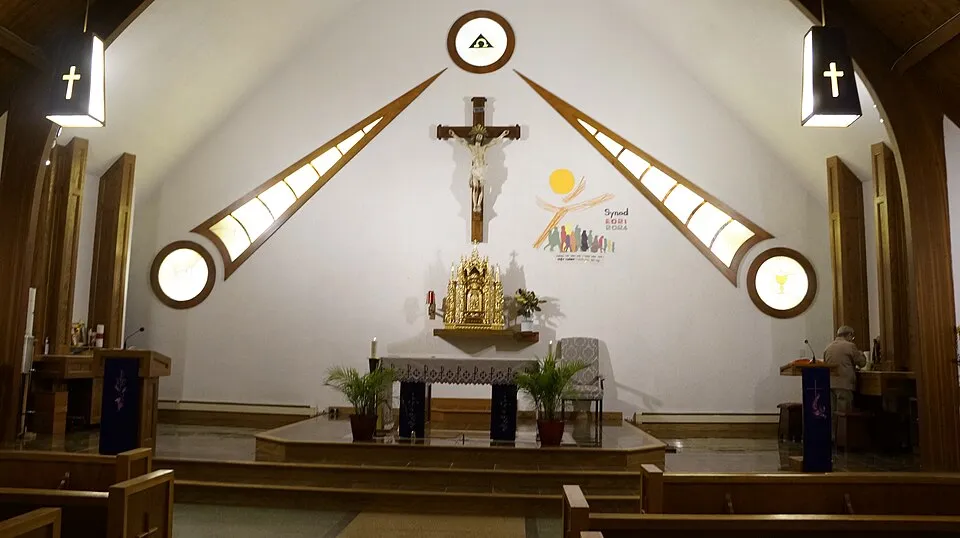
Church Structure at a Glance: 27 Dioceses, 8 Seminaries, 11,713 Seminarians
| Entity | Count |
|---|---|
| Dioceses | 27 |
| Seminaries | 8 |
| Seminarians | 11,713 |
| Dioceses represented | 26 |
This extensive network ensures that Catholic formation is accessible across Vietnam’s diverse regions. With 26 out of 27 dioceses sending candidates to the major seminaries, the church maintains a clergy that reflects the cultural, linguistic, and ethnic diversity of Vietnamese society. The 8 regional seminaries strategically located throughout the country reduce barriers to formation and allow for contextualized theological education that engages local cultural wisdom.
This structure enables the intersection of faith and culture to occur organically, as future priests are formed within their own cultural contexts while connecting with the universal Church. For a broader perspective on how Catholic culture manifests across Vietnam’s dioceses, see the CBCV’s overview of Catholic culture.
Seminarian Distribution: 26 Dioceses Participating in Formation
The participation of 26 dioceses in seminary formation demonstrates near-universal engagement at the local level. This high level of involvement ensures that clergy training is not centralized but rather distributed, allowing each region to contribute its cultural perspective to the formation process. Seminarians from mountainous areas, coastal regions, and urban centers bring their unique cultural heritage into the seminary community, fostering mutual enrichment.
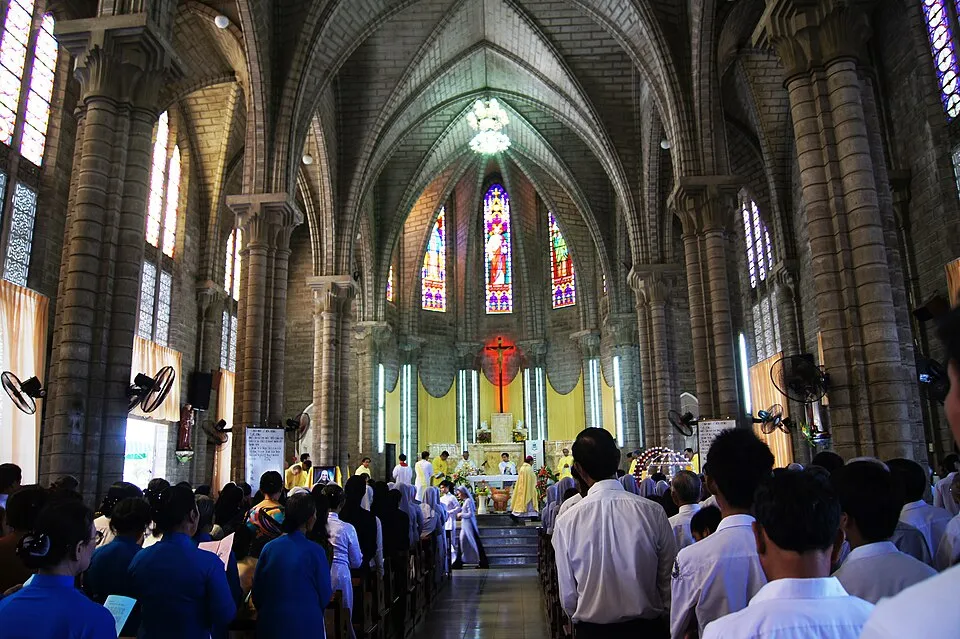
When these priests return to serve their home dioceses, they carry with them a deepened understanding of how Catholic faith can be lived out in ways that resonate with local customs and values. This geographic inclusivity is crucial for maintaining the relevance of Catholicism in Vietnam’s rapidly globalizing society, where traditional community structures remain strong. The rich tapestry of Catholic traditions in Vietnam is a direct result of this inclusive approach to formation.
Historical Development: Faith and Culture Intertwined in Vietnam
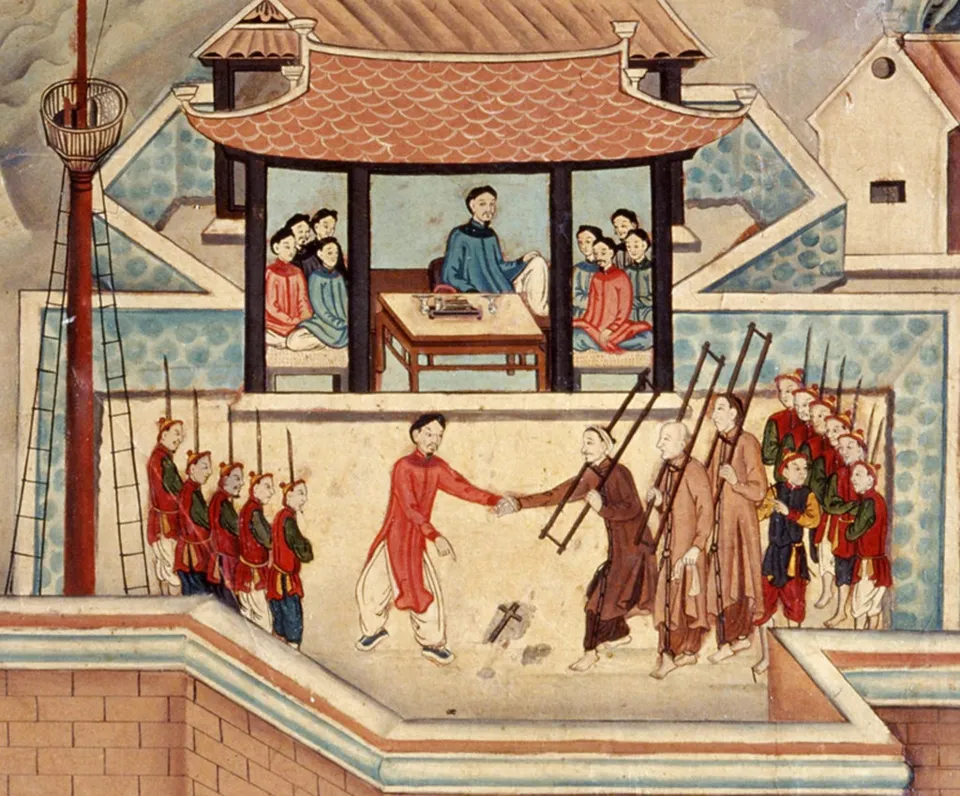
1889 Church Statistics: A Comprehensive Snapshot
| Category | Count |
|---|---|
| Bishops | 9 |
| Missionary priests | 219 |
| Vietnamese priests | 356 |
| Churches | 930 |
| Seminarians | 1,243 |
The 1889 statistics reveal a church that was already deeply inculturated, with Vietnamese priests (356) outnumbering missionary priests (219). This indigenous clergy presence meant that Catholic practices were being adapted to Vietnamese cultural norms from the earliest days. The 930 churches provided physical spaces where faith and local artistic traditions could merge, while the 1,243 seminarians indicate a strong commitment to forming local leadership.
These numbers demonstrate that the intersection of faith and culture was not a later development but was embedded in the church’s structure from the late 19th century. The presence of 9 bishops overseeing this growing church shows a hierarchical organization that could support cultural integration while maintaining doctrinal unity.
The churches built during this period often featured architectural elements that blended European and Vietnamese styles, a legacy that continues to influence church architecture in Vietnam today. Similarly, the religious art that adorned these spaces incorporated local motifs, laying the groundwork for a distinctive Vietnamese Catholic aesthetic that would flourish in later centuries.
Indigenous Clergy Growth: 356 Vietnamese Priests in 1889
The fact that Vietnamese priests outnumbered missionaries in 1889 is a striking indicator of early inculturation. These native clergy understood the cultural nuances of Vietnamese society—from family structures to communication styles—and could present Catholic teachings in ways that resonated with local sensibilities. They navigated the complex relationship between Catholic identity and Confucian values, finding ways to honor filial piety while remaining faithful to the Gospel.
This early generation of Vietnamese priests laid the groundwork for a church that would eventually become entirely self-sustaining. Their work demonstrated that Catholic faith does not require cultural assimilation but can be incarnated within any human culture, including Vietnam’s rich traditions.
The legacy of these pioneers continues today in the 11,713 seminarians currently in formation, representing a continuation of that same indigenous leadership. Their formation includes not only theological studies but also appreciation for Vietnam’s cultural heritage, including its music, art, and devotional practices.
The development of Catholic art in Vietnam owes much to these early efforts to integrate local aesthetics with religious expression.
Additionally, the incorporation of Vietnamese musical elements into liturgy has created a unique soundscape for worship, as explored in studies of sacred music in Vietnamese Catholic churches.
The formation of indigenous clergy also impacted the development of Catholic education in Vietnam. Many priests established schools that combined academic excellence with moral formation, further embedding Catholic values into Vietnamese society. These educational institutions became another avenue for the intersection of faith and culture, shaping generations of Vietnamese Catholics who would go on to influence all sectors of national life.
Modern Challenges: Protecting the Intersection of Faith and Culture
Vietnam’s Special Watch List Status: Religious Freedom Concerns
Vietnam’s placement on the US Commission on International Religious Freedom’s special watch list for “systematic, ongoing, egregious religious freedom violations” creates a challenging environment for Catholics seeking to express their faith publicly. These violations can include restrictions on religious gatherings, limitations on property ownership for religious organizations, and bureaucratic obstacles to religious activities. For Vietnamese Catholics, this means that the intersection of faith and culture must often be negotiated within constrained spaces.
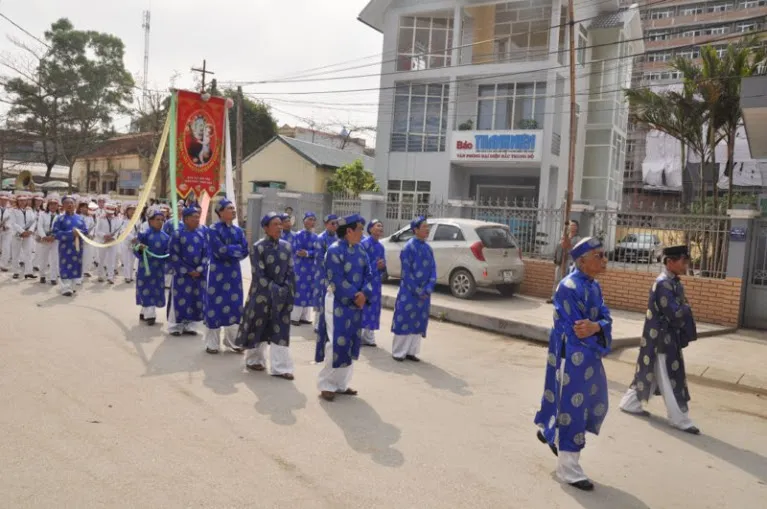
Public processions, church construction, and even the display of religious symbols can require official approval, which may be delayed or denied. This external pressure has fostered a resilience that characterizes Vietnamese Catholicism today, but it also means that cultural expressions of faith are sometimes more private or discreet than in countries with full religious freedom. Understanding these constraints is essential for appreciating how Catholic cultural practices in Vietnam have evolved to balance public presence with cultural sensitivity.
The watch list status also affects international Catholic organizations that wish to operate in Vietnam, potentially limiting partnerships and resources that could support local church activities. This isolation can paradoxically strengthen local resilience but also creates challenges for accessing global Catholic networks and materials.
Cultural Unspoken Rules: Social Norms Affecting Catholic Expression
- Avoid public displays that compromise reputation: Vietnamese culture values social harmony and face, so Catholics may keep devotional practices discreet.
- Maintain emotional composure: Loud arguments or emotional outbursts are avoided; faith discussions happen calmly.
- Avoid creating scenes: Public religious expressions are conducted with decorum to not draw negative attention.
- Do not berate others: Correction is done gently; this influences how faith is shared.
- Prevent causing shame: Religious teaching avoids public criticism that could embarrass individuals or families.
These unspoken rules shape how Vietnamese Catholics live out their faith in daily life. Rather than large public demonstrations of piety, Catholic practice often emphasizes quiet family devotions, discreet prayer groups, and respectful participation in community events. For example, the tradition of praying for ancestors during Tet is conducted within the home, aligning with both Catholic teaching and cultural norms of filial respect.
Processions, when permitted, are orderly and solemn rather than exuberant. This cultural adaptation does not diminish the depth of faith but expresses it in ways that are socially acceptable and culturally resonant. The result is a Catholic practice that is deeply personal yet communally integrated, demonstrating how the intersection of faith and culture can produce a distinctive spiritual expression that also connects to broader Catholic national traditions in Vietnam.
These unspoken rules mean that Catholic identity in Vietnam is often expressed through subtler markers—such as the wearing of modest religious medals, the maintenance of home altars, and participation in parish activities that are socially accepted. The church’s pastoral approach adapts to these norms, offering spiritual formation that respects cultural boundaries while deepening faith. For instance, the popular devotion to the Sacred Heart of Jesus is celebrated with Vietnamese musical styles and local floral decorations, creating a uniquely Vietnamese expression of a universal devotion.
Youth groups often meet in parish facilities rather than public spaces, ensuring compliance with social expectations while fostering community.
Historical Persecution and Current Reality: Is It Safe to Be Catholic?
Historically, Vietnamese authorities issued decrees that made Catholic practice illegal and forced foreign missionaries into exile. The case of Fr. Alexandre de Rhodes, who was imprisoned and then expelled, illustrates the risks faced by early Catholic missionaries.
Despite this legacy of persecution, the Vietnamese Catholic Church today is vibrant, with over 11,700 seminarians and thousands of active parishes. While legal restrictions have eased significantly since the Đổi Mới reforms, some bureaucratic challenges remain—such as difficulties in obtaining permits for church construction or recognition of religious organizations. Socially, Catholics are generally free to practice, but they must remain mindful of cultural norms that discourage overt religious displays.
The question “Is it safe to be Catholic?” thus has a nuanced answer: legally, practice is allowed; socially, Catholics navigate a complex landscape where faith must be expressed in culturally appropriate ways. The resilience of the church, evidenced by its growth, shows that Vietnamese Catholics have found ways to protect their intersection of faith and culture even under pressure.
The current reality also includes generational shifts. Younger Vietnamese Catholics, exposed to global media and travel, sometimes push for more public expressions of faith, creating intergenerational dialogue about cultural boundaries. This tension between traditional discretion and modern assertiveness is another dimension of the ongoing negotiation of faith and culture in Vietnam.
Despite facing religious freedom challenges and navigating strict social norms, the Vietnamese Catholic Church is not only surviving but thriving—with over 11,700 seminarians in formation, it is one of the most vibrant Catholic communities in Asia. This resilience demonstrates how faith can deeply embed itself within a culture while maintaining its universal identity. This remarkable growth defies expectations that religious restrictions would stifle practice.
Instead, Vietnamese Catholics have turned constraints into opportunities for deeper inculturation, creating a model of faith that is both authentically Catholic and distinctly Vietnamese. The Vietnamese Catholic experience offers valuable lessons for other faith communities navigating globalization: that cultural adaptation is not compromise, and that the deepest expressions of faith often arise from the creative tension between tradition and context.
For those seeking to understand this dynamic further, the CBCV’s Catholic culture page offers comprehensive insights into how faith and Vietnamese identity continue to intertwine in the modern globalized world. Visit the Catholic Bishops’ Conference of Vietnam’s official portal for more stories of faith and culture in Vietnam at Catholic culture.
Frequently Asked Questions About Intersection Of Faith And Culture
What country is 100% Catholic?
The country with the largest percentage of its population having membership in the church is Vatican City at 100%, followed by Timor-Leste at 97%. According to the World Christian Database, there are 1.279 billion Catholics worldwide as of 2026, which constitute 47.8% of 2.674 billion Christians.
Why is Vietnam on the special watch list?
The Vietnamese government is “ engaging in and tolerating systematic, ongoing, egregious religious freedom violations ”, according to the US Commission on International Religious Freedom.
What are the unspoken rules in Vietnam?
Most Vietnamese will avoid public displays that could compromise their reputation. As a general rule, keep your cool and avoid loud arguments, making a scene, berating others for mistakes, or pointing out anything that may cause the locals to feel shamed.
Is it okay to be Catholic in Vietnam?
Vietnamese authorities issued decrees that made the practice of the Catholic faith illegal, and they forced foreign missionaries into exile. (Fr. Alexandre de Rhodes, for example, was taken out of prison and forced to leave the country.
Is President Trump a Catholic?
Trump was raised in his Scottish-born mother's Presbyterian faith, and publicly identified with it for most of his adult life, including during his 2016 presidential campaign.