The Catholic Bishops’ Conference of Vietnam (CBCV) has developed a specific approach to ancestor worship Catholicism, permitting Vietnamese Catholics to practice ancestor veneration as an expression of filial piety, not idolatry, according to guidelines updated on November 4, 2019. This pastoral approach reconciles traditional Vietnamese culture with Catholic doctrine through the theological framework of inculturation promoted by the Second Vatican Council. The guidelines specify which rituals are acceptable and which superstitious elements are forbidden, allowing Catholics to honor their ancestors while remaining faithful to Church teaching.
- The CBCV permits ancestor veneration as filial piety, not idolatry, per 2019 guidelines (UCA News, Nov 4, 2019)
- Three key documents (1964, 1974, 2019) chart the evolution from restriction to accommodation
- Vietnamese Catholics may maintain altars, offer incense, and bow during Tet, weddings, and death anniversaries, but must avoid superstitious elements
The Current CBCV Position: Ancestor Veneration as Filial Piety
2019 Guidelines: Official Permission for Ancestral Altars and Rituals
On November 4, 2019, the CBCV issued updated guidelines that officially permit Vietnamese Catholics to maintain ancestral altars and perform rituals such as offering incense and bowing. These guidelines, reported by UCA News, are the most recent official instructions on the matter. They clarify that practices like keeping ancestral altars in the home, offering incense as a sign of respect, and bowing during rituals are acceptable.
The guidelines apply to key occasions including Tet (Lunar New Year), weddings, and death anniversaries. This permission is grounded in the interpretation of ancestor veneration as a cultural expression of filial piety rather than religious worship.
The 2019 guidelines were eagerly awaited by Vietnamese Catholics, providing clarity after years of varying interpretations. They explicitly state that these acts are expressions of filial piety, not religious worship, and must avoid superstitious elements.
This permission builds on earlier documents and provides clear direction for contemporary Catholics. The document was developed with input from the CBCV’s Committee on Family and Committee on Culture, ensuring it addresses real-life situations and aims to unify practice across the 26 dioceses of Vietnam.
These guidelines are a cornerstone of Catholic culture in Vietnam, demonstrating how faith and tradition can coexist. They allow families to honor their ancestors in a way that is consistent with Catholic faith, strengthening intergenerational bonds while upholding doctrinal purity. The move towards accommodation reflects the global Church’s trend of engaging with local cultures, as encouraged by Vatican II.
Theological Foundation: Inculturation and Distinguishing Cultural Veneration from Idolatry
The theological foundation rests on Vatican II’s concept of inculturation, which encourages the Church to adapt to local cultures, integrating wholesome traditions that honor family and community. This principle not only applies to ancestor veneration but also shapes other areas like church architecture in Vietnam and sacred music in Vietnamese Catholic worship. Additionally, the idea of the “church as family of God” emphasizes communal faith, supporting practices that strengthen familial bonds and honor ancestors as part of the family lineage.
| Theological Concept | Role in Permitting Ancestor Veneration |
|---|---|
| Inculturation (Vatican II) | Encourages the Church to adapt to local cultures, allowing integration of traditions that promote family unity and respect. |
| Cultural Assimilation | Would demand complete abandonment of traditional practices, which is not the CBCV’s approach. |
| Church as Family of God | Emphasizes that faith is lived within family and community, making rituals that honor ancestors compatible with Catholic teaching. |
| Individualistic Faith | Views religion as purely personal, separate from family duties, contradicting Catholic teaching on the domestic church. |
These concepts allow the CBCV to frame ancestor veneration as an expression of filial piety—respect and care for one’s parents and ancestors—rather than idolatry. The guidelines explicitly prohibit any superstitious elements, such as believing ancestors can influence fortune or act as intermediaries with God. By distinguishing cultural veneration from religious worship, the CBCV provides a clear framework for integration that honors both Vietnamese heritage and Catholic doctrine.
From Prohibition to Permission: The 1964-2019 Evolution of Guidelines
1964 Statement and 1974 Pastoral Letter: Early Foundations
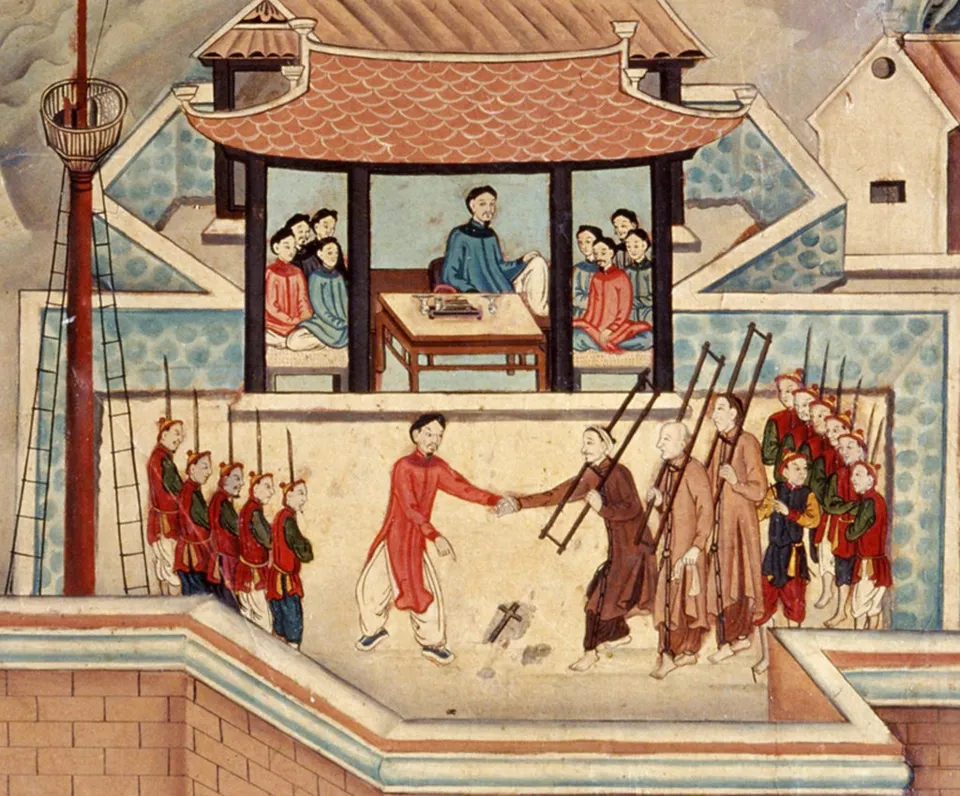
The 1964 statement, titled “The Veneration of Ancestors, National Heroes, and…” (dokumen.pub), was the first official document to address the issue. It began to distinguish between idolatrous worship and respectful veneration, laying the groundwork for future guidelines.
The November 14, 1974 pastoral letter, published by the Asian Research Center, provided the first comprehensive pastoral guidance. It detailed which rituals were acceptable and which were not, offering practical advice for priests and families.
These documents reflect the broader intersection of faith and culture that Vietnamese Catholics experience. They also influenced other cultural expressions, such as Catholic art in Vietnam, where local aesthetics blend with religious themes.
The shift from prohibition to accommodation was gradual, responding to pastoral needs and Vatican II’s spirit. The 1974 letter, in particular, helped normalize the practice within Catholic communities by providing a theological basis for permitting rituals like incense offering and bowing, provided they were understood as acts of filial piety.
2019 Update: Modernizing the Approach for Today’s Catholics
- The 2019 update, issued on November 4, 2019, and publicly reported by UCA News, represents the most recent official instruction from the CBCV. It reaffirms and clarifies the permissions granted in earlier documents.
-
These guidelines explicitly state that ancestor veneration is a cultural practice, not a religious one, aligning with Vatican II’s call for inculturation.
They emphasize that such practices strengthen family bonds and honor heritage.
- The update permits specific rituals including maintaining ancestral altars, offering incense, and bowing, while continuing to prohibit any superstitious elements. This provides clear direction for contemporary Catholics navigating tradition and faith.
- This shift toward full accommodation demonstrates the CBCV’s commitment to engaging with Vietnamese culture. It encourages Catholics to embrace their cultural identity within the broader Catholic culture of Vietnam and to preserve Vietnamese Catholic traditions for future generations.
What Practices Are Permitted and Prohibited for Vietnamese Catholics?
Permitted Practices: Altars, Incense, Bowing, and Key Occasions
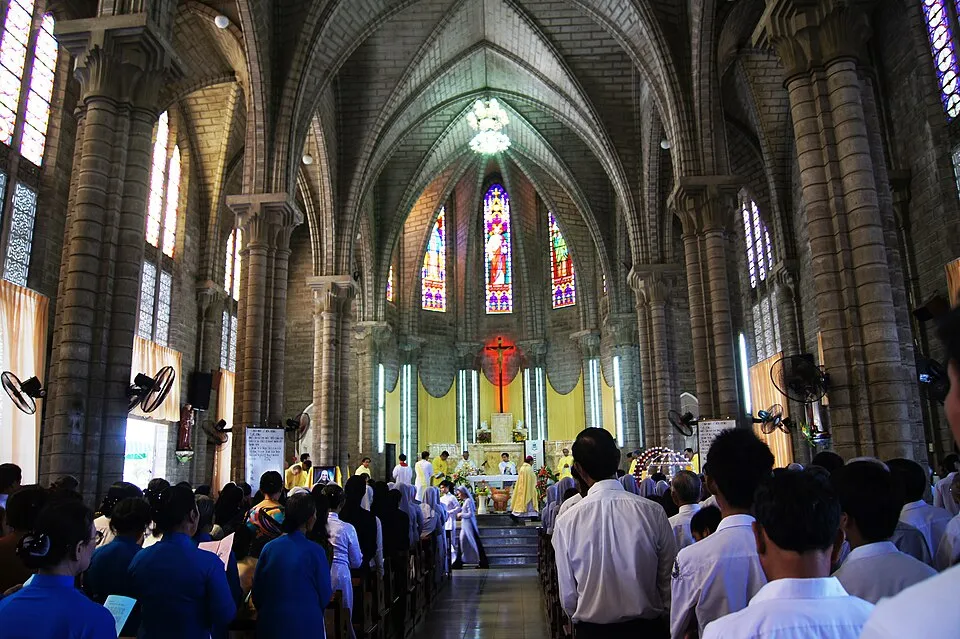
The CBCV guidelines specify which practices are permitted for Vietnamese Catholics. These allowed actions are considered expressions of filial piety and cultural respect.
They form part of the rich tapestry of Catholic cultural practices in Vietnam. The following table outlines the key permitted practices and when they are typically observed.
| Practice | Description/When Used |
|---|---|
| Ancestral altars | Maintained in Catholic homes, often with photos, incense, and simple offerings. They serve as a focal point for family remembrance. |
| Offering incense | A cultural sign of respect and honor, similar to practices in Vietnamese Buddhism and Confucianism. It is permitted as a filial act, not as worship. |
| Bowing | Performed during rituals as a gesture of deference to ancestors, acknowledging their role in the family lineage. |
| Key occasions | Tet (Lunar New Year), weddings, death anniversaries, and other family events where ancestors are traditionally honored. |
These practices are commonly performed during Tet, weddings, and death anniversaries. They allow Catholics to participate fully in family and cultural traditions while remaining faithful to Church teaching.
The guidelines stress that these acts must be free from any superstitious intent, focusing instead on honoring ancestors and strengthening family bonds. By permitting these rituals, the CBCV enables Vietnamese Catholics to live their faith in a way that resonates with their cultural identity.
Clear Boundaries: What Constitutes Superstitious Elements
The CBCV draws a clear boundary between allowed cultural veneration and prohibited superstition. Understanding this distinction is crucial for Vietnamese Catholics. The following comparison highlights the key differences:
| Allowed (Filial Piety) | Prohibited (Superstition) |
|---|---|
| Honoring the memory and legacy of ancestors | Praying to ancestors for favors, healing, or success |
| Showing respect through cultural rituals like incense and bowing | Believing ancestors have the power to control fortune, fate, or earthly events |
| Maintaining altars as family heirlooms and symbols of continuity | Using rituals to seek supernatural intervention from ancestors |
| Celebrating Tet with family gatherings that include ancestral rites as a cultural tradition | Incorporating elements that imply worship of ancestors as divine beings or mediators with God |
Any practice that implies belief in the ancestors’ ability to influence earthly outcomes—such as praying for favors or believing they control fortune—is explicitly forbidden. Permitted actions are purely cultural expressions of respect, memory, and family continuity.
This ensures that ancestor veneration remains within the realm of filial piety and does not become a form of idolatry. Vietnamese Catholics must carefully examine their rituals to ensure they align with these boundaries, consulting parish priests when in doubt.
The most surprising aspect is that the Catholic Church in Vietnam officially permits many practices that outsiders might assume are forbidden. This demonstrates a profound inculturation that respects Vietnamese heritage while maintaining doctrinal integrity. Vietnamese Catholics should consult their parish priest to ensure their ancestor veneration practices align with CBCV guidelines and avoid superstitious elements.
The guidelines provide a clear framework, but individual families may have specific questions. Priests are trained to offer guidance based on the CBCV’s official position, allowing for a harmonious integration of faith and culture that honors both tradition and belief.