Vietnamese Catholic Christmas traditions represent a vibrant fusion of deep religious faith and rich local culture, celebrated by approximately seven million Catholics across Vietnam, embodying Catholic traditions in Vietnam: A Living Heritage of Faith. These traditions center on the solemn Midnight Mass that begins at 10:00 PM on December 24th, marking the official start of Christmas celebrations.
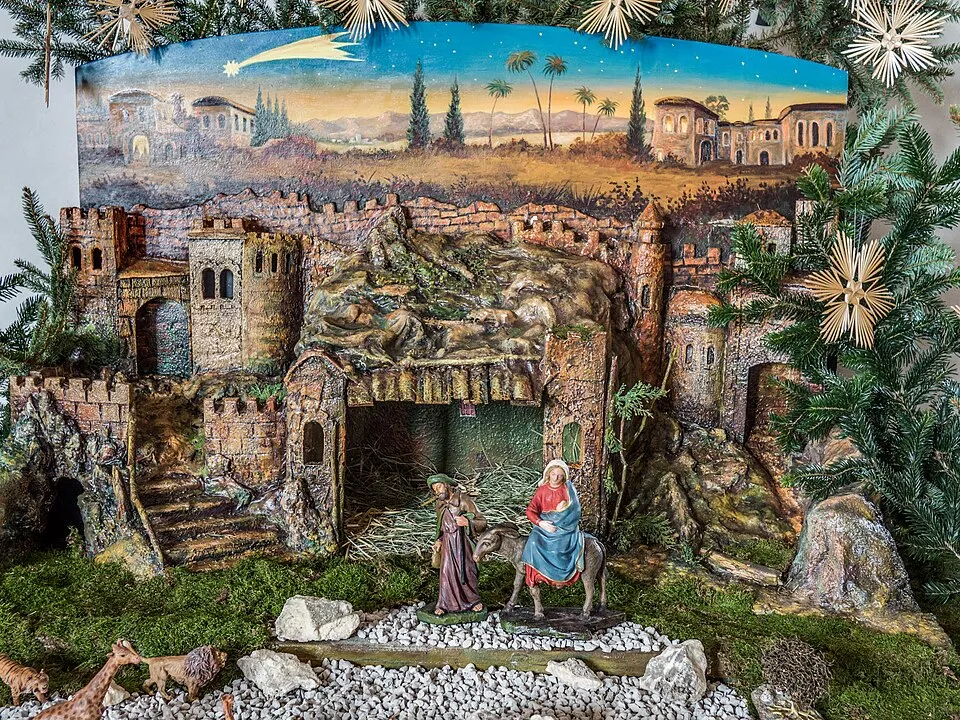
A distinctive feature is the prominence of elaborate nativity scenes called “hang đá” (stone displays), which often take precedence over Christmas trees and transform both churches and homes into immersive depictions of the Holy Family. The celebrations extend beyond church walls to encompass family gatherings, community caroling, and a growing spirit of interfaith cooperation that has made Christmas a widely shared national celebration.
- Midnight Mass begins at 10:00 PM on Christmas Eve, marking the solemn start of Christmas celebrations for Vietnamese Catholics.
- Nativity scenes (‘hang đá’) are more central than Christmas trees, reflecting the Incarnational focus of the faith in Vietnamese context.
- Christmas has evolved into a community-wide celebration with interfaith participation and government recognition, highlighting national unity.
What Are the Core Vietnamese Catholic Christmas Traditions?
Midnight Mass: The 10:00 PM Christmas Eve Tradition
The cornerstone of Vietnamese Catholic Christmas celebrations is the Midnight Mass, which uniquely commences at 10:00 PM on December 24th rather than at midnight. This timing accommodates families with children and allows the celebration to unfold as a community event that bridges Christmas Eve and Christmas Day.
Churches across Vietnam, from the historic St. Joseph’s Cathedral in Hanoi to the vibrant parishes of Ho Chi Minh City—each reflecting Church Architecture in Vietnam: Where Colonial Meets Contemporary—fill with worshippers for this solemn liturgy that commemorates the birth of Christ.
The Mass itself follows the traditional Roman Rite but incorporates Vietnamese hymns and sometimes local musical elements, showcasing sacred music Catholic: The Sound of Faith in Vietnamese Churches. The atmosphere is deeply reverent yet warmly communal, with families often sitting together and neighbors greeting one another.
The early start time enables the faithful to participate fully before returning home for family gatherings, creating a seamless transition from sacred observance to familial celebration. This tradition reflects the practical wisdom of Vietnamese Catholicism, which adapts liturgical practices to local rhythms while maintaining theological integrity.
For many Vietnamese Catholics, attending Midnight Mass is not merely a religious obligation but a cherished cultural ritual that connects them to both their global Catholic identity and their local community. The Mass serves as the spiritual anchor of the season, reminding participants that Christmas first and foremost celebrates the Incarnation—God becoming human—a mystery that resonates deeply within a culture that values family and relational harmony.
Hang Đá: Elaborate Nativity Scenes as Christmas Centerpieces
Vietnamese Catholic churches and homes distinguish themselves during Christmas through the creation of elaborate nativity scenes known as “hang đá” (literally “stone display” or “rock arrangement”). These displays are more central to Vietnamese Christmas décor than Christmas trees, reflecting the Incarnational emphasis of the faith—God made flesh in a humble stable. The hang đá tradition showcases remarkable craftsmanship and communal effort, often occupying entire church courtyards or prominent spaces in parish halls.
Key characteristics of Vietnamese hang đá include:
- Scale and Detail: Many parishes construct life-sized or larger-than-life nativity scenes with meticulously crafted figures, stable structures, and landscaped settings that replicate the Bethlehem environment.
- Cultural Integration: The figures often wear traditional Vietnamese clothing—Mary and Joseph in garments reminiscent of rural Vietnamese attire, with the Baby Jesus swaddled in local textiles. This inculturation makes the biblical story visually accessible and relatable.
- Community Participation: Creating hang đá is a collective endeavor involving parish volunteers, skilled artisans, and youth groups. The process can take weeks of preparation and becomes a bonding activity that strengthens parish community.
- Symbolic Materials: While the name suggests stone, displays use diverse materials including wood, clay, fabric, and even recycled items. The arrangement often incorporates Vietnamese flora like bamboo, banana leaves, and seasonal flowers.
- Lighting and Atmosphere: At night, hang đá are dramatically illuminated, creating a magical ambiance that draws families for evening visits and prayer.
In homes, smaller hang đá serve as focal points for family prayer and reflection. These domestic nativity scenes may be simpler but are equally meaningful, often passed down through generations. The tradition of hang đá demonstrates how Vietnamese Catholics visually and tangibly express their faith, making the Christmas story an integral part of the seasonal landscape.
Family Gatherings and Carol Singing: Faith Celebrated at Home
These gatherings reinforce the central Vietnamese value of family cohesion while celebrating the gift of Christ’s presence, with meals that reflect Catholic Cultural Practices in Vietnam: Daily Life and Devotional Rhythms. Christmas Day becomes an extension of the sacred vigil, with families hosting relatives, neighbors, and friends for elaborate meals that blend traditional Vietnamese cuisine with Christmas specialties.
Carol singing plays a vital role in these celebrations. Groups of parishioners, often organized by youth groups or choirs, go from house to house singing Christmas carols in Vietnamese, sometimes accompanied by simple instruments.
This practice, known as “đi hát mừng Giáng Sinh” (going to sing for Christmas), fosters community connection and spreads festive cheer. The carols include both translated Western hymns and locally composed songs that reflect Vietnamese musical styles and spiritual sensibilities.
The domestic celebration of Christmas among Vietnamese Catholics reflects a broader pattern where religious observance seamlessly integrates with cultural expressions of hospitality and community. Unlike in some Western contexts where Christmas might be highly commercialized, the Vietnamese Catholic celebration maintains a strong focus on relational and spiritual dimensions. The shared meal becomes an act of fellowship, the caroling an expression of missionary joy, and the family time a living out of the Incarnation’s call to love one another.
Community and Interfaith Dimensions: Christmas Beyond the Church
Non-Catholic Participation: A Shared Season of Joy
Vietnamese Christmas celebrations have evolved beyond strictly Catholic circles to become genuinely community-wide occasions where non-Catholics actively participate. This transformation reflects both the organic appeal of the festive season and the Vietnamese cultural emphasis on communal harmony. Streets around major churches—particularly in urban centers like Hanoi and Ho Chi Minh City—fill with people of all faiths who come to admire the hang đá displays, enjoy the festive atmosphere, and join in the caroling.
Key aspects of this broader participation include:
- Cultural Curiosity: Many non-Catholics are drawn by the beauty of the nativity scenes and the joyful music, treating Christmas as a cultural event that showcases Vietnamese creativity and community spirit.
- Social Media Amplification: Photos of elaborate hang đá and Christmas light displays circulate widely on Vietnamese social media platforms, encouraging more people to visit churches and participate in the festive mood.
- Commercial Engagement: Businesses, regardless of owners’ religious affiliations, often decorate storefronts with Christmas lights and symbols, contributing to the citywide festive ambiance.
- Intergenerational Appeal: The celebrations attract families with children who come to see the nativity scenes and enjoy the street food vendors that set up near church areas, creating a carnival-like atmosphere.
This phenomenon aligns with the Vietnamese concept of “cộng đồng” (community), where religious events often become public celebrations—a dynamic explored in the intersection of faith and culture. While the religious core remains intact for Catholics, the holiday’s expression has opened outward, allowing the broader Vietnamese society to appreciate and engage with Catholic cultural traditions.
Interfaith Visits: Buddhist Leaders and Catholic Solidarity
A particularly noteworthy development in recent years is the emergence of formal interfaith visits during the Christmas season, with Buddhist leaders and representatives from other religious communities extending greetings to Catholic parishes and dignitaries. This practice exemplifies the religious harmony that Vietnam officially promotes and that characterizes much of its social fabric. Buddhist monks and nuns, sometimes accompanied by lay followers, visit Catholic churches to offer seasonal greetings, exchange gifts, and participate in portions of the Christmas program.
These interfaith interactions are not merely ceremonial but reflect genuine mutual respect and solidarity. Buddhist leaders often emphasize shared values such as compassion, peace, and family—themes central to both Buddhism and the Christmas message.
In turn, Catholic hosts welcome their Buddhist guests with traditional hospitality, creating moments of cross-cultural understanding. Such visits have been documented in various dioceses and are sometimes covered in national media, highlighting their significance as models of interreligious dialogue.
The trend toward interfaith cooperation during Christmas extends beyond formal visits. It includes joint charitable activities, shared community service projects, and public statements of solidarity.
For instance, during the 2025 Christmas season, several Buddhist organizations joined Catholic charities in distributing food and gifts to the poor, framing their participation as an expression of universal human compassion rather than specifically religious activity. This synergy demonstrates how religious identity in Vietnam can coexist with and even enhance broader social cohesion.
Charity and Government Recognition: Solidarity in Action
Christmas in Vietnam has become an occasion for heightened charitable activity and official government recognition, underscoring its role as a unifying national celebration. Catholic parishes and organizations like Caritas Vietnam organize special Christmas charity drives, distributing food, clothing, and gifts to the poor, elderly, and marginalized. These efforts are increasingly supported by non-Catholic volunteers and donors, reflecting the holiday’s community-wide embrace.
Government officials at various levels also participate in Christmas celebrations, visiting Catholic communities and extending official greetings. This recognition signals state acknowledgment of the Catholic Church’s positive social contributions and its role in promoting national unity. The following table summarizes key dimensions of this solidarity:
| Dimension | Typical Activities | Participants | Significance |
|---|---|---|---|
| Charitable Acts | Food distribution, gift-giving to children, visiting the elderly, supporting disabled persons | Catholic parishes, Caritas Vietnam, Buddhist volunteers, general public donors | Demonstrates practical solidarity with vulnerable populations; embodies Christmas spirit of giving |
| Government Recognition | Official visits to Catholic leaders, participation in church events, public statements acknowledging Christmas | Local and national government officials, Catholic bishops and priests | Affirms religious freedom and national unity; integrates Catholic celebration into national cultural calendar |
| Interfaith Cooperation | Buddhist visits to Catholic churches, joint prayer for peace, shared community meals | Buddhist monks/nuns, Catholic clergy, interfaith committees | Models religious harmony; strengthens social fabric beyond denominational lines |
This combination of grassroots charity and official endorsement illustrates how Vietnamese Catholic Christmas traditions have transcended their purely religious origins to become vehicles for broader social good. The emphasis on solidarity—with the poor, across religious lines, and within the nation—echoes the core Christian message while resonating deeply with Vietnamese cultural values of community and mutual support.
2026 Trends: The Evolving Vietnamese Catholic Christmas
Ông già Noel: Santa Claus in Vietnamese Catholic Culture
The figure of Santa Claus has been naturally inculturated into Vietnamese Catholic Christmas celebrations as “Ông già Noel” (literally “Old Man Noel”). This adaptation follows the pattern of integrating global Christmas elements while giving them a local linguistic and cultural flavor. Ông già Noel appears in parishes during children’s parties, visits families in some communities, and features prominently in Christmas decorations and media.
Key aspects of this inculturation include:
- Linguistic Adaptation: The name “Ông già Noel” directly translates the concept while using familiar Vietnamese terms for “old man” and the French-derived “Noel” for Christmas, reflecting Vietnam’s historical linguistic influences.
- Visual Representation: Ông già Noel is typically depicted in the standard red-and-white Santa costume, but sometimes incorporates Vietnamese elements such as a conical hat (nón lá) or traditional footwear in artistic representations.
- Role in Celebrations: In many parishes, a parishioner dressed as Ông già Noel distributes small gifts or candies to children after Mass or during community gatherings. This practice blends the Western Santa tradition with local community festivities.
- Theological Integration: Unlike in some secular contexts, Ông già Noel in Vietnamese Catholic settings is presented as part of the joyful celebration of Christ’s birth, not as a replacement for religious meaning. The focus remains on the nativity, with Santa as a festive adjunct.
- Cultural Resonance: The figure appeals to Vietnamese cultural values of generosity and blessing for children, making it an easily accepted addition to Christmas customs without displacing the core religious observances.
The adoption of Ông già Noel illustrates how Vietnamese Catholics selectively incorporate external Christmas elements, adapting them to fit local sensibilities and ensuring they serve rather than overshadow the faith’s central celebrations. This selective inculturation allows Vietnamese Christmas to feel both globally connected and distinctly local.
Increased Public Participation and Community Spirit
Trends observed in 2025 and projected for 2026 indicate a continued growth in public participation and community spirit surrounding Vietnamese Catholic Christmas celebrations. The holiday is increasingly perceived not as a private Catholic observance but as a public festival that belongs to all Vietnamese people. This shift manifests in several ways:
First, the scale of public displays has expanded. More parishes are investing in elaborate outdoor lighting and large-scale hang đá that attract visitors from across cities. These displays have become tourist attractions in their own right, with travel agencies including church visits in Christmas season itineraries.
Second, media coverage of Christmas has grown, with national television and online news portals featuring stories about Catholic celebrations, hang đá craftsmanship, and interfaith greetings. This visibility normalizes Christmas as part of Vietnam’s cultural landscape.
Third, commercial participation has deepened. Shopping malls, restaurants, and street vendors embrace Christmas themes, creating a festive atmosphere that extends beyond Catholic neighborhoods. While some critics worry about commercialization, many Vietnamese Catholics appreciate how the broader festive environment enhances the celebratory mood.
Fourth, community volunteerism during Christmas has increased, with non-Catholics joining Catholic charities and parishioners opening their homes to visitors. The emphasis on shared meals and open hospitality has turned Christmas into a genuine season of communal bonding.
These trends suggest that Vietnamese Catholic Christmas traditions are not static but dynamically evolving, finding new expressions while preserving their essential character. The growing public participation reinforces the idea that faith, when authentically lived and beautifully expressed, naturally invites broader society into its celebrations.
Balancing Tradition and Modernity: How Customs Continue to Evolve
Vietnamese Catholic Christmas traditions demonstrate a remarkable capacity to balance continuity with change, maintaining core religious elements while adapting to contemporary contexts. This dynamic equilibrium reflects the broader inculturation process that has characterized Vietnamese Catholicism since the 16th century, when Christmas traditions were first introduced to Vietnam.
| Traditional Elements | Modern Adaptations | Continuity Principle |
|---|---|---|
| Midnight Mass at 10:00 PM | Live-streaming for homebound; multilingual services for diaspora | Sacred timing preserved; accessibility expanded |
| Hang đá nativity scenes | Use of LED lights, synthetic materials, digital projections | Central visual symbol maintained; materials modernized |
| Family gatherings and feasts | Inclusion of extended family via video call; fusion cuisine | Relational focus unchanged; technology enhances connection |
| Carol singing door-to-door | Social media-organized groups; recorded carols for nursing homes | Community sharing preserved; organization methods updated |
| Ông già Noel visits | Professional performers; coordinated with parish schedules | Cultural adaptation retained; execution professionalized |
The evolution is not accidental but guided by a clear principle: retain what is essential to the faith’s identity and Incarnational message, while adapting forms to communicate effectively in changing contexts. The nativity scene (hang đá) remains irreplaceable as the central symbol because it directly visualizes the core mystery of Christmas—God becoming human.
The timing of Midnight Mass remains at 10:00 PM because it has become a beloved tradition that serves the community’s practical needs. The family meal persists because it embodies the feast’s communal joy.
At the same time, Vietnamese Catholics have embraced modern tools and sensibilities. Social media helps coordinate caroling groups and share hang đá photos. Technology allows diaspora communities to participate virtually.
Environmental concerns have prompted some parishes to use sustainable materials and energy-efficient lighting. These adaptations ensure that Christmas traditions remain vibrant and relevant for younger generations while staying rooted in the faith’s timeless message.
The result is a living tradition that feels both ancient and contemporary, both Vietnamese and universally Catholic. This balance explains why Vietnamese Christmas celebrations continue to attract growing participation and why they serve as such a compelling expression of Catholic culture in Vietnam today.
The most surprising transformation in Vietnamese Catholic Christmas traditions is how a strictly religious observance evolved into a national celebration that actively fosters interfaith unity and community solidarity. In 2026, Christmas functions not only as a sacred feast for Vietnam’s seven million Catholics but as a cultural bridge that brings together people of all faiths in shared joy, charity, and national pride.
This unique blend of deep faith and open celebration offers a model of how religious traditions can enrich entire societies without losing their distinctive identity. Experience this vibrant synthesis firsthand by attending a Vietnamese Catholic Midnight Mass or visiting a church to view a hang đá nativity scene during the December holiday season—you will witness a faith that is both profoundly Catholic and distinctly Vietnamese.