Bishop Thomas Nguyễn Văn Trâm, born on May 1, 1969, and ordained a priest on March 6, 1992, serves as Auxiliary Bishop of the Diocese of Xuân Lộc, a key position supporting the leadership of one of Vietnam’s historic sees. His ministry occurs within a Catholic Church experiencing significant growth and operating a robust national seminary system that forms the next generation of clergy and leaders. Understanding his role requires examining the institutional framework of Catholic education he helps shepherd, which includes eight major seminaries forming over 11,700 seminarians from across Vietnam’s 27 dioceses.
- Bishop Thomas Nguyễn Văn Trâm was ordained a priest on March 6, 1992, and serves as Auxiliary Bishop of Xuân Lộc.
- Vietnam’s Catholic Church operates eight regional major seminaries with 11,713 seminarians from 26 dioceses.
- The Catholic Church in Vietnam has grown to over 7 million believers with approximately 30,000 clergy and religious.
Who is Bishop Thomas Nguyễn Văn Trâm?
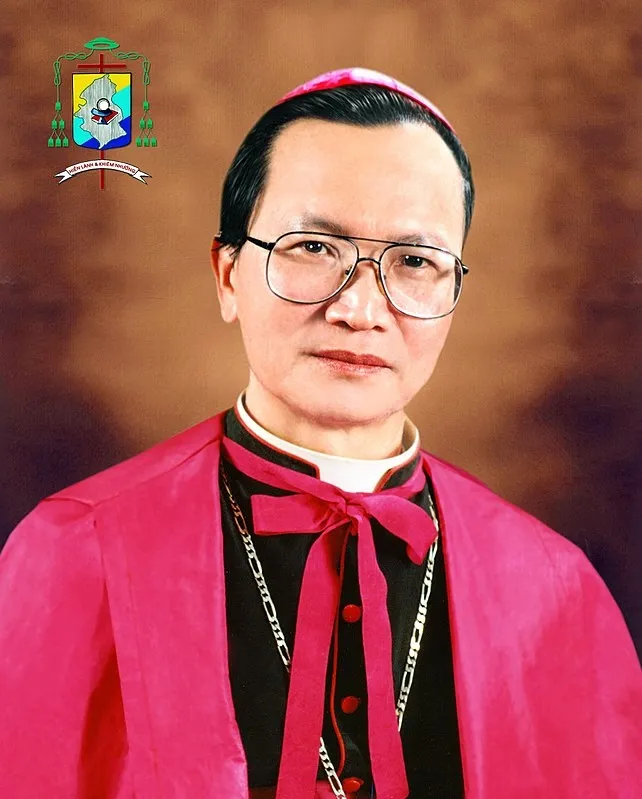
Bishop Thomas Nguyễn Văn Trâm is a member of the Catholic Bishops’ Conference of Vietnam, serving in the Diocese of Xuân Lộc. His episcopal appointment as an auxiliary bishop means he assists the diocesan bishop in the pastoral and administrative governance of the diocese.
This role is crucial in a diocese with a significant Catholic population, as the Diocese of Xuân Lộc served approximately 921,489 Catholics across 246 parishes as of 2014, with a substantial number of priests and seminarians in formation. His service contributes directly to the diocesan structures that feed into the national seminary system and overall Church vitality.
Birth and Priestly Ordination: May 1, 1969, and March 6, 1992
Bishop Trâm’s vocational journey began with his birth on May 1, 1969. He was ordained a priest for the Diocese of Xuân Lộc on March 6, 1992. These dates mark the foundational milestones of his lifelong commitment to priestly service.
His ordination occurred during a period of significant development for the Catholic Church in Vietnam, following the period of re-establishment of normal ecclesial life after the conflicts of the previous decades. Serving as a priest in his home diocese for nearly 13 years provided him with deep pastoral experience at the parish level, which is essential background for any bishop responsible for overseeing clergy formation and diocesan programs. This grassroots experience informs his understanding of the needs of parishes and the faithful, which is vital for his current role in supporting diocesan leadership and, by extension, the wider educational mission of the Church.
Appointment as Auxiliary Bishop of Xuân Lộc: Supporting Diocesan Leadership
Bishop Thomas Nguyễn Văn Trâm was appointed Auxiliary Bishop of Xuân Lộc, Vietnam, on March 6, 1992, the same day as his priestly ordination, and was also given the titular see of Hilta. He was ordained a bishop on May 7, 1992. An auxiliary bishop is appointed to assist the diocesan bishop in carrying out his pastoral duties.
In a large and active diocese like Xuân Lộc, which covers Dong Nai province and has a Catholic population representing over 27% of the local population, this assistance is vital. The auxiliary bishop often takes direct responsibility for specific geographic regions within the diocese, oversees certain ministries, and steps in to lead when the diocesan bishop is absent.
This role places Bishop Trâm at the heart of diocesan operations, including the encouragement of vocations, support for seminary students, and the oversight of Catholic schools and educational programs within the diocese’s territory. His work directly supports the pipeline of candidates who will enter the eight regional major seminaries.
Catholic Seminary Formation in Vietnam: Institutional Scale and Diocesan Participation
The formation of priests in Vietnam is a massive, coordinated effort under the Catholic Bishops’ Conference of Vietnam. The system is designed to be regional, ensuring that seminarians can attend a major seminary relatively close to their home diocese while receiving a standardized, nationally-approved curriculum. This structure reflects the Conference’s mission to coordinate pastoral care and ensure consistent formation across the country’s 27 dioceses.
The participation of 26 out of 27 dioceses in sending seminarians demonstrates a near-universal commitment to priestly formation, a cornerstone of Catholic education. The scale—over 11,700 seminarians—indicates a vibrant and growing Church with a strong future, though it also presents significant challenges in terms of faculty, facilities, and funding that bishops like Bishop Trâm help manage at the diocesan level.
Eight Regional Major Seminaries: National Coverage and Governance
- Number and Scope: Vietnam has eight regional major seminaries providing priestly formation (Source: Catholic Bishops’ Conference of Vietnam).
- Governance: These seminaries operate under the authority and coordination of the Catholic Bishops’ Conference of Vietnam, which sets formation standards and ensures theological orthodoxy.
- Regional Distribution: While specific names for all eight are not provided in the immediate data, their regional nature means they are strategically located to serve different geographical areas of the country, from the north to the central and southern regions.
- Purpose: Their primary mission is the holistic formation of candidates for the priesthood—intellectual, spiritual, pastoral, and human—preparing them for service in Vietnamese dioceses.
This network of eight institutions is the backbone of clerical education. Each seminary likely has a specific charism or focus (e.g., one may be run by a religious order, others are diocesan), but all adhere to the national program.
The governance by the Bishops’ Conference ensures that formation meets the needs of the Vietnamese Church and aligns with universal Catholic requirements. For an auxiliary bishop in a major sending diocese like Xuân Lộc, maintaining strong relationships with these seminaries is a critical part of the job, involving the selection of candidates, ongoing support for seminarians, and the integration of newly ordained priests back into diocesan ministry.
Seminarian Population: 11,713 from 26 Dioceses
- Total Seminarians: There are 11,713 seminarians in formation across Vietnam’s major seminaries (Source: Catholic Bishops’ Conference of Vietnam).
- Diocesan Representation: These seminarians come from 26 of Vietnam’s 27 dioceses, indicating almost total national participation in the seminary system.
-
Implication for Education: This number represents the current “pipeline” for future priests.
With approximately 30,000 priests and religious already serving, the 11,713 seminarians suggest a healthy rate of replenishment for the clergy, which is essential for sustaining parish life and Catholic education at all levels.
- Diocesan Responsibility: Each diocese bears the responsibility for the initial discernment and ongoing financial and spiritual support of its seminarians. This is where bishops and their auxiliaries, like Bishop Trâm, are directly involved through diocesan vocation offices and pastoral councils.
The statistic of 11,713 seminarians is one of the most striking indicators of the Vietnamese Catholic Church’s vitality. For comparison, this is a very large number relative to the total Catholic population. The near-universal participation of dioceses (26 out of 27) shows a unified commitment to priestly formation.
This system is not just about training priests; it is the primary engine for Catholic intellectual and pastoral leadership formation in the country. The quality of education in these seminaries directly impacts the quality of catechesis, sacramental preparation, and leadership in every parish and Catholic school. Therefore, the work of bishops in supporting these seminaries—through funding, prayer, and personnel—is fundamental to “advancing Catholic education” in its broadest sense.
The Catholic Church in Vietnam: Growth, Clergy, and Global Bishops
The context for Bishop Trâm’s ministry is a Church that has experienced dramatic growth over the past century. From a minority community of less than 2 million before 1945, Vietnamese Catholicism has expanded to over 7 million believers today, served by a large corps of clergy and religious. This growth fuels the demand for education at all levels—from primary Catholic schools to university-level theology in the seminaries.
Furthermore, the Vietnamese episcopate is now a significant presence globally, with bishops serving not only in Vietnam but also in diaspora communities, particularly in the United States. This global footprint reflects the Church’s health and the international recognition of Vietnamese clergy’s capabilities.
Church Demographics: Over 7 Million Believers and 30,000 Clergy/Religious
The current landscape of the Catholic Church in Vietnam is defined by substantial numbers. According to available data, the Church now includes over 7 million believers organized into 27 dioceses. This community is served by approximately 30,000 priests, men and women religious.
This represents a monumental shift from the pre-1945 era, when the Catholic population was less than 2 million across 12 dioceses. The growth is not merely numerical; it signifies deep roots and widespread acceptance across Vietnamese society.
The ratio of clergy to laity, while challenging, provides a vast network of ministers for sacraments, education, and social services. For every bishop and auxiliary bishop, this demographic reality means overseeing a vast and complex pastoral territory where educational institutions—both seminaries and parish-based catechism programs—are indispensable for faith transmission.
Is the Catholic Church growing in Vietnam?
Yes, the Catholic Church in Vietnam is demonstrably growing. The data shows a clear trajectory: from less than 2 million believers in 12 dioceses before 1945 to over 7 million believers in 27 dioceses today. This represents a more than threefold increase in the Catholic population over approximately 80 years.
This growth has direct implications for Catholic education. A larger Church requires more priests, more catechists, and more Catholic schools. The existing seminary system, with its 11,713 students, is a direct response to and a driver of this growth.
It ensures that as the number of believers increases, the number of ordained ministers and formed leaders can keep pace. The growth also creates a demand for ongoing adult faith formation and Catholic education for children, tasks that fall to the clergy and religious—the 30,000-strong workforce—supported by the diocesan structures where bishops like Bishop Trâm serve.
Vietnamese Bishops in the United States: At Least Four Serving as of 2025
The influence of the Vietnamese Catholic Church extends internationally. As of 2025, at least four Vietnamese bishops serve in the United States. Three serve as auxiliary bishops in various dioceses, and one holds a diocesan appointment.
The historic milestone was the installation of the Most Reverend Michael M. Pham as the seventh Bishop of the Diocese of San Diego on July 17, 2025. Bishop Pham is the first Vietnamese bishop to serve as the ordinary of a U.S. diocese.
This diaspora episcopal leadership highlights the maturity and global recognition of the Vietnamese Catholic hierarchy. It also creates important links between the Church in Vietnam and the global Vietnamese Catholic community, potentially fostering exchanges in educational resources, vocational promotion, and pastoral models that can benefit seminary formation and Catholic school programs back in Vietnam.
The most surprising data point is the sheer scale of the seminary formation system: 11,713 seminarians from nearly all of Vietnam’s dioceses. This number, supporting a Church of over 7 million, reveals a profound commitment to future leadership. For Bishop Thomas Nguyễn Văn Trâm, working within the Diocese of Xuân Lộc, this means his local support for vocations directly feeds this national pipeline.
The growth from under 2 million to over 7 million believers underscores that the educational work of bishops and the seminary system is not maintenance but expansion. To learn more about the specific initiatives and collaborative projects of the Catholic Bishops’ Conference of Vietnam in supporting this educational ecosystem, you can explore the full profile of Vietnamese bishops on the official portal. Their coordinated efforts are essential for sustaining this remarkable growth and formation.
Frequently Asked Questions About Bishop Thomas Nguyễn Văn Trâm
How many Vietnamese bishops are there in the USA?
While the three Vietnamese bishops have been serving as auxiliaries for their respective diocese, on July 17, 2025, the Most Reverend Michael M. Pham was installed as the seventh Bishop of the San Diego Diocese. He is the first Vietnamese bishop to have this position.
Is there a Catholic cardinal in Vietnam?
Dedicated to a divided nation Reflecting on the life of the Vietnamese Venerable, Cardinal Michael Czerny, prefect of the Dicastery for Promoting Integral Human Development, described Cardinal Văn Thuận as not only a promoter of justice and peace but also an embodiment of “these values in word and a…
Who introduced Catholicism to Vietnam?
Catholicism was introduced in Vietnam in the 16th century by Portuguese, Spanish and French missionaries: 1533: A European called Inekhu (Ignatius?) arrives in Ninh Cuong, today diocese of Bui Chu, to undertake evangelisation.
What is the salary of a Catholic bishop?
Can expect a monthly stipend of about €5,000. This comes out to about $68,000. Per year the Pope does not receive a salary as all of his expenses are paid for by the Vatican.
What country is 100% Catholic?
The country with the largest percentage of its population having membership in the church is Vatican City at 100%, followed by Timor-Leste at 97%. According to the World Christian Database, there are 1.279 billion Catholics worldwide as of 2026, which constitute 47.8% of 2.674 billion Christians.