Vietnam’s 27 dioceses serve over 7 million Catholics as of 2026, each centered on a cathedral church that stands as a historical, architectural, and spiritual landmark reflecting centuries of faith and cultural integration. These cathedrals of Vietnam dioceses embody the unique journey of Catholicism in Southeast Asia, blending European missionary architecture with indigenous Vietnamese design elements to create structures that are both places of worship and cultural treasures. From the Neo-Gothic spires of Hanoi to the wooden pagoda-style cathedrals of the Central Highlands, each building tells a story of adaptation and inculturation.
- Vietnam’s cathedrals showcase a unique blend of European and Vietnamese architectural styles, built primarily between 1863 and 1928.
- These cathedrals serve as the spiritual seats of bishops and vital community hubs for the country’s 7 million Catholics.
- Many are preserved as national cultural heritage, exemplifying the inculturation of Catholicism within Vietnamese identity.
Architectural Diversity of Vietnam’s Cathedral Churches
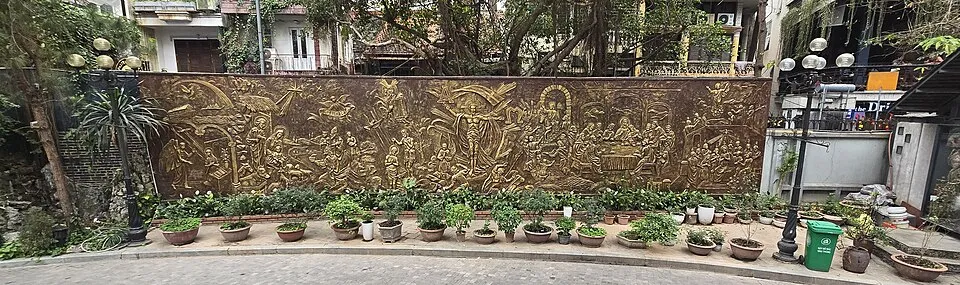
The cathedrals that serve as the seats of Vietnam’s 27 dioceses present a remarkable spectrum of architectural expression, ranging from pure Neo-Gothic revival to hybrid designs that incorporate indigenous building traditions. This diversity reflects the evolving relationship between the universal Catholic Church and Vietnamese culture over more than a century of missionary activity. The five most notable cathedrals—St.
Joseph’s in Hanoi, Notre-Dame in Saigon, Phát Diệm, Kon Tum, and Nha Trang—illustrate how European architectural templates were adapted, transformed, and sometimes completely reimagined within the Vietnamese context. Each building stands as a testament to the creativity of its builders and the inculturation process that allows the Catholic faith to take on local cultural forms while maintaining its universal identity.
Five Representative Cathedrals: Historical and Architectural Profiles
The following table compares five cathedrals that exemplify the architectural range across Vietnam’s dioceses:
| Cathedral | Diocese | Construction Period | Architectural Style | Key Features |
|---|---|---|---|---|
| St. Joseph’s Cathedral | Hanoi Archdiocese | 1863–1880 | Neo-Gothic revival | Two 58-meter tall bell towers; red brick facade imported from Marseille; elevated to basilica status in 1962 |
| Notre-Dame Cathedral Basilica | Ho Chi Minh City Archdiocese | 1875–1899 | Ecclesiastical architecture in the spirit of ancient Vietnamese palaces | Built by Father Trần Lục; stone and ironwood construction; resembles traditional Sino-Vietnamese pagodas; basilica status |
| Phát Diệm Cathedral | Phát Diệm Diocese (Ninh Bình) | Early 20th century | Hybrid: Roman + Ba Na stilt house | Entirely wooden; integrates indigenous Rong house elements; known as the “Wooden Cathedral” |
| Kon Tum Cathedral | Kon Tum Diocese | 1928 (construction began) | Gothic revival | Gray concrete mimicking stone; vibrant stained-glass windows; located on a 12-meter high hill; known as “Stone Church” or Christ the King Cathedral |
| Nha Trang Cathedral | Nha Trang Diocese | Not specified | Gothic revival (coastal adaptation) | Gothic masterpiece by the sea; prominent coastal landmark |
These five cathedrals map a spectrum from European orthodoxy to cultural fusion. St. Joseph’s in Hanoi represents the purest Neo-Gothic expression, with its vertical lines, pointed arches, and imported materials directly referencing French cathedral traditions.
Notre-Dame in Saigon occupies a middle ground: while its overall massing suggests European origins, its decorative details and spatial organization follow Vietnamese palace architecture, creating a building that feels both Catholic and distinctly local. Phát Diệm Cathedral breaks most radically with European models, constructing a Catholic sacred space entirely in the form of a Ba Na stilt house—a wooden structure raised on pillars, integrating the community’s traditional dwelling style into worship.
Kon Tum and Nha Trang cathedrals retain Gothic Revival forms but adapt them to local conditions: Kon Tum uses concrete to mimic stone, while Nha Trang’s seaside location influences its design. This progression illustrates how cathedral architecture in Vietnam evolved from colonial imposition to collaborative inculturation.
European Influence and Vietnamese Integration in Design
The cathedrals of Vietnam dioceses bear the unmistakable imprint of European architectural traditions, particularly Neo-Gothic revival, which was the dominant style for Catholic church building in the 19th century. St. Joseph’s Cathedral in Hanoi, with its pointed arches and towering bell towers, directly references the Gothic cathedrals of France.
Similarly, Kon Tum Cathedral employs Gothic Revival elements like stained glass and vertical emphasis. However, these European templates were never simply copied; they were actively transformed through integration of Vietnamese materials and motifs. At St.
Joseph’s, the red brick facade was imported from Marseille, but the church’s layout and decorative details incorporate local adaptations. Notre-Dame Cathedral Basilica in Saigon represents a more radical departure: Father Trần Lục designed it in the “spirit of ancient Vietnamese palaces,” using stone and ironwood to create a structure that resembles a traditional Sino-Vietnamese pagoda more than a Gothic church. This intentional blending of Eastern and Western architectural languages is a hallmark of Vietnamese cathedral design.
Even in seemingly “pure” Neo-Gothic churches, one can find subtle Vietnamese touches—lotus designs carved into woodwork, unicorn motifs, and other local symbolic elements. This process of architectural inculturation, where the universal Catholic faith is expressed through culturally specific forms, allowed cathedrals to become bridges between the Gospel and Vietnamese identity.
The result is a built environment that feels both familiar to Vietnamese Catholics and connected to the global Church. For a deeper understanding of how these designs relate to regional cultural contexts, see the geographical overview of Vietnam’s dioceses.
Regional Architectural Variations Across Vietnam’s Dioceses
The architectural character of Vietnam’s cathedrals varies significantly by region, reflecting local cultures, available materials, and missionary approaches:
- Northern Vietnam (e.g., Hanoi Archdiocese): Cathedrals tend toward traditional European-influenced designs, reflecting stronger French colonial presence and earlier missionary activity. St. Joseph’s Cathedral exemplifies the Neo-Gothic style with minimal overt Vietnamese motifs, though it remains a beloved national landmark.
- Central Vietnam (e.g., Phát Diệm Diocese, Ninh Bình): This region showcases blended styles where European structural forms merge with indigenous building traditions. Phát Diệm Cathedral’s hybrid Roman-Ba Na stilt house design demonstrates deep cultural integration, using entirely local materials and construction techniques.
- Central Highlands (e.g., Kon Tum Diocese): Highland cathedrals often incorporate hybrid designs that adapt Gothic Revival to local conditions and ethnic aesthetics. Kon Tum Cathedral’s use of concrete to mimic stone and its hilltop location reflect both European inspiration and local adaptation to the terrain and resources.
These patterns reveal how geography and culture shaped sacred architecture. For a visual representation of diocesan distribution, consult the Vietnam dioceses map.
Historical Development of Cathedral Construction in Vietnam

19th Century: French Colonial Cathedral Building Boom
The 19th century witnessed a surge in cathedral construction across Vietnam, driven primarily by French colonial expansion and the arrival of missionary congregations. Two iconic examples anchor this period: St. Joseph’s Cathedral in Hanoi, built between 1863 and 1880, and Notre-Dame Cathedral Basilica in Saigon, constructed from 1875 to 1899.
Both were erected by French colonists using materials imported from France—St. Joseph’s famous red bricks came from Marseille, while Saigon’s cathedral employed stone and ironwood shipped from Europe. These buildings served multiple purposes: they were centers of Catholic worship, symbols of French cultural and religious prestige, and physical manifestations of the Church’s growing presence in Vietnam.
The architectural language was deliberately European, with Neo-Gothic and Neo-Romanesque styles dominating, intended to evoke the grandeur of medieval European Christendom. This colonial-era building boom established the cathedral as a central institution in each diocese, a role that continues today. The 27 dioceses that exist now trace their origins to this period of expansion.
Early 20th Century: Indigenous and Hybrid Designs
As the 20th century began, cathedral construction in Vietnam entered a new phase marked by increasing involvement of indigenous clergy and a conscious turn toward cultural adaptation. Phát Diệm Cathedral, built in the early 1900s by French missionary Father Giuse Decrouille, broke from the European mold by adopting a hybrid design that combined Roman architectural principles with the traditional stilt house (Rong house) of the Ba Na ethnic group. The entire structure is wooden, creating a truly indigenous expression of Catholic worship.
Similarly, Kon Tum Cathedral, whose construction started in 1928 under Father Louis Vallet, employed Gothic Revival forms but used locally produced concrete to mimic stone, adapting the style to highland conditions and resources. These projects reflected a growing theological and missiological emphasis on inculturation—the idea that the Catholic faith should take root in local cultures rather than imposing foreign forms.
The shift from imported materials to local ones, and from purely European designs to hybrid ones, signaled a maturing Vietnamese Church that was confident in its identity and eager to express the faith in ways that resonated with the local population. To understand how these 27 dioceses developed historically, explore the 27 dioceses of Vietnam.
Is Any Country 100% Catholic? Vietnam’s Catholic Population
No sovereign country is entirely Catholic; the only entity with a 100% Catholic population is Vatican City, which is a city-state and the headquarters of the Catholic Church. Among nations, Timor-Leste has the highest percentage at approximately 97%. Vietnam, by contrast, has a Catholic population of about 7 million people, representing roughly 7% of its total population as of 2026.
These Catholics are organized into 27 dioceses across the country, each with its own cathedral serving as the episcopal seat. The distribution of Catholics is not uniform; certain regions, particularly in the north and south, have higher concentrations due to historical missionary activity and cultural factors.
This demographic context underscores the importance of cathedrals as focal points for a significant religious minority within Vietnam’s predominantly Buddhist society. For detailed statistics on each diocese, refer to the list of dioceses in Vietnam.
What is the Most Catholic State in Germany? A Comparative Note
While the question of Germany’s most Catholic state is interesting, it falls outside the scope of this article focused on Vietnam. Briefly, within Germany, the states of Bavaria (especially Upper and Lower Bavaria), the Rhineland (including Cologne, Aachen, Trier), Westphalia (Münster, Paderborn), and parts of southwestern Germany (Baden, Saarland) have historically high Catholic populations. In Vietnam, Catholic communities are concentrated in specific regions as well.
The Archdioceses of Hanoi and Ho Chi Minh City serve the largest numbers, but significant Catholic populations also exist in central provinces like Ninh Bình (home to Phát Diệm Cathedral) and in the Central Highlands (Kon Tum, Nha Trang). These regional patterns reflect centuries of missionary work, migration, and cultural integration.
The cathedrals in these areas stand as testaments to the local Church’s vitality and its deep roots in Vietnamese soil. For a broader understanding of diocesan roles, see Understanding Catholic Dioceses: Their Role in Vietnam’s Church Administration.
Spiritual and Cultural Significance of Cathedral Churches
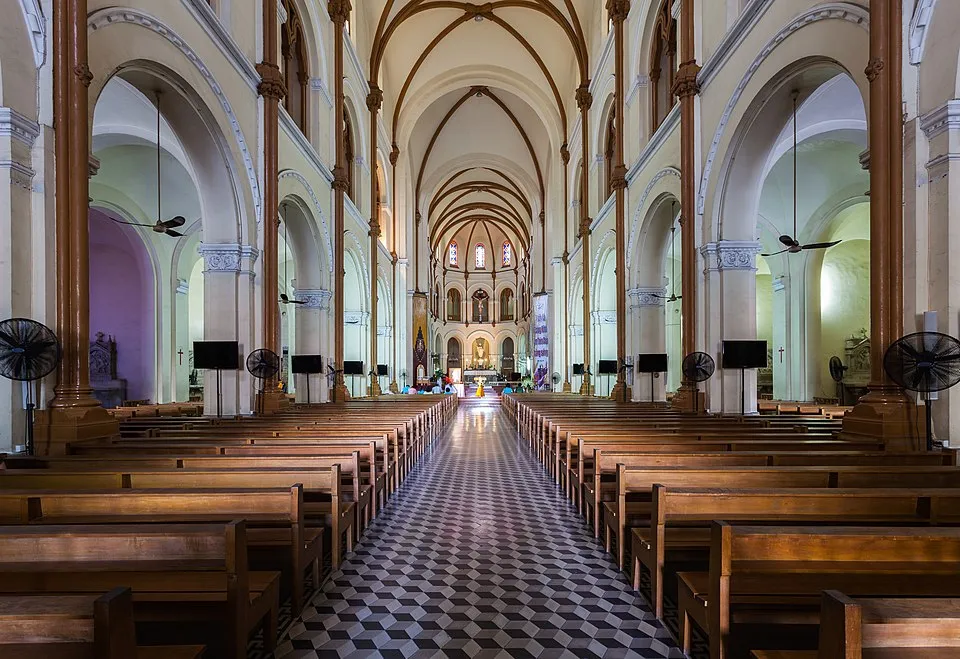
Cathedrals as Diocesan Seats and Community Hubs
Each cathedral in Vietnam’s dioceses serves as the official seat (cathedra) of the bishop, making it the symbolic and administrative center of the diocese. From this location, the bishop oversees pastoral activities, ordinations, and major liturgical celebrations. Cathedrals are more than administrative hubs; they are the spiritual hearts of Catholic communities, hosting daily Mass, sacraments, and special feast days that draw thousands of the faithful.
They function as pilgrimage destinations, especially those associated with martyrs or miraculous events, and as gathering places for diocesan-wide events. In a country where Catholics have historically been a minority, these cathedrals also symbolize the resilience and continuity of the faith through periods of persecution and social change.
They are tangible reminders that the Church in Vietnam is not a foreign import but a living, indigenous reality that has grown and adapted over centuries. The Catholic Directory for Vietnam provides practical information for visiting these sacred sites.
Inculturation and Cultural Identity
The cathedrals of Vietnam are prime examples of inculturation—the process by which the Catholic faith takes on local cultural expressions while maintaining its universal doctrines. Notre-Dame Cathedral Basilica in Saigon, with its pagoda-like silhouette and use of traditional Vietnamese architectural motifs, demonstrates how Catholic worship spaces can embody Eastern aesthetic and spiritual sensibilities. Phát Diệm Cathedral goes even further, constructing a Catholic church entirely in the form of a Ba Na stilt house, thereby making the sacred space immediately recognizable and meaningful to the local ethnic community.
These buildings are not merely aesthetic hybrids; they represent a theological conviction that the Gospel can and should be proclaimed through the languages, symbols, and art forms of each culture. For Vietnamese Catholics, seeing their cultural heritage reflected in the very architecture of their cathedrals affirms that their faith is not a European imposition but a gift that has taken root in their own soil. This inculturation has been crucial for the Church’s growth and identity in Vietnam, fostering a sense of ownership and pride among the faithful.
Preservation and National Heritage Status
Many cathedrals are officially recognized and preserved as national cultural heritage sites under Vietnamese law, ensuring their protection and maintenance for future generations. These buildings have been recontextualized as part of Vietnam’s broader historical legacy, celebrated not only for their religious significance but also for their architectural and cultural value to the nation. Despite their heritage status, cathedrals remain active places of worship, serving the spiritual needs of millions of Catholics and hosting regular liturgies, sacraments, and community events.
Ongoing preservation efforts in 2026 focus on maintaining structural integrity, restoring original features, and improving accessibility while respecting both religious function and cultural authenticity. The dual role as heritage site and living church creates a unique stewardship challenge, requiring collaboration between Church authorities and government cultural agencies. This recognition underscores how these cathedrals have transcended their purely religious function to become shared national treasures.
Vietnam’s cathedrals stand as living testimony to the Catholic Church’s capacity for cultural adaptation. They are not static museum pieces but vibrant centers of faith that have absorbed and reflected Vietnamese identity over more than a century.
The most surprising aspect is how these buildings, often initiated by foreign missionaries, have become deeply Vietnamese through the contributions of local artisans, clergy, and faithful. To explore each diocese’s unique cathedral and history, visit the Catholic Bishops’ Conference of Vietnam website at dioceses for comprehensive profiles and current information.