The Catholic Church calendar, or liturgical year, structures faith life by guiding believers through eight distinct seasons that recount the life, death, and resurrection of Jesus Christ. This global rhythm unites Catholics in shared prayer and scripture each year, offering a spiritual framework that transforms ordinary time into a journey of discipleship. For Vietnamese Catholics, the Catholic Bishops’ Conference of Vietnam (CBCV) provides official resources to follow this Catholic calendar in 2026.
- The liturgical year consists of eight seasons: Advent, Christmas, Ordinary Time I, Lent, Holy Week, Easter, Pentecost, and Ordinary Time II.
- Liturgical colors (white, green, violet, red, rose, black) symbolize the spiritual focus of each season and guide worship aesthetics.
- The calendar offers a global shared rhythm, uniting Catholics worldwide in prayer and scripture reflection.
- Vietnamese Catholics access official liturgical resources through the CBCV website at cbcvietnam.org/catholic-calendar.
The Eight-Season Framework: How the Liturgical Calendar Structures Faith Life
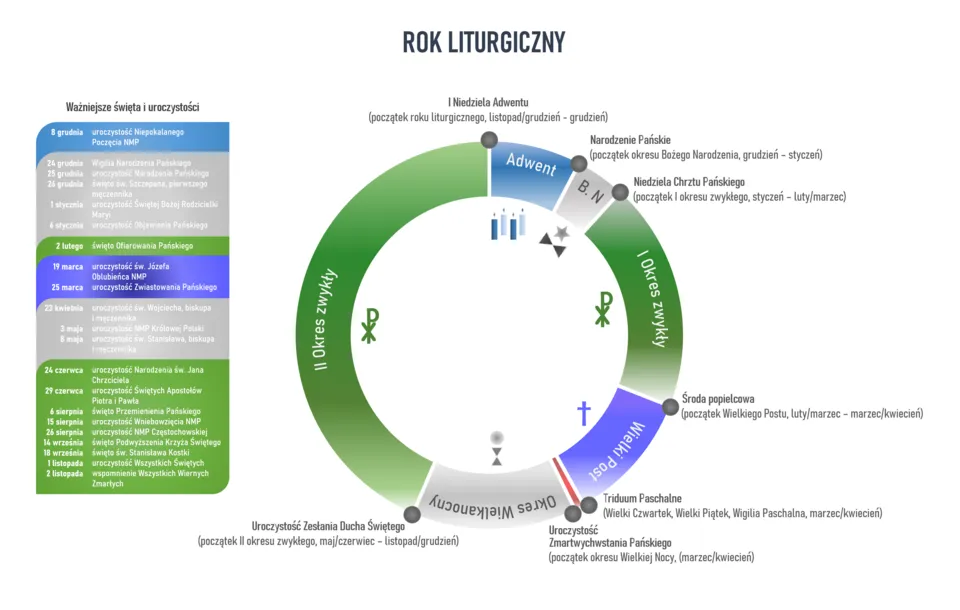
The liturgical calendar organizes the Catholic year into eight seasons that create a cyclical retelling of Christ’s story. This structure does not merely mark time; it invites believers to enter into the mysteries of faith with intentional rhythm. The eight-season framework—Advent, Christmas, Ordinary Time (two periods), Lent, Holy Week, Easter, and Pentecost—provides a spiritual map that guides prayer, worship, and daily discipleship throughout the year.
The Eight Liturgical Seasons: From Advent to Ordinary Time
The following table outlines the eight liturgical seasons, their approximate timing, spiritual focus, and associated liturgical color:
| Season | Approximate Time | Spiritual Focus | Liturgical Color |
|---|---|---|---|
| Advent | 4 weeks before Christmas (starts First Sunday of Advent) | Preparation for Christ’s coming (historical at Bethlehem and eschatological at end of time) | Violet (rose on Gaudete Sunday) |
| Christmas | December 25 to Baptism of the Lord (early January) | Incarnation, Nativity, and early manifestations of Christ | White/Gold |
| Ordinary Time I | After Baptism of the Lord until day before Ash Wednesday | Growth in Christ’s mystery, everyday ministry | Green |
| Lent | Ash Wednesday to Holy Thursday (40 days, not counting Sundays) | Penitence, conversion, preparation for Easter | Violet (rose on Laetare Sunday) |
| Holy Week | Palm Sunday to Holy Saturday | Passion, death, and burial of Jesus | Red (Palm Sunday), Violet/No color (Triduum) |
| Easter | Easter Sunday to Pentecost (50 days) | Resurrection, ascension, and early Church | White/Gold |
| Pentecost | 7th Sunday after Easter (50 days after Easter) | Descent of the Holy Spirit | Red |
| Ordinary Time II | Monday after Pentecost until day before Advent | Growth in mission, hope for Christ’s return | Green |
The cycle begins with Advent, a season of anticipation that prepares hearts for both the celebration of Jesus’ birth and the future hope of his return. Christmas follows, commemorating the Incarnation—God becoming human. After the Christmas season, Ordinary Time I allows for reflection on Christ’s public ministry.
Lent then calls the faithful to repentance and deeper conversion. Holy Week, the most solemn period, walks through Christ’s passion and death. Easter triumphs with the resurrection, leading to Pentecost when the Holy Spirit empowers the Church.
Ordinary Time II completes the year with focus on growth and mission until the cycle restarts with Advent. This narrative arc ensures that every Catholic, regardless of location, experiences the same spiritual progression each year.
How the Liturgical Seasons Deepen Participation in Christ’s Mysteries
Each season invites Catholics to enter into specific aspects of Christ’s life, making the mysteries tangible. During Advent, believers join Israel’s longing for the Messiah through Scripture readings that emphasize prophecy and hope. Christmas becomes a time to marvel at God’s humility in becoming a child.
Ordinary Time fosters steady growth through daily encounters with Jesus’ teachings and miracles. Lenten practices—prayer, fasting, almsgiving—connect the faithful to Christ’s 40 days in the desert. Holy Week’s liturgies (Palm Sunday, Holy Thursday, Good Friday) make the passion emotionally present.
Easter Vigil and the 50-day Easter season celebrate resurrection life. Pentecost recalls the Spirit’s descent and the Church’s birth. This sequential immersion allows the calendar to function as a spiritual trainer, shaping character and faith through repeated cycles.
Liturgical Year 2026: Year A and the Gospel of Matthew
The liturgical year follows a three-year cycle designated as Year A, Year B, and Year C, each highlighting one of the Synoptic Gospels. 2026 follows the liturgical year that began on the First Sunday of Advent, November 30, 2025, and runs through November 29, 2026. This period is Year A, meaning the Sunday Gospel readings primarily come from the Gospel of Matthew.
The three-year cycle ensures comprehensive exposure to the Gospels: Year A (Matthew), Year B (Mark), Year C (Luke), with John’s Gospel interspersed throughout, especially during Easter. This structure means that Vietnamese Catholics attending Mass in 2026 will hear Matthew’s distinctive presentation of Jesus as the new Moses, the teacher of the Kingdom, and the fulfillment of prophecy. The weekday lectionary operates on a two-year cycle (Years I and II), providing additional breadth.
How Is the Catholic Church Calendar Organized?
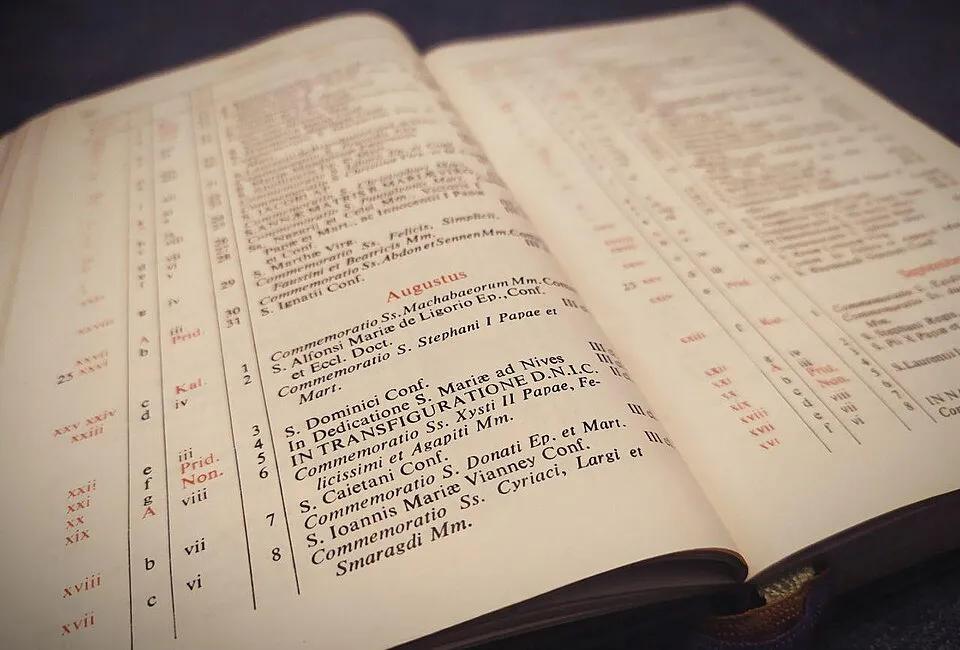
Beyond the seasonal framework, the liturgical calendar operates through multiple interconnected systems that determine daily worship elements. Understanding this organization clarifies how the same calendar can provide specific prayers, readings, and colors for every day worldwide. The organizational backbone includes the cycle of seasons, a standardized system of liturgical colors, a three-year Sunday lectionary, a two-year weekday lectionary, a Psalter cycle for the Liturgy of the Hours, and the General Roman Calendar as the universal template from which national conferences like the CBCV may adapt.
Organizational Elements: Seasons, Colors, and Lectionary Cycles
The Catholic Church calendar integrates several precise components:
- Cycle of liturgical seasons: The eight-season framework that structures the year.
- System of liturgical colors: Visual symbols (white, green, violet, red, rose, black) that communicate the season’s spiritual character.
- Sunday lectionary: A three-year cycle (A, B, C) assigning specific Gospel and epistle readings for each Sunday.
- Weekday lectionary: A two-year cycle (I, II) for daily Mass readings, ensuring coverage of most biblical books.
- Psalter cycle: A four-week distribution of Psalms for the Liturgy of the Hours, allowing the entire Psalter to be prayed regularly.
- General Roman Calendar: The universal list of solemnities, feasts, and memorials that serves as the foundation for all local calendars.
- Cycle of liturgical seasons: The eight-season framework that structures the year.
- System of liturgical colors: Visual symbols (white, green, violet, red, rose, black) that communicate the season’s spiritual character.
- Sunday lectionary: A three-year cycle (A, B, C) assigning specific Gospel and epistle readings for each Sunday.
- Weekday lectionary: A two-year cycle (I, II) for daily Mass readings, ensuring coverage of most biblical books.
- Psalter cycle: A four-week distribution of Psalms for the Liturgy of the Hours, allowing the entire Psalter to be prayed regularly.
- General Roman Calendar: The universal list of solemnities, feasts, and memorials that serves as the foundation for all local calendars.
These elements work together so that any given day—whether a solemnity like Christmas or an ordinary Wednesday—has predetermined prayers, readings, and colors, creating a cohesive global worship experience.
Liturgical Colors: Symbolism and When to Wear White, Gold, Green, and Red
Liturgical colors provide immediate visual cues about the season’s mood and focus. Their use extends to vestments, altar cloths, and sometimes congregational attire. The symbolism is consistent worldwide:
- White/Gold: Symbolize purity, joy, and resurrection. Used during Christmas, Easter, and feasts of the Lord (including solemnities of Mary and non-martyr saints). Answer to “What color should Catholics wear on Christmas?”: White or gold is appropriate.
- Green: Represents growth and life. Worn during Ordinary Time, reflecting the ongoing growth of the Church and personal spiritual development.
- Violet: Signifies penance, preparation, and sorrow. Used in Advent and Lent. Rose may be used on Gaudete (Advent) and Laetare (Lent) Sundays as a joyful pause.
- Red: Symbolizes blood, martyrdom, and fire. Worn on Pentecost (Holy Spirit’s fire), feasts of martyrs, and Good Friday (often with no color but sometimes red).
- Rose: A lighter violet used on the third Sunday of Advent and fourth Sunday of Lent to signify approaching joy.
- Black: Optional for funerals and All Souls’ Day, representing mourning and death (though many places now use violet or white).
These colors create an immediate, non-verbal sermon each time the community gathers.
Daily Structure: How the Lectionary Determines Mass Readings
The lectionary is the organized book of Scripture readings used at Mass. It ensures that over a set period, Catholics hear a broad swath of the Bible. For Sundays and solemnities, the three-year cycle provides:
- Year A: Gospel of Matthew
- Year B: Gospel of Mark (with some John)
- Year C: Gospel of Luke
Each Sunday includes a first reading (usually Old Testament), a responsorial psalm, a second reading (from New Testament letters, mainly in Year C), and a Gospel reading. Weekdays follow a two-year cycle (I and II) with shorter readings, often from one of the Gospels in sequence. For specific daily schedules, Catholics can consult resources for daily mass readings.
The Psalter cycle distributes the 150 Psalms across four weeks for the Liturgy of the Hours, ensuring the prayer of the Church includes the entire Book of Psalms regularly. This systematic approach means that regardless of parish, the faithful worldwide hear the same readings on any given day, reinforcing the global shared rhythm and providing a clear way to follow the liturgical day.
Purpose, Global Unity, and Resources for Vietnamese Catholics
The liturgical calendar serves not only as an organizational tool but as a means of spiritual formation and ecclesial unity. For Vietnamese Catholics, understanding this framework connects them to the universal Church while providing access to locally adapted resources through the CBCV.
The Global Shared Rhythm: Uniting Catholics in Prayer and Scripture
The same liturgical calendar is used by Catholics worldwide, from Vietnam to Venezuela. This creates a profound sense of unity: on Easter Sunday 2026, Catholics in all Vietnamese dioceses will celebrate the same resurrection mystery with the same Gospel reading as Catholics in Rome, Manila, and Nairobi. This shared rhythm means that when a Vietnamese Catholic travels abroad, they can enter any Mass and immediately feel at home, knowing the season, prayers, and readings.
The calendar thus makes the Church truly catholic (universal) in a tangible way. As the AI Overview notes, it “offers a global, shared rhythm of prayer and scripture.” This unity does not erase local expressions but provides a common foundation upon which inculturation can build.
Following the Liturgical Calendar in Vietnam: CBCV Resources and Local Practices
The Catholic Bishops’ Conference of Vietnam (CBCV) serves as the authoritative body for liturgical norms in Vietnam. While the General Roman Calendar forms the universal baseline, the CBCV may approve local adaptations, particularly regarding the celebration of diocesan patronal feasts. Vietnamese Catholics can access official liturgical resources—including the 2026 calendar in both English and Vietnamese—through the CBCV website at www.cbcvietnam.org/catholic-calendar.
This page provides the authoritative dates for all seasons, solemnities, and feasts as observed in Vietnam. It is the definitive source for parish bulletins, personal devotion planning, and family liturgical life. The CBCV ensures that while the global rhythm is maintained, any legitimate local celebrations are properly integrated.
How the Calendar Shapes Daily Catholic Life: Prayer, Sacraments, and Devotions
The liturgical calendar’s influence extends beyond Sunday Mass into the daily rhythms of Catholic life. During Advent, families may light wreaths and use special devotional prayers. Lenten practices—abstaining from meat on Fridays, adding extra prayer or almsgiving—are tied to the season’s penitential character.
Eastertide brings joyful devotions like the Regina Coeli. The calendar also determines when certain sacraments are particularly appropriate: baptisms and confirmations are often scheduled during Eastertide, linking new members to the resurrection.
Even the choice of which saint to invoke in personal prayer can be guided by the day’s memorial or feast. This integration means that the liturgical calendar becomes the heartbeat of Catholic spirituality, structuring not only communal worship but also individual growth and family traditions.
The liturgical calendar is not a constraint but a liberating spiritual rhythm. It frees Catholics from deciding what to focus on each day by providing a divinely ordered cycle that repeatedly brings them through the entire story of salvation. To integrate this rhythm into your family and parish life in 2026, visit cbcvietnam.org to download the official CBCV liturgical calendar and make it your guide for prayer, worship, and discipleship throughout the year.