The Catholic Bishops’ Conference of Vietnam (CBCV) publishes the official liturgical calendar followed by all 27 dioceses in the country, integrating universal Church celebrations with unique Vietnamese traditions like the Tết observances for the 2025-2026 period.
- The Catholic Bishops’ Conference of Vietnam (CBCV) publishes the official liturgical calendar for all 27 dioceses in the country (source: cbcvietnam.org).
- The 2025-2026 calendar incorporates unique Vietnamese traditions, including three special Tết (Lunar New Year) celebrations: Thánh Lễ Tất Niên, Giao Thừa, and Tân Niên (source: CBCV).
- English-language digital versions and ICAL downloads for 2025-2026 are available through GCatholic.org (source: GCatholic.org).
2025-2026 Catholic Liturgical Calendar: Key Dates and Observances
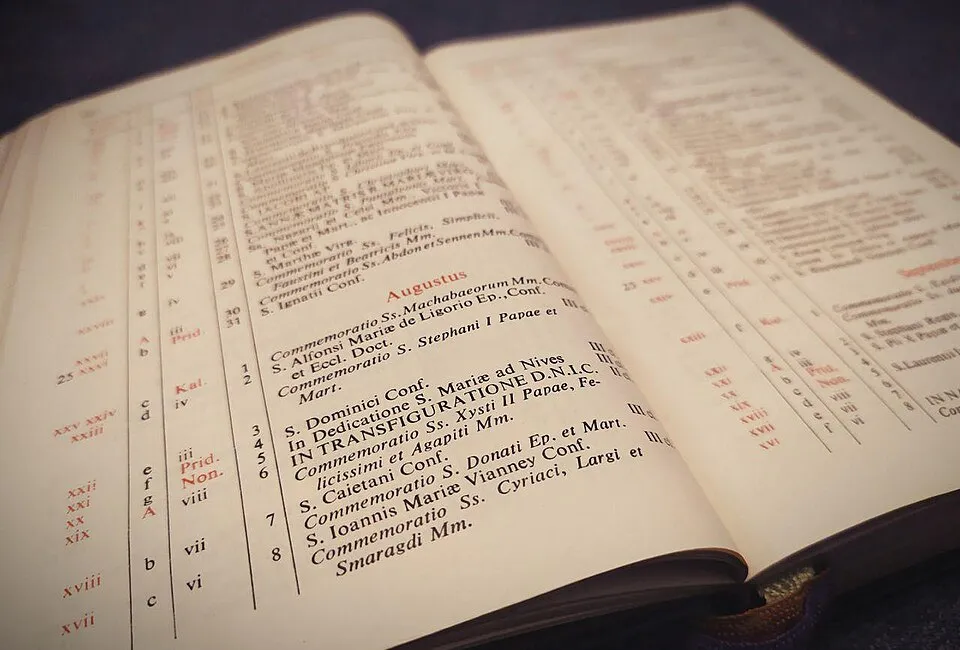
The liturgical calendar for 2025-2026, as followed in Vietnam, structures the spiritual life of Catholics around a fixed cycle of seasons and celebrations. This calendar is based on the General Roman Calendar, which was last universally revised in 1969 by Pope Paul VI’s motu proprio Mysterii Paschalis.
The calendar assigns specific dates to feasts, solemnities, and memorials, determining scripture readings and the degree of liturgical celebration. For the year 2025, this structure is immediately evident in the early January dates, which fall within the Christmas Time season.
Major Feast Days and Saints’ Commemorations in 2025-2026
- January 1, 2025 (Wednesday): The Blessed Virgin Mary, the Mother of God. This is a solemnity and a holy day of obligation, illustrating the hierarchy between solemnities and feasts.
-
January 2, 2025 (Thursday): Saint Basil the Great and Saint Gregory Nazianzen, bishops and doctors of the Church.
[P5]
This feast commemorates two 4th-century bishops known for their theological contributions.
- January 3, 2025 (Friday): Friday of Christmas Time. This day is designated as a weekday in the ongoing Christmas season, with the feast of The Most Holy Name of Jesus also being commemorated. [P6]
- January 5, 2025 (Sunday): The Epiphany of the Lord. This solemnity celebrates the manifestation of Christ to the Gentiles.
The pattern of saint commemorations in early 2025 highlights the calendar’s focus on foundational figures: bishops who shepherded the early Church (Basil and Gregory Nazianzen) and doctors who defined its theology.
[P7]These are assigned fixed dates, separate from the moveable celebrations that depend on the date of Easter. The inclusion of bishops and doctors among the early January feasts reflects the General Roman Calendar’s structure, which selects key saints from the entire history of the Church for universal commemoration.
This feast commemorates two 4th-century bishops known for their theological contributions.
The pattern of saint commemorations in early 2025 highlights the calendar’s focus on foundational figures: bishops who shepherded the early Church (Basil and Gregory Nazianzen) and doctors who defined its theology.
These are assigned fixed dates, separate from the moveable celebrations that depend on the date of Easter. The inclusion of bishops and doctors among the early January feasts reflects the General Roman Calendar’s structure, which selects key saints from the entire history of the Church for universal commemoration.
Liturgical Seasons: Structure and Timing
- Advent: The preparatory season before Christmas, beginning four Sundays before December 25.
- Christmas Time: The season celebrating the Incarnation, running from Christmas Day through the feast of the Baptism of the Lord, typically in early January. The designation of January 3, 2025, as “Friday of Christmas Time” confirms this season’s duration.
- Lent: The 40-day penitential season of preparation for Easter, beginning on Ash Wednesday.
- Easter Triduum: The three-day celebration of Christ’s passion, death, and resurrection, from Holy Thursday to Easter Sunday.
- Easter Time: The 50-day season of celebration following Easter Sunday, culminating in Pentecost.
- Ordinary Time: The periods of the year outside the major seasons, focusing on the growth and mission of the Church.
The liturgical year provides a recurring rhythm that structures Catholic worship and spirituality. Each season has its own character, indicated by liturgical colors (e.g., violet for Lent, white for Christmas and Easter) and specific prayers.
The example of “Friday of Christmas Time” on January 3, 2025, illustrates how the calendar assigns every single day to a specific season and often a particular feast or memorial. This system, defined in the Universal Norms on the Liturgical Year and the Calendar, ensures a coherent and theologically rich cycle of celebration that unfolds year after year, with the date of Easter determining the timing of all other moveable feasts like the Sacred Heart of Jesus.
What Makes the Vietnamese Catholic Calendar Unique?
While the universal structure of the liturgical year is followed worldwide, the Vietnamese Catholic calendar, as overseen by the CBCV, incorporates specific local celebrations that reflect the nation’s cultural and spiritual heritage. The most significant of these are the three distinct Masses and observances integrated into the Lunar New Year (Tết) period, embodying Catholic liturgy traditions in Vietnam. This adaptation demonstrates how a national bishops’ conference can enrich the general calendar with elements that resonate deeply with the local faithful, without altering the core of the liturgical year.
CBCV: The Authority Behind Vietnam’s Liturgical Calendar
The Catholic Bishops’ Conference of Vietnam (CBCV) is the entity responsible for publishing and overseeing the official liturgical calendar for the entire nation. Its official website, cbcvietnam.org, serves as the primary portal for pastoral information. The CBCV facilitates communion among Vietnam’s 27 dioceses, meaning its calendar is the standard that all local churches follow.
The conference’s structure includes all active and retired bishops of the country, with its leadership and administrative headquarters based in Ho Chi Minh City. This centralized authority ensures uniformity in celebrating the liturgical year while allowing for the inclusion of properly approved local feasts, such as the Tết celebrations.
Tết Celebrations: Integrating Vietnamese Lunar New Year into the Liturgical Year
- Thánh Lễ Tất Niên: The Mass of the 30th day of the 12th lunar month, celebrated on the evening before Lunar New Year’s Eve. It is a vigil Mass preparing for the new year.
-
Giao Thừa: The New Year’s Eve Mass, celebrated at the moment the old year ends and the new year begins.
This is a major celebration for Vietnamese Catholics.
- Tân Niên: The New Year’s Day Mass, celebrated on the first day of the lunar new year. This Mass marks the beginning of the new year in the liturgical context.
The integration of these three specific celebrations—Tất Niên, Giao Thừa, and Tân Niên—is the most distinctive feature of the Vietnamese Catholic calendar. They are not merely cultural additions but are fully incorporated into the liturgical observance, providing a Catholic expression of the most important family and cultural holiday in Vietnam.
This practice allows Vietnamese Catholics to observe the Lunar New Year within the framework of their faith, connecting their deep cultural traditions with their spiritual life. The timing of these Masses is determined by the lunar calendar, creating a unique intersection between the solar-based liturgical year and the traditional lunisolar calendar.
Language and Digital Access: English and Vietnamese Resources
The CBCV’s primary online presence at cbcvietnam.org offers an English language option, making basic information accessible to an international audience. However, the most detailed liturgical documents, including the full annual calendar with all specific dates and local feasts, are typically published in Vietnamese on this site. For English-speaking Catholics, both in Vietnam and abroad, who need access to the official Vietnamese liturgical calendar, GCatholic.org provides a crucial service.
This external resource compiles the CBCV’s calendar and offers it in English-language format, with digital versions and ICAL calendar files available for download for the 2025-2026 period. This dual-resource system means that while the CBCV is the authoritative source, practical digital access for non-Vietnamese speakers often comes through GCatholic.org’s translations and aggregations.
The most culturally significant aspect of the Vietnamese Catholic calendar is its seamless integration of three separate Tết (Lunar New Year) Masses—Thánh Lễ Tất Niên, Giao Thừa, and Tân Niên—directly into the liturgical year. This creates a uniquely Vietnamese expression of Catholic faith that honors both the universal Church calendar and local tradition.
For anyone needing to follow the official schedule of feasts and seasons in Vietnam for 2025-2026, the most practical step is to download the ready-to-use ICAL file from GCatholic.org’s Vietnamese Catholic Calendar page. This digital calendar can be synced to personal devices, ensuring all dates, including the universal solemnities and the local Tết observances, are readily available.