The Catholic liturgical seasons—Advent, Christmas, Lent, Easter, and Ordinary Time—structure the spiritual life of Vietnamese Catholics in 2026 with unique local traditions that blend Roman Rite with Confucian ancestral veneration. The liturgical year runs from November 30, 2025, to November 22, 2026, with each season offering distinct observances shaped by centuries of inculturation. This guide examines the 2026 dates and explores how Vietnamese Catholics celebrate each season through practices like Tết integration, nativity scenes, and community gatherings, all within the context of Catholic liturgy in Vietnam, providing a comprehensive view of faith expressed through culture.
- Vietnamese Catholics uniquely integrate Confucian ancestral veneration into their faith, with home altars and Tết traditions shaping the liturgical year.
- Tết (Lunar New Year) is so significant that in 2026 it forced the rescheduling of Ash Wednesday to February 20, demonstrating practical inculturation. (Source: Tết and Ash Wednesday)
- Each liturgical season has distinct Vietnamese expressions: Advent’s ‘Mong Đợi’ and ‘Hang Đá’ nativity scenes, Christmas Eve Midnight Mass, Lent’s ‘Ăn Chay’ and ‘Đàng Thánh Giá,’ and Easter baptisms. (Source: Exploring Advent, Celebrating Christmas, Lenten Observances, Easter Significance)
The Five Liturgical Seasons: 2026 Dates and Structure

The Five Liturgical Seasons: Overview and Spiritual Themes
The Catholic liturgical year consists of five seasons that guide the faithful through the life of Christ. Each season carries a core spiritual theme that builds upon the previous one, creating a rhythmic journey of preparation, celebration, reflection, and growth. For Vietnamese Catholics, these universal themes are expressed through local customs and terminology, such as Advent‘s “Mong Đợi” (hope and expectation) and Christmas‘s focus on incarnation.
Lent emphasizes conversion and penance, Easter celebrates resurrection, and Ordinary Time fosters growth through Christ’s public ministry. This structure provides a consistent framework while allowing cultural expressions to deepen spiritual engagement.
2026 Liturgical Calendar: Complete Date Reference
| Liturgical Season | 2026 Dates | Key Feasts | Vietnamese Notes |
|---|---|---|---|
| Advent | November 30, 2025 – December 24, 2025 | First Sunday of Advent, Gaudete Sunday | Season of “Mong Đợi” with community prayer gatherings |
| Christmas | December 25, 2025 – January 11, 2026 | Nativity of the Lord, Holy Family, Epiphany | Main celebration on Christmas Eve; elaborate “hang đá” nativity scenes |
| Ordinary Time I | January 12 – February 17, 2026 | Baptism of the Lord | Daily Mass and Rosary recitations common |
| Lent | February 20 – March 28, 2026 | Ash Wednesday, Palm Sunday, Holy Week | Ash Wednesday rescheduled due to Tết; “Ăn Chay” and “Đàng Thánh Giá” |
| Easter | April 5 – May 24, 2026 | Easter Sunday, Ascension, Pentecost | Solemn liturgies; major time for baptisms and confirmations |
| Ordinary Time II | May 25 – November 28, 2026 | Trinity Sunday, Corpus Christi, Christ the King | Parish community life and Marian devotions flourish |
The full liturgical year spans from November 30, 2025, to November 22, 2026. The 2026 calendar differs from a standard Roman Rite calendar due to the rescheduling of Ash Wednesday to February 20, a direct adjustment to accommodate Tết celebrations. This modification illustrates how the Catholic Church calendar structures faith life throughout the year by balancing universal liturgical norms with deeply rooted cultural traditions, ensuring that major religious observances do not conflict with the most significant family holiday of the year.
Lent 2026: Ash Wednesday Rescheduled to February 20 Due to Tết
In 2026, Ash Wednesday—the traditional start of Lent—was moved from its usual date to February 20 to avoid overlapping with Tết (Lunar New Year) celebrations, which fall on February 17–19. This adjustment, authorized by the Catholic Bishops’ Conference of Vietnam, reflects a deliberate practice of inculturation. Ash Wednesday carries profound theological significance as the day when Catholics receive ashes on their foreheads, symbolizing repentance and mortality (“Remember that you are dust, and to dust you shall return”).
By rescheduling this solemn observance, the Church in Vietnam demonstrates respect for the cultural and familial importance of Tết while maintaining the integrity of the Lenten season. The decision allows Vietnamese Catholics to fully participate in both traditions without compromise.
Ordinary Time: Two Periods of Growth and Reflection
Ordinary Time is divided into two distinct periods in 2026: the first runs from January 12 to February 17, and the second from May 25 to November 28. These intervals between the major seasons focus on Christ’s public ministry and the ongoing growth of the Church. For Vietnamese Catholics, Ordinary Time is marked by daily Mass attendance, with Daily Mass Readings for 2026 available, Rosary recitations, and strong Marian devotions, particularly to Our Lady of La Vang.
The period fosters deep parish community life, with activities that build fellowship and spiritual maturity. This season provides a rhythm of steady formation, connecting the joy of Christmas and Easter with the anticipation of the next liturgical cycle.
How Do Tết and Ancestor Veneration Shape the Vietnamese Liturgical Year?
Confucian Ancestral Veneration: A Foundation of Vietnamese Catholic Identity
Vietnamese Catholic identity is deeply shaped by the integration of Confucian ancestral veneration with Catholic practice. This synthesis creates a distinct expression of faith that honors both tradition and doctrine. In many Vietnamese Catholic homes, ancestor altars are prominently displayed, typically below a crucifix, serving as a place for remembrance and prayer for deceased family members.
The Catholic Church in Vietnam has carefully distinguished this practice from superstitious offerings, framing it as an act of filial piety and intercessory prayer—values that align with Catholic teaching on the communion of saints. This theological balance allows Vietnamese Catholics to maintain cultural heritage while remaining faithful to Roman Catholic doctrine, a harmony recognized and supported by the CBCV.
Tết (Lunar New Year): The Pivot Point of the Liturgical Year
Tết is the most significant cultural and spiritual event for Vietnamese Catholics, influencing the liturgical calendar in profound ways. Its timing in late January or February often intersects with key liturgical seasons, necessitating adjustments like the 2026 Ash Wednesday rescheduling.
Tết’s spiritual significance centers on family, renewal, and gratitude, with specific days dedicated to different prayers. The celebration shapes Catholic observances through special Masses, home traditions, and community activities that blend faith and culture.
- Timing and Impact: Tết 2026 falls on February 17–19, directly affecting Lenten scheduling and parish pastoral planning.
- Spiritual Focus: The three-day Tết period includes thanksgiving prayers, ancestor remembrance, and petitions for the year’s work.
- Liturgical Integration: The CBCV includes specific Tết feasts—Thánh Lễ Tất Niên, Giao Thừa, and Tân Niên—in the official calendar.
- Community Expression: Parishes often hold lion dances (múa lân) and encourage traditional áo dài attire for festive Masses.
- Family Devotion: Home altars are decorated with flowers and incense, and families visit graves to pray for the departed.
The 2026 Ash Wednesday Adjustment: A Case Study in Inculturation
The rescheduling of Ash Wednesday to February 20, 2026, serves as a concrete case study in inculturation. Normally, Ash Wednesday falls 46 days before Easter, but in 2026 that date would have been February 12, conflicting with the Tết holiday period. The CBCV’s decision to move the observance demonstrates a pastoral approach that respects Vietnamese cultural traditions while preserving the Lenten season’s integrity.
This adjustment is not a compromise of doctrine but a practical application of the principle that liturgy should engage with local cultures, as encouraged by Vatican II’s Sacrosanctum Concilium. The change allows Vietnamese Catholics to begin Lent with the traditional imposition of ashes without abandoning their Tết family obligations, showing how the Church adapts to local contexts without altering essential teachings.
Tết Traditions in Vietnamese Catholic Homes: Altars, Prayers, and Lucky Money
During Tết, Vietnamese Catholic households engage in specific traditions that blend cultural customs with Catholic spirituality:
- Ancestor Altar Decoration: Families adorn home altars with flowers (hoa mai or hoa đào), incense, and candles, creating a sacred space for remembrance and prayer.
- Grave Visits: Prayers are offered at family graves, honoring deceased loved ones and asking for their intercession.
- Special Tết Masses: Parishes celebrate Thánh Lễ Tất Niên (New Year’s Eve Mass), Giao Thừa (Midnight Mass), and Tân Niên (New Year’s Day Mass), often with large attendance.
- Xin Lộc Tradition: Families pick a Bible verse from blossoms or cards for guidance and blessing in the new year, a practice that combines cultural luck-seeking with Scripture.
- Lì Xì (Lucky Money): Children and elders receive red envelopes containing money, symbolizing prosperity and blessing, often after prayers or blessings from parents.
These practices illustrate how Vietnamese Catholics live out their faith within a cultural framework, maintaining distinct identities while participating fully in the Church’s life.
Seasonal Observances: Vietnamese Catholic Traditions for Each Liturgical Season
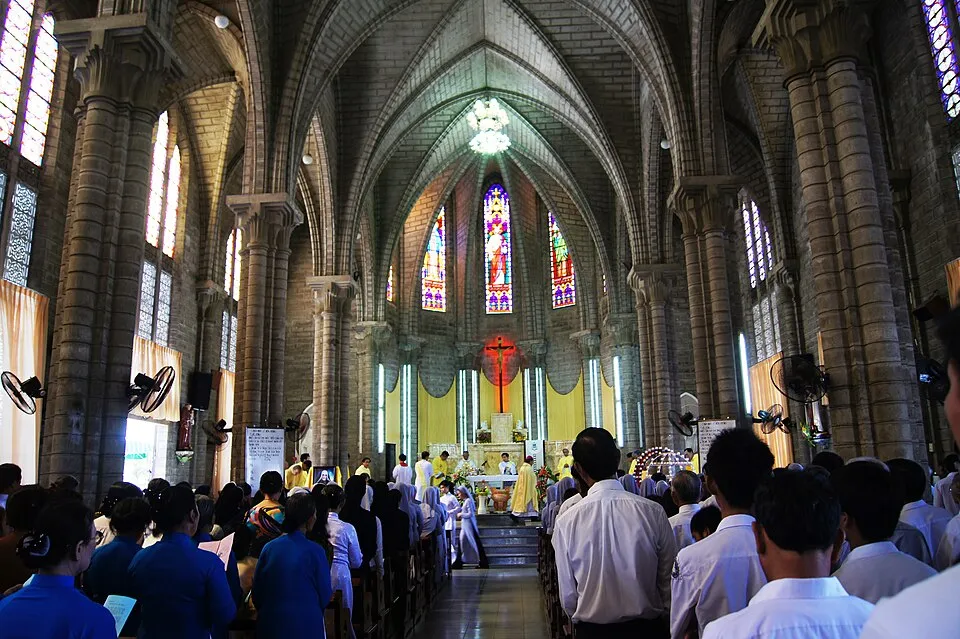
Advent: ‘Mong Đợi’ (Hope) and the ‘Hang Đá’ Nativity Scenes
Advent in Vietnam is characterized by the spirit of “Mong Đợi”—a deep sense of hope and anticipation for Christ’s coming. This season fosters community and family devotion through several distinctive practices:
- Community Prayer Gatherings: Parishes organize early morning Masses, retreats, and caroling sessions that build shared expectation for Christmas.
- Hang Đá Nativity Scenes: Elaborate nativity scenes, known as “hang đá,” are crafted from wood, stone, or clay and displayed in homes and churches. These often incorporate Vietnamese cultural elements, such as local dress or architecture, making the incarnation narrative relatable.
- Family Devotions: Families set up home nativity scenes and pray together, reinforcing the season’s preparatory focus.
- Advent Wreaths: While not uniquely Vietnamese, the lighting of Advent wreath candles is common in parishes and households.
The “Mong Đợi” spirit captures both the universal Advent theme of waiting and the Vietnamese cultural emphasis on hopeful anticipation.
Christmas: Midnight Mass, ‘Chúc Mừng Giáng Sinh,’ and City Light Displays
Christmas is one of the most vibrant and publicly celebrated seasons for Vietnamese Catholics, with a strong social and communal dimension. Key observances include:
- Christmas Eve as Main Celebration: Unlike many Western countries where December 25 is primary, Vietnamese Catholics emphasize Christmas Eve, culminating in Midnight Mass that draws massive crowds to churches.
- Hang Đá Displays: The nativity scenes remain central, with parishes competing to create the most impressive displays that attract visitors of all faiths.
- City Light Festivities: Parishes in Ho Chi Minh City and Hanoi are renowned for spectacular Christmas light decorations, turning church grounds into community gathering spots.
- Greeting: The Vietnamese phrase “Chúc Mừng Giáng Sinh” (Merry Christmas) is widely exchanged, often accompanied by traditional foods like chicken soup during the Reveillon meal after Midnight Mass.
- Public Visibility: Christmas is a highly visible celebration, with many non-Catholics participating in the festive atmosphere, reflecting the Church’s integration into broader society.
Lent: Fasting, Abstinence (‘Ăn Chay’), and the ‘Đàng Thánh Giá’
Lent is a solemn season of penance, prayer, and almsgiving, observed with distinct Vietnamese expressions:
- Fasting and Prayer: Catholics commit to intensified prayer, Scripture reading, and fasting, often in community settings.
- Ăn Chay (Abstinence): On Fridays and throughout Lent, many Vietnamese Catholics abstain from meat, embracing vegan Vietnamese cuisine that showcases the country’s rich vegetable-based dishes. This practice is both a penitential act and a cultural expression.
- Đàng Thánh Giá (Stations of the Cross): This devotion is extremely popular, with parishes organizing processions and meditations on Christ’s passion, often held outdoors or within church grounds. The communal participation strengthens bonds among the faithful.
- Charitable Works: Lent emphasizes giving to the poor, aligning with Vietnamese values of compassion and mutual support. Parishes often organize food drives and outreach to vulnerable communities.
These practices transform Lent into a season of both personal conversion and social solidarity.
Easter and Ordinary Time: Baptisms, Marian Devotions, and Parish Community
Easter and Ordinary Time each have their own Vietnamese character:
- Easter Observances: The Resurrection is celebrated with great solemnity, featuring elaborate liturgies, music, and processions. Baptisms and confirmations are often administered by bishops during this season, marking the high point of initiation into the Church. The Easter Vigil is a particularly cherished tradition.
- Ordinary Time Practices: This period focuses on daily Christian living. Vietnamese Catholics are known for high attendance at daily Mass, even in rural areas. Rosary recitations and Marian devotions—especially to Our Lady of La Vang—are central to spiritual life. The strong sense of parish community manifests in frequent gatherings, feast days, and mutual support networks that extend beyond the church building.
Together, these seasons provide a rhythm of celebration and growth that sustains the faith throughout the year.
For a complete overview of all feast days and solemnities in the 2026 liturgical calendar, consult the Catholic feast days guide on our site.
The most striking aspect of the Vietnamese liturgical year is how seamlessly Tết and ancestor veneration are woven into the Catholic calendar, even altering official dates like Ash Wednesday. This deep inculturation is integral to the Catholic calendar itself, shaping identity and practice.
To experience these traditions firsthand, consider attending a Vietnamese Catholic Tết Mass in 2026 or a Christmas Eve Midnight Mass. Check the CBCV website for parish schedules and join a community to witness how faith and culture together create a vibrant expression of Catholicism in Vietnam.